
In AD 43 Rome invaded Britain and they landed what was then on a narrow point of land in the Wantsum channel. Today this location is 3km inland and it underlines just how the coastline has changed since then.
Today we know this spot as Richborough Roman Fort and it was a vital beachead for the Romans. A small blob of land it was connected to the mainland via a small causeway. This was a near perfect defensible position from which Romans could land their forces and so begin their conquest. Initially it was a place of ditches and timber pallisades. Indeed one set of ditches has been dated to the Claudian period, possibly dug by those who initially embarked there.
What started as an initial grasp on the British mainland became a site which underwent development signifying its status. A small set of baths occupied the corner of the site and today can be wandered around. We are often shown large extravagant baths, however, here we meet them in the form they commonly took; a place of small rooms and alcoves. It would be a couple of centuries before timber was replaced with stone and perhaps this resulted in the confidence Rome had in the fort’s defensive capabilities. However, one stone feature did find a place early on in the fort’s history.
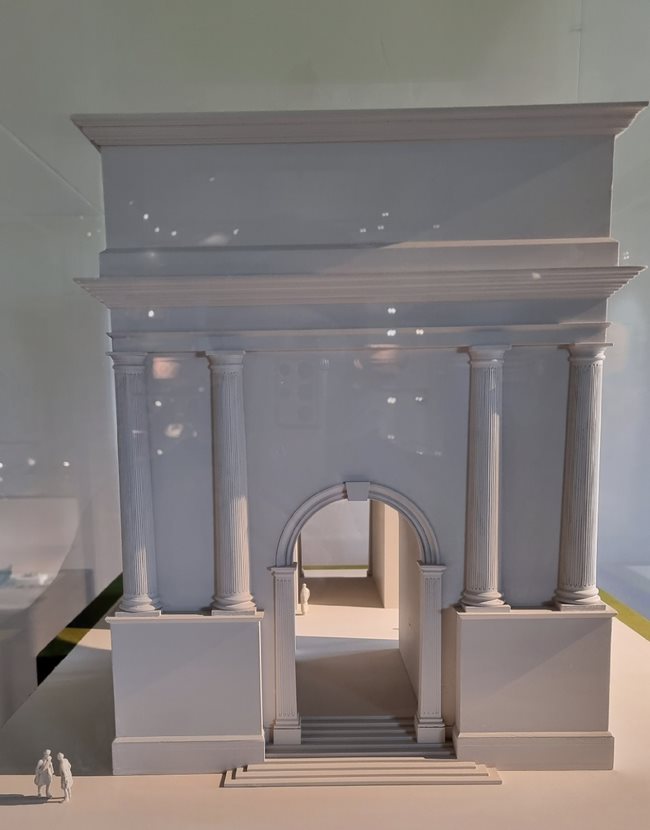
Around 85 AD a momunental arch was placed in the centre of the fort. Monumental is certainly the word, the foundations ran 10 metres deep and consisted of clay and flint. The arch reached an impressive height of 25 metres and took the form of a ‘quadrifrons’ style. Today the platform upon which it stood can be walked around and the grand scale measured by the foot and the imagination. This arch recognised what the fort had achieved, it was Rome’s gateway to Britain.
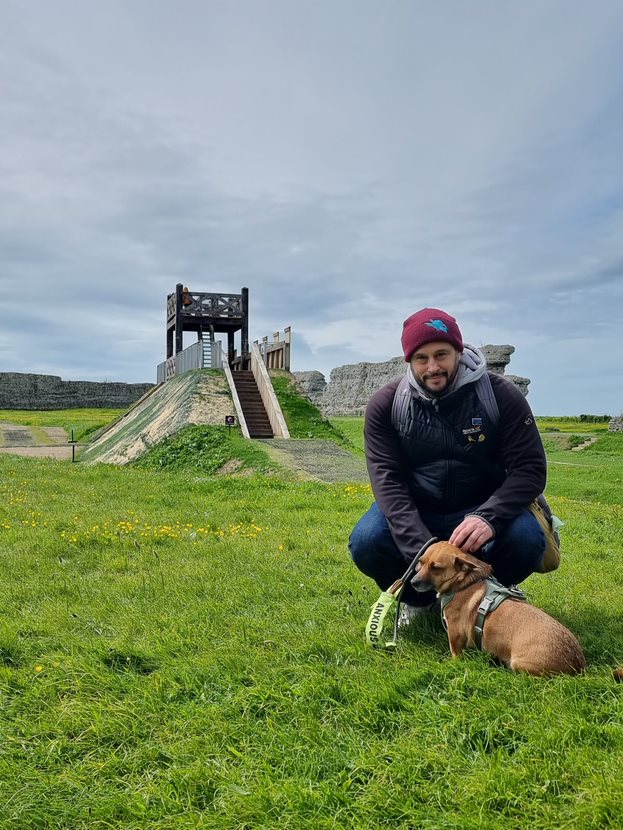
A more modern structure has recently been added which improves the experience of the visitor immensely. A gateway (pictured at top) has been constructed using original post holes, placing it where one once stood. The design of it is in keeping, so now you can walk and hold a view across the landscape, ableit a changed one, that a Roman soldier once took.
Looking outwards is one thing, but the site now takes on a wholly new perspective once you look back across it. Now the ripples and oulines of long lost buildings can be more easily made out. Those defensive ditches, some dating from the earliest days of the site seem far more foreboding. It’s an astute addition which enlivens the site and brings it up from the soil.

The museum is a small but fascinating one. Here you can find objects which provide a real insight into the day to day life of those who resided here, or moved on. Delicate glassware sits alongside the buckles from soldiers’ belts. Even more intriguing are the samian bowls which have been identified as coming from southern France (or Gaul back then).
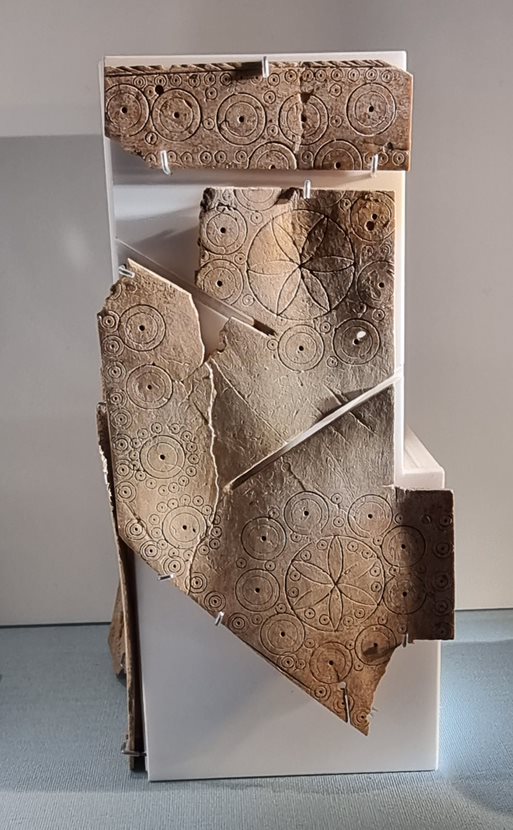
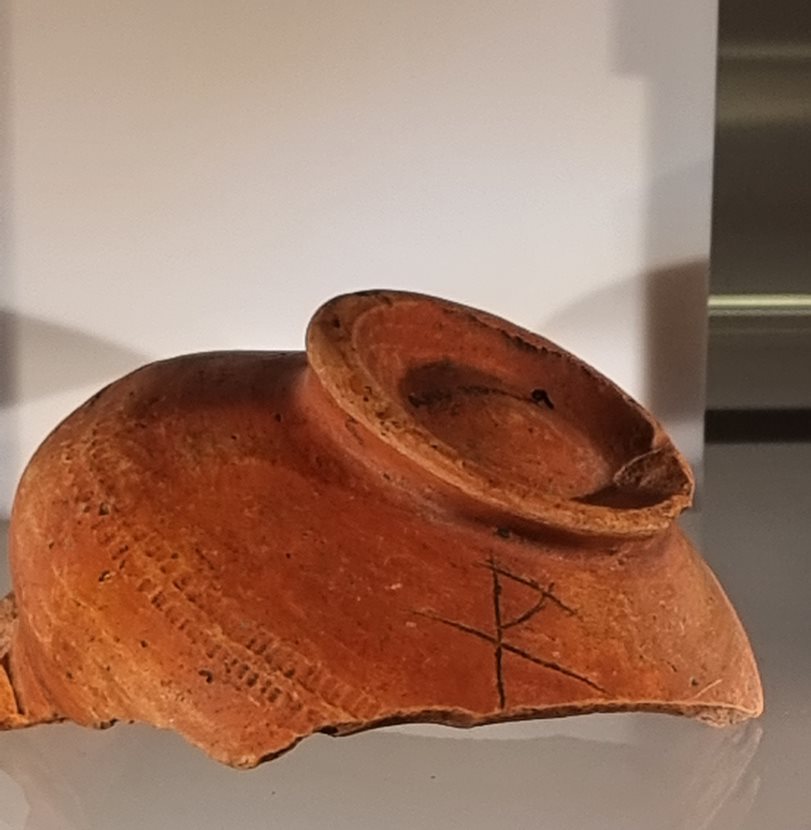
The personal is made more immediate and obvious with a dice tower made from bone, this was used to drop dice into and therefore mitigated cheating. It’s the only one of its type found in Britain. Elsewhere there is a sundial inscribed into chalk, though it was not accurate. Finally a shard of pottery dating to the early 4th century with the Christian ‘Chi-Rho’ made upon it. Could it’s owner have been an early practitioner of the faith or was it another object which had been bought and carried with the owner not aware of the significance of the small marking?
The site permits dogs on leads, though they are not allowed in the museum (and it’s easy to understand why). To a dog I’m sure the outdoors of this site is far more interesting anyhow. The museum and the site itself rewards any who visit and that’s aside from the historical importance it possesses.
Tickets can be bought in advance through English Heritage:
https://www.english-heritage.org.uk/visit/places/richborough-roman-fort-and-amphitheatre/
* * *
Neil Cozzi is a podcaster and blogger on ancient history. You can find him at www.ancientblogger.com and podcast Ancient History Hound. Also on twitter/TikTok/Instagram/Youtube as AncientBlogger.