 NTI Chris Jonas (1).jpg)
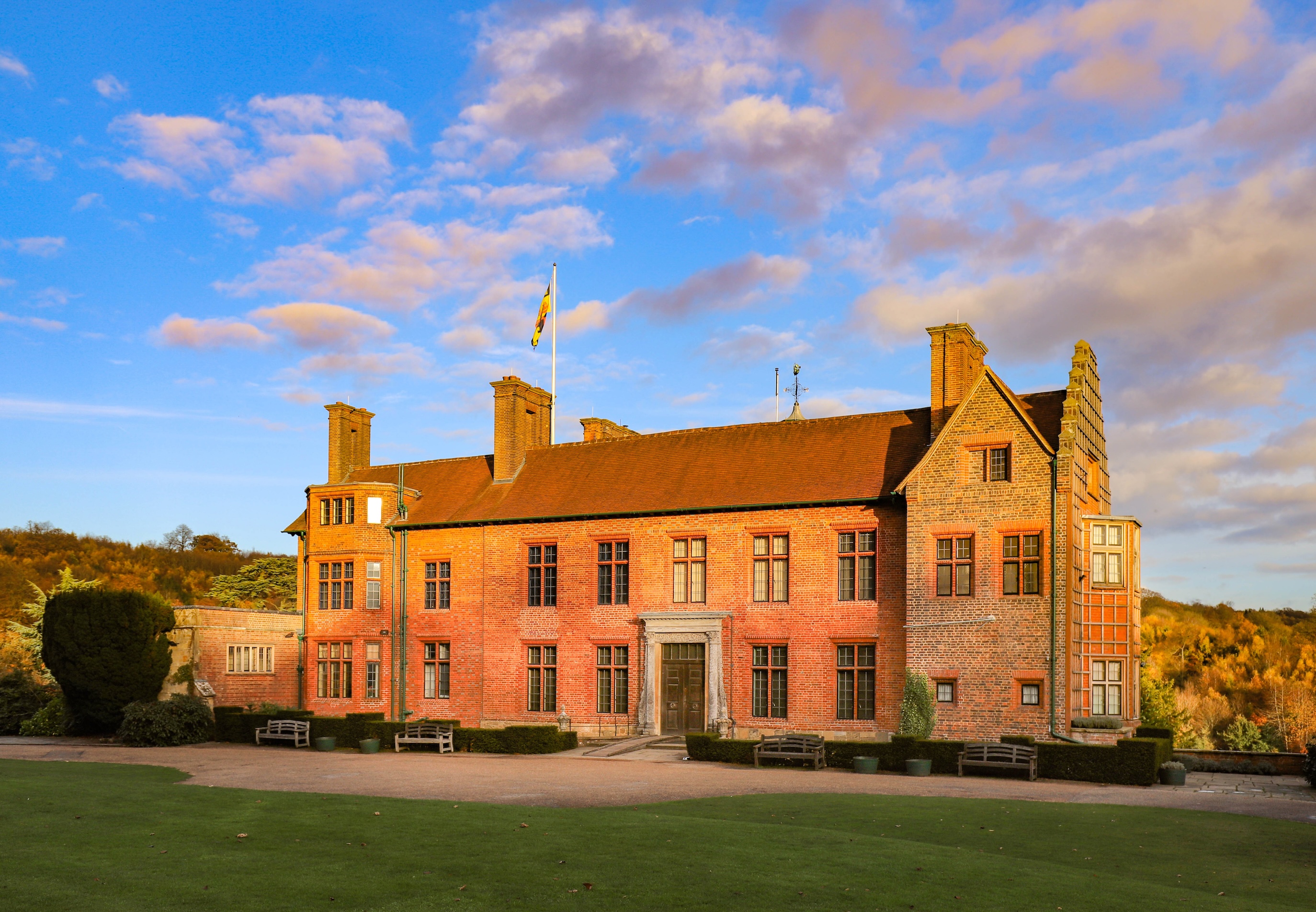
Above: Chartwell in Kent, Image courtesy of and © National Trust Images/Chris Jonas
In 1922 Winston Churchill bought Chartwell, a rambling, brick country house and 82 acres in the Kent Weald about 30 miles south of London. He had just lost his parliamentary seat and the previous year had suffered the death of his two-year-old daughter, Marigold. For forty years it was where he created and wrote, raised a family and entertained. It was his retreat when out of political office in the 1930s, and when he suffered a stroke whilst Prime Minister in 1953. It was also a constant drain on his resources, nearly sold more than once and, after the Second World War, only kept by being gifted to the National Trust on the condition that the Churchill family could remain there during his lifetime. The most famous museum associated with Churchill is the War Rooms in London, but if you want to understand the man behind the cigar, Chartwell seems like a good place to go.
The house is not going to win any architectural awards. Originally a Tudor farmhouse, when Churchill bought it, it had been in the same family since the mid-nineteenth century and extended and ornamented in a very Victorian fashion. Churchill himself immediately set about enlarging it further, and there were two years of building work, spiraling costs and increasingly acrimonious relations with architect, Philip Tilden, before the family moved in. However, he had bought the place because of the setting and the views, and they remain as stunning today as they were in the 1920s. This being a National Trust property, there are extensive, well-marked walks and trails and you could spend a day here and never venture into the house at all.
Even if you baulk at a five mile hike (the longest walk which connects to Emmetts Garden, another NT estate), the formal gardens are well worth a stroll (and you can get an audio guide). The house sits on a hillside with views down to lakes which Churchill enlarged and landscaped. Close by the path up is a circular swimming pool and a pond for his golden orfe, purchased from Harrods and regularly fed by him as a form of relaxation. The gardens are also home to Australian black swans, gifted to Churchill in 1927, and the vegetable garden contains Chickenham Palace for the family’s collection of bantams. There are roses planted by Clemmie, the Marlborough Pavillion decorated by Churchill’s nephew with a slightly absurd military frieze in honour of their famous ancestor, an orchard, walled kitchen garden, croquet lawn, and a playhouse, Marycot, created for his daughter.
All of the water features were at least in part actually dug by Sir Winston and the garden wall was largely built by his own hands: brick-laying was another form of relaxation. However, his main pastime was painting and the garden studio is hung literally floor to ceiling with examples of his work. Unlike plenty of celebrity artists, Churchill was under no illusions about his talent. Although he took informal lessons from Walter Sickert among others, painting was primarily a therapy and an escape which he described variously as a ‘joyride’, a ‘companion’ and ‘a complete distraction’ The sheer number of pictures, like his hands-on involvement in the gardens, are testament to his work ethic: this was a man who clearly could not bear to be idle.
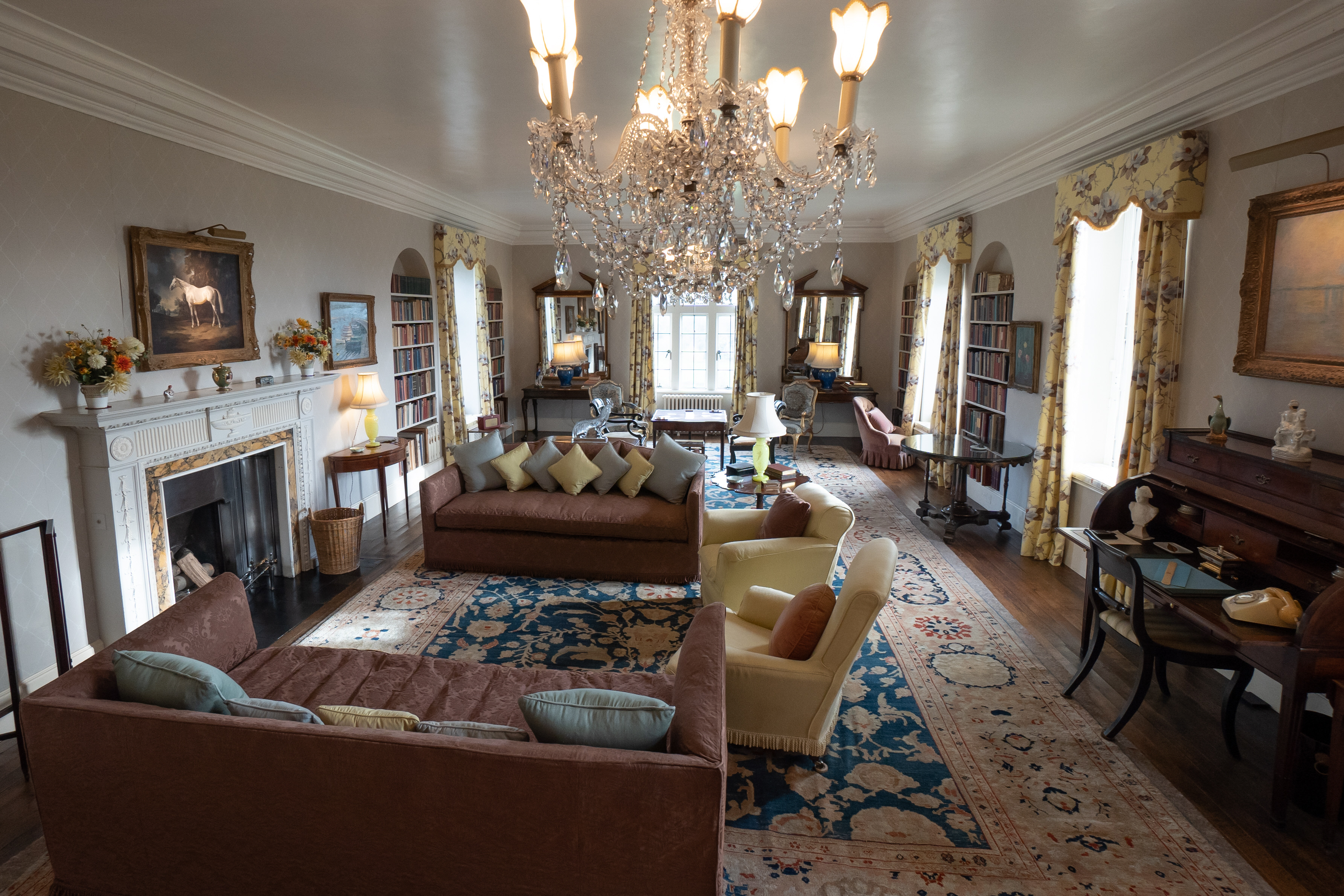
The house itself is domestic rather than grand. The National Trust, which opened it just a year after Churchill’s death, have set the interior up as it would have been during the 1930s, when he spent most time there. The entrance hall displays the open visitors’ book, the ground floor rooms, which include Lady Churchill’s sitting room, library and drawing room are all pastel-colours and chintz-y furnishings which wouldn’t look out of place as the setting for an Agatha Christie film. The most surprising space is the dining room, on the lower ground floor of Tilden’s extension. The full-length arched windows and a claustrophobically low ceiling give it a modernist feel which is slightly at odds with heavy drapes, rush matting and leafy green furnishings.
As with most NT properties there is very little labelling, and you are somewhat at the mercy of the volunteer room guides: without asking them you will miss the significance of objects like the Lalique cockerel (a present from de Gaulle), the Orthodox icon given by the Regent of Greece in 1945 or various paintings of race horses, another Churchill hobby. However, there is no mistaking the Monet – a gift from his literary agent, and a sure sign of how successful an author he was – nor Frank Salisbury’s famous portrait of the siren-suited war-time leader. There are elements of cliché, a large number of cigar boxes, for instance, but generally this feels like an honest recreation of how the house must have looked, and been lived in.
.jpg)
Much of the upstairs is given over to exhibition space, displaying memorabilia and gifts and (not currently open, due to refurbishment) a selection of uniforms. Churchill himself toyed with the idea of creating an on-site museum, but never had the funds. The National Trust has put some effort into the display here, although the exhibition is rather cramped into former guest bedrooms. There is a large and well labelled collection of medals and medallions, including Churchill’s schoolboy award for fencing, of which he was especially proud. A bowl, a birthday present from President Roosevelt during the 1943 Tehran Conference, having been hurriedly purchased in a local bazaar, stands out alongside the more usual silverware and awards, including the Nobel Prize for Literature, collected by Clemmie on his behalf in 1953, and his honorary American citizenship.
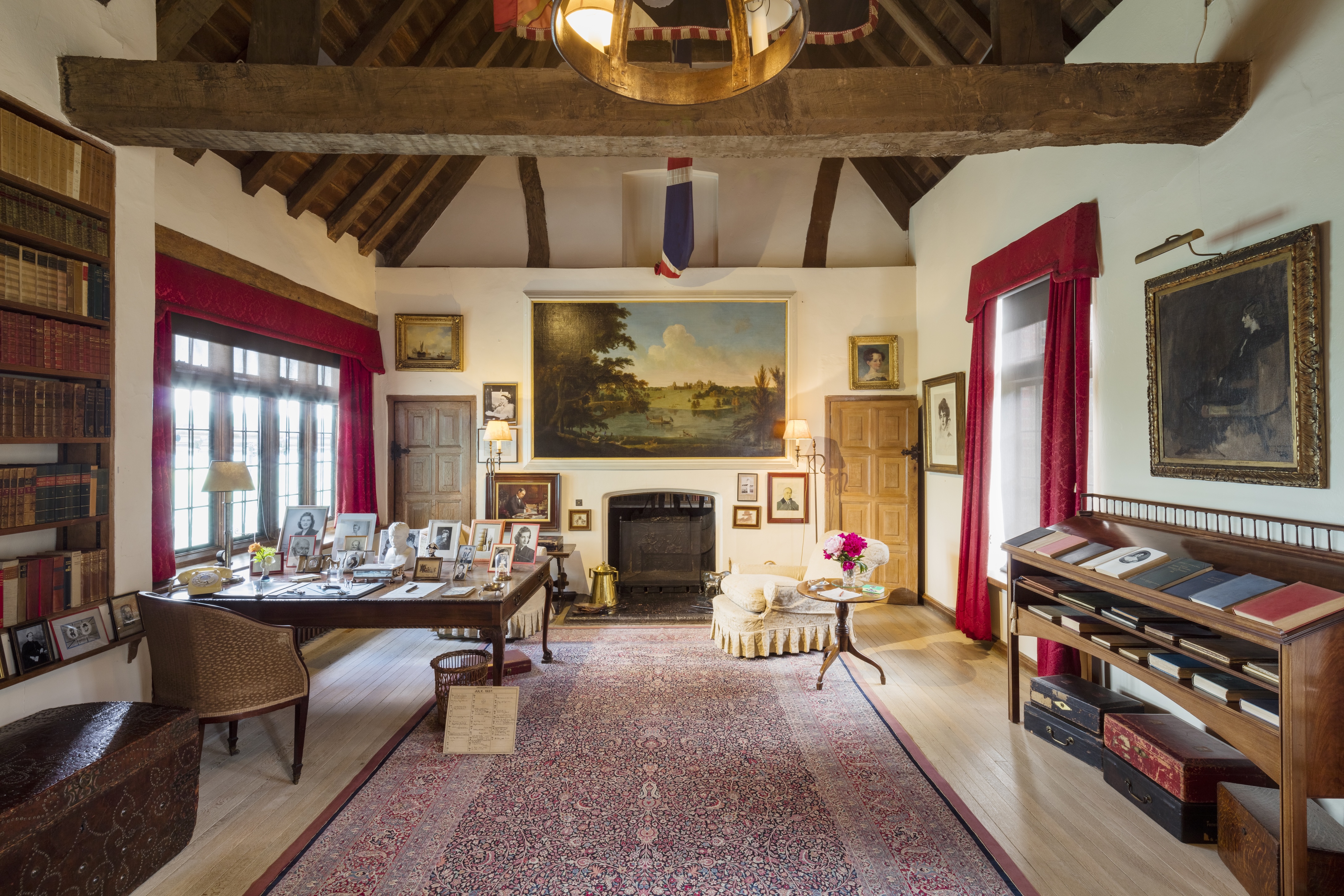
A disappointment is a lack of access to Churchill’s bedroom, only open to those on guided tours. However, the highlight is his study, an airy, vaulted room, stripped back to the Tudor beams of the original farmhouse, with banners hanging, including the Union Flag raised in Rome on the day of its liberation in 1944 and his Knight of the Garter standard. This was the nerve-centre of Chartwell and the place where Churchill did most of his work, writing and composing his speeches, not sat at a desk, but standing at a long lectern on which John Lavery’s unfinished but dramatic profile portrait of Clemmie looks down. The sheer amount of writing Churchill did (more words than Dickens and Shakespeare combined) along with the idiosyncratic way he did it gives perhaps the best insight into the man’s restless energy. The rug, gifted by the Shah of Persia in 1943, originally had a fringe, removed after it caused Churchill to trip as he paced the floor. It’s one of many examples that give the impression that everything at Chartwell revolved around him.
,_Later_Baroness_Churchill_(38575925961).jpg)
The final stop on the house tour is the ‘History of Churchill in Fifty Objects’ exhibition, an eclectic collection illustrated with often quite familiar photographs. It’s certainly a very information-heavy way to end. My history-buff companion found it a little too random, and would have preferred a more systematic chronology of Churchill’s life. Personally, I thought it was an almost unnecessary add-on, or a feature which could have run throughout the house. There was, for instance, hand-written orders relating to the North African campaign, hanging almost unnoticed on a wall which I could happily have learnt more about. However, the display objects and the stories behind them were fascinating. I didn’t know, for instance, that a young Churchill had been captured and subsequently escaped during the Boer War, or about the Pluto pipeline designed to get fuel across the Channel in 1944.
Chartwell is open daily: the gardens 10-5 and the house 11-3.40. It is one of the National Trust’s top attractions – they recommend booking a timed entry slot to the house in advance (although when I went there seemed to be slots available on the day). Even with this, it is busy and can be cramped, especially in the upstairs display rooms. Standard entry is a fairly hefty £22, although you could easily spend an entire day there and of course National Trust members go free. There are also bookable tours, for which you pay extra, which include access to Churchill’s bedroom.
It is best reached by car and there is ample onsite parking (although non-NT members are charged, a personal bug-bear).
There are all the usual NT facilities – plant sales, second-hand book shop and two excellent cafés serving a full range of snacks and lunches. There are also, of course, plenty of child-friendly play areas, games and activities.
Chartwell in some ways falls frustratingly between two stools. It is not just your usual National Trust property - the owner is most definitely the draw rather than the house and gardens. Neither is it a conventional museum and if you go looking for labels and themes and dates, you’ll be disappointed. However, with a bit of effort (looking and chatting) and simply through a kind of osmosis, you can leave with a real sense of the man who called it home.
* * *

Catriona Miller is an independent art historian and writer on art based in the UK. She has taught and lectured on all aspects of art history and is currently researching women artists in British collections and issues of nationalism and identity in nineteenth-century landscape painting.
https://www.instagram.com/cmillerartlife/
https://twitter.com/cmillerartlife