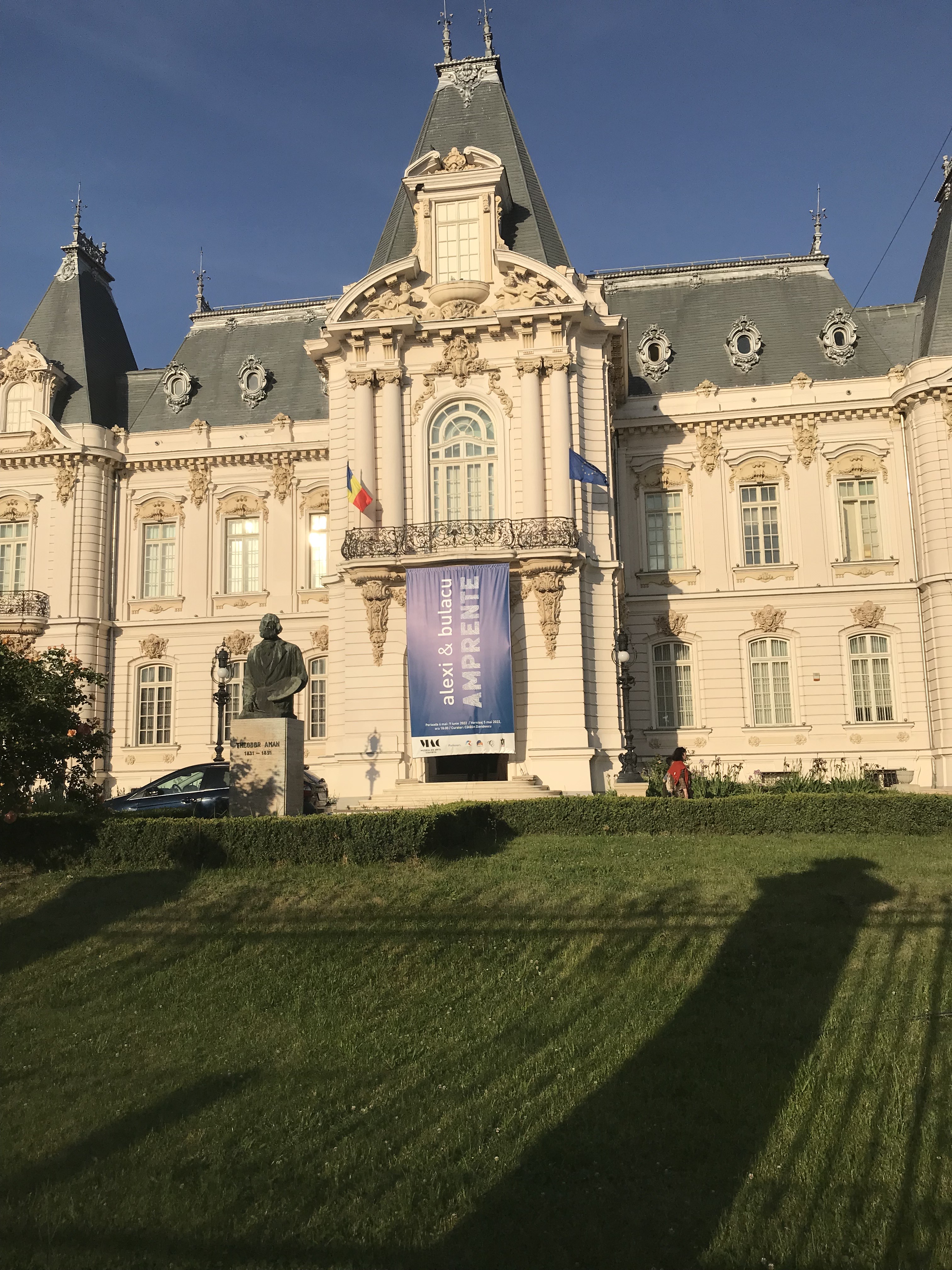
The palace was built between 1897 and 1907 in the French style to emulate the architecture of Cheverney palace in the Loire valley. It has 29 rooms, including an impressive hall of mirrors. It was given to the nation in 1936 upon the death of Jean Mihail, a prominent lawyer, financier and politician.
The palace is open Tuesday to Sunday 1000-1700. Entrance is free on the first Wednesday of every month.
Admission prices are: Adults: 15 lei, Students: 10 lei, Under 18s: Free.
Calea Unirii no. 15
Craiova, Romania
email: info@muzeuldeartacraiova.ro
phone: +4 0251 412 342
fax: +4 0251 412 342
There are 3 main areas of interest:
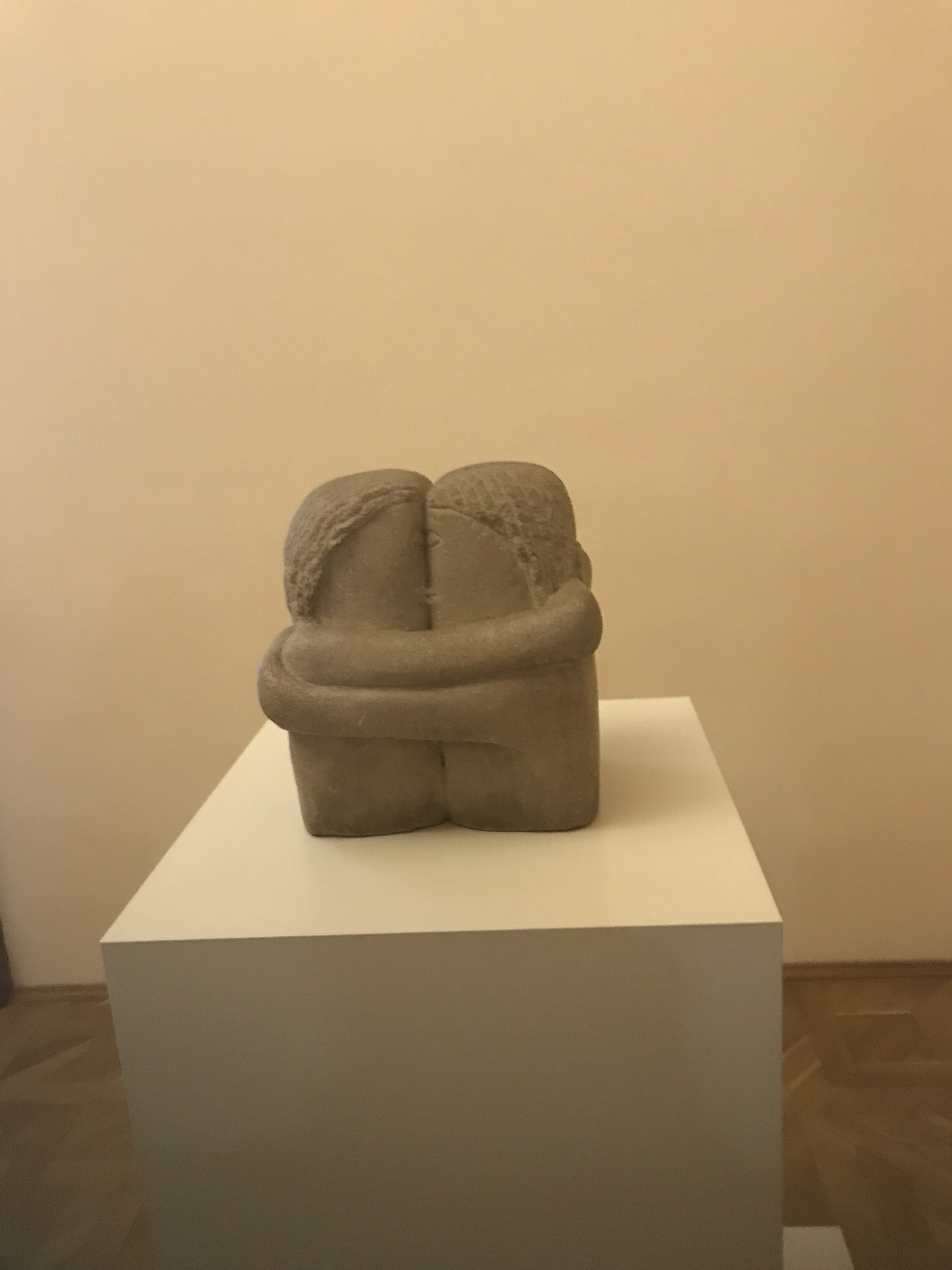
The work of Constantin Brâncuși, widely regarded as the father of modern sculpture, whose atelier can be viewed in a studio beside the Centre Pompidou, Paris. From Craiova and Bucharest, he moved to Paris, where he lived for the rest of his life befriending Picasso, Satie and many other artists of the first part of the twentieth century. The year 1907 is a landmark for Brâncuși's art. He briefly became a student of Auguste Rodin, his separation from him being marked by the words that became famous: "in the shade of great trees nothing grows." He created the masterpiece The Kiss (1907), an iconic work, known in art history as the first modern sculpture in the world. This marks a turning point not only in his creation, but also in the entire universal art, managing to decisively influence the evolution of artistic thought of the 20th century. The Kiss is the pièce de résistance of the collection and the undisputed star of any Brâncuși exhibition in the world. A sculpture conceived in antithesis to Rodin's The Kiss, it stands out for its abandonment of any insignificant detail and its concentration on the ample gesture of the embrace that merges the two silhouettes, thus directly rendering the entire expressive force of love.
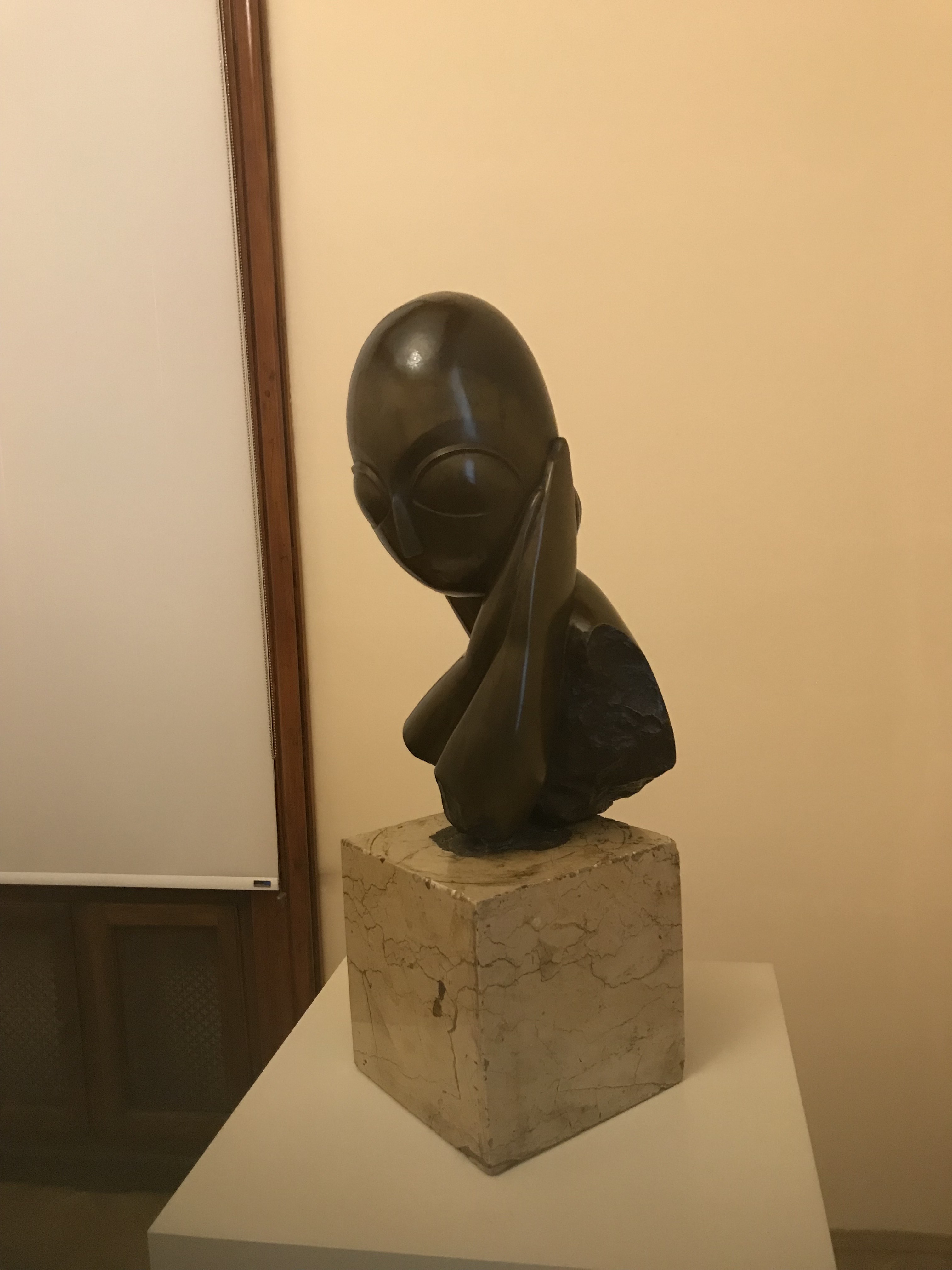
The museum owns a copy of Miss Pogany - the famous sculpture that sparked controversial reactions in New York and still continues to amaze viewers. In relation to the model, the resemblance resides at a different level than the epidermal one, because the proportions are reconsidered according to an aesthetic logic, and not an anatomical one. This head, adorned with wide eyes (similar to those specific to the Byzantine iconography of the Virgin Mary) in a gaze that seems to encompass the entire world, the extremely delicate nose and the infinitesimal mouth compose a hieratic figure, which releases an almost palpable mystery.
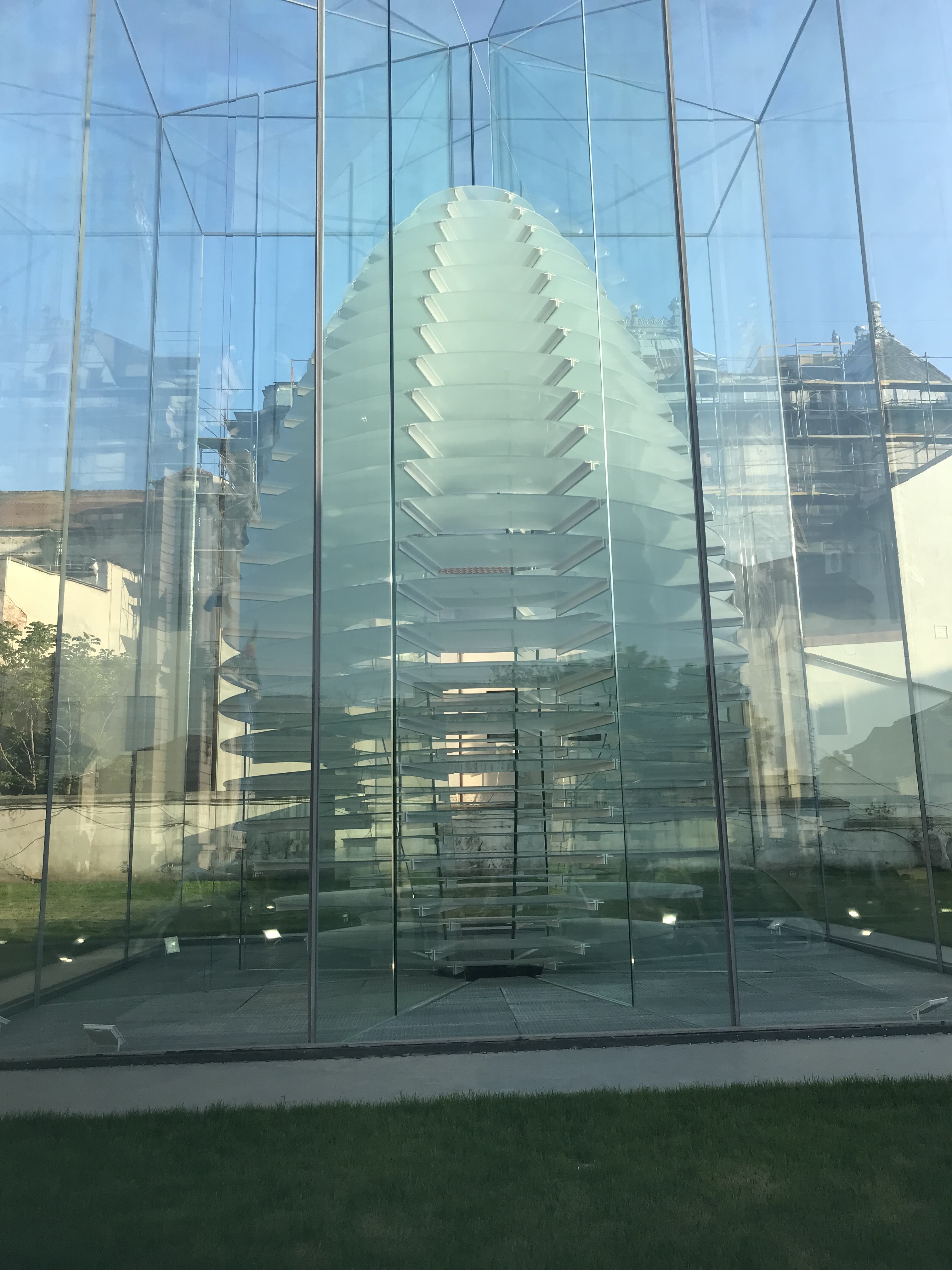
A fantastic and surreal glass, steel and light sculpture, made as a tribute to Constantin Brâncuși’s huge artistic heritage and personality, probably the most entitled and venerated artist in the country. The architectural complex is imbued with a sort of religious aura, felt in the first moments you approach the structure, a tall, transparent and layered body of glass and light, containing an elevator which can be used by an individual or two at a time for a few minutes, in a unique and mesmerizing experience right through the structure. The underground gallery is very spacious, built in a brutalist manner – a real journey in itself – holding a permanent exhibition of Brâncuși's life aspects: origins, childhood, early years, career and journeys, well presented through photographic sequences, interactive panels and documentaries on large TV screens.
This section features works by artists such as Nicolae Grigorescu (1838-1907) with 24 works being featured. Grigorescu was influenced by Corot and Millet. The painter's participation as a campaign artist on the front of the War of Independence meant approaching a new major theme in his creation: the war scene. He immortalises in sketches and numerous compositions, quickly sketched, scenes of confrontation with the characters fiercely engaged in the assault, or moments of rest behind the front. Thus the painter's drawing skills come to light, and based on these drawings, large-scale compositions in oil will later be created, capable of reproducing scenes from the midst of the battle with great suggestive force, as is the case with the work The Attack at Smârdan.

Theodor Aman (1831 – 1891) was a founder, managing to concentrate in a few decades the evolution of European art, from classicism, plein-air-ism, passing through romanticism and realism, to the threshold of impressionism at the end of the 19th century. Historical painting, with important moments recorded in documents as subjects, genre scenes with characters inside or in the courtyard of his house in Bucharest such as the portrait of a Lady with a parrot, Still life with cherries, rustic or urban landscapes, aspects of his own studio, are themes that Aman initiated in modern Romanian painting and that we still encounter today.
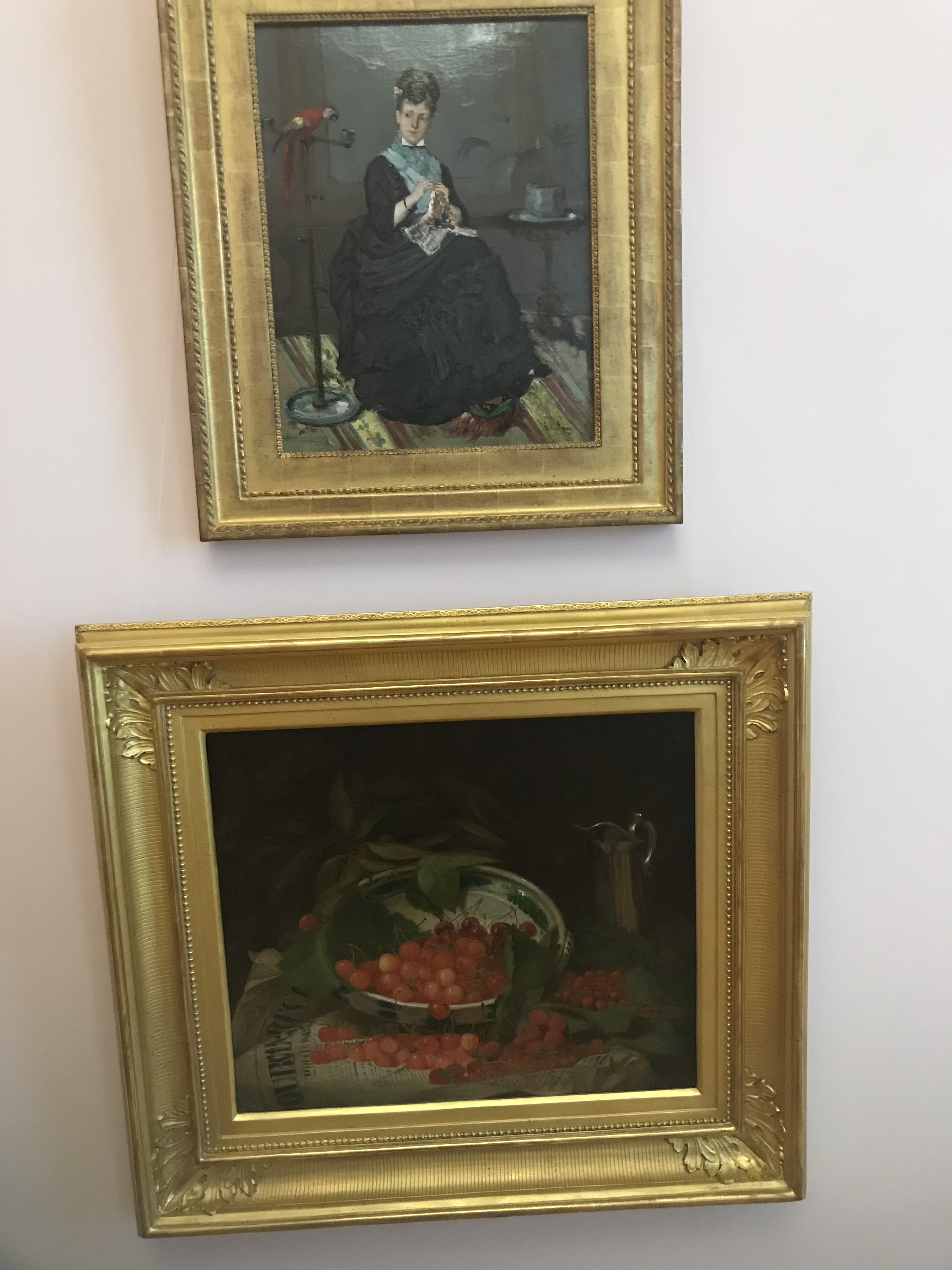
There are many examples of paintings from the Dutch, Flemish, French and Spanish schools. The visitor will be enchanted by the architectural beauty of this two storey museum as well as by the artistic masterpieces that it contains.
* * *
Dr. David Ceiriog-Hughes is a retired academic, teacher and lecturer, who has lived in Romania since 2019.