From the mid-nineteenth century’s steam engines to the twenty-first century’s high-speed trains, Indian Railways have come a long way. It represents a longitudinal study of Indian transport history. From technology to cultural heritage and emotions, it’s many things to many people. And nothing encapsulates its essence better than the National Rail Museum in Delhi (read how to explore). With informative galleries to original trains bodies and a ride in one of those vintage coaches, the museum has a lot to offer to the discerning traveller. For your convenience, here’s a guide on how to experience India’s railway heritage at the National Rail Museum.
Of all the modes of transport, trains are arguably the best in terms of travel experience. They are comfortable, relatively fast and most importantly, they offer a significant cultural experience. Moreover, if you are travelling in India, it’s an enriching experience every time. Not only for their transport value, the railways in India are valued immensely for their rich history and heritage. (Read more: Train journey in India) Whether you are enthusiastic about history in general or history of the railways in general, National Rail Museum is a must for you.
During my first visit to the National Rail Museum, I was so impressed by its heritage value and the natural environment it’s set in that I have now visited two more times. So, I genuinely want to spread the word, and hence this article.
It was March 2017, a beautiful spring season. I was still new to Delhi. After exploring all the major monuments of the city, I was wondering something which is of value, but not yet in my travel list. A little more research and I got to know about the National Rail Museum at the heart of the city and immediately wanted to check out.
The moment I set foot in the museum premises, I was transported to my childhood days. In those days, we used to live near a railway track. Many an afternoon, after the school got over, we used to run to the railway track. Because we were in awe of the large coal-powered steam engines. It was absolutely awe inspiring how the burning coal produced the steam and propelled those large pistons to get the wheels going.
In course of time, diesel engines replaced these steam engines. But the charm of steam engines remained etched in my memory. The lovely memories were evoked by the charming old steam engines in display at the museum.
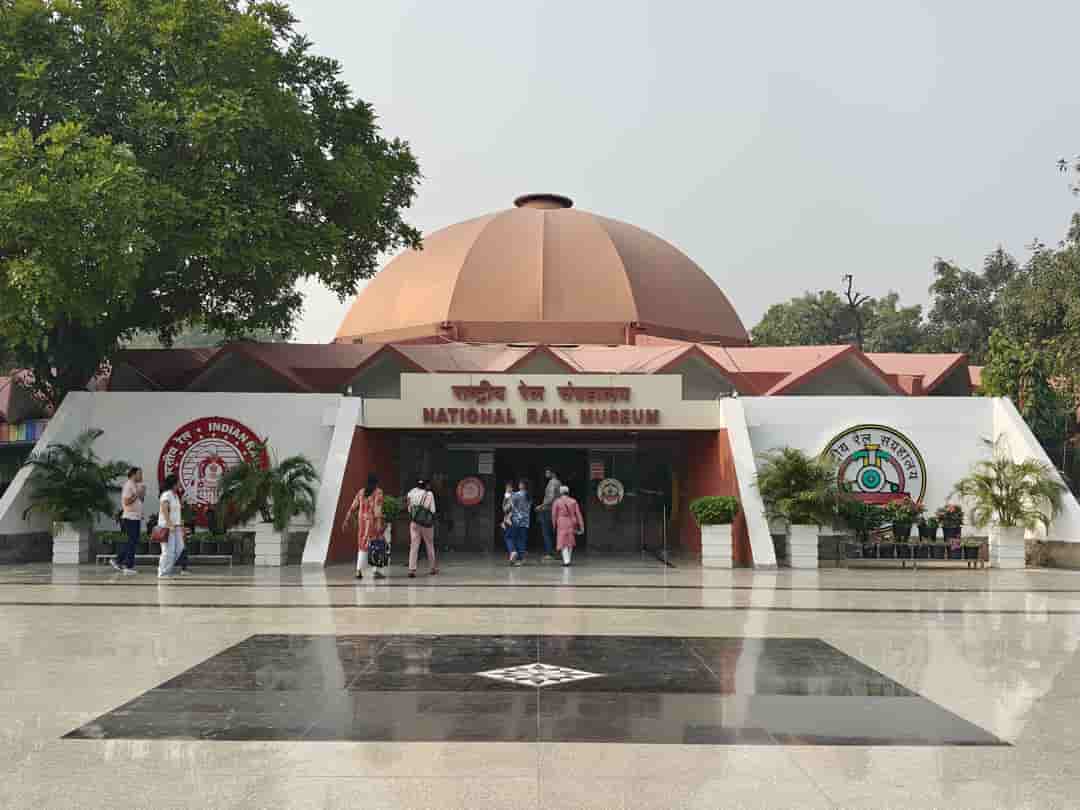
Established in 1977, National Rail Museum is a treasure trove of India’s railway heritage. Spread across 4.4 hectares (~11 acres) of land in central Delhi, this museum proudly showcases a large array of different kinds of train engines and bodies, originally from their heydays. Among the 34 railway museums and parks all over India, the National Rail Museum holds the pride of place. I’m not sure how it fares among the best in the world, but definitely it’s among the best in Asia. If you are a railway museum enthusiast, here’s a good read: World’s best railway museums.
National Rail Museum has two distinct sections- the information gallery (six of them) and the open area exhibits. The information gallery takes one through the history and milestones of Indian Railways. And in the open area, some of the most beautiful old engines/ coaches are exhibited. Apart from these, there’s an auditorium, two joy trains, a theme restaurant and a souvenir shop.
Beginning during the British Raj, the Indian Railways has a rich history spanning 160 years. Its journey is truly fascinating — from the colonial era to periods of technological advancement and now, a phase of rapid modernisation. Let’s map a few key milestones (below).
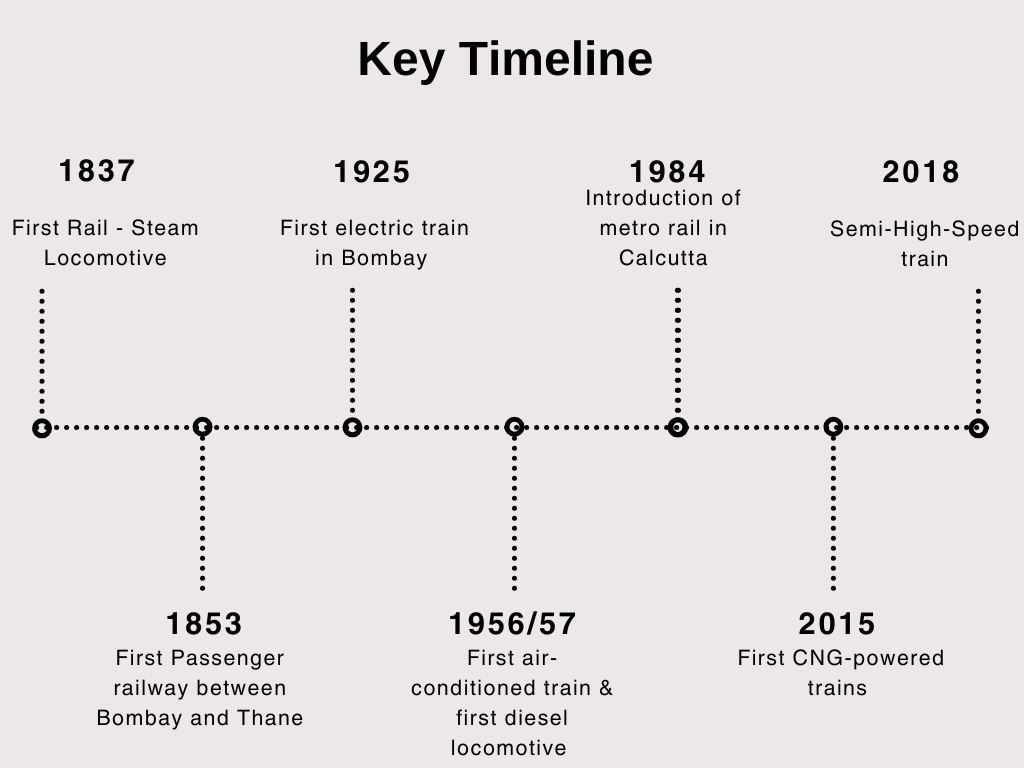
The story of Indian Railways began in 1832, when rail travel was still not prevalent even in Britain. A few years later, in 1837, the first train was introduced in Madras as an experiment to use for transporting the construction material. In 1853, the first passenger train rolled out from Bombay to Thane with 400 passengers.
Over the next decades, the railways extended their work and spread their tracks in the country which linked major cities – Bombay (now Mumbai), Calcutta (now Kolkata), Delhi, Madras (now Chennai), and Ahmedabad in the country. The Trams for public transport initiated in the streets of Bombay (1874) and Calcutta (1880). In 1925, Indian Railways introduced the first electric train between Victoria Terminus and Kurla in Bombay.
After Independence, the transformation had been carried out rapidly. The railways were reorganised into six zones and formed a true national network. In 1956, the first air-conditioned train rolled out followed by diesel engines in 1956, metro trains in Calcutta in 1984 and later, computerised ticketing and online reservations. In the 21st century, the journey of innovation continued with CNG-powered trains in 2015 and semi-high-speed self-propelled trains like Vande Bharat in 2018. As of now, High-Speed Rail Corridor (Bullet train) is under-construction (to complete by 2028), which will revolutionize train travel in India.
To know more, here’s a further reading suggestion: History of Indian Railways.
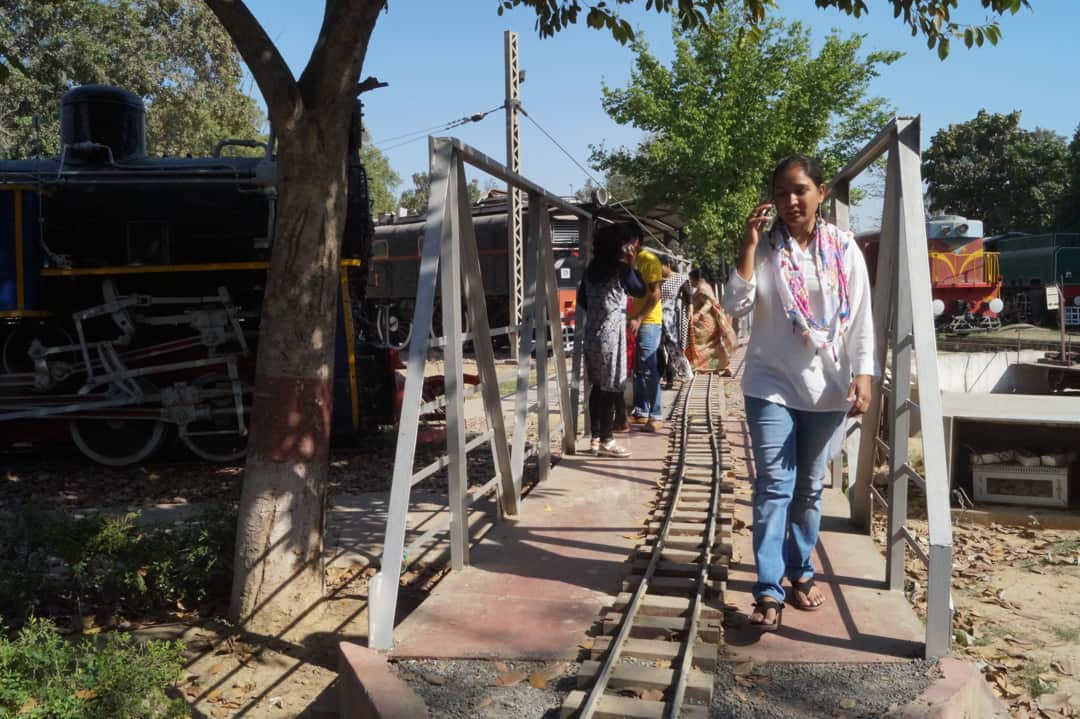
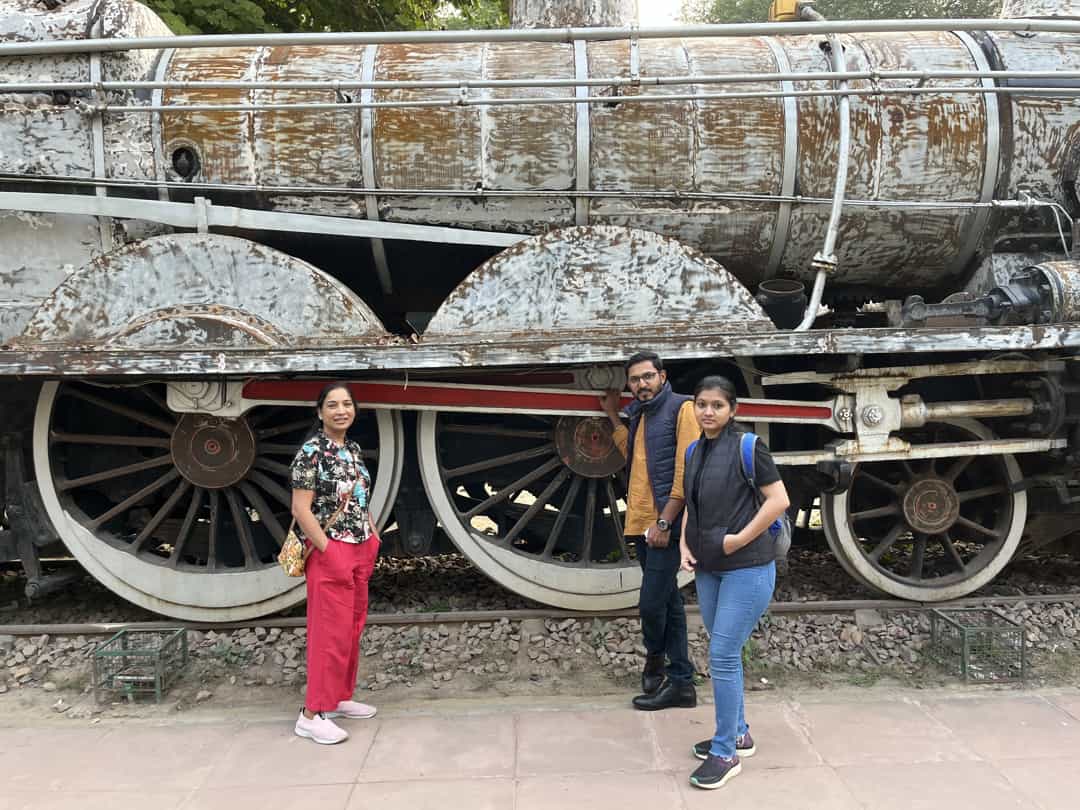
At the National Rail Museum, at one glance, one can have a glimpse of the 160 years-history of Indian Railways. The courtyard at the museum exhibits a number of vintage, elegant and interesting train engines and coaches from the yesteryears. Let’s have a look at a few of them:
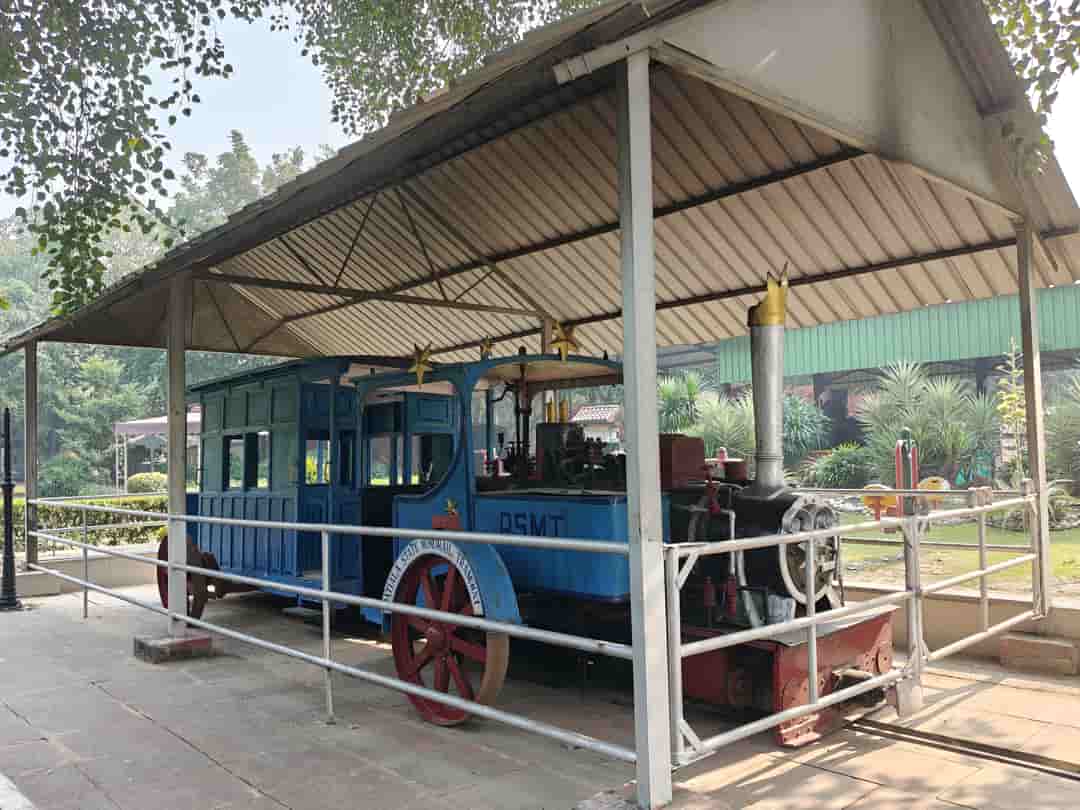
Patiala State Mono Rail: These unique 40-ton locomotives were manufactured and imported in 1909 from Berlin. The unique train system consists of a single-rail track. While the main load is borne by the middle single rail, the rest is borne by the balancing wheel which runs on the ground. The balancing wheels are large iron wheels on either side to keep the train upright.
John Morris Fire Engine: The engine was built by the famous fire engineers – John Morris and Sons Ltd. of Salford, Manchester and bought by seventh and last Nizam of Hyderabad in 1914. It got retired in 1981.
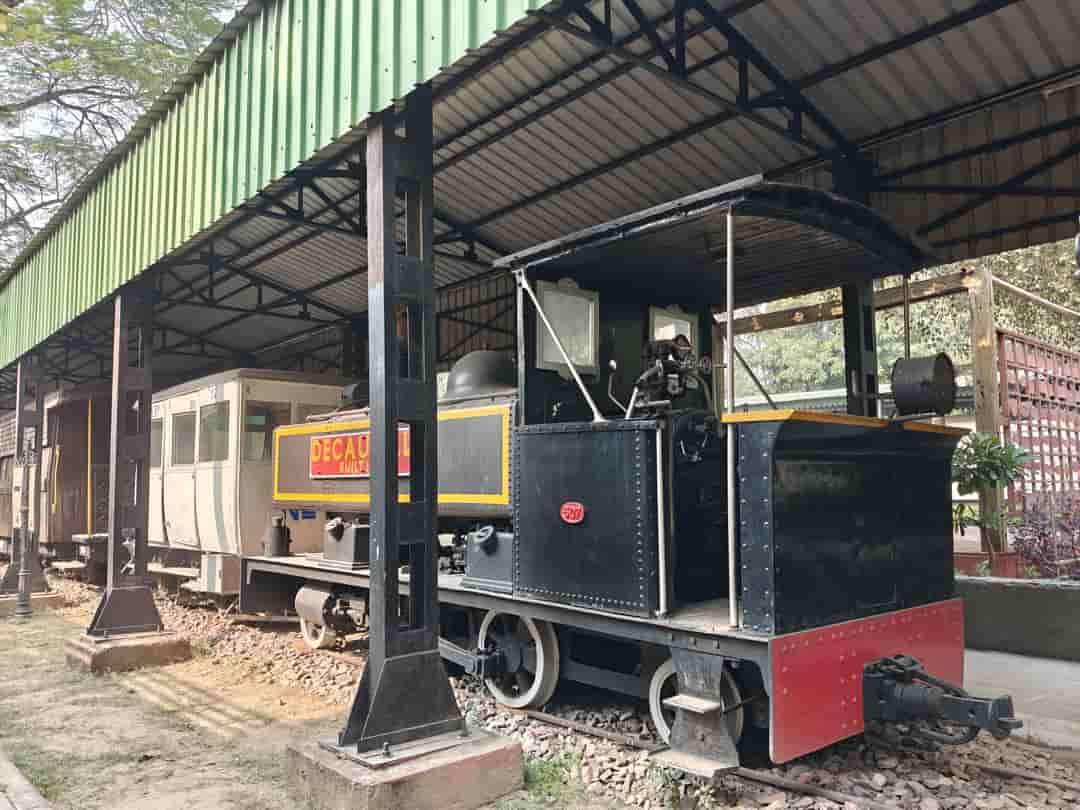
Decauville: The engine was imported from W.G. Bagnall, Stafford in 1902. This was a 15-ton narrow-gauge locomotive. It was built for strategic lines on Decauville Railway on North Western Frontier section and was later used for training by Madras Engineering Group of Bangalore.
Matheran Rail Car – 899: This wooden bodied Car was imported in 1932 from Graham-Paige based at Detroit, United States. It was attached with a petrol driven engine of six cylinders. It was used on the 2-feet narrow-gauge line in Neral – Matheran hill section and has a carrying capacity of 12 passengers.
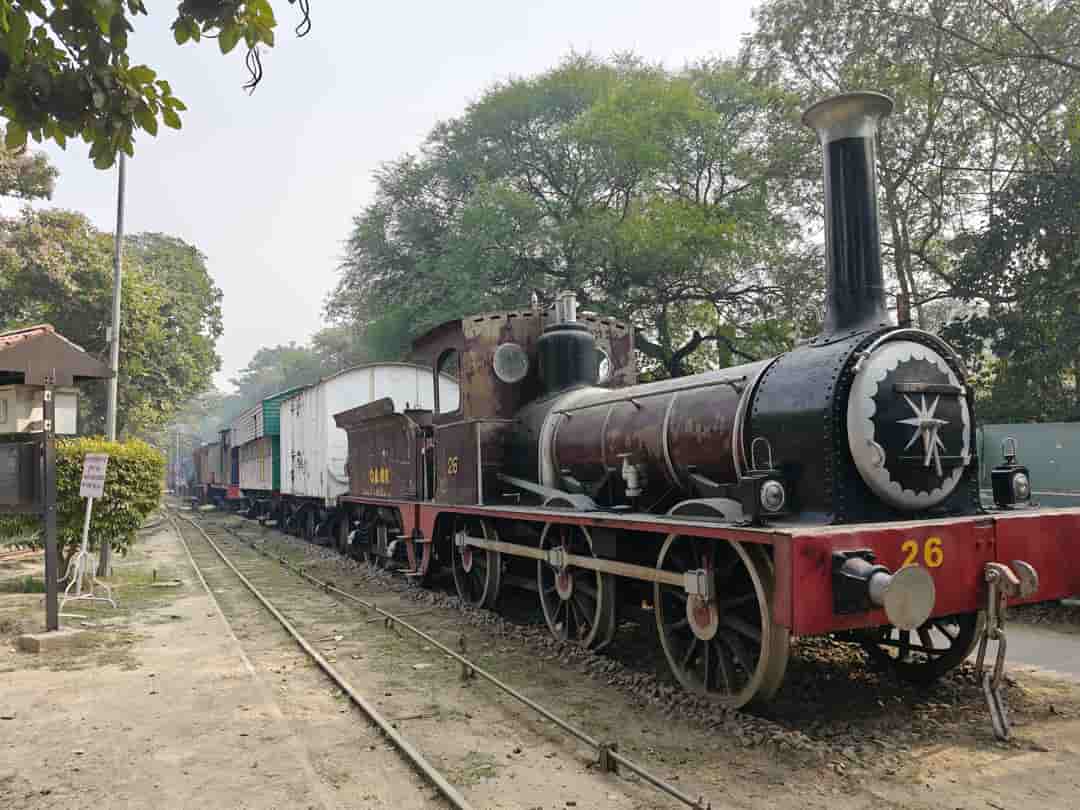
B-26: This was one of the earliest locomotives built in 1870. This 40-ton broad-gauge locomotive hauled the first train in 1900. It was withdrawn from service in 1921.
The museum spreads over 4.4 hectares of land. As said earlier, it is divided into two sections – the indoor gallery and the large open area where old locomotives, saloons, coaches, and other exhibits are on display.
You should begin your visit with the indoor gallery. The gallery starts with illustrations of how people in India used to commute before the introduction of trains. It exhibits photographs of different historical events, various train models, signal systems of earlier times, rail control system, and more. The gallery gives you a fair idea about the history of Indian railways and also helps you to understand how the rail system works technically.
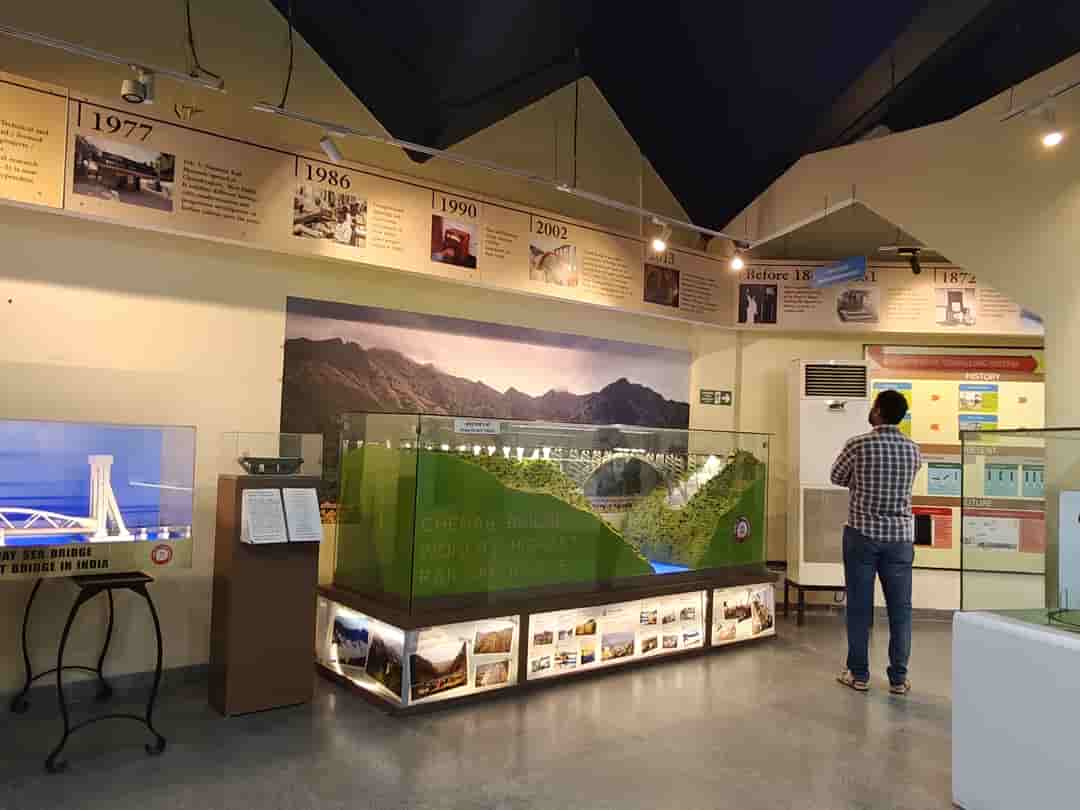
A few interesting exhibits for me are:
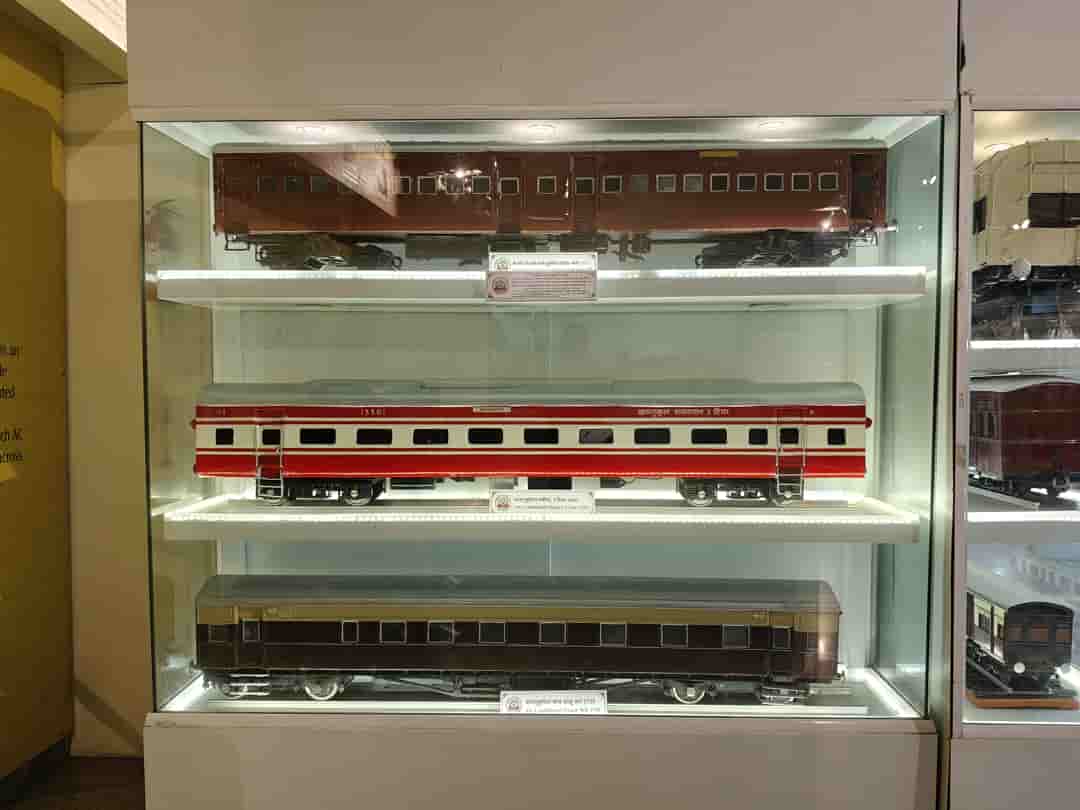
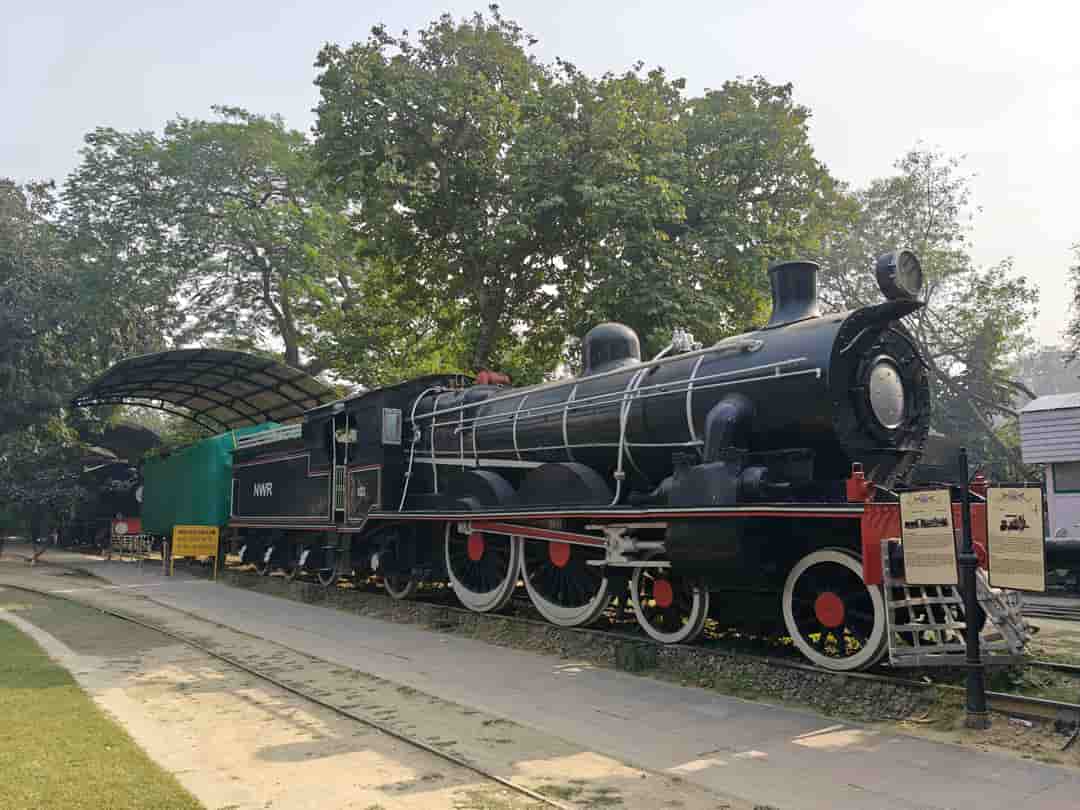
After that, visit outdoor displays of different types of locomotives, saloons and coaches. The outdoor campus has a well-arranged exhibit of about 19 old train locomotives, 11 saloons and coaches, 1 crane, and 1 John Morris Fire Engine. You will truly enjoy taking pictures of these vintage gems and watching others taking their own pictures with these gems in creative ways.
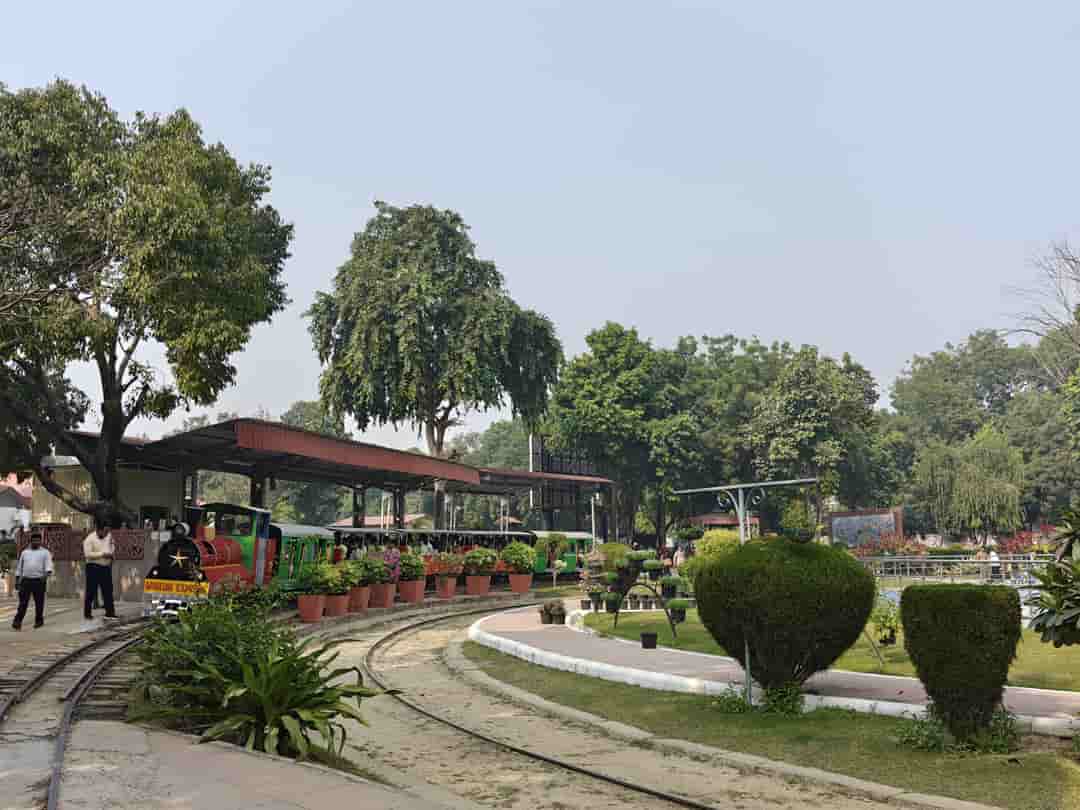
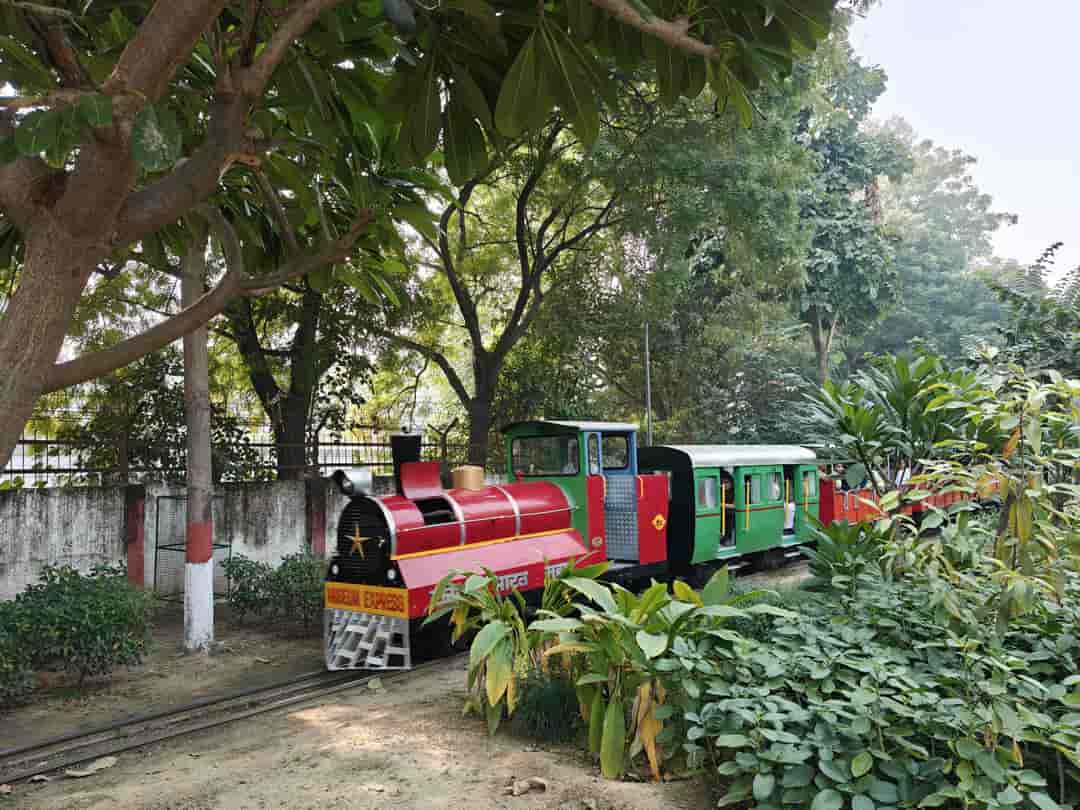
To complete your visit, don’t miss the must-do activity — a ‘Joy Ride on the Museum Express.’ The museum express train passes through various locomotives, and the screaming of children with joy will definitely amuse you. It’s a great place for kids to have fun and learn about the rich heritage of Indian Railways.
Last but not least, at the center of the outdoor campus, you will find a restaurant called ‘The Rails’ where you can have some snacks, tea or coffee. Designed in the ethos of one of India’s iconic train stations- Chhatrapati Shivaji Terminus (CST), a UNESCO Heritage Site, you will love the experience of a ‘serving train’.
Best time to visit: From October to March, the weather remains pleasant in Delhi. Since one has to walk around in the open park within which the museum is set, weather plays an important role in experiencing the place. So, plan your trip sometime during these months from autumn across to the winter and spring seasons. April to August months are too hot and humid for a pleasant visit.
Timings: 10 AM to 5 PM, Tuesday to Sunday | On Mondays, the museum remains closed
How to reach: If you are coming by metro, the nearest metro station is Jor Bagh- Yellow Line (2 kms from the museum)
Tickets: For entry, on weekdays, Rs. 50/ 10 (adults/ children) and on weekends/ holidays: Rs. 100/ 20. For toy train ride and other fun experiences, one has to pay extra.
Museums are places not only to witness history, but to get inspired seeing the journey of mankind in various walks of life. National Rail Museum in Delhi showcases mankind’s journey in technology, transportation, innovation and human ingenuity in good measure.
While at the museum, looking at those elegant and beautiful trains, a peculiar thought came to my mind regarding the concept of aesthetics. Every age defines its own standards of aesthetics. But when we look back, don’t we feel the standards were much higher in those days than they are now? Maybe it’s true for most walks of life- from architecture to designs, arts, fashion, etc. Just leaving you with this thought.
* * *

In a career spanning more than 20 years, Parina has worked with some of the best NGOs, network organizations and government agencies. She has been working in the field of agriculture, natural resource management, capacity building (training) and holistic rural development.
Apart from her mainstream profession, she is a traveller by heart. She loves exploring historic ruins, heritage monuments and culturally rich destinations and document her experiences. She and her husband write a travel blog- Stamped Moments.