‘Once upon a time in the heart of Anatolia there was an old farm, called Butcher Erdinc's farm. It had been built for the shelter, protection, and care of cattle and sheep. It looked like a humble place with no grand ambitions: nobody would have bet on it, no one would have predicted its glorious future. Nonetheless, one day two people did it: two far-sighted artists, Mrs Nazan and Mr Ercan Kesal, managed to see how much beauty had been hidden until then, and how much more could still be created. Therefore, the dilapidated buildings of that old ‘dam’ were renovated and transformed into an imposing and awe-inspiring cultural centre. Its name was ‘UrlaDam’ and today it’s a star that shines without equal in the galaxy of culture. And everyone lived happily ever after, like in fairy tales’.
The story of Urladam is extremely considerable and noteworthy both due to its origin and why it was created. When I heard about it, I couldn't help but be mesmerized: this quaint spot in the coastal city of Urla, not far from the marvellous İzmir, is a special ‘gem’ very different from the usual centres, museums or galleries you can stumble upon in your town regardless of whether you live. In brief, we should take it into consideration as a thinking-outside-the-box cultural centre since it’s an innovative ‘school’ that stands out from the crowd and has quickly emerged as a precious stone at the base of a new way of creating and sharing culture.
Ege’s cultural and artistic hub, Urladam has swiftly become a nationally recognized treasure.
To render justice to Urladam’s essence, I need to borrow its founder's words: as Mr Ercan Kesal states,‘More than just a venue, it is an institution aiming to be a school and a movement suited for the endless learning journey of people of all ages, a world that encompasses accommodation, gastronomy, music, cinema, visual arts, workshops, and workspaces’.
Before framing the geographical context and delineate the structure of this centre, it’s inescapable to clarify the underlying reasons for its foundation and answer the following questions:
1) Why did Urladam come into being?
2) What is its mission?
3) What makes it different?
Being an exquisitely peculiar story, I’m persuaded the most suitable way to narrate Urladam’s chronicle is in a fairy-tale-like way. Well, you know, generally speaking our poor and disgraced world is going through a time of difficulty and uncertainty, where the economic factor is the undisputed leading element in our society while loneliness and resignation reign supreme. Furthermore, on this cold and hopeless earth no one feels sorry for each other, everybody hates each other easily, and lastly no one even thinks of helping another. The inevitable result is: the desire to resist and react, to strive and stand up for what’s right has been lost somewhere. Who knows...It often feels like being abandoned in a vast arid desert or in a dense, tangled forest with no way out.
So let’s imagine to be lost at midnight in the Anatolian steppe, or better yet, let’s pretend to be Hänsel and Gretel left alone in the forest: their only concern is to return home safe and sound. To achieve their goal, the children use the breadcrumbs hidden in the pocket to mark a trail through the woods, hoping to find their way back home. So behold: we must therefore wake up, react, leave the forest, blindly follow the carefully placed bread-crumb path, and try to get home. The most important thing to emphasize is that, before leaving the forest, we need to stop by Urladam to collect a big basket of special breadcrumbs that will help us face our journey towards Humanity and Cultural Capital, moving in the footsteps of time between traces of the past and dreams of the future. Because Culture has got the sublime power to cultivate memory, to connect people across enormous distances and time, and the supreme ability to transcend physical limitations. That’s the only way to come back home safely. And that’s how I’ve answered the first question.
Let’s continue our journey across the forest and try to understand why it’s so urgent to make a stop in Urladam, the best safe haven to collect breadcrumbs and recharge during our trip.
No doubt, every citizen has the right to enjoy cultural activities. As the Founders themselves usually highlight, when we talk about culture, probably we shouldn’t immediately think only about having fun, maybe entertainment is usually the element that first comes to mind. But that’s wrong! What I’m trying to explain is Urladam’s philosophy of life: the true culture is not even just theater, cinema, painting, or art. The melting pot of culture is much broader because it encompasses a significant continuity, and has a deeper significance, as well as human production in every aspect of life. For instance, if you throw away an heirloom, you are actually blocking the paths of perception to your soul, and that causes degeneration.
First and foremost, you have to know people, but you have to know them truly as you can’t create a society or a nation from a crowd whose culture you don’t understand. And you can never create an audience or listeners. At most, all that remains is a football crowd devoted to mere slogans, marches, and catchphrases. They may fly of course, but there’s nothing truly worthwhile to do with them: all these things run away immediately and vanish over the horizon without leaving any memory of the past or traces for the future. That means the entire society is condemned to be stripped of its memory, but we must not forget we owe a debt to the children of today and tomorrow plus an immense debt of gratitude to the great workers and masters of the past.
Therefore the answer to the second and third question sounds like this: Urladam is after cultural capital, I mean a capital whose value isn’t measured by economics. Because property, status, all that goes and perishes. On the contrary, something will always remain in this old crazy world: The Brothers Karamazov, Yaşar Kemal, the Mona Lisa, for example. A book, a writer and human rights activist, a picture: in brief, just culture! Moreover, keep in mind that we tend to leave behind houses, streets, or markets from ancient cities, but not the amphitheater. It does remain, it will remain thousands of years from now. May the special breadcrumbs also last for centuries and centuries!
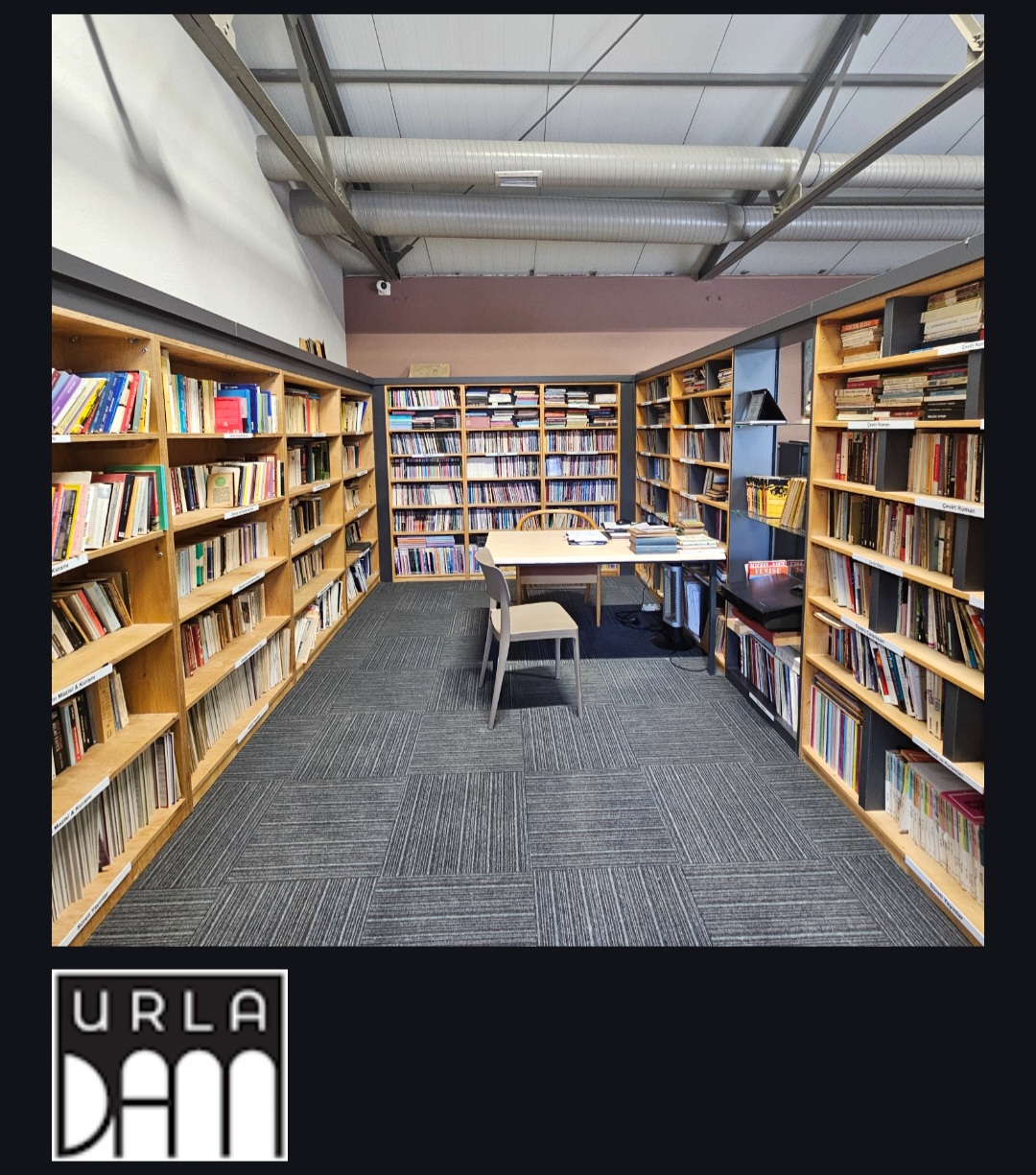
Mrs Nazan and Mr Ercan Kesal (the former is an esteemed actress and director, the latter an esteemed doctor, author, screenwriter, actor and director) have accomplished a remarkable feat in Urla for the Arts. As stated earlier, a simple and mere farm, an extremely messy and chaotic old barn turned out to be a ‘stellar place’ where you can find regular exhibitions, an event hall where visitors can listen and sit (it’s the Metin Erksan Hall), a library, another multi-purpose hall. It’s not difficult to imagine Urladam is absolutely the most suitable location for solo plays, stand-up, small trio concerts, other various events. A dilapidated dam (local term meaning farm), originally built for the shelter, protection, and care of cattle and sheep, was transformed into a cultural center. So the current buildings you see are renovated from the old farm buildings: actually, the gallery and seminar room block were a barn, the Hangar saloon was the depot, the hotel block was born from two houses of two old owners.
Each visitor and traveller like Hänsel and Gretel is welcomed with great enthusiasm. As Ercan Kesal says of Urladam, his purpose was never to open a commercial venue: he envisioned a school that would foster artistic education and production, carrying the memory of that background to the present day without straying far from the codes of the historical landscape in which it is located. The Founders aimed for both the pleasure of viewing an artistic product and the unique joy of contributing to an artistic production. So they set out to create a cultural campus that would encompass and present all genres of art—classical, modern, and post-modern—and that would cater to people of all ages, with theater, cinema, plastic arts, music, workshops, gastronomy centers, and accommodation. To recap, a school that transcended commercial space, a cultural ‘oasis’ where education is embedded in production and the master-apprentice relationship is all that matters, a stately location that becomes a real part of its geography, a place that never fades away, never vanishes into dust. In other words, a moral continuation of its predecessors and a contributor to that memory. You know, simply a grand ‘good’ school that nurtures the cultural legacy of the old masters. More than just a venue, I can perceive it as an institution aiming to be a school and a movement suited for the endless learning journey of people of all ages. In short, a 360-degree Cultural Centre in every respect!
Given that humans are creatures with a story and life without a story is horribly joyless and meaningless, it’s not difficult to understand that Urladam truly wants to be a place that embraces this principle as this Centre is telling us a story. And if you have the privilege to follow the events, you will soon realize that this story will complete itself. Well, in simple terms I’m trying to demonstrate that, if you have to do with this spot, you’ll surely feel happily ‘involved’ and its story will be intertwined with yours. Actually, if it connects with others, this place will continue its own journey; otherwise, it will shrink and become stagnant. If others come and go, move forward, and grow closer, they will become ‘stakeholders’ because everyone is welcome.
Personally, I’m genuinely convinced that the formula ‘everyone is welcome’ is Urladam’s passport to success. As a matter of fact, it’s not difficult to see: you must bear in mind that, unfortunately, cultural and artistic activities are tremendously expensive everywhere, therefore they’re strictly not easily accessible to everybody. Thus it’s imperative to change this perception and ensure easy access for everyone. That’s why, in my humble opinion, I do consider Urladam a special and unique treasure that opens its doors to anyone interested, exactly as the Founders wish: their dreams are based on being a school, becoming a school, and becoming a memory. The haven where everyone, from seven to seventy, can easily participate and enrich their knowledge in their own way.
You only have to set eyes on the powerful heritage of that geographical area to see how Urla earned this impressive label: nestled within the borders of the ancient Ionian city of Klazomenai, Urla was known as Bryela, meaning ‘the Lady of God/Virgin Mary during the Byzantine Empire after the ancient period. It is highly likely that Bryela evolved into Vourla over time through a transposition of letters. Vourla in ancient Greek ‘Βουρλά’ means reed bed/marshlands.
So let’s start by providing an overview of the ancient Urla on the basis of written testimonies of that era.
They say that Pausanius, a traveler from Manisa (Magnesia ad Sipylus), who lived during the time of Roman Emperors Antonius Pius and Marcus Aurelius, wrote that Urla had long been famous for its olive oil production, and that all surrounding cities were attracted to this trading center to purchase it. And archaeological excavations unearthed olive oil workshops where large-scale oil production was carried out.
Well, you know, Urla also owes its fortune to the attractive İzmir, which has always maintained a close bond with Europe, especially with Italy.
With over 8,500 years of iconic past, İzmir is the cradle of civilization on Turkey's Western coast overlooking the Aegean Sea and has no rivals in its flourishing history. The presumed Homer's birthplace and an active trade port thanks to maritime trade across the Mediterranean, this town stayed close to Italy for centuries, and also to France: the city is even mentioned in the play ‘L'impresario delle Smirne’ by Carlo Goldoni (at that time Smirne meant Turkey in general), and Alexandre Gustave Eiffel designed the Konak Pier!
We cannot forget Izmir’s prominent role at a national level, well proven by the Atatürk Monument ‘İzmir Atatürk Anıtı’ that stands proudly in the heart of Cumhuriyet Square, testifying the enduring legacy of the Father of the Nation. This impressive monument, realized by Italian sculptor Pietro Canonica and completed in 1932, is more than a statue: it’s a symbol of the resilience and determination that characterized the Turkish War of Independence.
However, Urla has always played a significant role in history. The records of the first settlement date back to ancient times when it was part of the Ionian League, a confederation of Greek city-states, and known as the ancient city of KLAZOMENAİ mentioned before. The local ‘Ioninas’ living in that area (Ionia, from the Gulf of İzmir to the Gulf of Mandalya on the coasts of the Aegean Sea) have established lots of cities like it.
Klazomenai extended from Liman Tepe to the western slopes of Ayyıldız and Cankurtaran hills. Some of it was on Karantina Island. There, during the Ottoman period, the French established the first quarantine zone in 1865 to prevent contagious diseases. It was used for trade and passenger ships, especially for pilgrims coming on the northern pilgrimage route, and was active until 1950. The quarantine station, built 150 years ago, was at the forefront as the most advanced health center of the period.
That being said, Urla, a wonderland where nature and history walk together, is one of the oldest known ports in the Aegean. And the most striking evidence is the Klazomenai Olive Oil Workshop, used during the life of the Ancient City. It's the first olive oil production workshop in Anatolia and the oldest one found in these lands.
So, as you can imagine, the Ancient city was a powerful port town in the midst of overseas trade relations since the Early Bronze Age II period, when the city spread over a much wider area and a new defense wall supported by much more monumental and horseshoe-shaped bastions was built, replacing the previous defense system.
During the Hellenistic-Roman periods, the mainland was evacuated, and the settlement on Karantina Island became extremely important.
The Turks’ arrival in the Aegean area dates back to Çaka Bey in the 1080s. Then, in 1330, Izmir and Urla were included in the territory of the Aydınoğullari Principality, and a new settlement was established four kilometers inland from the coast. Old records from the end of the 14th century mention Urla as the Karye Market. Ottoman rule began in 1390, and Urla developed very rapidly in trade that there were around 200 shops in the district. Unfortunately, maritime trade declined in the late 16th century due to the fact that these waters became a pirate nest.
To go on with Hänsel and Gretel’s route towards Urladam, please take your car and go or embark on a remarkable adventure by bus:
1) Take the İzmir Metro to Fahrettin Altay station located under Fahrettin Altay Square, one of the biggest stations of the only operating line M1.
2) Walk from Fahrettin Altay metro station to the bus station
3) Catch a Dolmuş (a traditional shared minibus) or an Eshot (a modern bus) from İzmir to Urla.
4) Enjoy your stay in Urla!
Urladam address is: Camiatik, Mimoza Sk. No:13/A, 35430 Urla/İzmir.
If you visit Urladam on a day full of various events, surely you will encounter a scene like this: on one side of the centre, you’ll witness the seemingly endless autograph queue during a book presentation, then you’ll be touring an eye-catching art exhibition. In the adjacent hall, you’ll have the privilege to follow a talk on a famous writer. In the amphitheater, you’ll watch one of Shakespeare’s works. In another hall, you’ll take a look at a presentation on olive oil tasting and philosophy, then proceed to a concert by the Allegro string quintet. Besides, a curious crowd will be listening to an intriguing and powerful film analysis.
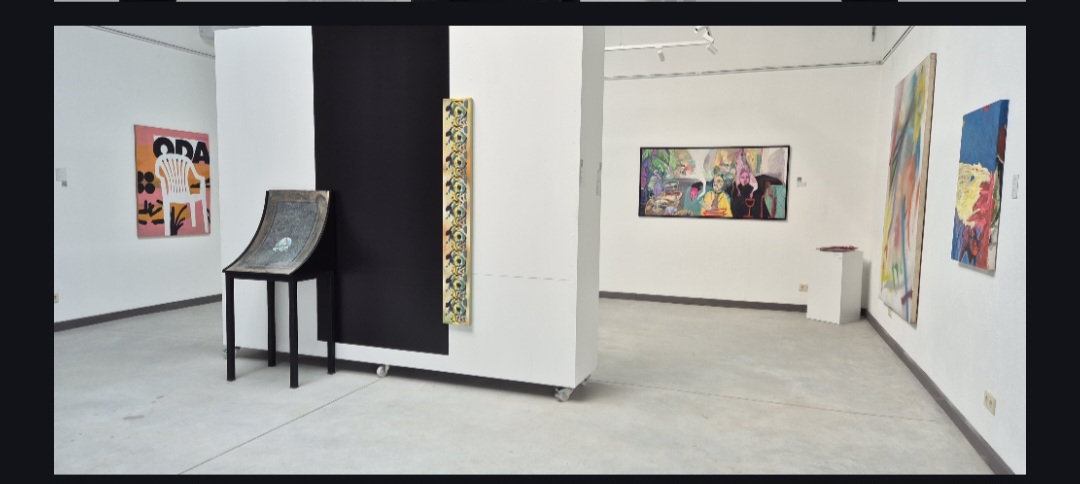
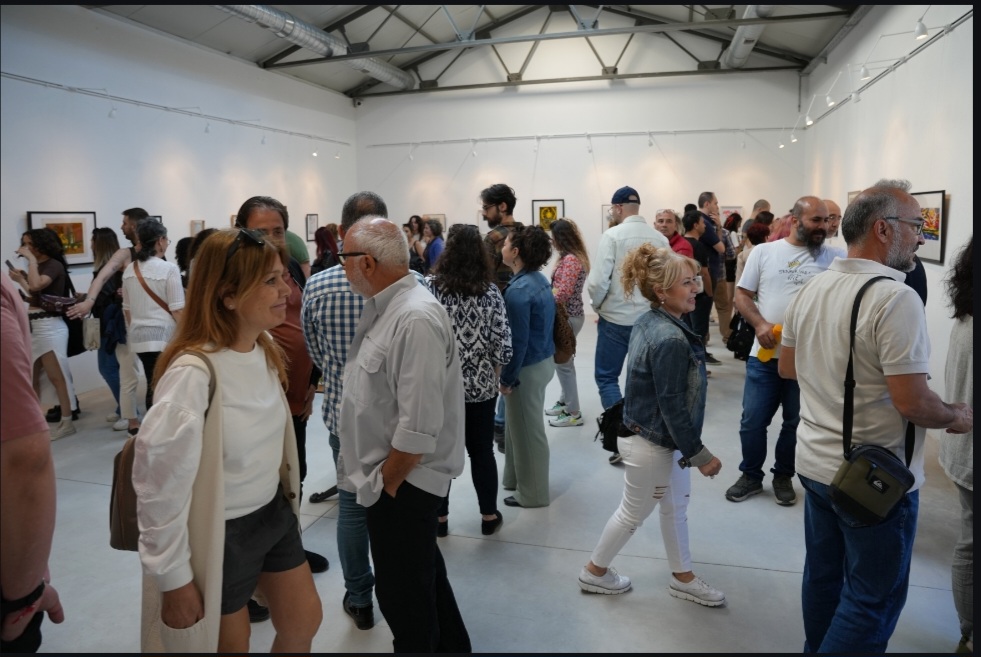
Art and its visibility, key themes of Urladam, are an inseparable part of the venue and its spirit, serving as the lifeblood of the stage, symbolized by the tree that stands at its core. One of the most special places in the complex, where stages intersect, is undoubtedly Urladam Gallery. Hosting exceptional exhibitions and cocktail events regularly, it continues to meet and multiply perspectives in the pursuit of art’s visibility. As it celebrate its 3rd anniversary and hosts dozens of exhibitions, Urladam Gallery continues with the vision that ‘the cities turn into towns, and spaces become places through the memories you freeze inside them and the people who experience them.’ With its doors open for the display of visual arts, particularly painting exhibitions, special installations, various workshops, and creative endeavors, new perspectives and breaths continue to flow through this splendid space, stretching both time and space.
Not far, Antakya Hall hosts dance events and children’s theater workshops.
The restaurant proudly offers a unique culinary and gastronomic experience with a rich selection of flavors to suit every palate: the extra fine Mediterranean cuisine, prepared with fresh and natural ingredients, combines both local recipes and exquisite examples from around the world. So that each guest will be delighted and pleased, and won’t leave without asking for the magic recipe! However, what I would like to emphasize is the captivating and comfortable atmosphere, as this location is not just a place to dine, it’s also a special gathering place where you can enjoy time with friends and family, and create lovely memories. Why? Well, I dare say this inasmuch as the café, in this intense space where art and culture intercept, offers guests a peaceful and inspiring atmosphere: in effect, you’ll notice this setting is a popular destination for visitors of all ages (Hänsel and Gretel included), since it’s directly connected to the library and the workshop spaces. Thus, it’s what you would say ‘combine business with pleasure’: you’ll feel soon that’s not a simple bar overflowing with glasses and drinks, but a particular hub where the pulse of the arts and culture world beats, inspiring conversations carry on, and valuable encounters take place.
This eclectic cultural centre also provides three room types to make you feel at home and to have sweet dreams: the terrace suite, the garden suite, and the standard room. The terrace suites overlook the courtyard and feature a bedroom, a living room, a bathroom, and obviously a balcony. The second ones have an intriguing garden view and feature a bedroom, a living room, a bathroom, and the garden’s company. Lastly, the standard room opens to a view of the garden and features a bedroom and a bathroom.
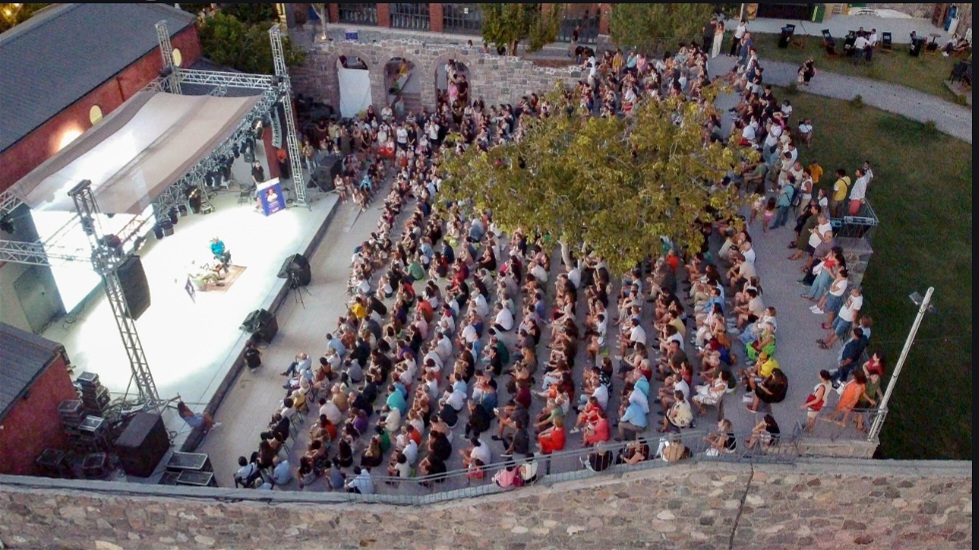
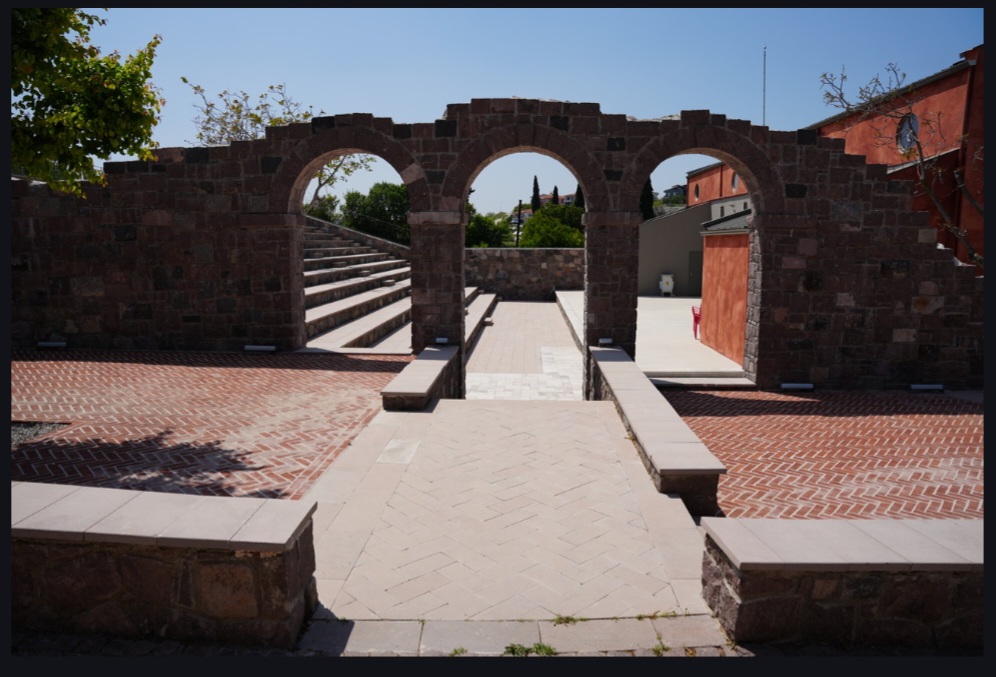
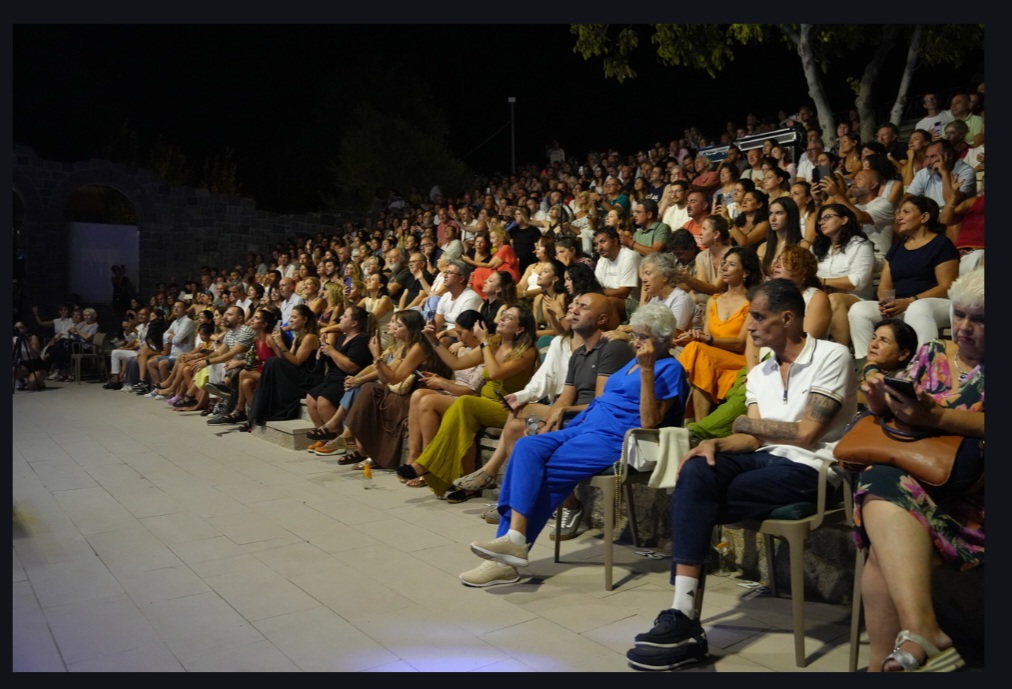
Finally, don’t forget the stage with the trees. It’s an amphitheater with a capacity of 650 people, especially during Summer season. Look at this majestic place, close your eyes and enjoy the show: concerts, film screenings, theater events. In my humble opinion, it seems to be a grand and iconic location, full of memories, stories, emotions and hope. Hundreds and thousands have been there, with their own stories and dreams. They have spent a lovely moment of their life there. They have loved those hours and still take care of those memories.
Lastly, as we’re talking about theatre and plays hosted in Urladam, to end in style our journey it’s my duty and pleasure to mention what I consider the masterpiece and a real pièce de résistance inside Urladam’s theatre programme: ‘My Wounds are from Love’, a moving one-woman play performed by Nazan Kesal in tribute to the Persian poet Füruğ Ferruhzad. Even though that feminist writer tragically passed away more than fifty years ago, her iconic and grand voice is still alive, still talking about freedom, still knocking on our doors, still hoping and looking for us. For us? Yes indeed, her poems are destined to each of us. Why? It’s quite easy to understand: Mrs Nazan’s play tells the story of all of us who blossom and wither in the same climate, those who live under oppression, those who are always found wanting, and those who continue to live despite everything, speaking out. Awaiting to be entrusted to the earth, whose death is unbearable, Füruğ wrote the poem of her life in her own limbo and will be on stage to whisper words that will never leave your mind. She comes to give us all courage, to say, ‘A bird dies, remember the flight.’
Mrs Kesal proudly stated they produced a play befitting Füruğ’s literary personality, and the play’s message to women is ‘Come to your senses, don’t wait for others to bring you back to your senses!’ No doubt: her poems also convey some supreme messages to women such as ‘love yourself, respect yourself, be proud to be a woman!’. The Turkish actress also denounced the increasing violence against women all over the world and emphasized the transformative power of Theatre: it does have such great power to change people.
Once upon a time in Anatolia there was an old farm. One day it became Urladam, a place where good and beautiful things multiply, where you will always want to be, and that you will miss when far away. The stage where cinema, theater, all kinds of music, and dance are not only performed but also discussed, constructed, taught, and learned. A vibrant, constantly evolving school where learning takes place in its workshops. With a restaurant that will expand the flavors of Urla and the peninsula’s culinary culture, while still being open to all cuisines worldwide. With a Guest Writers’ House and a beautiful square where you can meet beautiful people. Maybe even Hänsel and Gretel among them, collecting the special breadcrumbs to find their way home with insistance and resilience.
* * *

The cultural blog Downton Gazette was created in 2022 and concerns whatever can be referred to DOWNTON ABBEY, of which it shares the brave motto : ‘ You can change your life if you want to’ ( Mr Bates to Gwen, series 1). This website, also devoted to Theatre,Music and Art, supports the art activity of FONTANA SHELTER(in loving memory of the Italian painter Luigi Fontana), a member of West Ox Arts Gallery in Bampton, Oxfordshire Artweeks in Oxford, Opulent Art Gallery (London), Artsy (New York), Paks Gallery Cannes Biennale, Jaamzin Studio (Singapore), Parallax Art Fair in London. Previously on ITVX ANGLIA Region in Spring 2024, now on OX LOVES and FYNE TOWNS WEBSITE. Don’t forget Downton Gazette’s latest books ‘Shining Ocean’ and ‘Guiding Lights- A Tribute to Sir Matt Busby’.
CONTACT: https://downtongazette.altervista.org
downtongazette@gmail.com