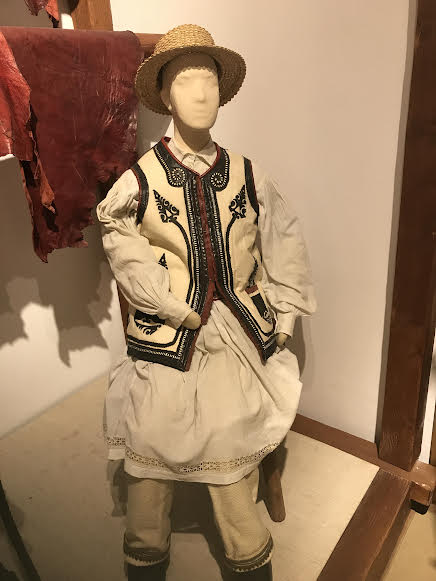

The museum was founded in 1915 and was designed to collect and exhibit ethnographic material found in the communes of this county, such as: old Oltenian rugs, old artistically crafted peasant costumes, collections of pottery, painted eggs, tools and artistically carved wooden household objects.
The museum collections in the heritage of the Ethnography Section also include the collection of religious objects, the collection of musical instruments, the collection of painted eggs, the Maria Tanase collection of documents and photographs, the collection of ethno-folklore documents, and household objects.
The collection of cult objects used in the ritual space of the Oltenia peasant household, apart from the hearth icons presented in the "iconarium" collection, includes an important series of ritual-symbolic objects used in various temporalities and sacred occasions (holidays, rites and rituals of passage, rituals from calendar cycles.
The heritage of the Ethnography Section also contains folk instruments specific to Oltenia. We refer in particular to wind instruments, that is, types of flutes with shapes and from different areas of the province, cavalles, fifes, ocarinas, bagpipes. Violins, cobzas, a zither, etc. complete this heritage.
The Oltenia folk costume, through the variety of pieces that compose it, the techniques and materials used, the organization of the decorations, the surface of the pieces and the decorative motifs used, represents one of the most complex areas of folk art. Oltenia, an ethnographic area with a highly expressive artistic individuality, knows a great diversity of types of costumes.
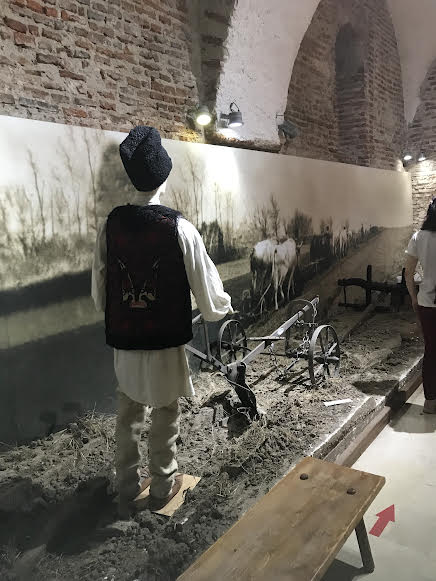
From weeding to ploughing to sowing (room 2 – basement) The exhibition in the basement of Casa Băniei is, in fact, a specific representation of wheat cultivation in Oltenia, a province with a predominantly agrarian economic character. It could not be otherwise, considering, on the one hand, the historical, social and cultural importance of this cereal.
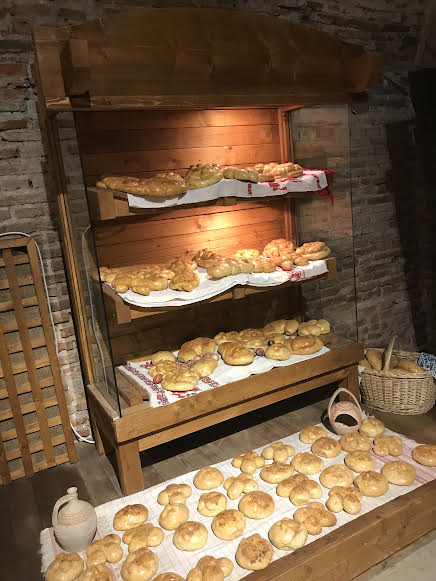
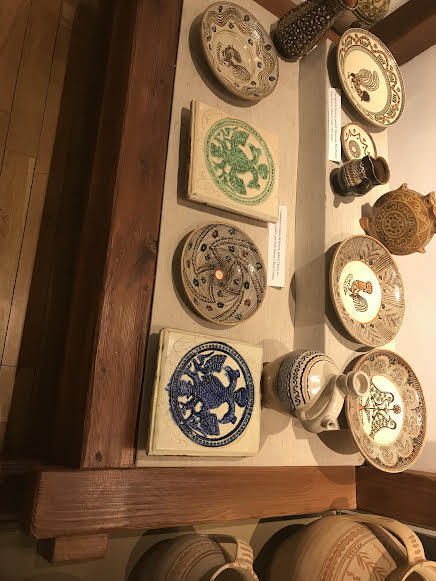
Pottery appears as a craft, in the geographical space of the province, around 3000 BC, being one of the most complex crafts due to the diversity of the necessary knowledge and the accuracy of their knowledge. The improvement of the technique of firing vessels and the subsequent introduction of the potter's wheel (300 BC) were important moments in the evolution of this craft.
Housed in the oldest building in Craiova, the ethnographic museum shines a revelatory light on the cultural heritage of this region.
Museum of Ethnography, Casa Băniei, Craiova, Romania
Str. Matei Basarab no.16
Tel. +40 351 444.030
Open Tuesday – Sunday 0900-1700
* * *
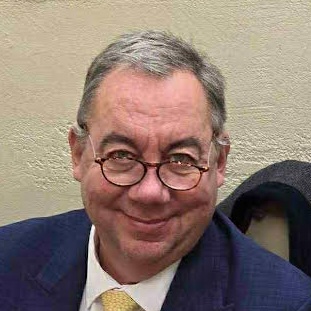
Dr. David Ceiriog-Hughes is a retired academic, teacher and lecturer, who has lived in Romania since 2019.