
Above: The Exterior of Batemans (By DeFacto - Own work, CC BY-SA 4.0, https://commons.wikimedia.org/w/index.php?curid=72368509 )
In 1902, Rudyard Kipling, journalist, poet and writer, and his American wife, Carrie, drove up from Rottingdean on the Sussex coast of England to buy a house they had first fallen in love with two years before. As Kipling describes in his autobiography: ‘That’s her! The Only She!...We entered and felt her Spirit – the Feng Sui – to be good.’ Unfortunately, when they’d first seen it, the house had just been let to tenants. When Batemans came back on the market, it cost the Kiplings £9300, a pretty significant sum for thirty-three acres and a property in poor condition. It would remain the family home for the rest of their lives: some of Kipling’s most famous works were written there, and the house and surrounding countryside were a constant source of inspiration. It is now owned by the National Trust who preserve it as a very nice property which happens to have a famous literary connection.
Part of the appeal of Batemans was (and still is) its isolation in the wooded countryside of the Kentish Weald, which for Kipling epitomised England and Englishness. Born in India, he described a childhood spent with his ayah, stumbling over English words when in the rare company of his parents. Sent back to a miserable experience at school, he went abroad again as soon as he could at the age of sixteen, and, having married Carrie, settled in the United States. When they finally returned to England in 1896, Kipling had spent more than half his life abroad: it was hardly surprising that he famously described England as ‘the most marvellous of all foreign countries that I have ever been in’. Batemans was also a place of escape. Rottingdean had become a fashionable tourist trap which counted the painter Edward Burne Jones as well as Kipling among its famous residents. More personally, the village was associated with the tragic death, in 1899, of Kipling’s daughter, Josephine, aged only six. There is a lovely painting of Josephine, for whom Kipling wrote the Just So Stories, in the exhibition room at Batemans.
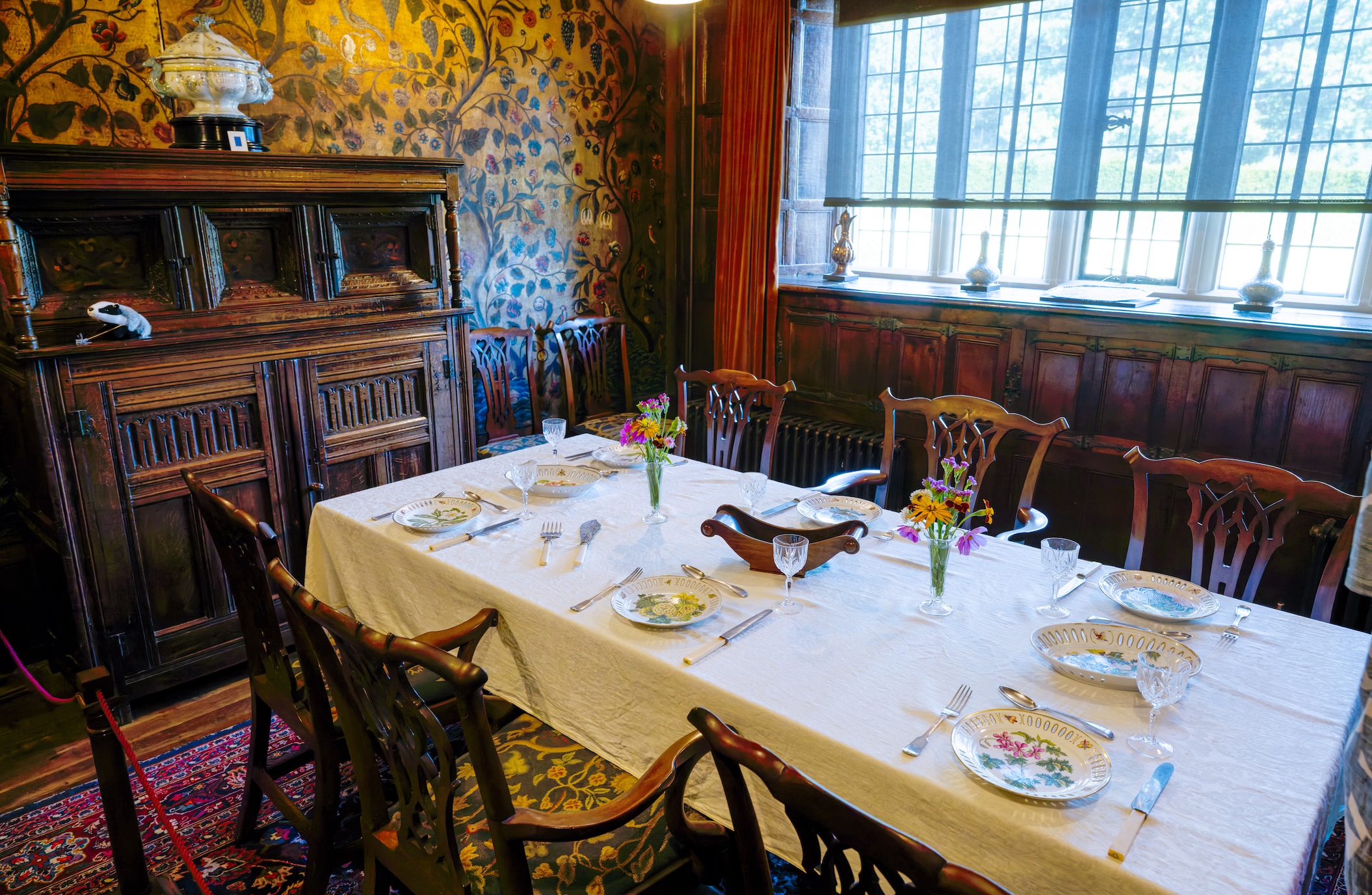
It is still very easy to appreciate the appeal of Batemans as an archetypal English bolt-hole. Originally built in 1634, it is an elegant, sandstone manor with mullioned windows and tall brick chimneys. When Kipling bought it, it had no bathroom and no electricity, but the lack of modernisation was part of its appeal, and he was determined to restore and furnish it in a style faithful to its seventeenth century origins. The ground floor interior is dark and characterful, with uneven floors and off-vertical walls, dark oak paneling and stone fireplaces. It remained spartan - Kipling never installed a telephone – but there is nothing miserly about the furnishings. There are tapestries, including a sixteenth century Flemish design hanging on the stairs; an impressive array of clocks which Kipling himself worked on; and pieces acquired from India and elsewhere. The Kiplings combined genuine antiques with judiciously chosen ‘fakes’ (a coffer in the hall hybridises various sixteenth century panels with a nineteenth century frame) and contemporary Stuart-style furniture. The highlight of the ground floor is the dining room’s magnificent embossed leather wall coverings, Dutch in origin, which Kipling travelled to Hampshire to buy for 100 guineas in 1902. The floral design is still wonderfully vibrant and gleams in the half-light, a testament to their owner’s taste and commitment to getting his home just so.
.jpg)
The interior is also full of personal details – photos, paintings and drawings, letters and hundreds of books which offer more insight into their owner. Kipling’s study with its overflowing wastepaper basket and his characteristic round glasses lying on the ink-stained desk feels like it could have been occupied moments before. Kipling is often presented as a solitary figure, but through his aunts on his mother’s side he was cousin to Stanley Baldwin, three-time Prime Minister, and nephew to Edward Burne Jones and Edward Poynter, two of the biggest names in art. There is an excellent family tree in the exhibition space but these connections are visible throughout the house: watercolours of the garden by Poynter, a wooden pig that was a gift from Baldwin. The study is watched over by a portrait of Carrie resplendent in green, painted by Burne Jones’ son, Philip, another successful, though now lesser-known, artist.
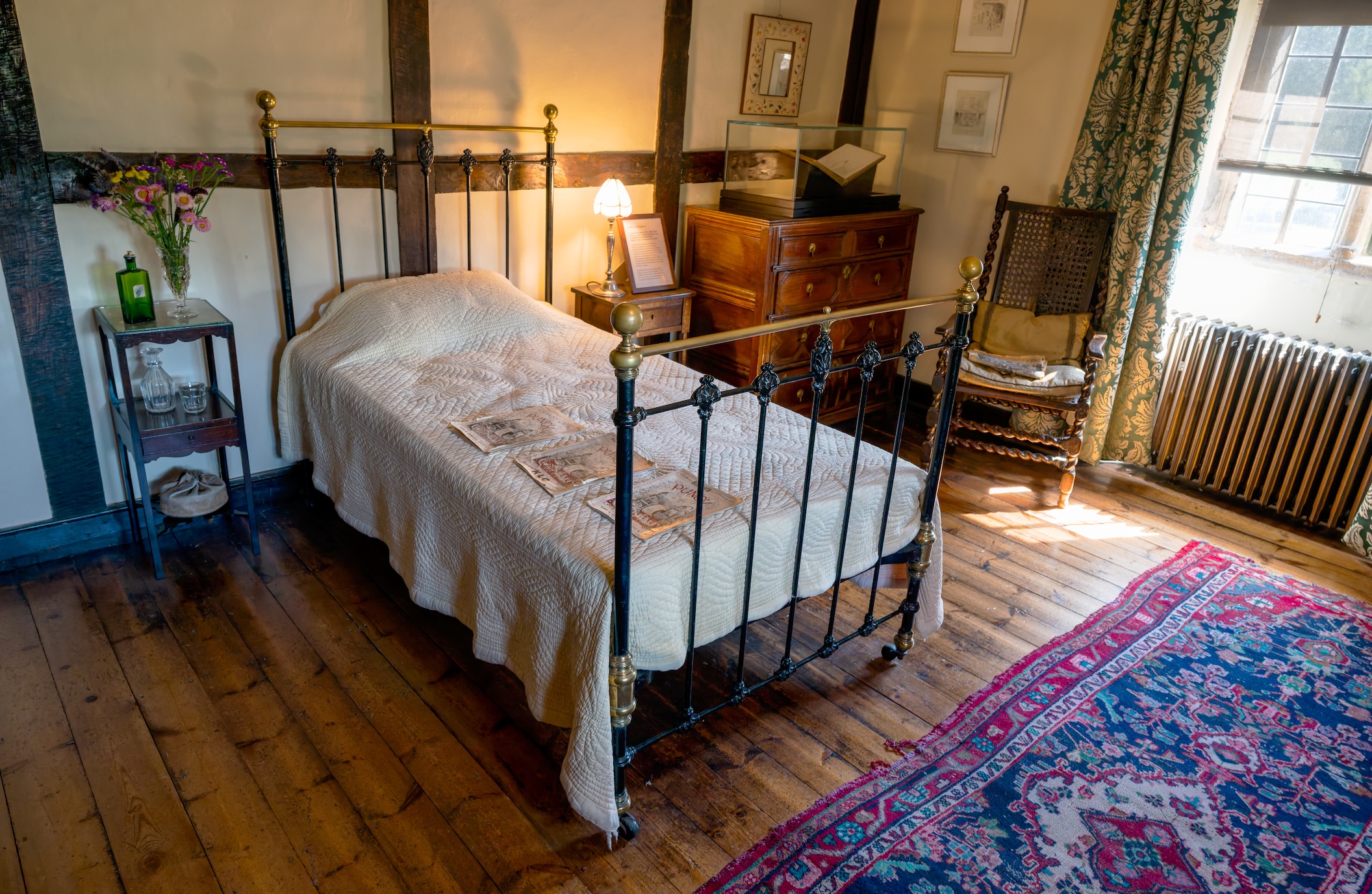
The most poignant and personal room, however, is the bedroom of John, Kipling’s only son who was killed in the First World War, which is displayed with an open cabin trunk and clothes hanging in the wardrobe. John had wanted to serve but was rejected because of his poor eyesight – his father pulled strings to get him a commission, and consequently could not forgive himself for the terrible loss. John’s body was never found and Kipling persisted in trying to discover what had happened and where his remains might be. The story gives added weight to Kipling’s subsequent role as war grave commissioner and his support for the creation of the Tomb of the Unknown Soldier.
As always with National Trust properties there is little in the way of labeling but most rooms are staffed by volunteer guides who are an absolute mine of information: so, look around, have a chat and ask plenty of questions. The exception is the recently created - and excellent - exhibition space on the first floor, which tells Kipling’s life and work through a wide range of objects, from a seventeenth century Japanese scroll to a Disney film poster. There are six themed areas including his biography, travels, writing, and displays which contextualise him as a children’s author and how he is received today. The curators deliberately try to show the breadth of his writing and interests, whilst acknowledging that some of his views about race and empire are now problematic. The display shows the complexity and empathy of his attitudes to India, Japan and South Africa (where he regularly spent the winter months), his close links to the army and scout movement and his love of history. If you only think of the Jungle Book or indeed ‘If’ you will start to think again. And Batemans itself provided direct inspiration: Puck of Pook’s Hill was set in there, and partly inspired by artefacts he dug up in the grounds.
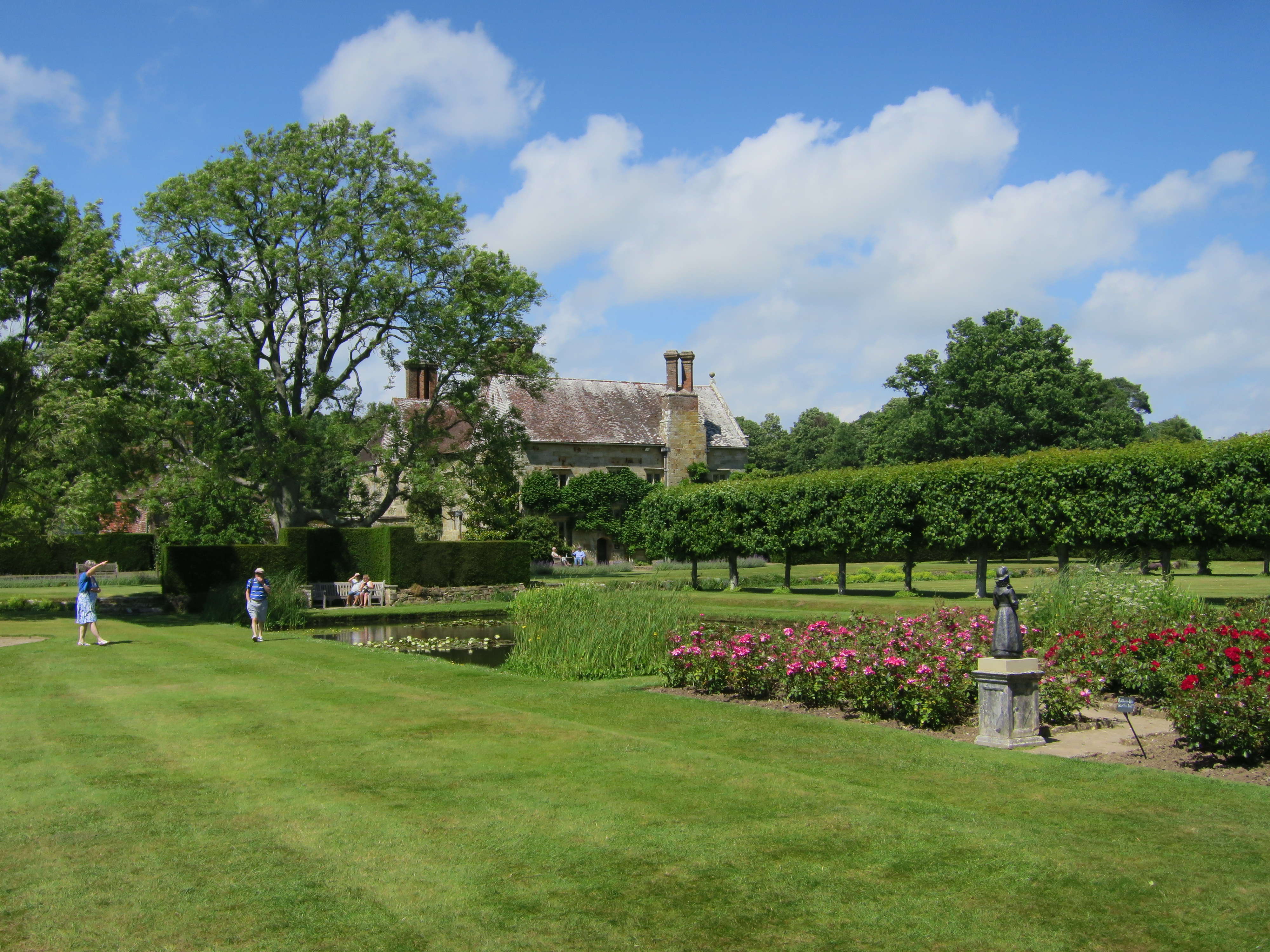
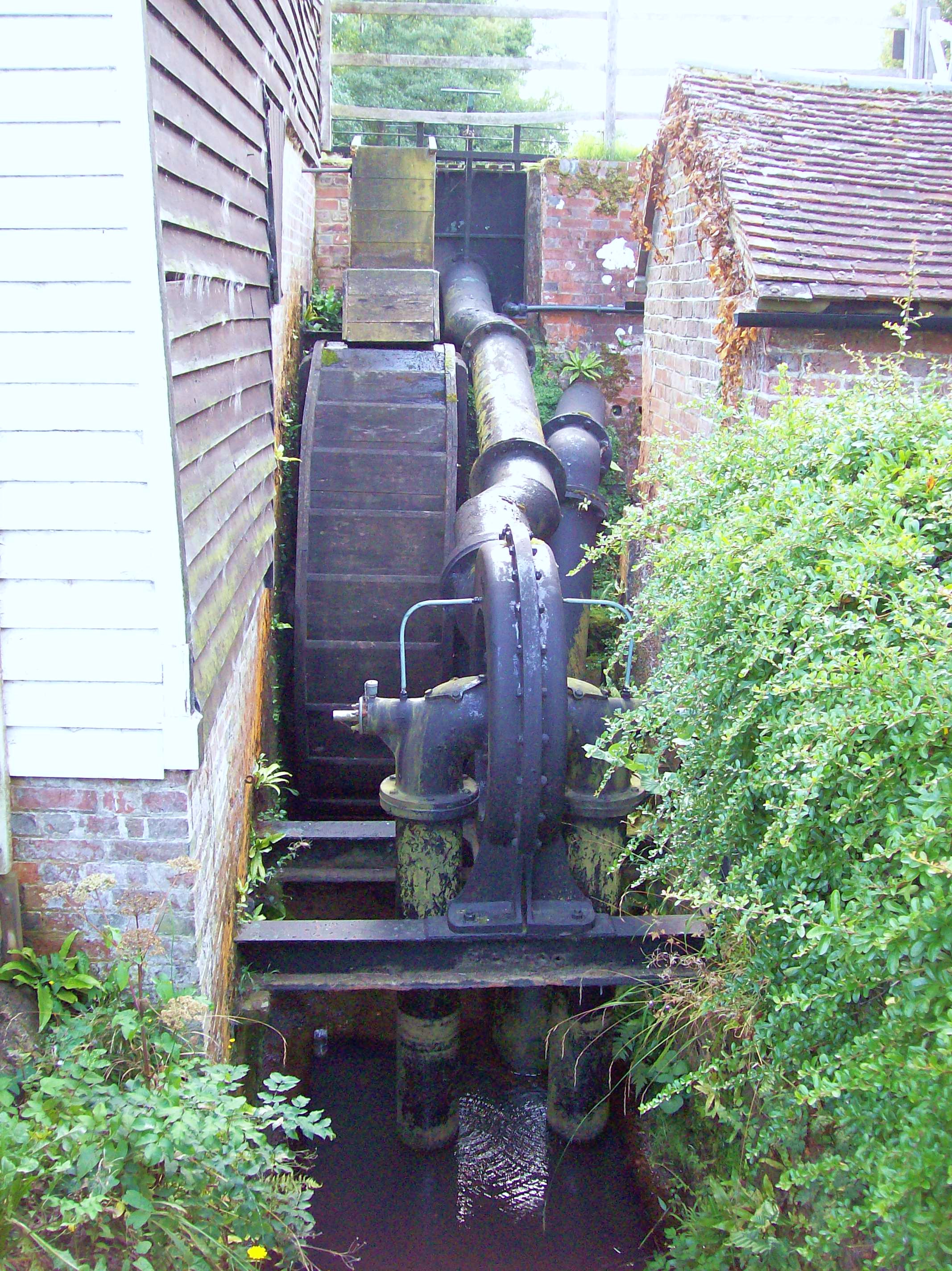
In 1907 Kipling created the garden, financed by his Nobel Prize for Literature, in classic English style, including rose beds and pond, and over the years he bought up neighbouring farms to extend his estate. There is also a watermill which featured in his short story ‘Below Mill Dam’. Kipling adapted it into a turbine to provide electricity for the house, albeit only enough to power ten light bulbs for four hours each evening. The mill has been restored several times by the National Trust: it is at present out of action but still worth a visit to see the combination of traditional and early twentieth century, state of the art machinery. Last but not least, the garage houses Kipling’s magnificent 1928 Rolls Royce Phantom. An enthusiastic motorist, having first caught the bug right back in 1899 when he hired a car in London to drive down to Brighton, he owned a series of often unreliable cars and even went on driving tours in France.
As you would expect from a National Trust property, there is extensive land - some 300 acres - which you can explore at leisure with a series of well-marked trails. There are also all the usual National Trust facilities: play area, tea room, shop and plant centre, and second-hand book shop.
Bateman’s is open daily, 10am – 5pm, with the house itself opening 11 – 4.30. Standard entry is £17 although concessions are available and it is of course free to National Trust members. It is very difficult to get there without a car and unfortunately non-NT members are charged for parking.
If you are a particularly devoted Kipling-ite, you can make the journey down to Rottingdean (about an hour by car) where you can see the house he rented there, The Elms, and visit The Grange Museum, which has a room dedicated to him. For anyone, though, Batemans is a great day out: a lovely house, beautiful countryside, and an empathetic insight into a writer who deserves more recognition than he currently receives.
* * *

Catriona Miller is an independent art historian and writer on art based in the UK. She has taught and lectured on all aspects of art history and is currently researching women artists in British collections and issues of nationalism and identity in nineteenth-century landscape painting.
https://www.instagram.com/cmillerartlife/
https://twitter.com/cmillerartlife