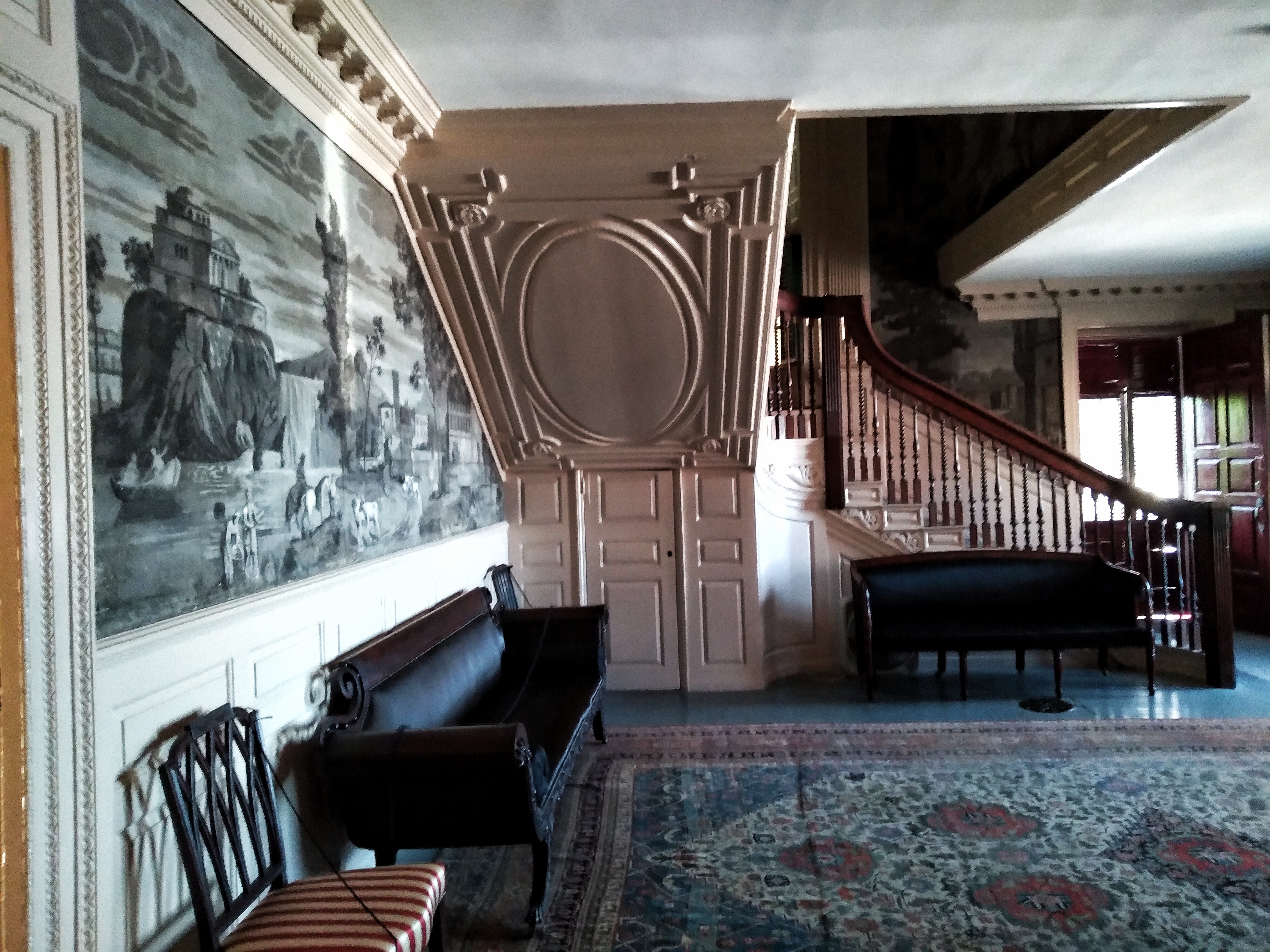

During a three-day trip to Portsmouth, New Hampshire back in 2022, I visited Moffatt-Ladd House & Garden, also known as the William Whipple House. Constructed between 1760 and 1763, this property is listed on the National Register of Historic Places and is a stop on the Portsmouth Black Heritage Trail. The ownership of this house was chaotic and confusing, resulting in the double-barrelled name under which it is currently marketed, in addition to the name after its most famous owner.
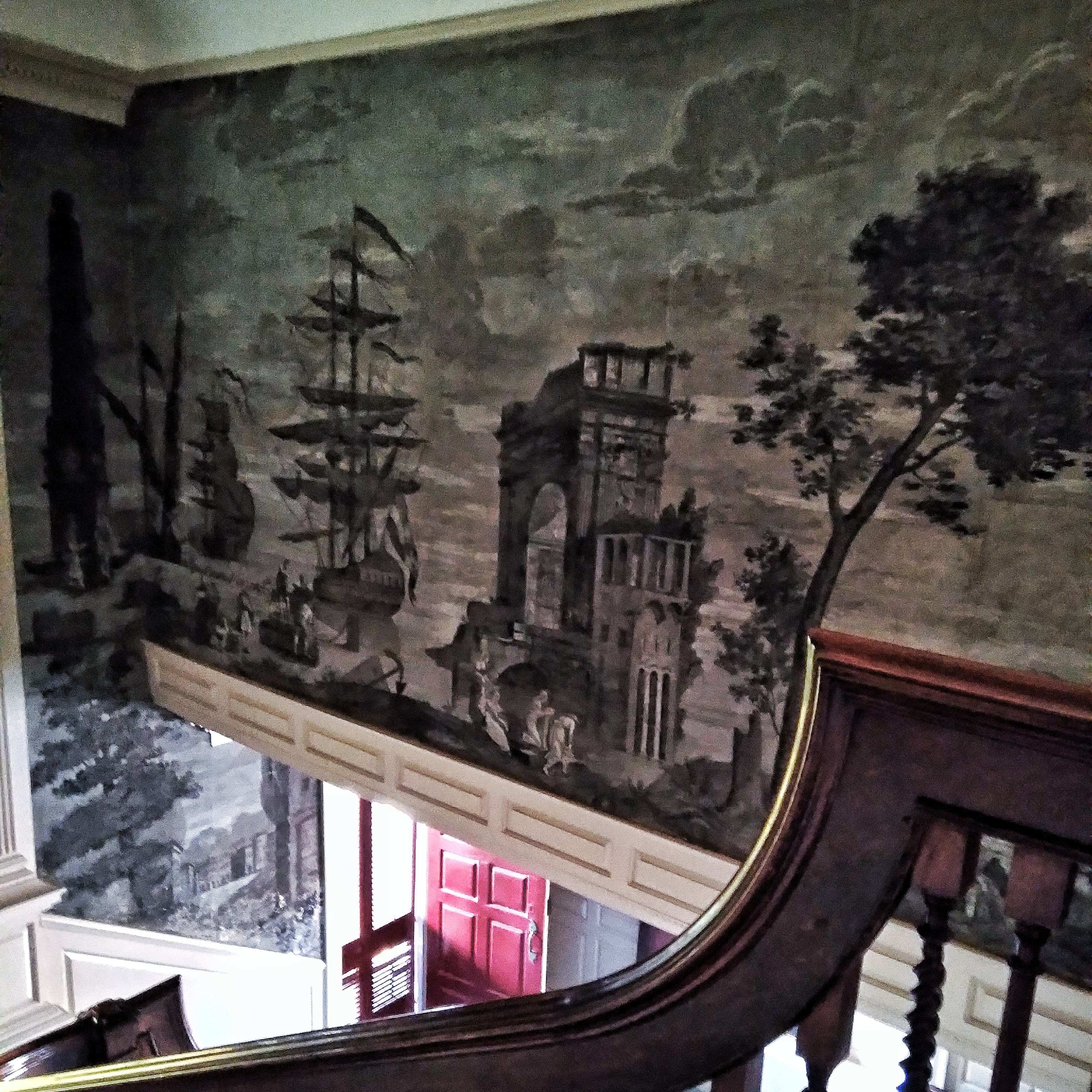
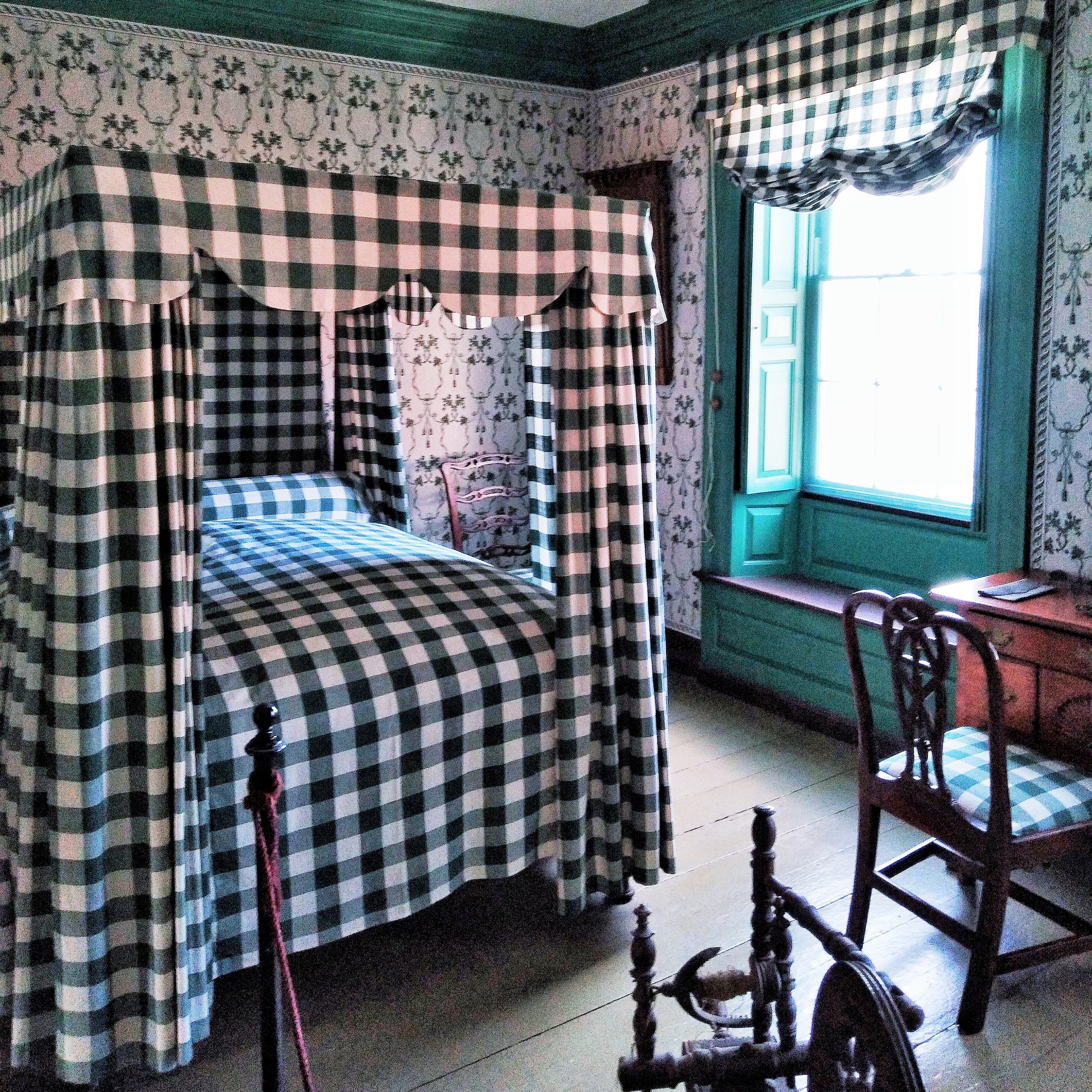
Originally, wealthy colonial merchant and ship captain John Moffat and his wife Katharine Cutt Moffatt constructed the house as a wedding gift for their newlywed only son and daughter-in-law, Samuel Moffat and Sarah Catherine Tufton Moffat. John spared no expense on this lavish house, from the intricate handcarved cornices to the gorgeous wallpapers. Unfortunately, its intended inhabitants had serious issues with their mental stability. Upon finding he could not repay his debts, Samuel abandoned his wife and three children and fled to Sint Eustatius, an island colony in the Caribbean ruled by the Netherlands. Within a year, Sarah Catherine had abandoned their two younger children, John Tufton Moffatt and Mary “Polly” Tufton Moffat, and travelled to Sint Eustatius with the oldest daughter, Elizabeth "Betty" Tufton Moffatt.
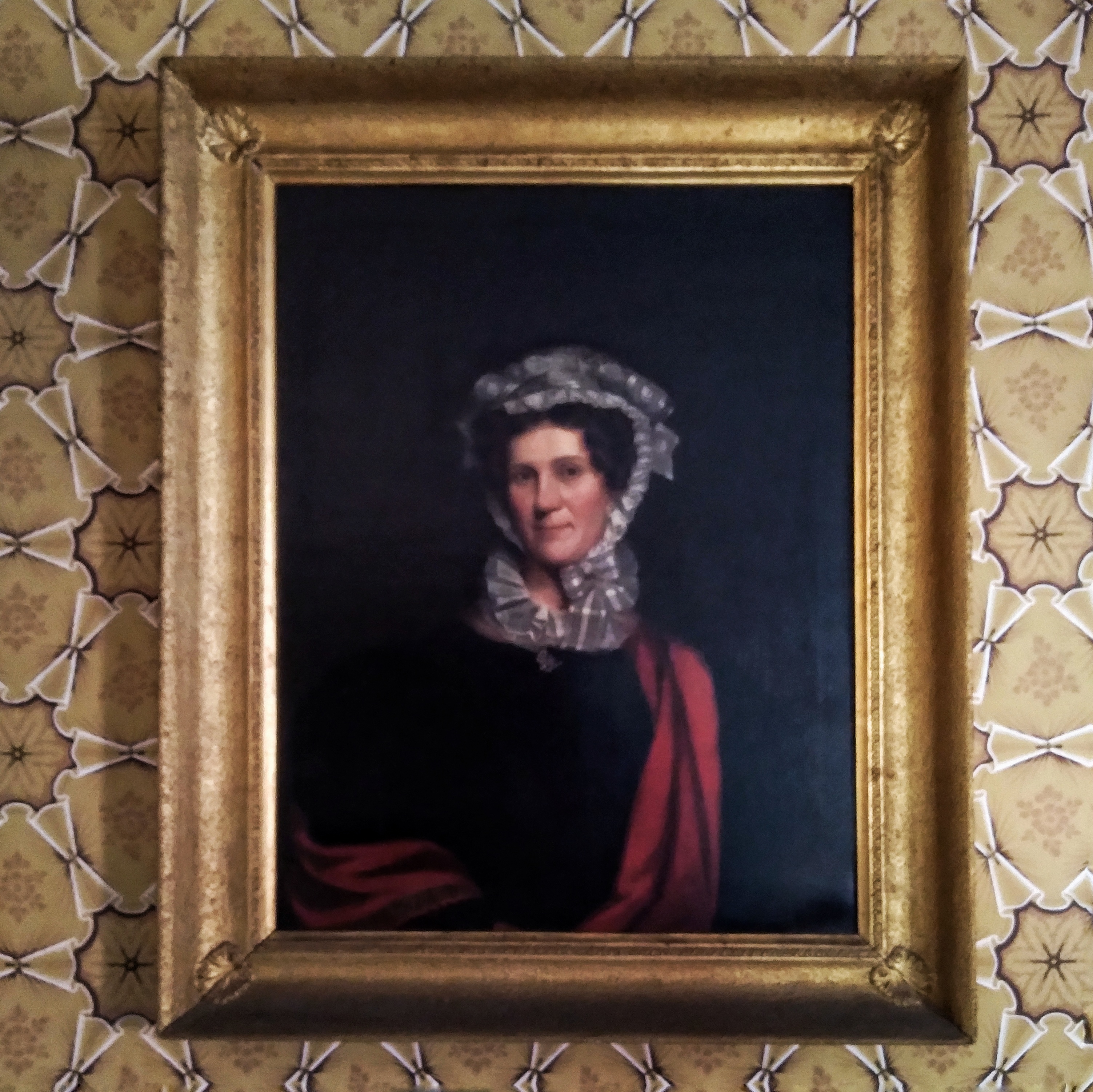
Samuel’s two older sisters, Elizabeth Moffatt Sherburne and Katharine Moffatt Whipple, had to deal with the aftermath of their brother and his wife. Elizabeth was less involved, as she was busy arranging the marriage of her daughter, also called Elizabeth, to much older Governor John Langdon. (I have previously written about their house, which is also a museum.) Katharine stepped in to care for her abandoned niece and nephew, along with caring for her aging parents and secretly courting her cousin, William Whipple, a member of the Continental Congress and a signer of the Declaration of Independence.
Katharine secretly married William, but the couple did not announce their marriage until Katharine was visibly pregnant. Their baby, William Whipple Jr., did not survive past eleven months, so Katharine and William raised John and Polly as their own children, until John left for South America and Polly married Nathaniel Appleton Haven, a doctor and politician. William died unexpectedly in 1785, and John Moffat died the next year in 1786, devastating Katharine. Fortunately, Nathaniel and fellow politician Daniel Webster oversaw the handling of the estates, as Sarah Catharine and her older children brought suits against Katharine. While Sarah Catharine’s family technically won the battle, Nathaniel bought the house from them and then sold it for a dollar to his daughter, Maria Tufton Haven Ladd.
We need to take a quick break from the reality show to consider another reality: while the Whipples were charitable towards their family, their attitude towards African-Americans in Portsmouth was more complex. William owned an enslaved man, Prince Whipple, as a personal servant but signed manumission papers for him in 1784. Katharine gave land to Prince and his wife Dinah Chase Whipple, along with Prince’s brother Cuffee Whipple and his wife Rebecca Whipple. This family ran the African Ladies Charitable School from a house that they had moved onto the land given by Katharine. Additionally, Prince Whipple and Windsor Moffatt, enslaved by John Moffat, signed the Petition of Freedom in 1779. Modeled after the Declaration of Independence, which William Whipple had signed in 1776, the signers argued that they should be immediately freed, as their kidnapping and enslavement as children should be considered illegal and immoral. Unfortunately, their petition was largely ignored by the white enslavers in power.
Back to the Moffatt-Whipple family, later generations were calmer than their predecessors. Maria and her husband, politician Alexander Ladd, lived in the house with their thirteen children. Maria was an avid furniture collector and began the family tradition of decorating and remodeling the house. Only five of the children outlived their parents, and Alexander Hamilton Ladd bought the house from his siblings in 1861. He preferred tulip collecting to furniture and modernized the estate by improving the basement drainage system and installing a refrigerated dumbwaiter. After his death in 1900, his daughter Elizabeth Hamilton Ladd Wentworth and her husband Charles Eben Wentworth sometimes lived in the house, but they ultimately donated the property to The National Society of The Colonial Dames of America in the State of New Hampshire (NSCDA) in 1911. The house has been a museum ever since.
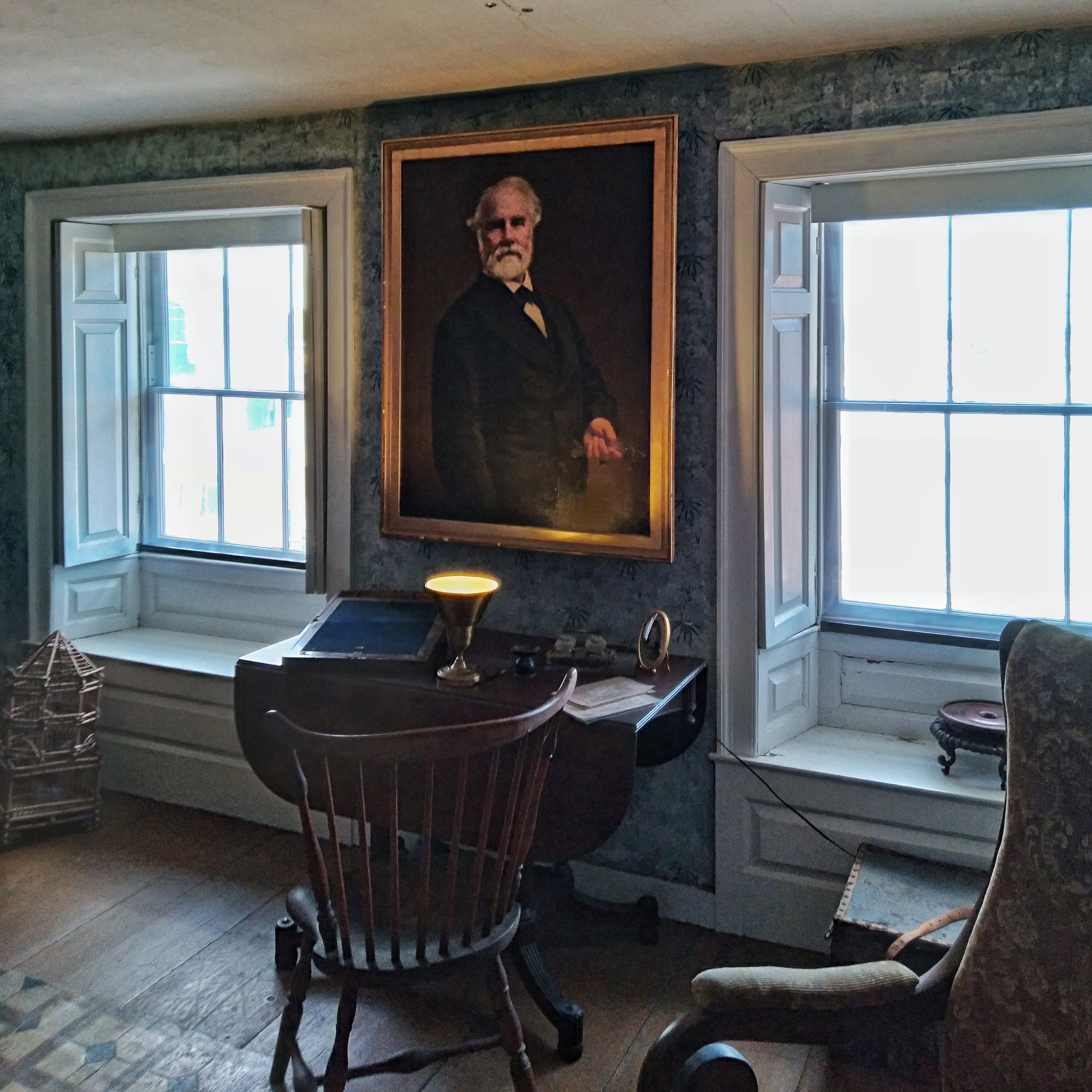
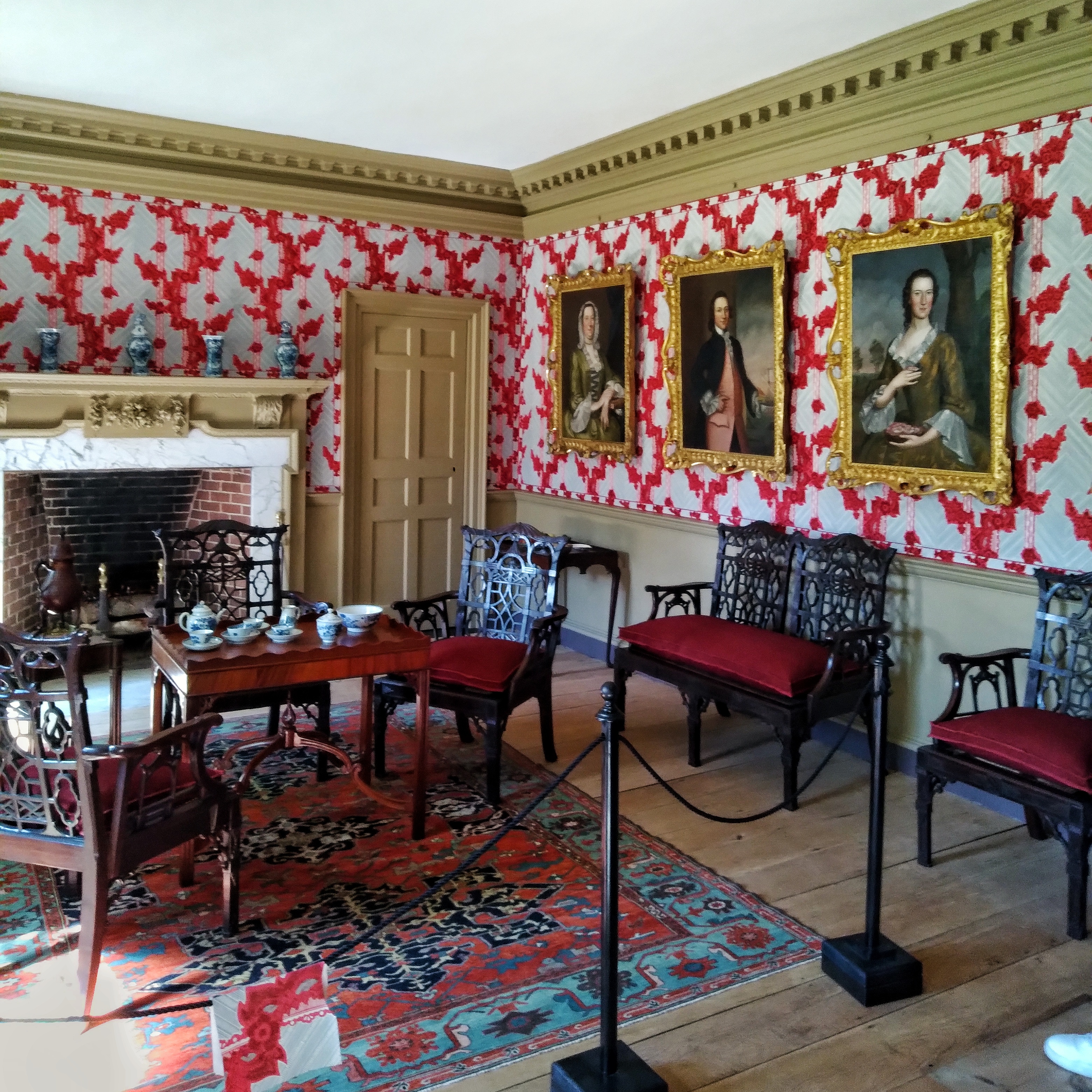
This beautiful Georgian style house was lovingly maintained by its owners and later renovated by the Friends of the Moffatt-Ladd Garden & Museum. Original wallpaper was recovered during renovations and inspired the gorgeous red flocked wallpaper in the parlor. Fuzzy to the touch, with a sample provided by the guide so guests do not pet the wallpaper, one design was reproduced by Adelphi Paper Hangings in Sharon Springs, New York. Because of the great expense to create this vintage design, the museum split costs with Governor John Wentworth House, now used as a senior living facility. Other restorations of the property included improving the windows and maintaining the colonial-era warehouse, one of the few surviving structures from this time period.
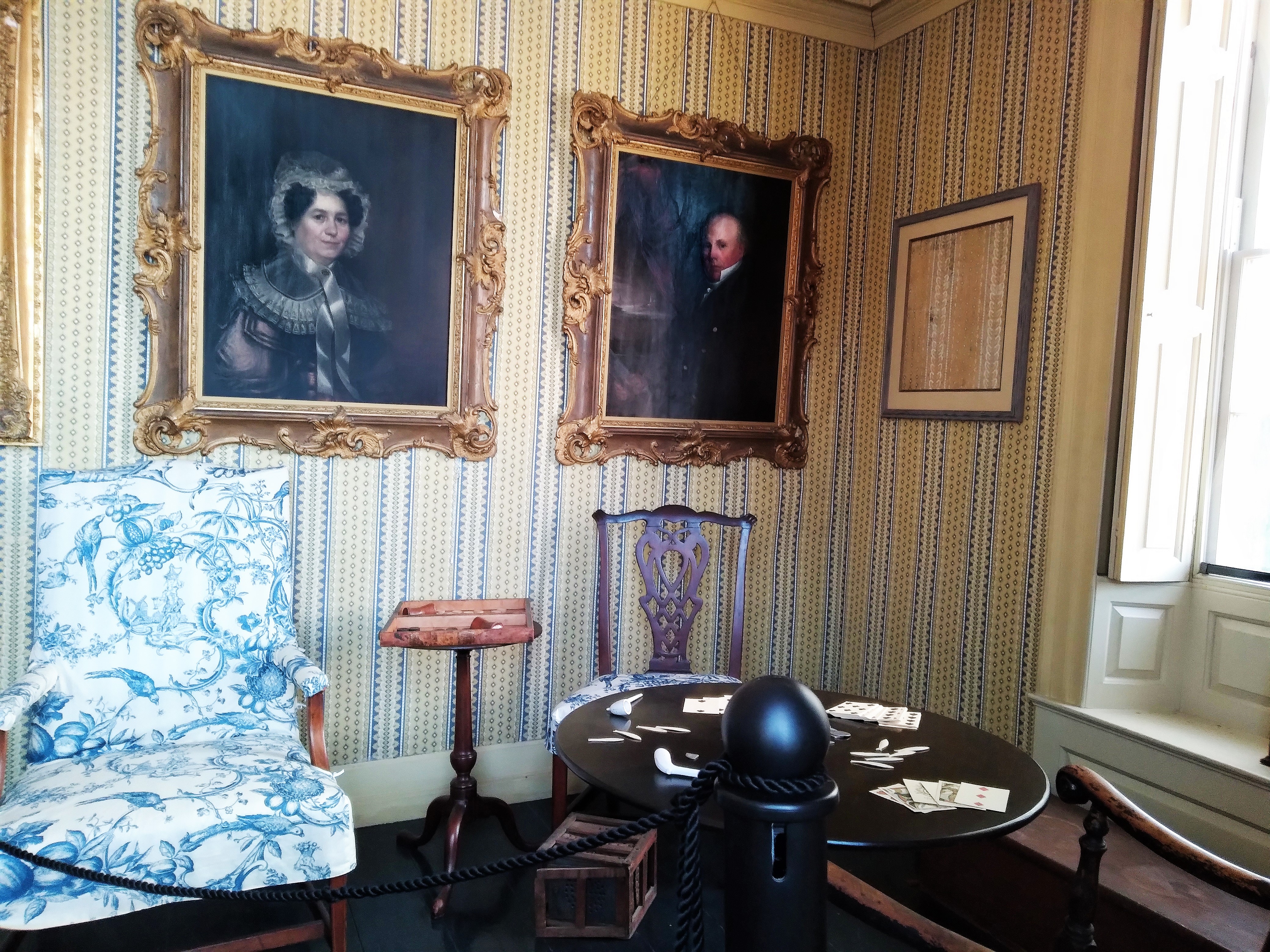
Moffatt-Ladd House & Garden was a fun tour with a highly knowledgeable guide, although the tour ran a bit long due to her enthusiasm. Plan for about ninety minutes to take the full tour and explore the garden. The house has a great gift shop with souvenirs for every price point, along with a beautifully designed website complete with thorough information on the history of the house, current projects and renovations, the NSCDA and Friends of Moffatt-Ladd House & Garden, and an online shop. The museum is only open from June 1 through October 14, as the building is unheated. Open times are 11:00 a.m. to 4:00 p.m. with tours on the hour. At the time of my visit, tickets cost $10 for adults, $8 for seniors, $3 for children ages 7 to 12, and $0 for children under 7 plus members of the New England Museum Association (like me!). If you have time to tour only a few museums during your trip to Portsmouth, put this one on your list.
* * *

Abigail Epplett is a marketing consultant open to working with humanities-focused organizations. She holds an MA in Museum Education from Tufts University, where she researched the history of New England from Plymouth to the Civil War. To learn more about her adventures with museums, visit her current blog at abbyeppletthistorian.blogspot.com.
Abigail is Historian-In-Residence at the National Museum of Mental Health Project: https://www.nmmhproject.org/