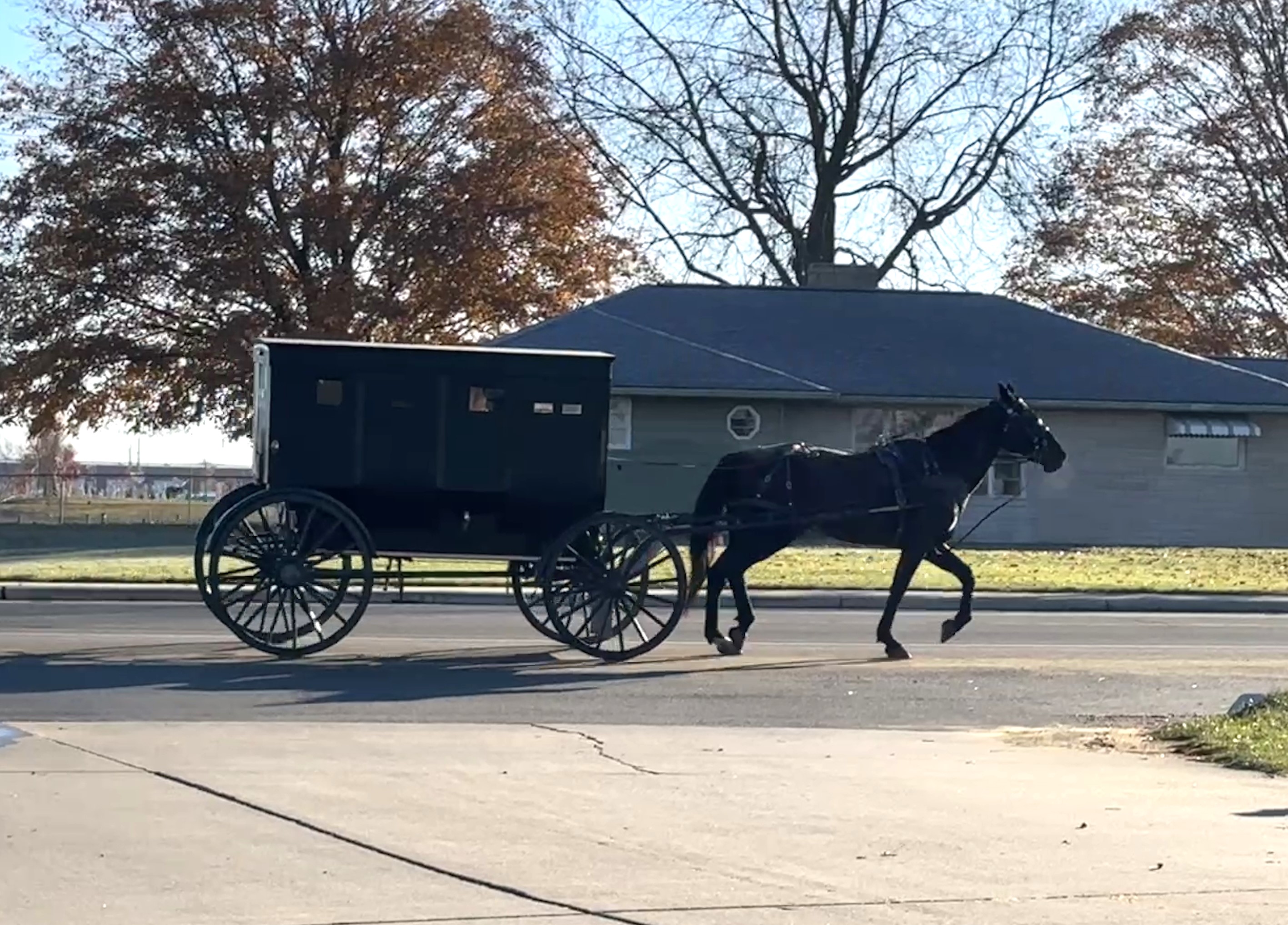

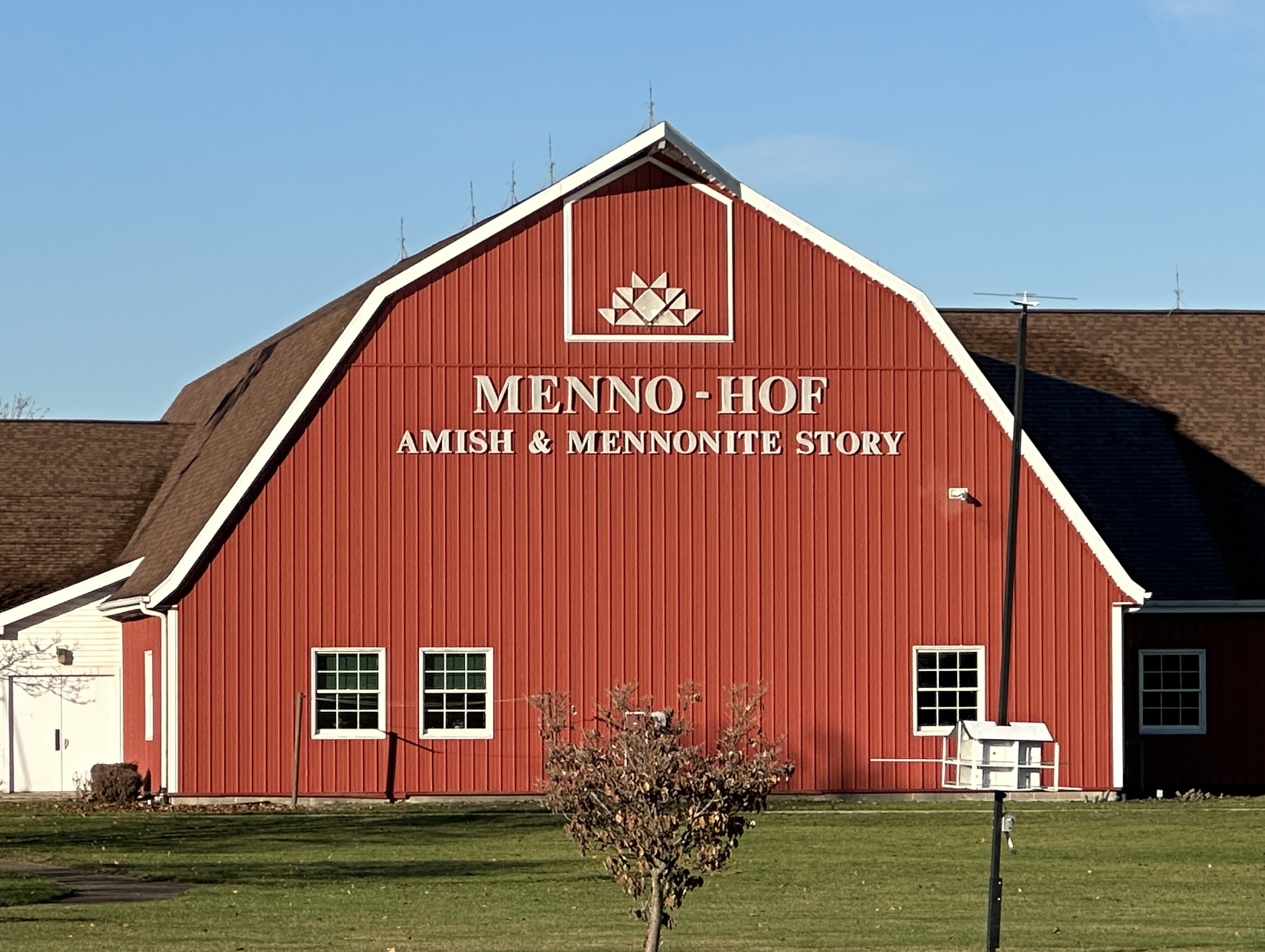
I visited Shipshewana, Indiana, in November, when the town slowed into that peaceful, post-harvest hush the Amish call “quiet time.” It felt fitting to explore Menno-Hof then. Menno Hof is a remarkable interpretive center built during a traditional barn raising by nearly 200 Amish and Mennonite craftsmen. The moment I stepped inside, I knew this wasn’t going to be a typical museum.
My visit was hosted. All opinions are my own.
The center traces the origins of the Anabaptist movement and the Amish and Mennonite ways of life. Yet it does so in a way that feels welcoming and accessible for every visitor. Families, school groups, and solo travelers alike move through spaces designed to teach through immersion rather than lectures. Each room draws you deeper into a narrative spanning centuries.
Throughout the building, the craftsmanship is exceptional. You can feel the attention to detail in the hand-worked beams, solid doors, and thoughtful lighting. Knowing the structure was built during an old-fashioned barn raising, with volunteers arriving by buggy, tools in hand, adds authenticity you won’t find elsewhere. The building itself is part of the story.
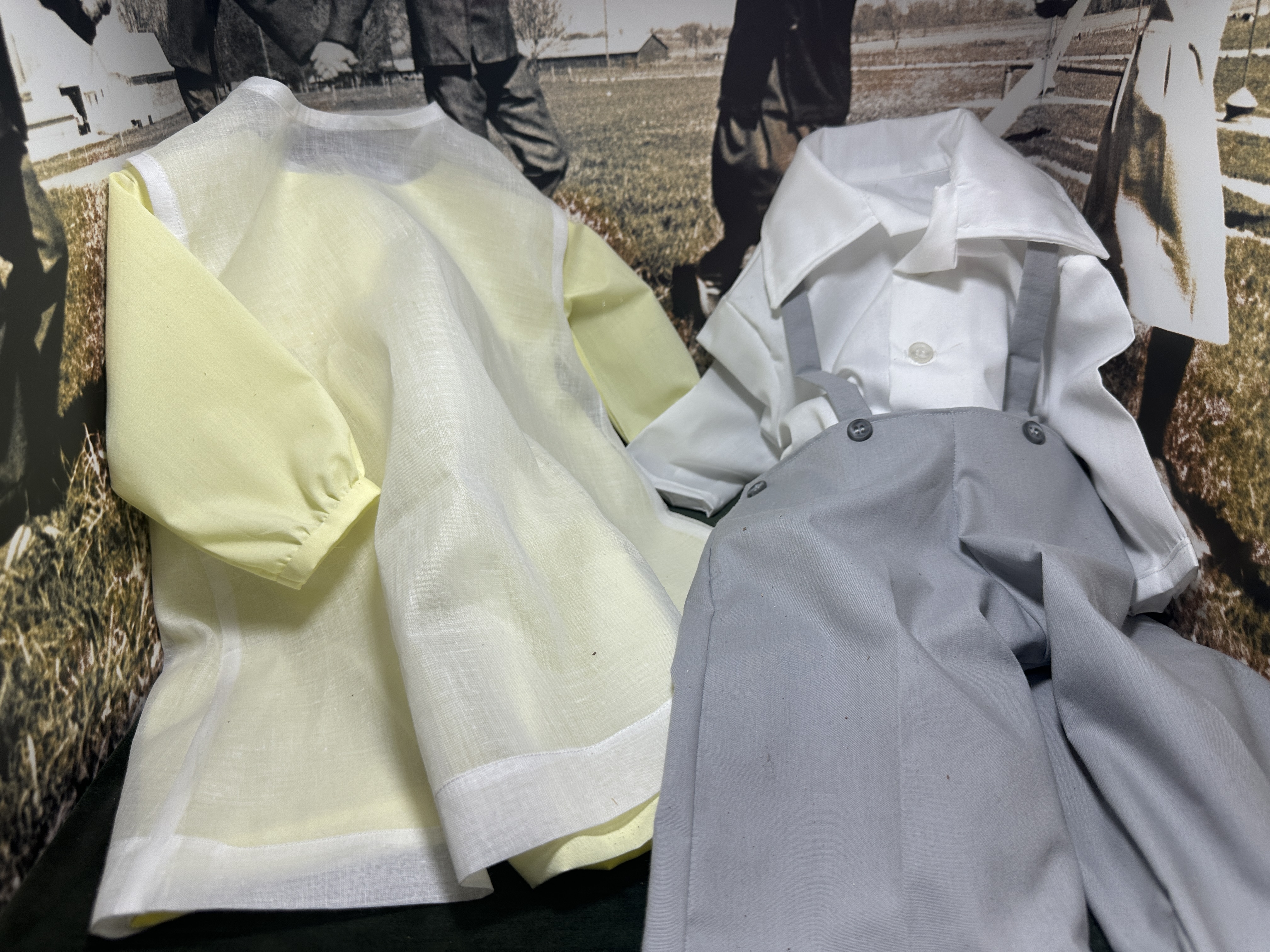
The agricultural exhibits are beautifully presented, showing how Amish and Mennonite communities have farmed the land for generations. Mural panels, tools, and rural scenes paint a picture of early mornings in quiet fields and the deep connection these families have with the land. It’s an honest, balanced look at both the challenges and rewards of farm life.

One of the first highlights is the dramatic multimedia presentation about the early Anabaptist movement in Europe. The room dims as images illuminate the walls and a narrator explains the sacrifices and convictions that shaped these communities. It’s deeply moving and sets the tone for the rest of the tour: Menno-Hof informs without persuading and invites thoughtful understanding.
From there, the walking tour becomes a seamless sequence of scenes and interactive displays. You even enter a dungeon-like space that reflects the persecution early Anabaptists faced, complete with flickering torchlight. One of the exhibits that captivated me was the Tongue Screw, used to keep Anabaptists from giving testimony.

Moments later, you’re in a bright harbor scene representing families who crossed the ocean seeking freedom. You learn about 7-year-old Anna whose mother kept a diary of the journey. The girl died the day before arriving in America. The emotional shift is intentional—and effective.
One of my favorite rooms tells the story of immigration and settlement in America. The first Amish settlement was in my home state of Pennsylvania. They were invited by William Penn. Pennsylvania's reputation for religious tolerance under Penn's "holy experiment" drew many Amish settlers. Lancaster, PA has the largest Amish community in the world.
A large wall map shows the westward movement of Amish and Mennonite communities to Ohio, Indiana and Illinois. Shipshewana has the third largest Amish population in the world. Artifacts highlight the challenges and triumphs of building new lives. The sense of resilience is palpable, and the exhibits make their journey feel personal rather than distant.
Midway through the tour, the focus shifts to daily life. A kitchen display highlights canning supplies and baking tools used in Amish homes. These vignettes feel intimate, almost like stepping into someone’s day rather than strolling through a curated exhibit.

A thoughtful multimedia presentation explains the Amish approach to technology. Rather than blanket rejection, each community evaluates tools based on how they affect family and community life. This section clears up misconceptions that many visitors carry and offers a respectful, balanced explanation that leaves you with a deeper understanding of Amish decision-making.
A surprising highlight is the tornado chamber, where you experience what a destructive storm once felt like in the Shipshewana area. Sound effects and shaking walls bring the event to life without being frightening. Visitors of all ages seemed captivated, and it’s one of the most memorable and talked-about parts of the tour.
One room that touched me deeply showcases mutual aid and community life. Barn raisings, quilting circles, disaster relief, and neighborly service are depicted with heartfelt clarity. You see how these traditions go beyond nostalgia, they form the backbone of community support. It’s a reminder of how powerful collective care can be.
Toward the end of the tour, you enter a peaceful, chapel-like room. A reflective video presentation explores themes of faith, family, and community today. Even if you’re not part of the Amish or Mennonite traditions, the message encourages personal reflection. Many visitors linger here, letting the quiet atmosphere sink in.
The final gallery highlights modern Anabaptists missions, service projects, and global peacemaking efforts. Colorful panels and photographs illustrate how the values of compassion and service extend far beyond Indiana. The display feels like a bridge between history and modern life, showing how these communities are active in meeting global needs.

After nearly two hours of exploring, I visited the gift shop. This isn’t your standard museum store. It’s filled with handmade, locally crafted items: wooden toys, baskets, quilts, candles, books, jams, and home décor. Everything feels intentional, beautiful, and connected to the story you just experienced.
As I stepped outside, I realized Menno-Hof offers something rare: a slow, thoughtful, immersive experience that allows visitors to understand rather than simply observe. It brings clarity to a community often misunderstood and provides historical context that enriches every Shipshewana visit.
Location: Shipshewana, Indiana (just off SR 5, across from the flea market)
Open Year-Round: Hours vary by season—check before visiting
Time Needed: Plan for 2 hours to enjoy every exhibit and presentation
Cost: Affordable admission of $9.50; discounts for children, families, and groups
Parking: Free, with easy access for cars, RVs, and buses
Accessibility: Wheelchair-friendly pathways and exhibits
Don’t Miss: Tornado experience and immigrant harbor scene
Gift Shop: Excellent selection of locally made Amish & Mennonite crafts
Best For: Families, history lovers, cultural travelers, and first-time visitors to Shipshewana
Menno-Hof isn’t flashy or commercial. It’s warm, inviting, and grounded in authenticity, much like the Amish and Mennonite communities it represents. If you want to deepen your understanding of this region, this is an essential stop. And if you leave with a handcrafted treasure from the gift shop, you won’t be alone. Many visitors find it hard to resist taking a little piece of Menno-Hof home.
* * *

Robin O’Neal Smith is a freelance travel writer. She resides in Pennsylvania and travels all over the country searching for some adventure and a touch of luxury to inspire others to travel, visit that museum, enjoy a new experience, and eat delicious food.