.jpeg)
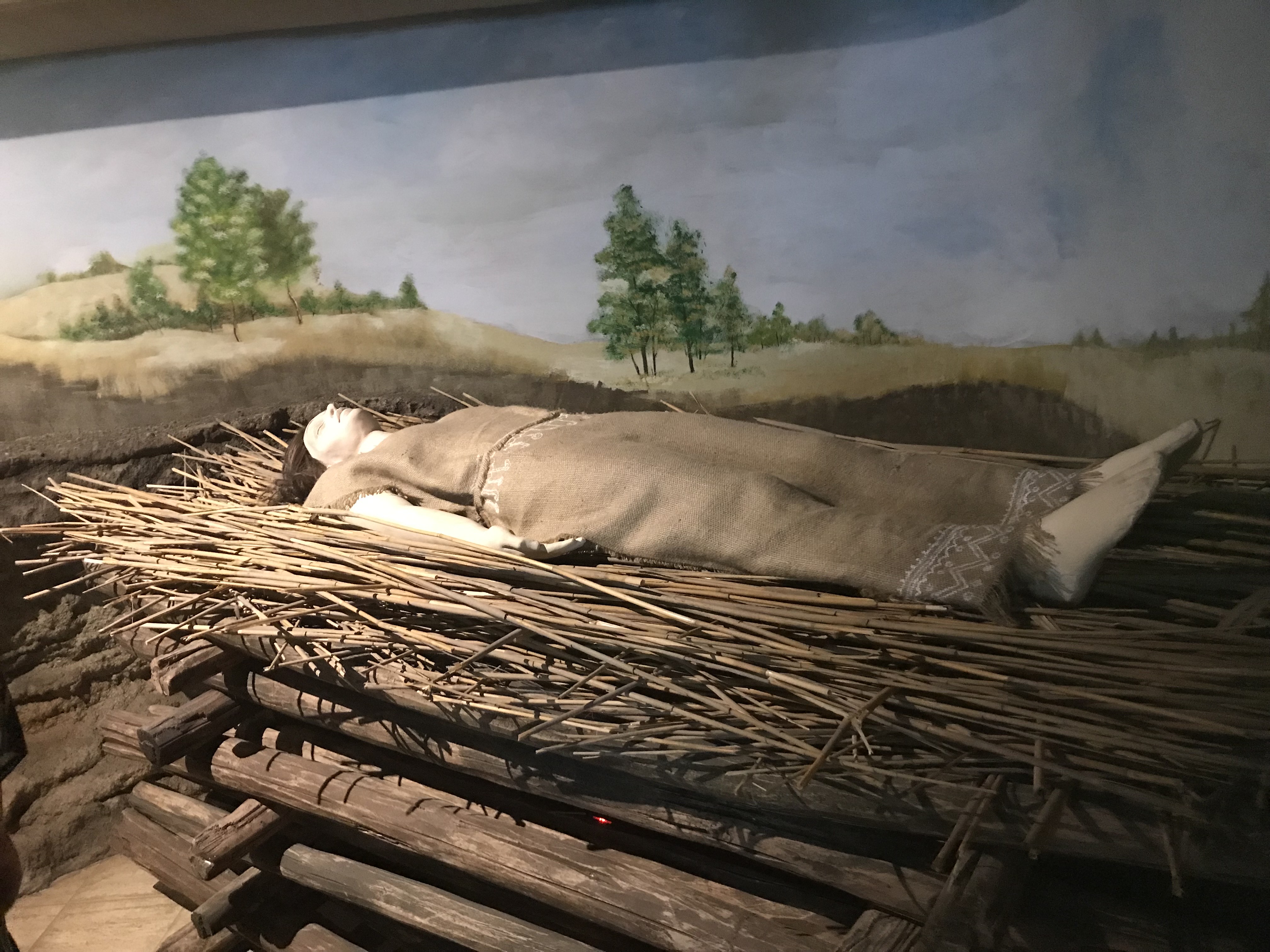
The Prehistoric Oltenia exhibition represents a journey through the prehistory of the geographical space delimited by the Carpathians, the Danube and the Olt, presenting, in an original concept, the life of human communities including burial rites starting from the Paleolithic Age (approx. 35,000-15,000 BC), throughout the Neolithic Age (approx. 6600-3700 BC) and up to the Bronze Age (approx. 3700-1200 BC).
The exhibition journey continues to lead the public through thirteen fragments of history, the first step placing the visitor in the residence of the great Ban of Oltenia (Mihai the Brave), who judges a dispute between two boyars. The exhibition story continues with the hall that depicts the subsequent evolution of Craiova (17th-18th centuries), illustrated by the reconstruction of some house facades,
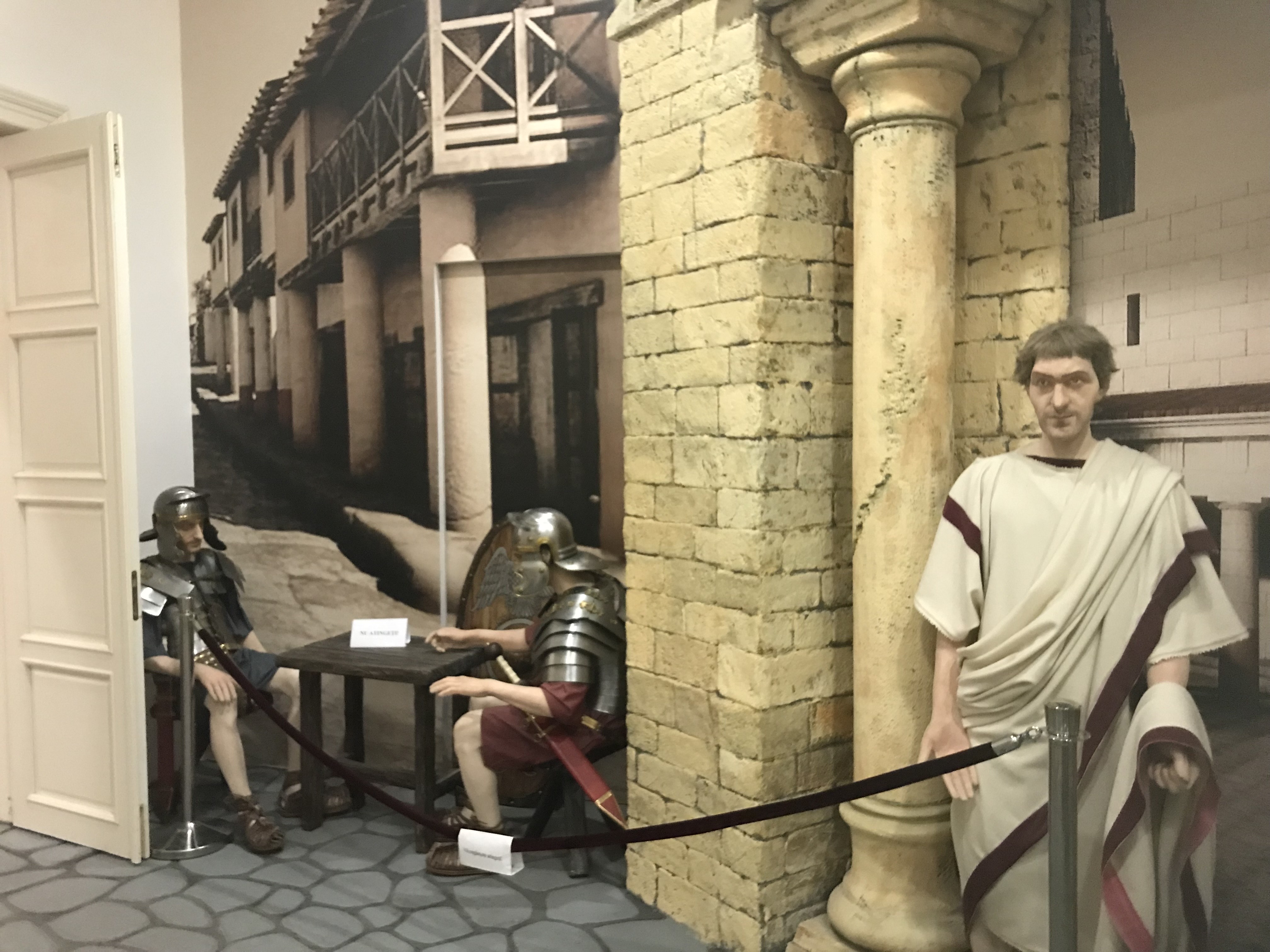
The exhibition “Rediscovering History” represents a journey into the past of Oltenia, starting with the knowledge of Dacian customs, beliefs and society, exemplified by reconstructions of houses and fortresses typical of the Dacian era, continuing with the presentation of the fabulous Roman civilization with all the advantages it offered to its citizens.
The Oltenia Museum holds over 5,000 documents in Slavic, Greek and Romanian with Cyrillic characters on parchment or paper. Many documents are issued by the princely chancellery of Wallachia, with original signatures of well-known rulers such as Mihai Viteazul, Matei Basarab or Constantin Brâncoveanu.
This collection includes over 120 manuscripts dating from the 12th to the 19th centuries, written in Greek, Slavic, Turkish and Romanian with Cyrillic characters. Some manuscripts are known throughout the world, such as the Tetraevangelium on parchment transcribed in Constantinople, from the 12th to the 13th centuries.
The Medieval Art Collection includes objects of adornment, frescoes from the Church of St. John Sebastian in Craiova (second half of the 18th century), religious objects, tiles and paftales chronologically dated between the 14th and 18th centuries. Of remarkable value in execution are the paftales and religious objects decorated in the Brancoveanu style (double-headed eagles, crossed eagles)
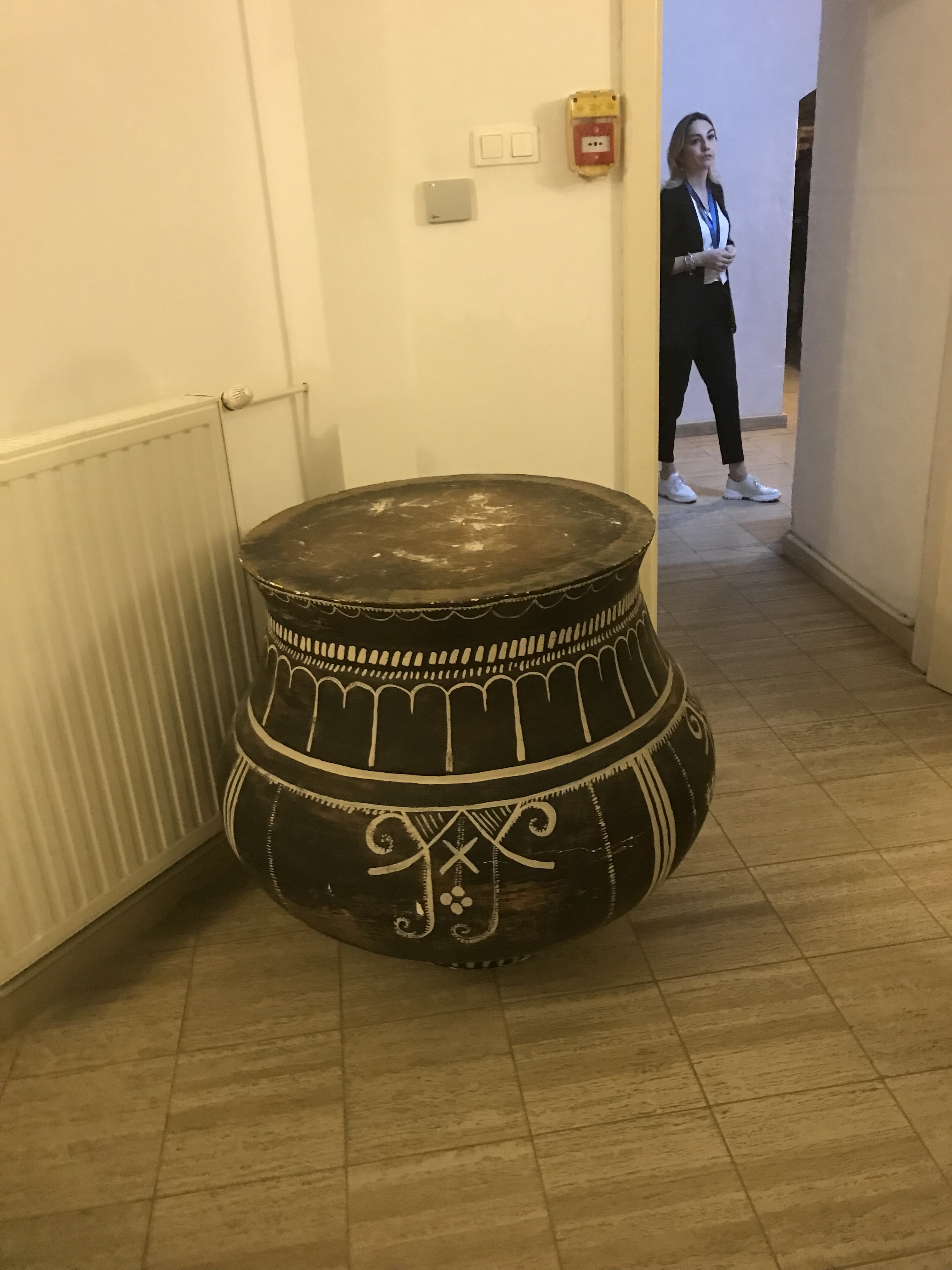
The museum holds pieces of exceptional historical, documentary and artistic value, among which we mention: from the Paleolithic, the fossils from Bugiuleşti, the stone tools found in Dârjov and Fărcaşele, Olt County; splendid painted ceramics belonging to the oldest Romanian Neolithic, discovered in the settlement of Cârcea.
Roman Dacia is the last province conquered and founded by the Roman Empire. Its territory is broadly circumscribed by present-day Transylvania, Banat and the whole of Oltenia, the latter corresponding to the province of Dacia Inferior/Malvensis. Its population consisted of colonists ex toto orbe Romano and native elements, as proven by inscriptions and archaeological discoveries.
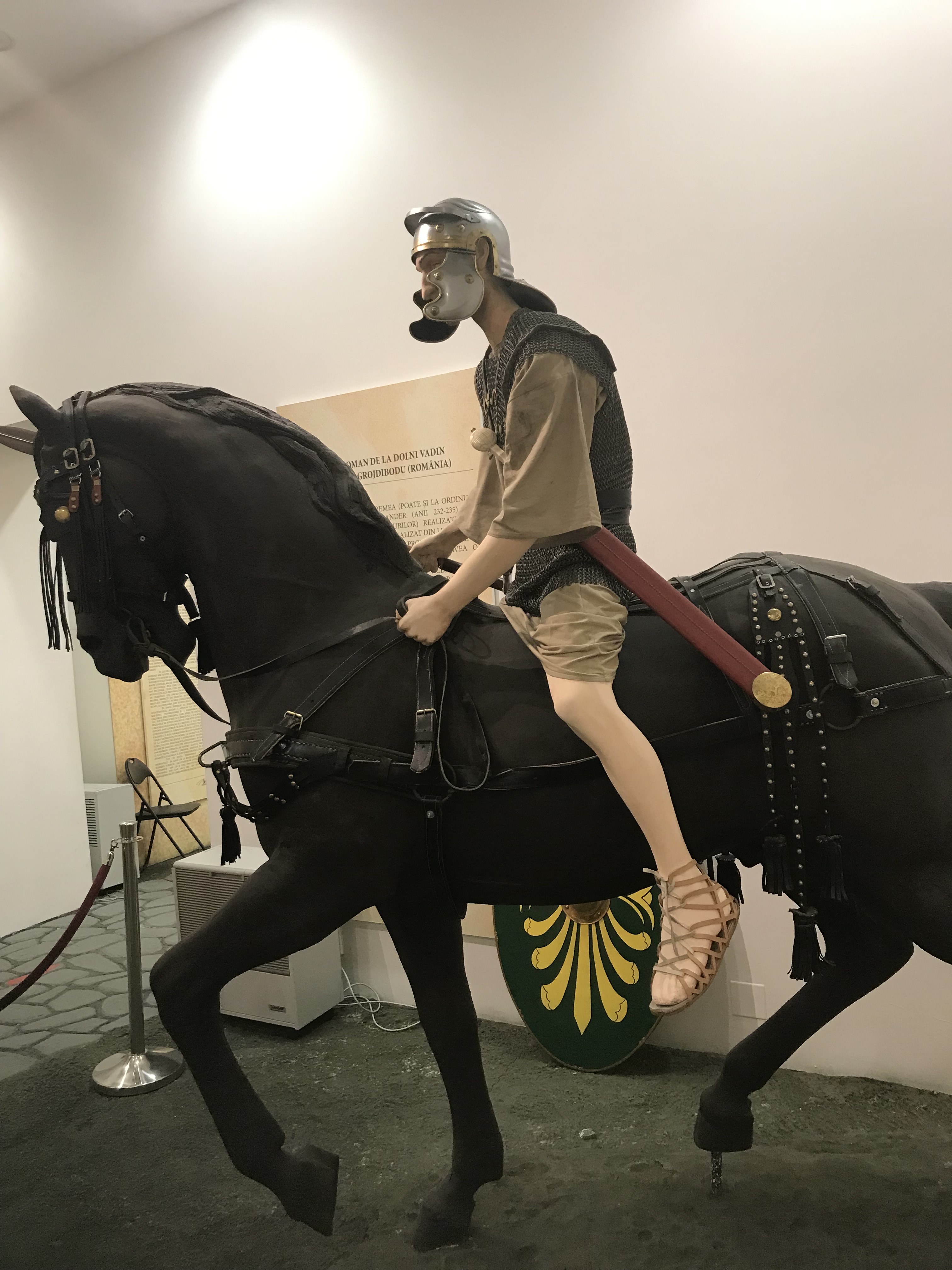
It is a nicely laid out museum which was interesting, mixture of artefacts and demonstration dummies dressed in period costumes.
Str. Madonna Dudu no. 14
Tel.: +40 251 417.756
istorie_arheologie@muzeulolteniei.ro
Open Tuesday – Sunday 0900-1700
Admission 15 lei, Pensioners 7.5 lei. Free for those aged under 18
* * *

Dr. David Ceiriog-Hughes is a retired academic, teacher and lecturer, who has lived in Romania since 2019.