
The Museo a Cielo Abierto en San Miguel is truly one of a kind. As its name suggests, it is not enclosed within a building, but unfolds across streets, residential blocks, and plazas, embedded in everyday life. Rather than stepping into a museum, visitors find themselves walking through a neighborhood where art and domestic spaces are inseparable.
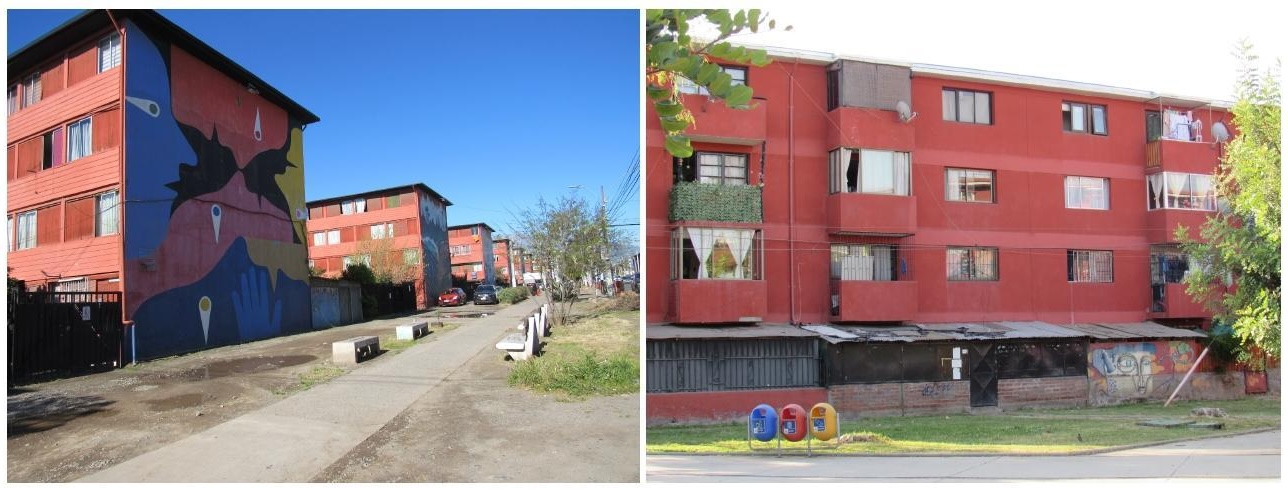
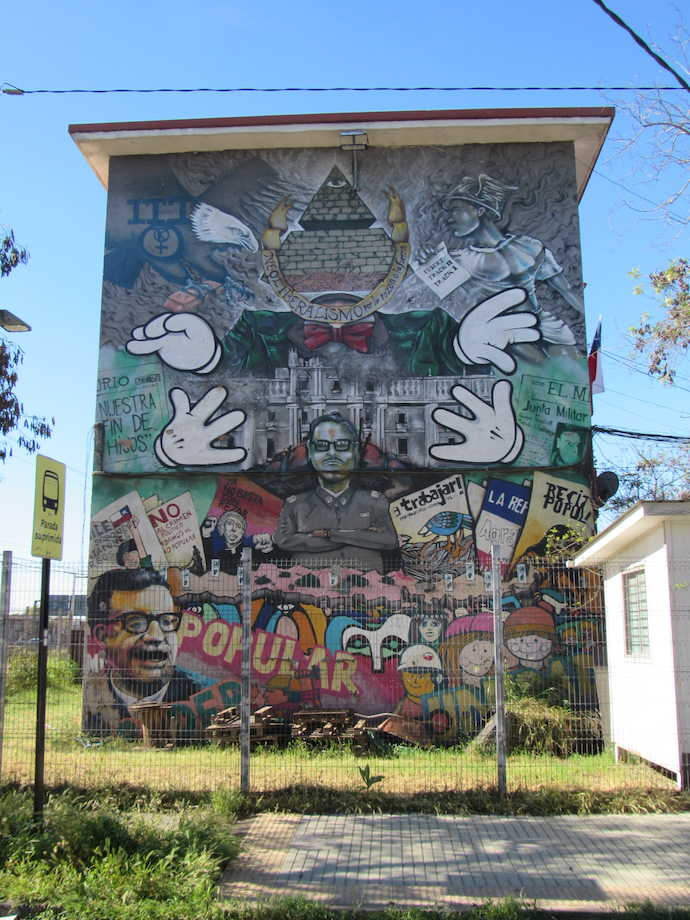
Located in the commune of San Miguel, in Santiago, Chile, the museum occupies Villa San Miguel, a housing estate built in the 1960s and bounded by four major avenues. Its murals are painted directly onto the façades of four-story residential buildings, turning the neighborhood itself into an open exhibition.
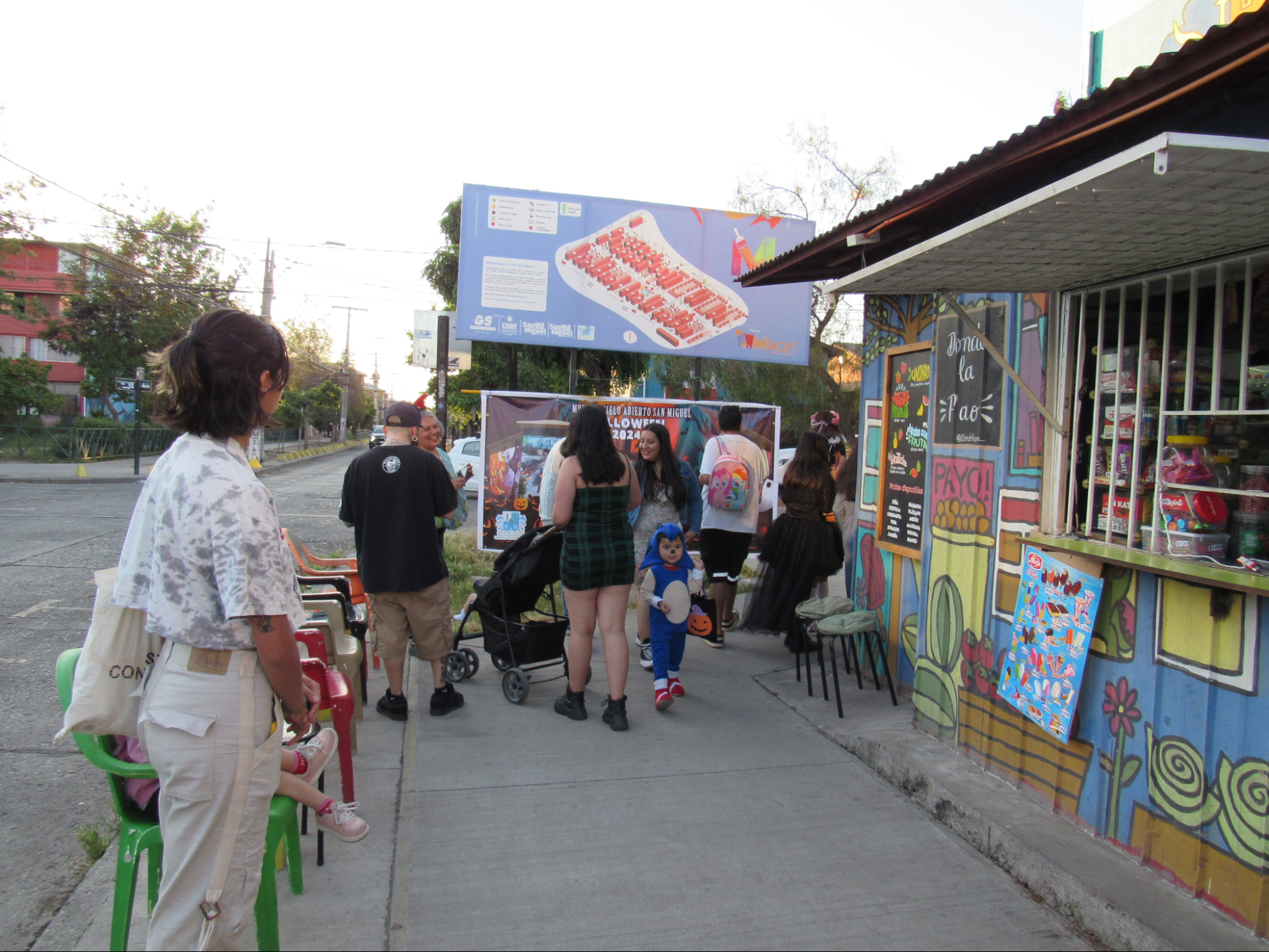
When we visited, we arrived by public bus along Avenida Departamental, already spotting murals through the window. Stepping off, we walked into the neighborhood between rows of apartment blocks and balconies. There was no sign announcing the museum and no clear entrance - only small plaques beside each mural indicating its title and author. There is no suggested route, no starting point, and no prescribed way of moving through the space. Afterwards we realized that maps of the Villa San Miguel and its murals are available at the corner of Avenida José Joaquín Prieto and Carlos Edwards, and where Tristán Matta meets Teodoro Schmidt.
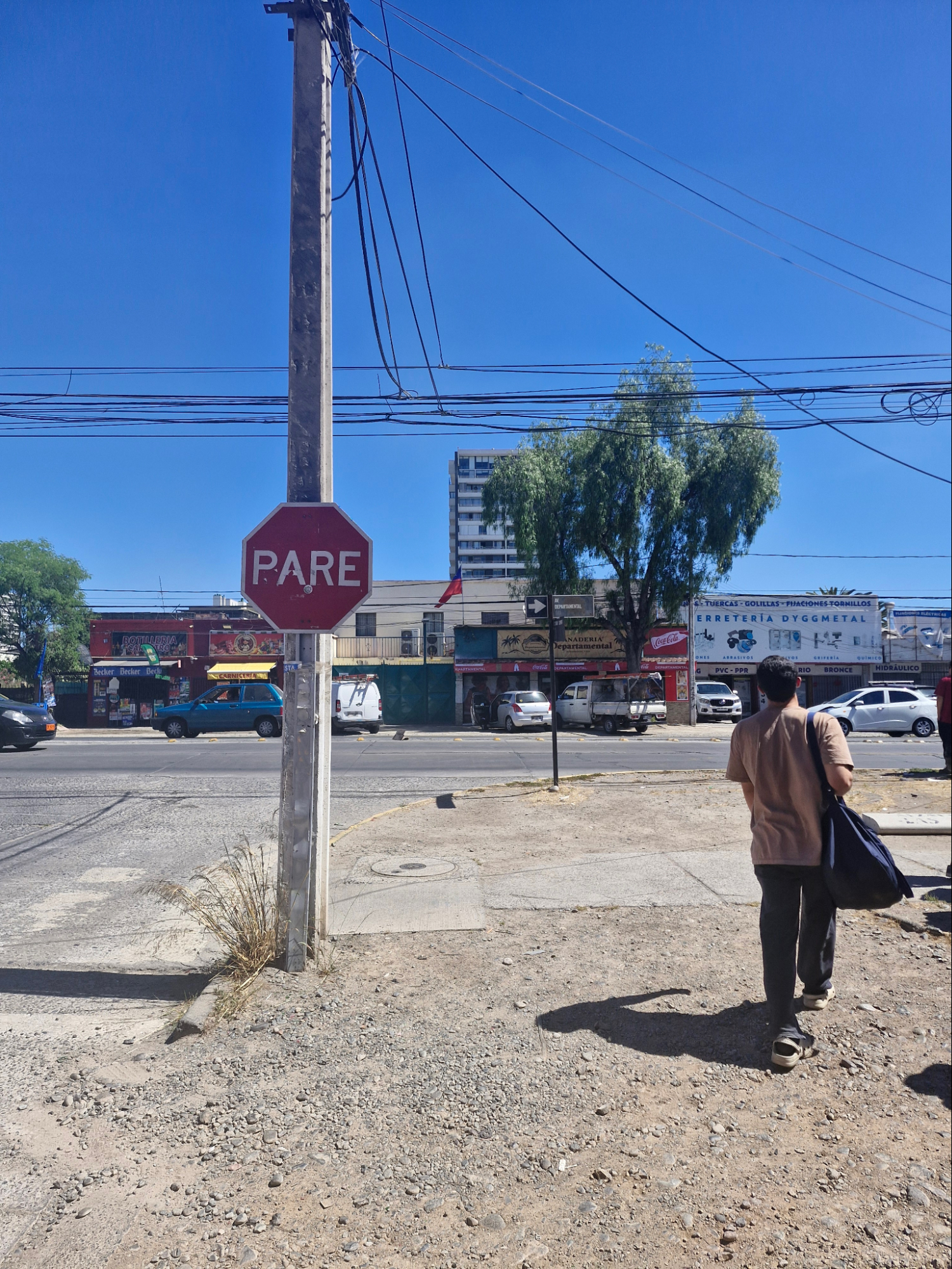
Visitors can arrive by car or public transport. The nearest metro station is Departamental, about 30 minutes from Plaza de Armas de Santiago by public transport. Several public bus routes, such as the 107, 102, and 108, stop near where the museum begins - or ends, depending on your route -, particularly at the intersection of Avenida Departamental and Monja Alférez. From the avenue, passing cars catch brief, fleeting glimpses of the murals, while a slower walk reveals their full scale and detail.
Finding the museum is, paradoxically, both easy and disorienting. Digital maps will guide you there without trouble, yet once inside, the similarity of buildings makes orientation less obvious. Nonetheless, imagery on the walls can always serve as orientation markers, as neighbors usually use them.
As a museum located in a residential neighborhood, entrance is free, and there is no opening or closing hour. The only cost of visiting is getting there.
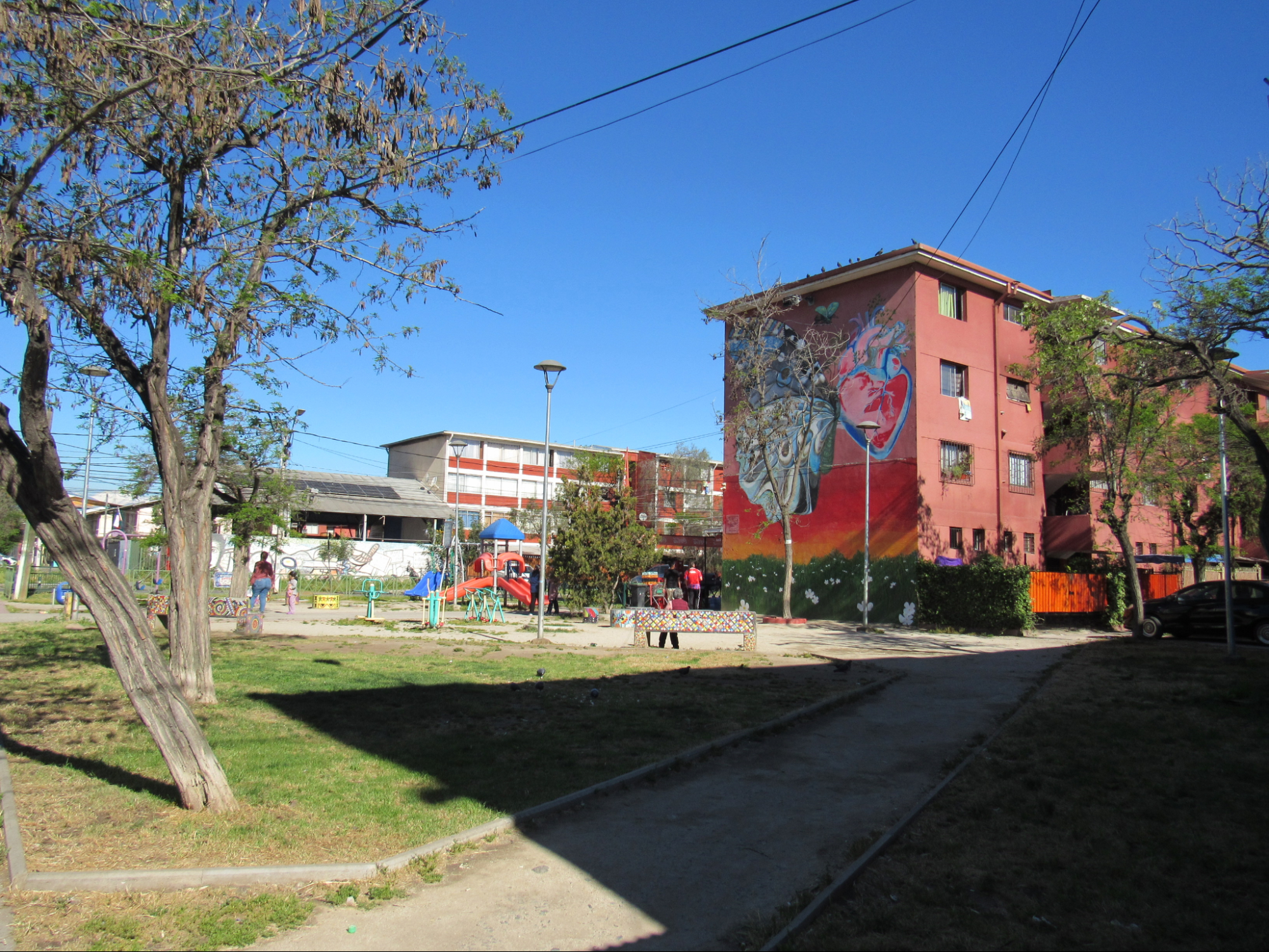
Every visit to the museum feels different. Along Avenida Departamental, the rush of buses is almost felt physically, while inside the smaller streets the atmosphere becomes quieter and more intimate. Surrounded by murals and mosaics, the neighborhood feels both familiar and newly revealed.
At times it is loud, as traffic from the surrounding avenues, music playing from apartments, and horns echoing nearby permeate the space. This is not necessarily a flaw but a defining feature. Unlike conventional museums, silence is neither expected nor possible. The sounds of everyday life interrupt and transform the space into what it was meant to be - a lived environment.
Smell also plays a role. On Thursday mornings, the iconic Feria Tristán Matta (street market) fills the streets with the scent of fruit, vegetables, fish, and meat. The market is so central to local life that it appears in one of the murals, highlighting the ongoing dialogue between art and neighborhood identity. At other times, the smell of barbecue, baked goods, or home cooking drifts through the air, reminding visitors that this is first and foremost a place where people live.
If you are lucky enough, you might stumble upon community events happening in the streets, including football matches and celebrations during special dates, such as Halloween and Christmas. However, regardless of a specific day, it is always nice to wander through the streets and appreciate the different murals.
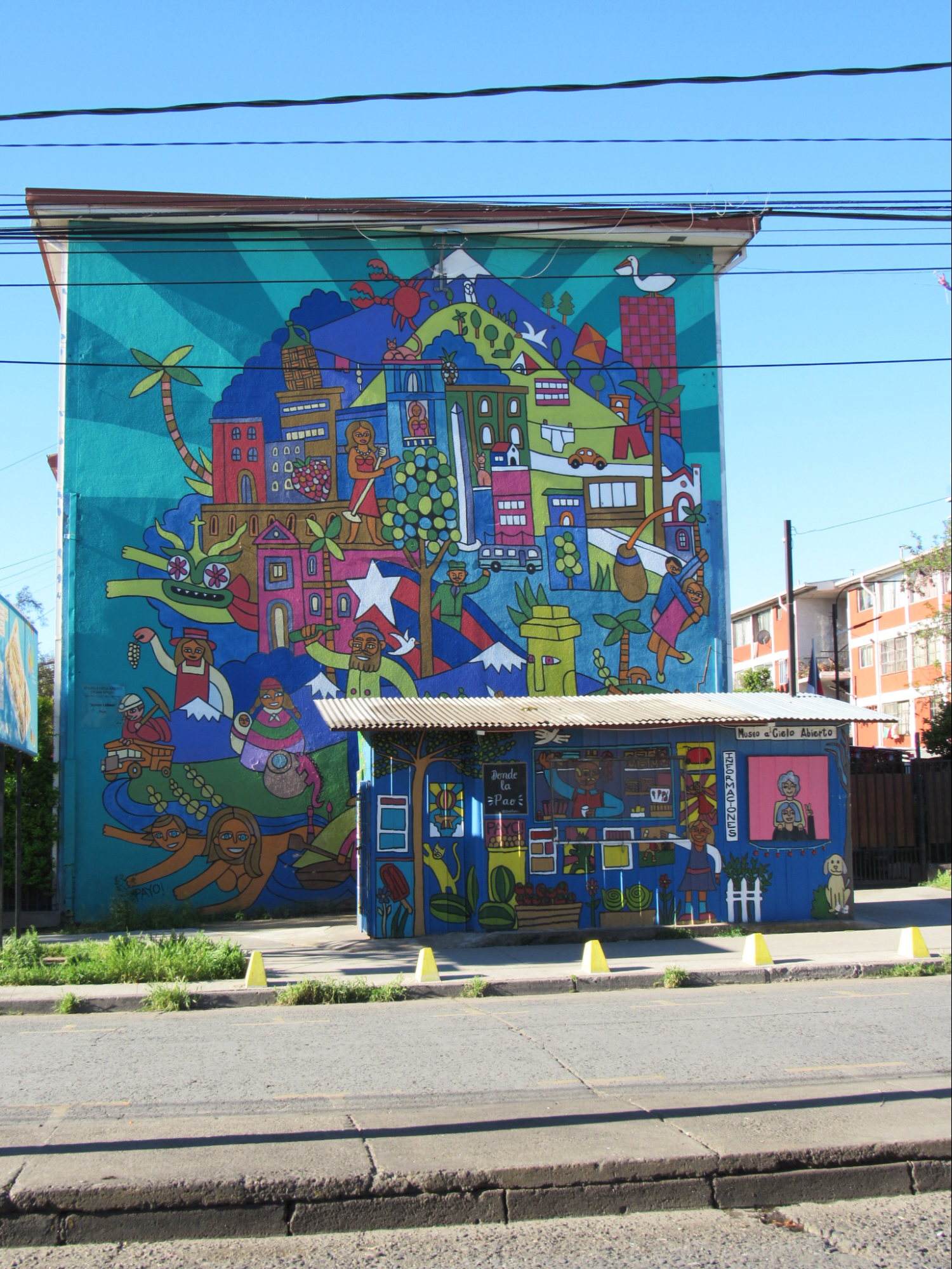
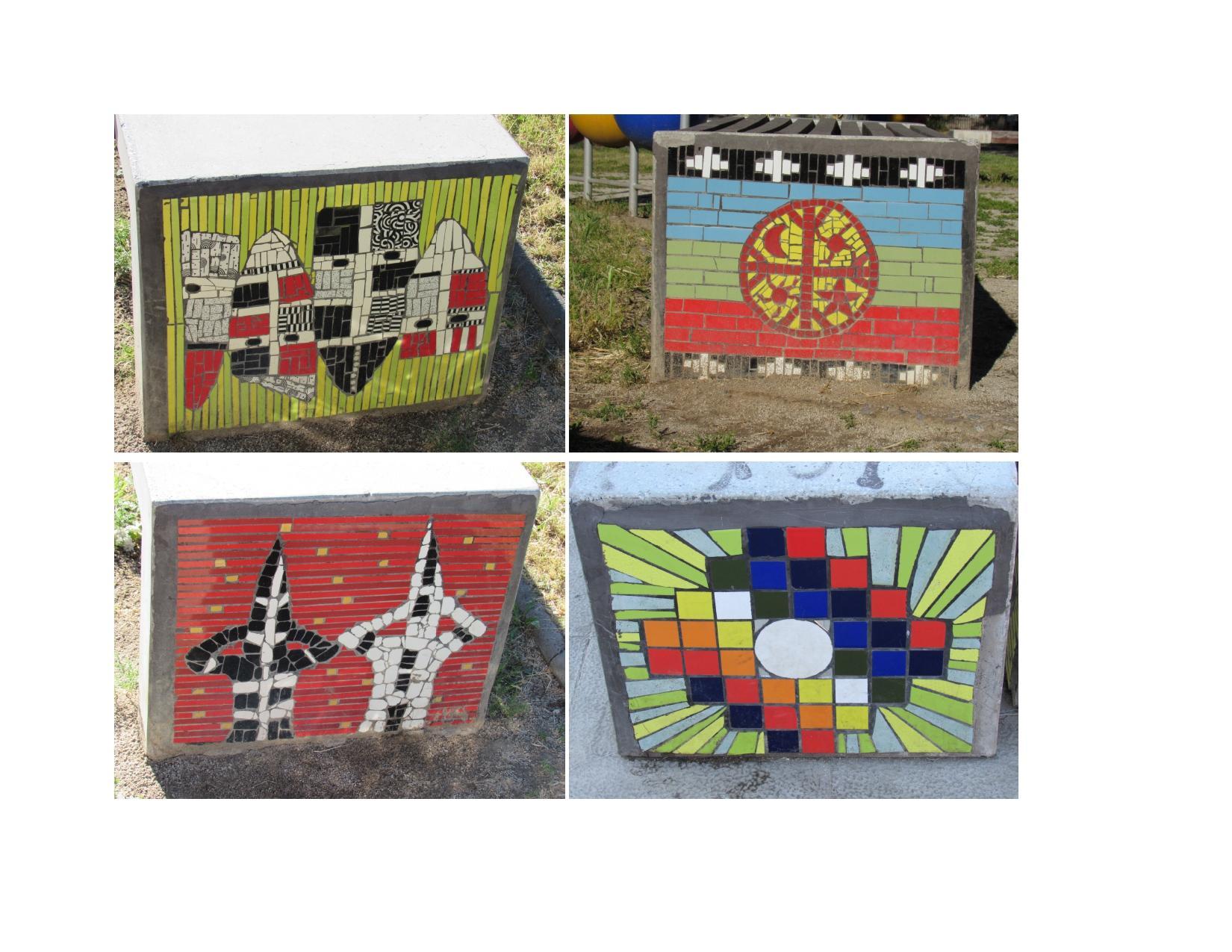
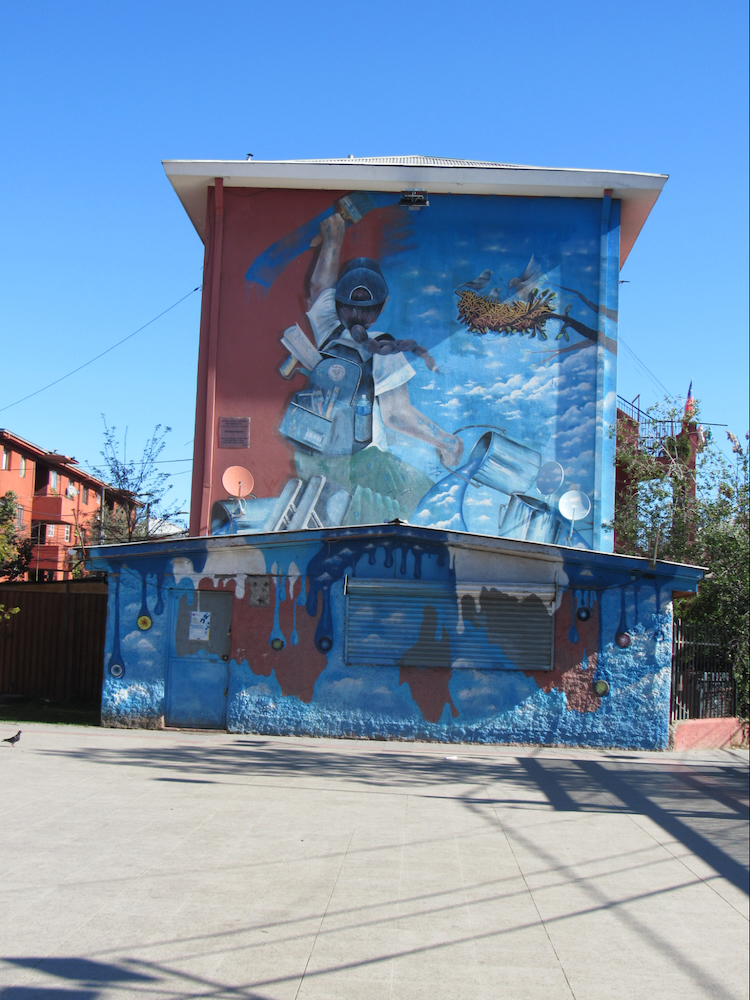
During your visit, you will encounter a wide range of motifs: national figures such as the music band Los Prisioneros - who originated in San Miguel - and the poet Nicanor Parra; and art that criticizes the dictatorial regime and the installment of neoliberalism in Chile. The artworks extend beyond the buildings to other infrastructures, benches, and plazas, using mosaics, recycled materials, and painted signage. For instance, a mural by Payo (Instagram @payosochting) representing the vibrancy and diversity of Latin America, was extended to the structure of a kiosk underneath it. These elements blend seamlessly with children playing, laundry hanging from balconies, and trees swaying in the wind.

According to the Chilean Museums Registry (2025), the Museo a Cielo Abierto en San Miguel is a participatory, community-based cultural project. The neighborhood - originally known as the Miguel Munizaga Mossino housing complex - began to be inhabited in the early 1960s, mainly by workers from the nearby MADECO factory. Today, Villa San Miguel comprises 41 residential blocks and is home to over 6,000 residents (QMB, 2017).
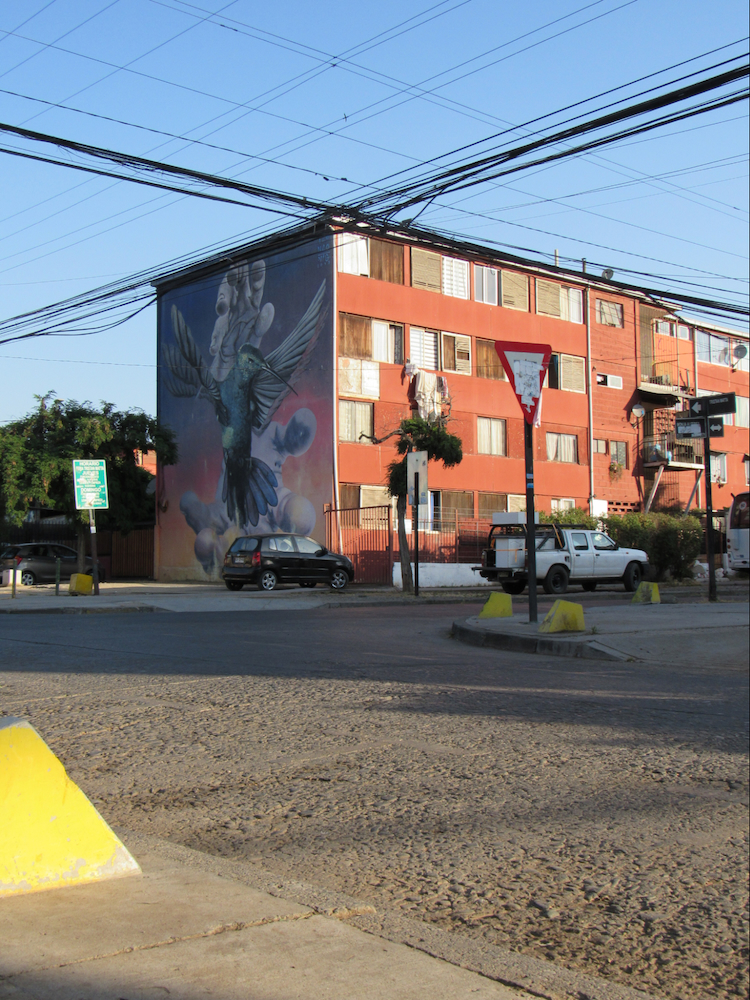
In its early decades, the neighborhood was marked by strong community life. Streets functioned as social spaces, children played outside, and neighbors organized festivals and cultural activities. This cohesion was severely disrupted during Augusto Pinochet’s dictatorship (1973–1990), when social ties weakened, and the physical environment deteriorated. Public spaces became neglected, and buildings fell into disrepair.
In 2009, lifelong residents Roberto Hernández and David Villarroel sought to reverse this process. They founded the Mixart Cultural Center, bringing together families and neighbors to address both the material and social decay of the area. In 2010, they secured Bicentennial FONDART funding to launch an open-air museum, with goals that included large-scale murals, workshops, cultural events, and documentary production. Although the initial funding ended in 2012, the project continued to grow through community effort, private support, and collaborations from all over the world.
Today, the museum features 65 large-scale murals, many curated by the renowned artist Alejandro “Mono” González (Instagram @monogonzalezchile). Recognized nationally and internationally - including by National Geographic - the museum has become a landmark of Chilean muralism (Museo a Cielo Abierto en San Miguel, 2024).
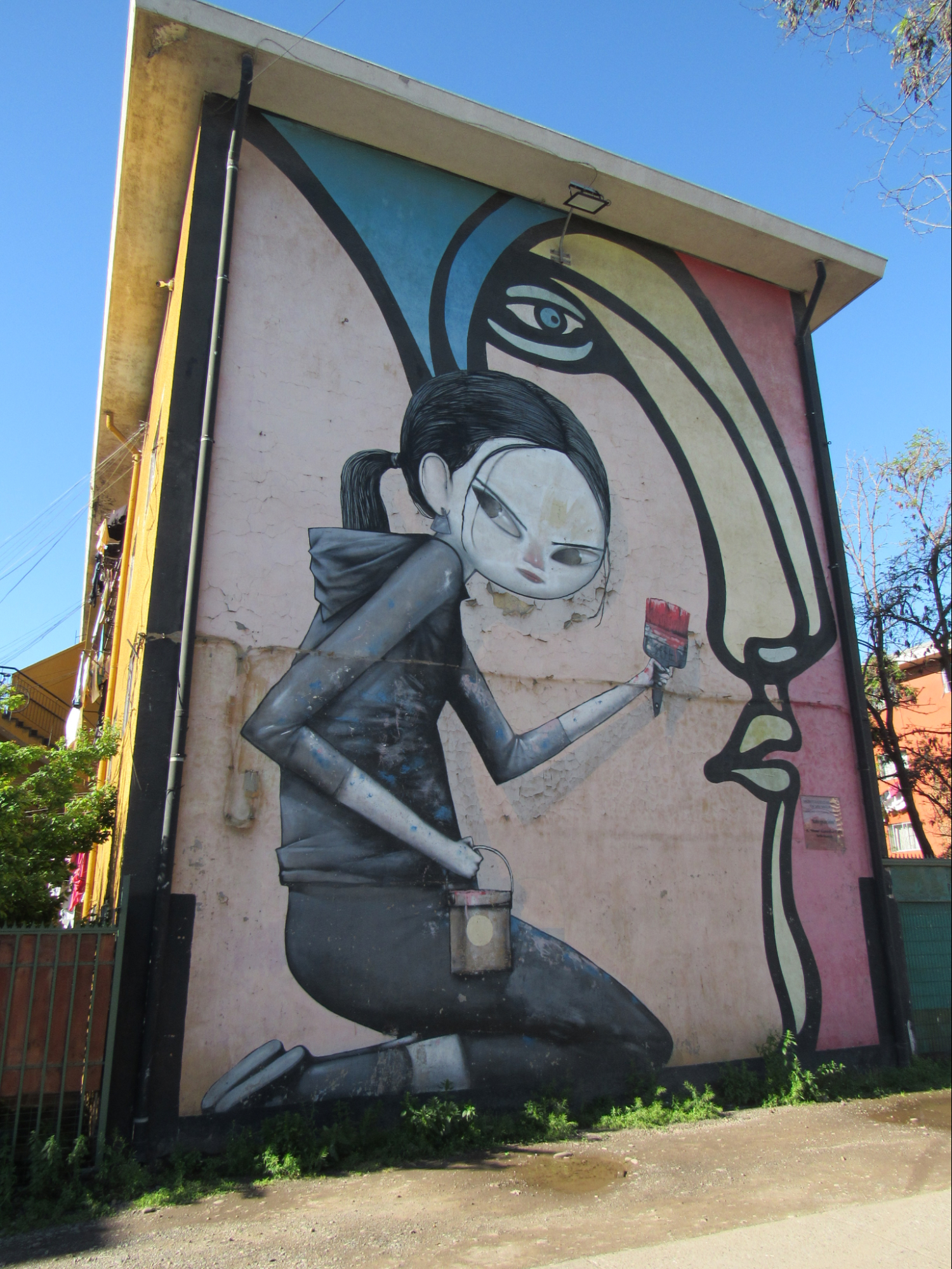
There is no “correct” order for visiting the museum. The sequence and the murals you engage with will depend on each visitor’s style. Some may prefer to explore independently, following their curiosity through the streets. Others would perhaps have another type of experience, aiming to understand the museum’s life process. Roberto - co-founder and coordinator of Mixart - can offer guided walks focused on the museum’s history and key murals. To request this service, you can visit the museum’s website (https://www.museoacieloabiertoensanmiguel.cl/).
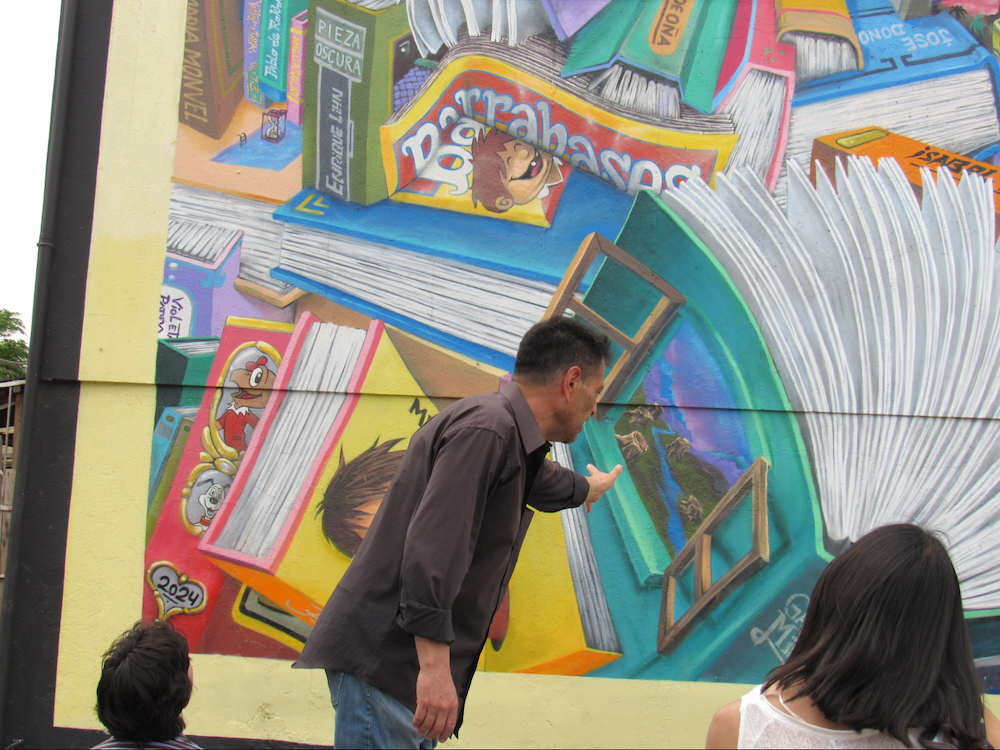
As you may have realized, there are some aspects to consider before your visit regarding comfort and accessibility. Be prepared to walk several blocks, wear comfortable shoes, and bring water.
The weather will surely impact your visiting experience. During the hot summers, temperatures can rise up to 35°C, while in winters you might find yourself walking under the rain and wind. Late afternoons in the summers, around 6:00 p.m., make for a perfect outing. You might encounter cooler temperatures and have the chance to enjoy once - the Chilean equivalent of teatime - while strolling past painted kiosks and bakeries.
Accessibility can be uneven, as some sidewalks are difficult for people with reduced mobility and wheelchair users. However, the museum can also be experienced by car, viewing murals directly from the street.
Certainly, the Museo a Cielo Abierto en San Miguel has enriched and transformed the neighborhood. What could be described as a ‘logic of beautification’ (Escobedo, Jiménez & Pezoa, 2024) that seeks to make the area more aesthetically attractive, has also encouraged an increased use of public space by residents and infrastructural improvements - such as better street lighting - and greater community participation and engagement, reinforcing social cohesion and safety.
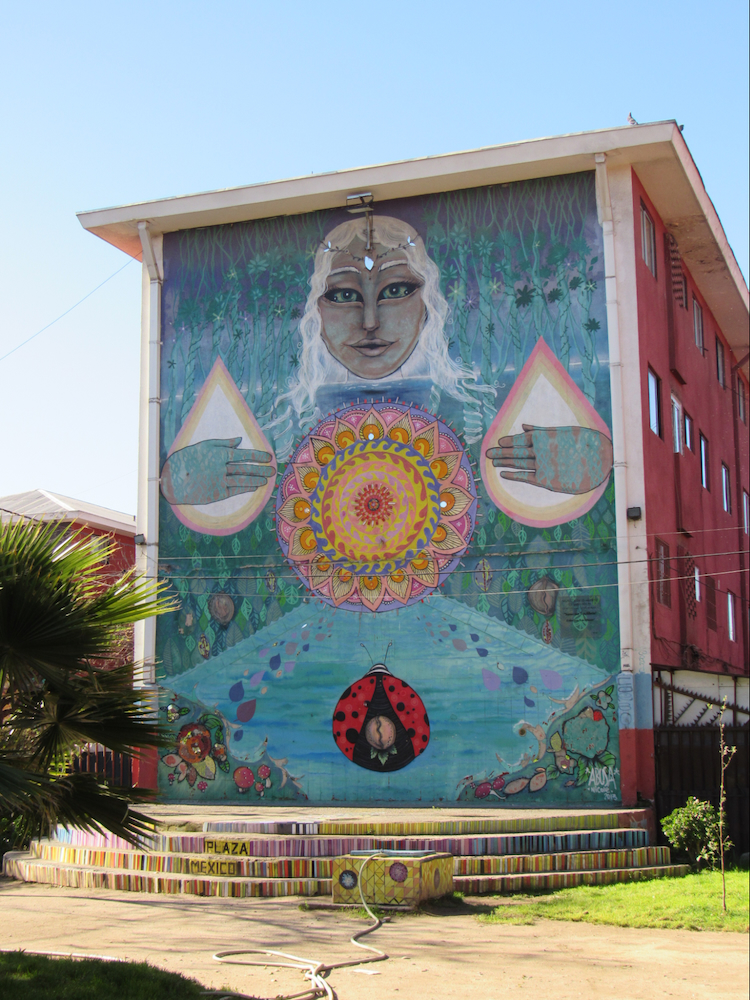
As Roberto pointed out: although the Museo a Cielo Abierto en San Miguel can be seen today as a consolidated cultural project, its permanence has been marked by continuous management and mediation work that is not always visible to those who visit it. In this process, the Mixart Cultural Center has operated as a flexible and sustained structure over time, accompanying the development of the museum beyond its initial stage. This work has involved not only the production and maintenance of the works, but also the articulation of links between neighbors, artists, and institutions, as well as the management of tensions inherent in a project located in a working-class community of social housing, with more than six decades of history and a strong collective memory associated with everyday life. Considering this dimension allows us to understand the museum not only as a collection of murals, but as an ongoing social process, sustained by practices of care, negotiation, and continuity (personal communication, 30 January 2026).
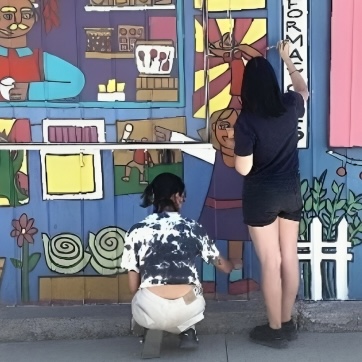
As such, residents are not only the inhabitants of this museum but also its primary caretakers. They participated in selecting the murals and continue to expand the museum through initiatives such as mosaic workshops and other collective artistic practices. The museum and the neighborhood grow together, shaping one another in a continuous process. Similar dynamics can be seen in projects like the Museo a Cielo Abierto de Valparaíso - a key inspiration for the San Miguel project - and the Museu de Favela in Rio de Janeiro.
Taken together, these transformations point beyond local urban improvement and invite reflection on broader questions about what constitutes a museum, where its boundaries are located, and who museums are ultimately for. As Roberto noted, the history and experience of this museum could effectively serve as a practical guide for other areas with similar social and urban conditions (personal communication, 12 November 2025). Its participatory governance model and strong community alliances have positioned San Miguel as a heritage neighborhood and as an inspiration for other communities worldwide.
Escobedo, F., Jiménez, J. & Pezoa, F. (2024). Viviendo entre murales: etnografía en el Museo a Cielo Abierto en San Miguel (Living among murals: an ethnography in the Museo a Cielo Abierto en San Miguel) [Unpublished manuscript]. Antropología de los museos: historia, debates y prácticas, Pontificia Universidad Católica de Chile.
Equipo Quiero mi Barrio (QMB), Ilustre Municipalidad de San Miguel, Secretaría Regional Ministerial de Vivienda y Urbanismo (2017). Villa San Miguel. Un acercamiento a su historia.
Museo a Cielo Abierto En San Miguel (2024). Inicio. https://www.museoacieloabiertoensanmiguel.cl/
Registro de Museos de Chile. (2025). Museo a Cielo Abierto en San Miguel https://www.registromuseoschile.cl/663/w3-article-50831.html
We would like to extend our gratitude to Roberto Hernández for constantly receiving us with open arms and to the residents of Villa San Miguel for their collaboration.
If you would like to explore this museum further, you can visit their webpage and social media profiles:
https://www.museoacieloabiertoensanmiguel.cl/
https://www.instagram.com/museosanmiguel/?hl=es
https://www.facebook.com/groups/94216758067
Spanish translation:
El Museo a Cielo Abierto en San Miguel es verdaderamente único. Como su nombre lo indica, no está contenido dentro de un edificio, sino que se despliega a lo largo de calles, conjuntos residenciales y plazas, inmiscuido en la vida cotidiana. En lugar de ingresar a un museo, sus visitantes se encuentran caminando por un barrio donde el arte y el espacio doméstico son inseparables.
Ubicado en la comuna de San Miguel, en Santiago de Chile, el museo ocupa la Villa San Miguel, un conjunto habitacional construido en la década de 1960 y delimitado por cuatro grandes avenidas. Sus murales están pintados directamente sobre las fachadas de edificios residenciales de cuatro pisos, convirtiendo al propio barrio en una exposición abierta.
Cuando lo visitamos, llegamos en un bus público por Avenida Departamental, y ya desde la ventana comenzamos a divisar murales. Al bajarnos, ingresamos al barrio caminando entre filas de bloques de departamentos y balcones. No había ningún letrero que anunciara el museo y ninguna entrada clara, solo pequeñas placas junto a cada mural que indican su título y autor. En realidad, no existe un recorrido sugerido, ni un punto de inicio, ni una forma prescrita de desplazarse por el espacio. Más tarde supimos que hay mapas de la Villa San Miguel y de sus murales disponibles en la esquina de Avenida José Joaquín Prieto con Carlos Edwards, y en la intersección de Tristán Matta con Teodoro Schmidt.
Se puede llegar en auto o en transporte público. La estación de metro más cercana es Departamental, a unos 30 minutos de Plaza de Armas de Santiago en transporte público. Varias líneas de buses, como la 107, 102 y 108, paran cerca de donde comienza —o termina, según el recorrido— el museo, especialmente en la intersección de Avenida Departamental con Monja Alférez. Desde la avenida, los autos que pasan alcanzan a captar solo destellos fugaces de los murales, mientras que una caminata pausada permite apreciar su escala y detalles.
Encontrar el museo es, paradójicamente, fácil y desorientador a la vez. Los mapas digitales te pueden guiar allí sin dificultad, pero una vez dentro, la similitud de los edificios hace que la orientación no sea tan evidente. Aun así, las imágenes en los muros siempre pueden funcionar como hitos de referencia, tal como suelen usarlos sus propios residentes.
Al estar ubicado en un barrio residencial, la entrada es gratuita y no existen horarios de apertura ni de cierre. El único costo de la visita es el traslado.
Cada visita al museo se siente distinta. A lo largo de Avenida Departamental, el paso acelerado de los buses casi se percibe físicamente, mientras que al internarse en las calles más pequeñas, el ambiente se vuelve más tranquilo e íntimo. Rodeado de murales y mosaicos, el barrio se siente familiar y a la vez lleno de capas por descubrir. A ratos es bastante ruidoso, ya que el tráfico de las avenidas circundantes, la música que suena desde los departamentos y las bocinas que retumban por las calles atraviesan el espacio. Esto no es necesariamente algo negativo, sino una característica intrínseca del territorio. A diferencia de los museos convencionales, el silencio no se espera ni es posible. Los sonidos de la vida cotidiana interrumpen y transforman el espacio en lo que estaba destinado a ser; un entorno vivido.
Los olores también juegan un rol clave. Los jueves por la mañana, la icónica Feria Tristán Matta llena las calles con aromas de frutas, verduras, pescado y carne. La feria es tan central en la vida local que incluso aparece representada en uno de los murales, destacando el diálogo permanente entre el arte y la identidad barrial. En otros momentos, el olor a asado, a panadería o a comida casera flota en el aire, recordando a sus visitantes que este es, ante todo, un lugar donde la gente vive.
Si tienes suerte, puedes encontrarte con actividades comunitarias que ocurren en las calles, como partidos de fútbol o celebraciones en fechas especiales, como Halloween y Navidad. Sin embargo, más allá de un día específico, siempre resulta grato recorrer las calles y apreciar los distintos murales.
Durante la visita se encuentra una amplia variedad de temas retratados en los edificios: figuras nacionales como la banda musical Los Prisioneros —originaria de San Miguel— y el poeta Nicanor Parra; y obras que critican el régimen dictatorial y la instalación del neoliberalismo en Chile. Las intervenciones artísticas se extienden más allá de los edificios hacia otras infraestructuras, tales como bancas y plazas, utilizando mosaicos, materiales reciclados y señalética pintada. Por ejemplo, un mural de Payo (Instagram @payosochting), que representa la vitalidad y diversidad de América Latina, fue extendido a la estructura de un quiosco ubicado debajo. Estos elementos se integran de forma orgánica con niños jugando, ropa colgando de los balcones y árboles meciéndose con el viento.
Según el Registro de Museos de Chile (2025), el Museo a Cielo Abierto en San Miguel es un proyecto cultural participativo y de base comunitaria. El barrio —conocido originalmente como el conjunto habitacional Miguel Munizaga Mossino— comenzó a ser habitado a inicios de la década de 1960, principalmente por trabajadores de la cercana fábrica MADECO. Hoy, la Villa San Miguel comprende 41 bloques residenciales y alberga a más de 6.000 habitantes (QMB, 2017).
En sus primeras décadas, el barrio estuvo marcado por una fuerte vida comunitaria. Las calles funcionaban como espacios sociales, los niños jugaban afuera y los vecinos organizaban festivales y actividades culturales. Esta cohesión se vio gravemente interrumpida durante la dictadura cívico-militar (1973–1990), período en el que los lazos sociales se debilitaron y el entorno físico se deterioró. Los espacios públicos quedaron abandonados y los edificios cayeron en mal estado.
En 2009, Roberto Hernández y David Villarroel, residentes del barrio de toda la vida, buscaron revertir este proceso. Fundaron el Centro Cultural Mixart, reuniendo a familias y vecinos para enfrentar tanto el deterioro material y social del sector. En 2010, obtuvieron el financiamiento de FONDART Bicentenario para lanzar un museo a cielo abierto, con objetivos que incluían murales de gran formato, talleres, eventos culturales y producción documental. Aunque el financiamiento inicial terminó en 2012, el proyecto continuó creciendo gracias al esfuerzo comunitario, apoyos privados y colaboraciones provenientes de todo el mundo.
Actualmente, el museo cuenta con 65 murales de gran escala, muchos de ellos curados por el renombrado artista Alejandro “Mono” González (Instagram @monogonzalezchile). Reconocido a nivel nacional e internacional —incluido National Geographic—, el museo se ha convertido en un referente del muralismo chileno (Museo a Cielo Abierto en San Miguel, 2024).
No existe un orden “correcto” para recorrer el museo. La secuencia y los murales que se recorren dependen del estilo de cada visitante. Algunas personas prefieren explorar de manera autónoma, orientadas por su curiosidad. Otras buscan una experiencia distinta, enfocada en comprender el proceso vital del museo. Roberto —cofundador y coordinador de Mixart— ofrece recorridos guiados centrados en la historia del museo y sus murales principales. Para solicitar este servicio, se puede visitar el sitio web del museo (https://www.museoacieloabiertoensanmiguel.cl/).
Como podrán haber imaginado, hay ciertos aspectos de comodidad y accesibilidad a considerar. Es recomendable prepararse para caminar varias cuadras, usar zapatos cómodos y llevar agua.
El clima incide notablemente en la experiencia de visita. En los veranos calurosos, las temperaturas pueden alcanzar los 35°C, mientras que en invierno es posible encontrarse con lluvias y viento al recorrer el barrio. Las tardes de verano, alrededor de las 18:00 horas, son ideales, ya que suelen ser más frescas y ofrecen la posibilidad de disfrutar de la once —el equivalente chileno de la hora del té— mientras se camina junto a coloridos quioscos y panaderías.
Debido a que algunas veredas resultan difíciles para personas usuarias de silla de ruedas u otras condiciones de movilidad reducida, la accesibilidad puede ser irregular. No obstante, el museo también puede recorrerse en automóvil, apreciando los murales directamente desde las calles.
Sin duda, el Museo a Cielo Abierto en San Miguel ha enriquecido y transformado el barrio. Lo que podría describirse como una “lógica de embellecimiento” (Escobedo, Jiménez y Pezoa, 2024), orientada a hacer el área más atractiva estéticamente, también ha fomentado un mayor uso del espacio público por parte de los residentes, mejoras en la infraestructura pública —como una mejor iluminación— y una mayor participación e involucramiento comunitario, reforzando la cohesión social y la seguridad.
Como señaló Roberto: aunque el Museo a Cielo Abierto en San Miguel puede leerse hoy como un proyecto cultural consolidado, su permanencia ha estado marcada por un trabajo continuo de gestión y mediación que no siempre resulta visible para quienes lo recorren. En este proceso, el Centro Cultural Mixart ha operado como una estructura flexible y sostenida en el tiempo, acompañando el desarrollo del museo más allá de su etapa inicial. Esta labor ha implicado no solo la producción y mantención de las obras, sino también la articulación de vínculos entre vecinos, artistas e instituciones, así como la administración de tensiones propias de un proyecto emplazado en una comunidad obrera de viviendas sociales, con más de seis décadas de historia y una fuerte memoria colectiva asociada al habitar cotidiano. Considerar esta dimensión permite comprender el museo no solo como un conjunto de murales, sino como un proceso social en curso, sostenido por prácticas de cuidado, negociación y continuidad (comunicación personal, 30 de enero de 2026).
En este marco, los residentes no solo son los habitantes de este museo, sino también sus principales cuidadores. Participaron en la selección de los murales y continúan ampliando el museo mediante iniciativas como talleres de mosaico y otras prácticas artísticas colectivas. El museo y el barrio crecen juntos, moldeándose mutuamente en un proceso continuo. Dinámicas similares pueden observarse en proyectos como el Museo a Cielo Abierto de Valparaíso —una inspiración clave para San Miguel— y el Museu de Favela en Río de Janeiro.
En conjunto, estas transformaciones van más allá de la mejora urbana local e invitan a reflexionar sobre preguntas más amplias: qué constituye un museo, dónde se sitúan sus límites y para quiénes son, en última instancia, los museos. Como señaló Roberto, la historia y la experiencia de este museo podrían servir efectivamente como una guía práctica para otros territorios con condiciones sociales y urbanas similares (comunicación personal, 12 de noviembre de 2025). Su modelo de gobernanza participativa y sus sólidas alianzas comunitarias han posicionado a San Miguel como un barrio patrimonial y como una inspiración para otras comunidades en el mundo.
Escobedo, F., Jiménez, J. y Pezoa, F. (2024). Viviendo entre murales: etnografía en el Museo a Cielo Abierto en San Miguel [manuscrito no publicado]. Antropología de los museos: historia, debates y prácticas, Pontificia Universidad Católica de Chile.
Equipo Quiero mi Barrio (QMB), Ilustre Municipalidad de San Miguel, Secretaría Regional Ministerial de Vivienda y Urbanismo (2017). Villa San Miguel. Un acercamiento a su historia.
Museo a Cielo Abierto en San Miguel (2024). Inicio. https://www.museoacieloabiertoensanmiguel.cl/
Registro de Museos de Chile (2025). Museo a Cielo Abierto en San Miguel. https://www.registromuseoschile.cl/663/w3-article-50831.html
Nos gustaría expresar nuestro agradecimiento a Roberto Hernández por recibirnos siempre con los brazos abiertos y a las y los residentes de la Villa San Miguel por su colaboración.
Si deseas profundizar en este museo, puedes visitar su sitio web y redes sociales:
https://www.museoacieloabiertoensanmiguel.cl/
https://www.instagram.com/museosanmiguel/?hl=es
https://www.facebook.com/groups/94216758067
* * *
Macarena P