
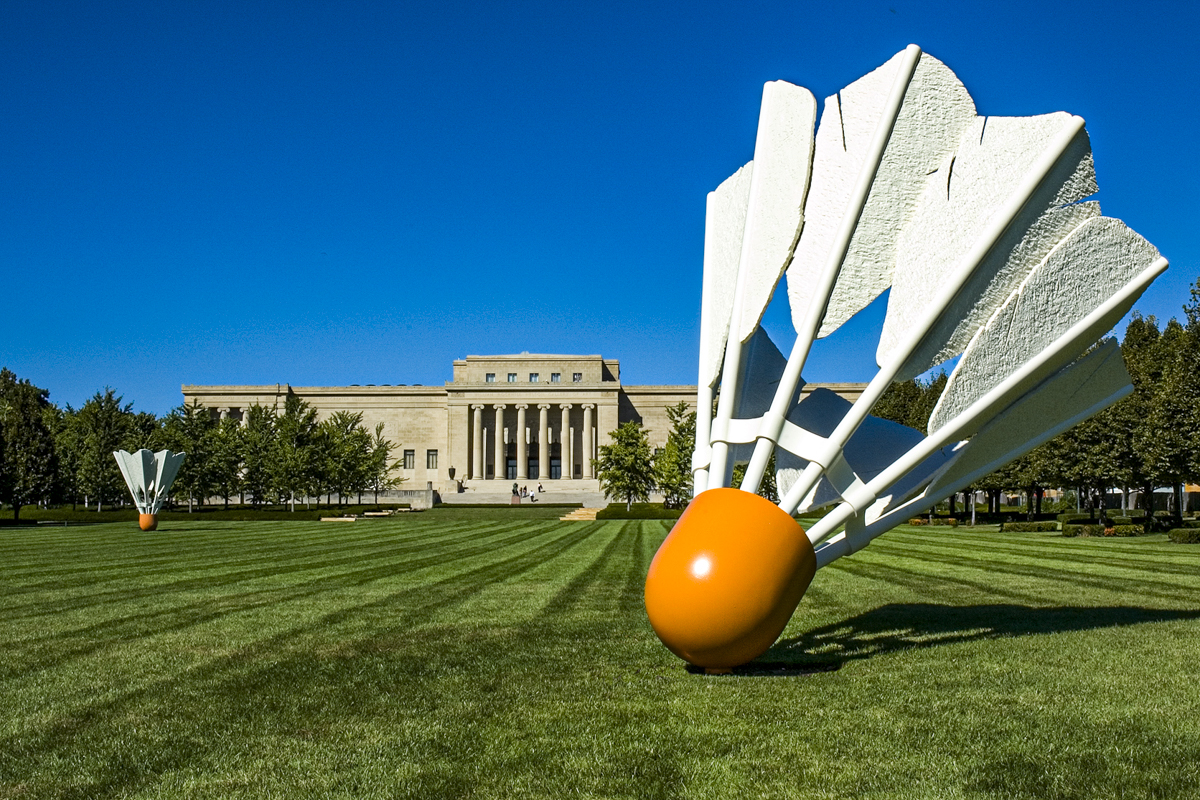
Wherever Mary and I travel, we love visiting art and history museums. Can you imagine that, in the middle of the United States, in Kansas City, Missouri, there is one of the finest museums in the world? The Nelson-Atkins Museum of Art is celebrated for its broad-ranging collection of over 45,000 works of art, some dating back 5,000 years and collected from around the globe.
The Nelson-Atkins Museum of Art was opened in 1933, in the midst of the Great Depression, from the estates of William Rockhill Nelson and Mary McAfee-Atkins. It was their dream to bring culture and art to the population, not only in Kansas City but also across the entire Midwest and beyond. The museum was built in the Beaux-Arts architectural style.

William Rockhill Nelson was born in 1841 to Issac De Groff Nelson and Elizabeth Rockhill in Fort Wayne, Indiana. Nelson’s father published The Fort Wayne News Sentinel. His mother was the daughter of a respected farmer and politician, William R. Rockhill.
Nelson took over The Fort Wayne News Sentinel in 1879 with business partner Samuel Morss. They moved to Kansas City the following year and founded The Kansas City Star, which is still published today.
Nelson was also a real estate developer, building over 100 homes in the city’s Rockhill District. Here, he built his own home, Oak Hall. After he died in 1915, he bequeathed his fortune to his wife and daughter to bring art to all people. His will called for the demolition of his home, Oak Hall, and the construction of an art gallery.

In 1878, in her 40s, Mary McAfee Atkins moved to Kansas City as a new bride. She had been a schoolteacher in Kentucky when an old school chum, James Burns Atkins, a widower, married Ms. McAfee. Mr. Atkins was a shrewd real estate speculator who amassed a considerable fortune, but he sadly passed away eight years after he and Mary wed.
Mary McAfee Atkins was now a very wealthy woman, heartbroken and alone. Since she did not have children of her own, she invited her niece to live with her. Eventually, the niece married, and she moved to Switzerland with her husband.
Atkin’s niece asked her aunt to visit. She accepted the invitation and took a trip to Europe. Once there, she fell in love with museums and galleries. She took several trips back to Europe’s finest galleries over the years.
When she passed away in 1911, she had left $300,000 (over ten million in today’s currency). Her wishes were to build a museum of fine Art.
The trustees of William Rockhill Nelson and Mary McFee Atkins agreed that combining the funds and building a single museum was the best way to utilize the endowments.
The William Rockhill Nelson Gallery and the Mary McAfee Museum of Fine Arts would reside under one roof. During the construction of the massive gallery, curators were sent to all parts of the world to fill the museum. This was during the worldwide Great Depression, allowing the curators to purchase treasures at bargain prices.
When the museum/gallery was opened in 1933, it had an extensive, varied collection of works from many cultures. Works by European masters and a significant collection of Chinese and Indigenous American art.
Known for many years as the Nelson Art Gallery or the Nelson Gallery, it rightfully became the Nelson-Atkins Museum of Art in 1983. The addition of the contemporary-designed Bloch Building in 2007 expanded the gallery space by 165,000 square feet, bringing the total to almost 600,000 square feet.
The African collection encompasses 2,500 years and features over 400 distinct objects. These artifacts represent a wide variety of cultural expressions from 30 different cultures across the African continent, including several historically significant pieces. These collected artifacts can be found in the Bloch building.

This collection comprises works of painting and sculpture from America, dating from the 1700s and continuing through World War II. One of our favorites is the 45 paintings and drawings by Kansas City’s own Thomas Hart Benton.
These works are among the highlights of the Nelson-Atkins Museum of Art. Featuring items dating back 4000 years from Egyptian, Greek, Near Eastern, and Roman eras of history.
The Egyptian collection was started in the 1930s. The Nelson-Atkins has acquired an incredible amount of artifacts from the eras of Senusret III, Ramses II, Nefertiti, and the Ptolemies.
The crown jewel of the collection is that of an Egyptian priestess, Meretites, from the 30th Dynasty to the early Ptolemaic period. An exhibit acquired in 2007 features funerary equipment, including cartonnage, two coffins, and over 300 statues of servants. Statues occupy an entire gallery within the museum.

Vases and sculptures primarily from the 5th to the 1st centuries B.C. are just a part of this impressive collection. Commanding sculptures of the gods Demeter and Helios are not to be missed. Beautiful bronze statuettes of satyr and young athletes are displayed alongside a priceless terracotta of Apollo.

The Roman collection contains a premier selection of sculptures from the 2nd and 3rd centuries A.D. Powerful portraits of Roman emperors, such as Hadrian and Severus, adorn the gallery walls.
The Nelson-Atkins Asian collection was considered one of the finest in the West by 1941. This magnificent collection, with over 7,000 works spanning every period of China’s art history, is on view in this exhibit. Some of the art dates back more than 1,000 years before Christ was born. The collection encompasses paintings, jade jewelry, inlaid boxes, sculptures, furniture, and over 500 exquisite silk fabrics.

From the 1960s to the present, this fascinating collection covers pop, minimalism, conceptual pluralism, and globalization. From Arneson’s Pablo Ruiz with Itch to Andy Warhol’s Baseball, this extensive collection covers the contemporary genre.
Do not miss the Noguchi Sculpture Court housed in the Bloch Building. The court was designed by architect Steven Hall, specifically for this exhibition of seven Noguchi sculptures. Steven Hall was the architect of the Bloch Building. This is the largest public exhibition of Isamu Noguchi sculptures outside New York and Japan.

This collection of paintings and sculptures spans from medieval times to the 19th century. Housed in both the main museum and the Bloch Building, it showcases works by fine art masters and sculptors. Included are Monet’s Boulevard des Capucines, Caravaggio’s St. John the Baptist in the Wilderness, Poussin’s The Triumph of Bacchus, and Rembrandt’s Young Man in a Black Beret.

We loved Degas’s pastels and Toulouse-Lautrec’s sketches. Mosca’s sculpture, Atalanta and Meleager with the Calydonian Boar, is available for your consideration alongside other masterpieces.

There are over 2000 works from the 7th Century to the early 1900s in the Japanese collection. The outstanding woodblock prints account for over 500 of the works. This collection of Edo-period Ukiyo-e prints includes works by Hokusai, Hiroshige, and other masters.
One of the highlights of this exhibit is the paper folding screens from the 16th to the 20th centuries. Two of the most magnificent works are the Pine and Plum Moonlight by Kaiho Yusho and Shiokawa Bunrie’s River Landscape with Fireflies.
The collection is complete with lovely ceramics and sculptures.
This collection comprises drawings, paintings, and sculptures by renowned artists such as Klee, Picasso, Pollock, Miro, and many others. The works represent Abstract, Bauhaus, Cubism, Dada, Fauvism, and Surrealism from the early 20th Century into the 21st century.

Considered one of the finest Native American collections in the United States, with over 200 artifacts. The art and objects of the Pacific Northwest Coast, Southern Woodland, Plains Native tribes, and the Southwest.
The number of prominent masterworks makes the collection historically invaluable. Before the museum opened in 1933, crates of Native pieces were delivered to Nelson-Atkins. Many of these came from the Museum of the American Indian/Heyes Foundation in New York and the Fred Harvey Company in Kansas City. Over the last 70 years, the Kansas City community has given objects and artifacts to this distinguished collection housed in three galleries at the museum.

Displayed in the Bloch Building, the Photography Collection of over 7000 works by over 1000 artists, makes the Nelson-Atkins Museum one of the world’s leading museums for photography. This collection begins with daguerreotypes in 1839 and continues through the processes used in the 21st century.
This compilation includes 161 works by one of Kevin’s favorites, David Douglas Duncan. Many of these photographs are from Duncan’s collection of Picasso at home. Other masters include substantial bodies of work by Ray K. Metzker and Terry Evans. The extensive list of artists includes Dorthea Lange, Timothy O’Sullivan, and André Kertész. The collection will captivate you for hours.
The works are rotated because of light sensitivity five times a year.

This collection of over 1100 pieces features art from many different cultures and art forms, dating back to the 3rd Century BC and continuing into the 21st Century, including Himalayan art and Islamic art from West Asia.
The collection began in 1931, before the gallery opened two years later. That acquisition was predominantly Southeast Asian sculptures and Indian textiles.
The collection’s greatest strength is its sculptures. Examples of stone, bronze, and metals from Ancient Gandhar, India, Nepal, Southeast Asia, and Tibet. There are works on paper from Persia, folios, furniture, and drawings from the colonial era in India.

The sculpture park became a reality with the Hall Family Foundation’s acquisition of 57 works by Henry Moore. An additional 10 pieces were acquired by the foundation in 1989 and added to the collection. The park was first named the Henry Moore Sculpture Park.
By 1992, the collection started to grow exponentially, thanks to the Hall Family Foundation’s Modern Sculpture Initiative. The acquisition of many works by numerous artists in the 1990’s greatly expanded the collection, and the park was renamed the Kansas City Sculpture Park.
On the park’s tenth anniversary, all 87 pieces were gifted to the museum. The park was renamed again, becoming the Donald J. Hall Sculpture Park.

When you need a break, the Rozzelle Court Restaurant in the center of the museum offers food, wine, beer, and soft drinks in an Italianate garden setting. In this quiet and beautiful setting, you can relax, chat with companions, and discuss the masterpieces from around the world.

The Nelson-Atkins Museum of Art is one of the world’s finest art museums. We believe the best way to see it is over several days. If you only have one day to visit, we recommend focusing on one or two collections.
This free-to-all museum is a fascinating learning experience for all ages and interests. It is also a perfect opportunity to introduce children to the world of art.
Visiting the Nelson-Atkins Museum of Art in Kansas City, Missouri, is deeply inspiring due to its diverse collection of over 45,000 artworks spanning centuries and cultures. This cultural gem offers visitors inspiration, education, and the opportunity to appreciate art’s beauty and significance in society.
* * *
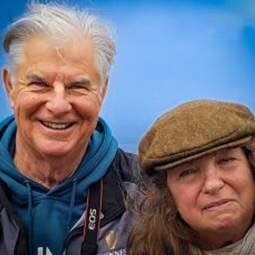
Mary and Kevin are travel writers, travel photographers, and hotel scouts. They are based in Gozo, Malta. M&K travel internationally and domestically, looking for their next travel story.
Mary and Kevin are lifelong photographers and passionate travelers. Mary became a published travel writer in 2016, and Kevin began his career as a travel journalist in 2021. Today they work together, focusing on off-the-beaten-path, not-well-known, and in-the-shadow-of locations. They delve into art, music, food, and libations. In addition, they explore architecture, museums, parks, well-curated tours, history, agriculture, and the unexpected in micro-towns and big cities, domestically and internationally.