I did not set out to visit a steam locomotive museum.
I spent a week in Nuremberg, taking regional trains to nearby towns in northern Bavaria. One of my day trips was planned for Bad Berneck, a name that caught my eye— “Bad” in German usually signals a spa or mineral baths.
The train carried me as far as the station at Neuenmarkt-Wirsberg, where I was supposed to catch a bus for the last stretch to Bad Berneck. When the bus arrived, the driver shook his head—road construction had blocked the route and continuing that day wasn’t possible.
Travel rarely unfolds as planned, but sometimes the best stories begin that way.
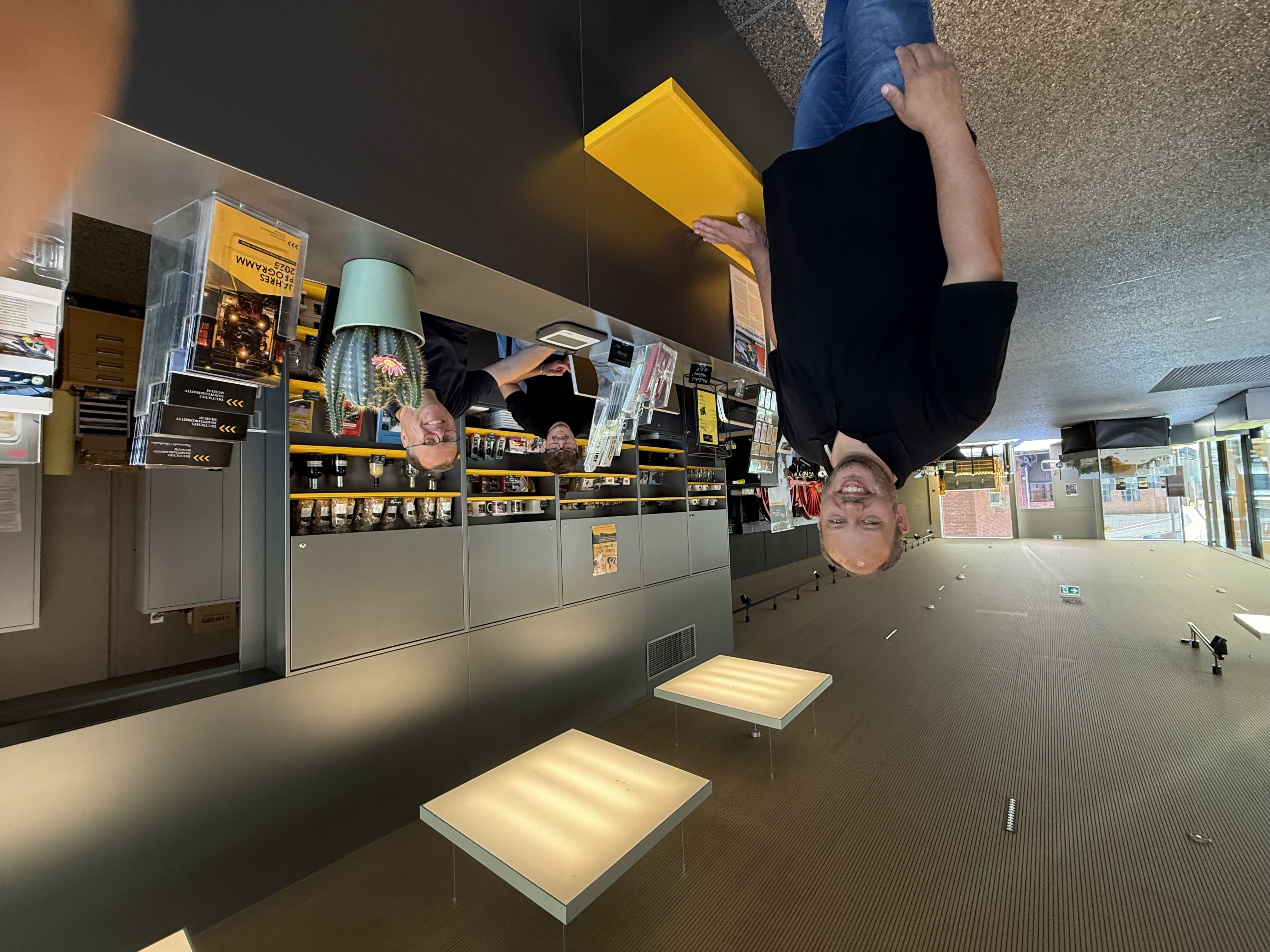
I texted my local contact, Florian Fraass from Bad Berneck Tourism, to explain the hiccup. Instead of sending me back, he told me to hang tight. A short time later he pulled up in his car, grinning as if this detour had been planned all along.
“This is actually good luck,” he said. “You’re in the perfect spot for the German Steam Locomotive Museum.” He was right.
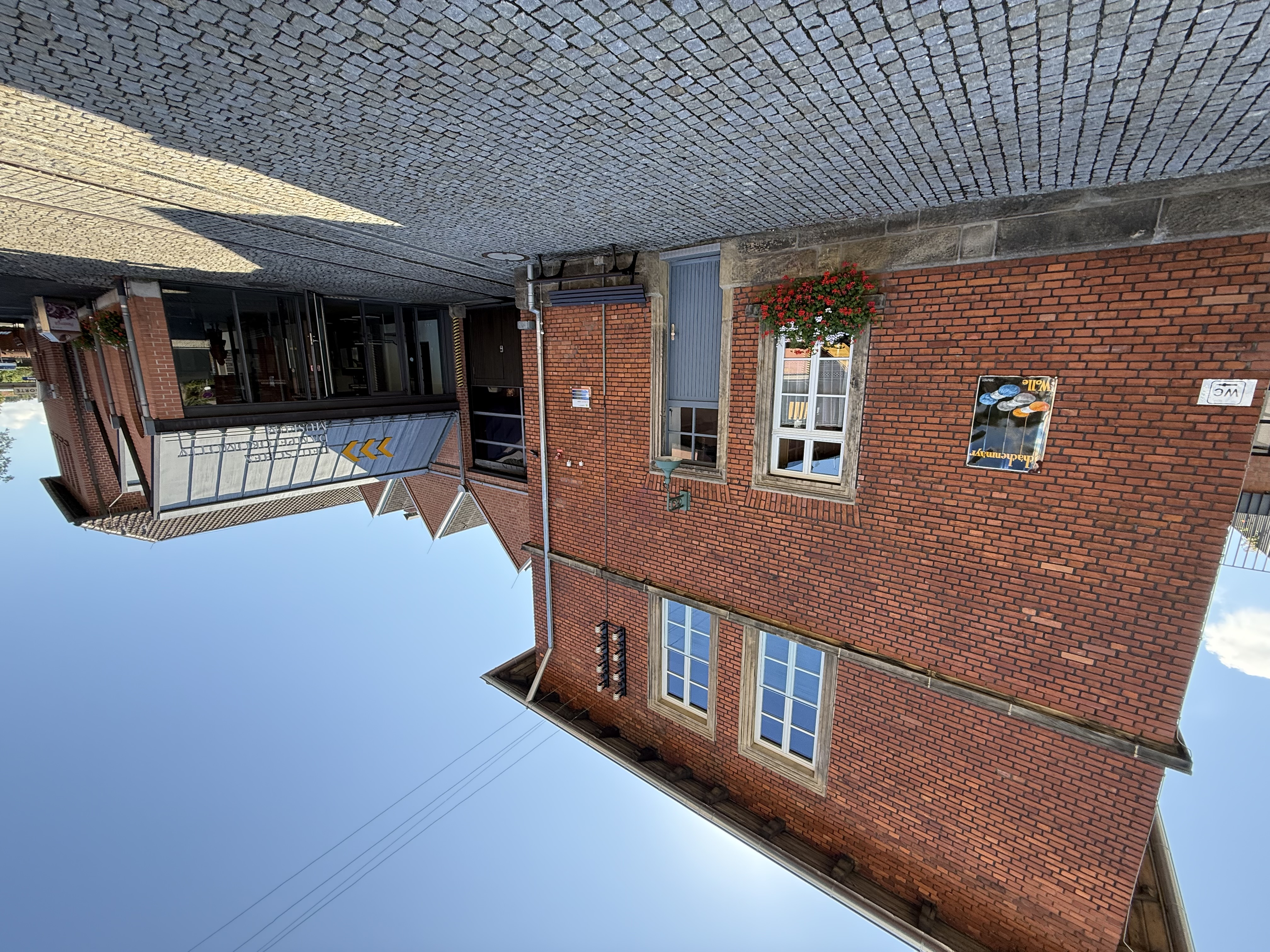
The German Steam Locomotive Museum sits at the base of the Schiefe Ebene, one of Europe’s first steep railway grades. In the 1800s, it was a proving ground for steam engines, showing trains could conquer hills once thought impossible.

When steam locomotives were retired in Germany in 1977, the depot in Neuenmarkt could have disappeared like many others. Instead, local rail fans and former workers stepped in to save what they could. Over time, their efforts turned the old locomotive yard into a museum, keeping the original roundhouse, turntable, water towers, and service equipment in place.
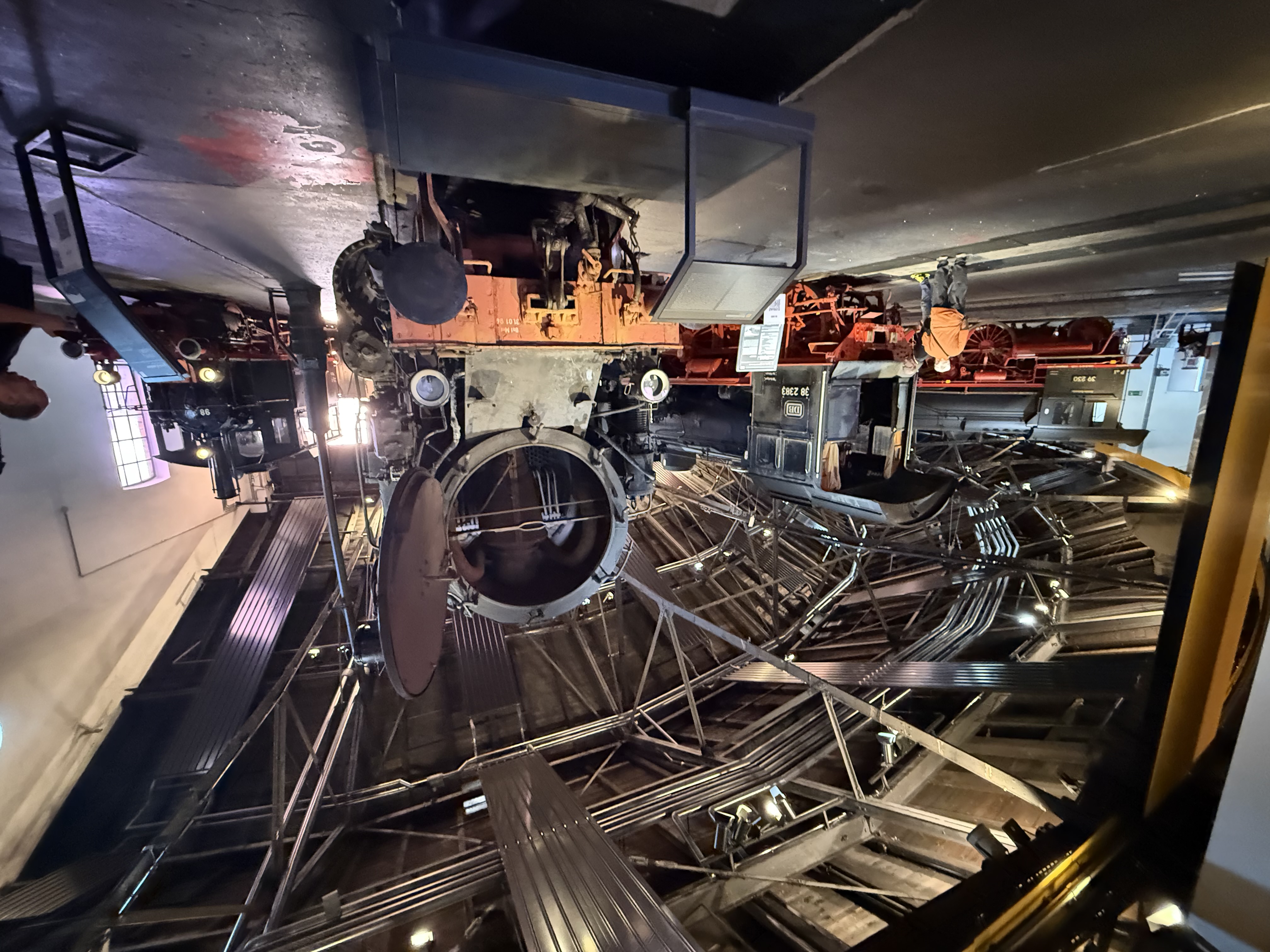
More than thirty historic locomotives are housed here, not as isolated objects but as part of the environment in which they once worked. The scale of the site shows that railroads were never only about trains. They were about infrastructure, labor, and the work required to keep machines in motion.
The first impression is not the locomotives.
It is the space.
Inside the roundhouse, the locomotives sit in a wide brick building arranged around a central turntable. Each bay holds a different engine, and some of them are big enough to make the building feel smaller than it really is. Light comes through high windows and reflects off steel wheels and rods.
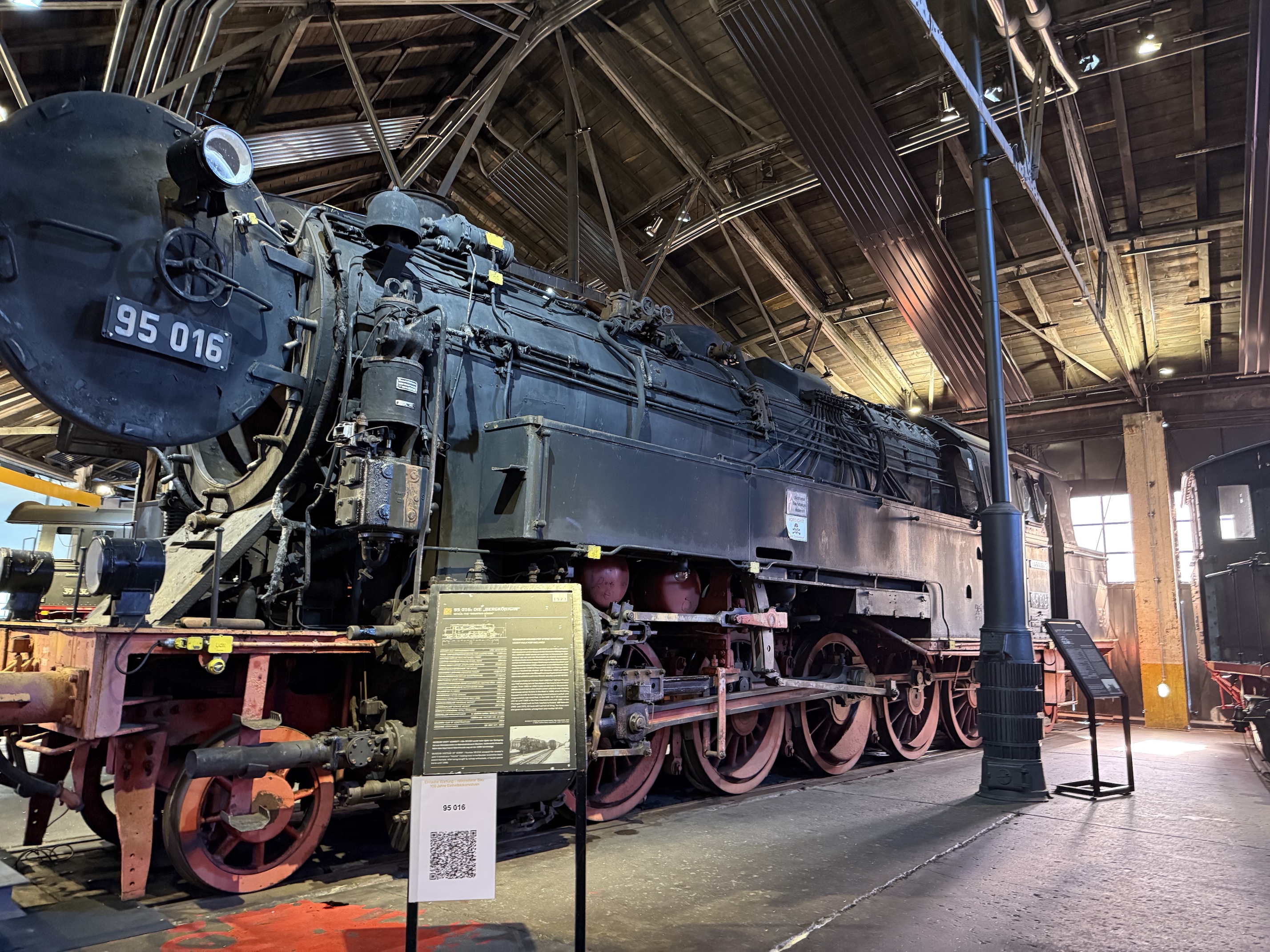
The place smells faintly of oil and metal, like a repair shop that has been around a long time. It’s mostly quiet, but you can hear footsteps on the floor and the sound of tools from the workshop where engines are still being restored.

Up close, I noticed the steps on one locomotive where the paint had been worn away from years of use. Details like that make it easier to imagine the crews who once worked here every day.

This is not a museum of glass cases.
It’s a museum that feels alive.
The museum began as a private effort to save locomotives that would otherwise have been scrapped when steam service ended. In 1984, responsibility passed to a regional association that continues to operate the site today, supported by public funding, volunteers, and railway historians.
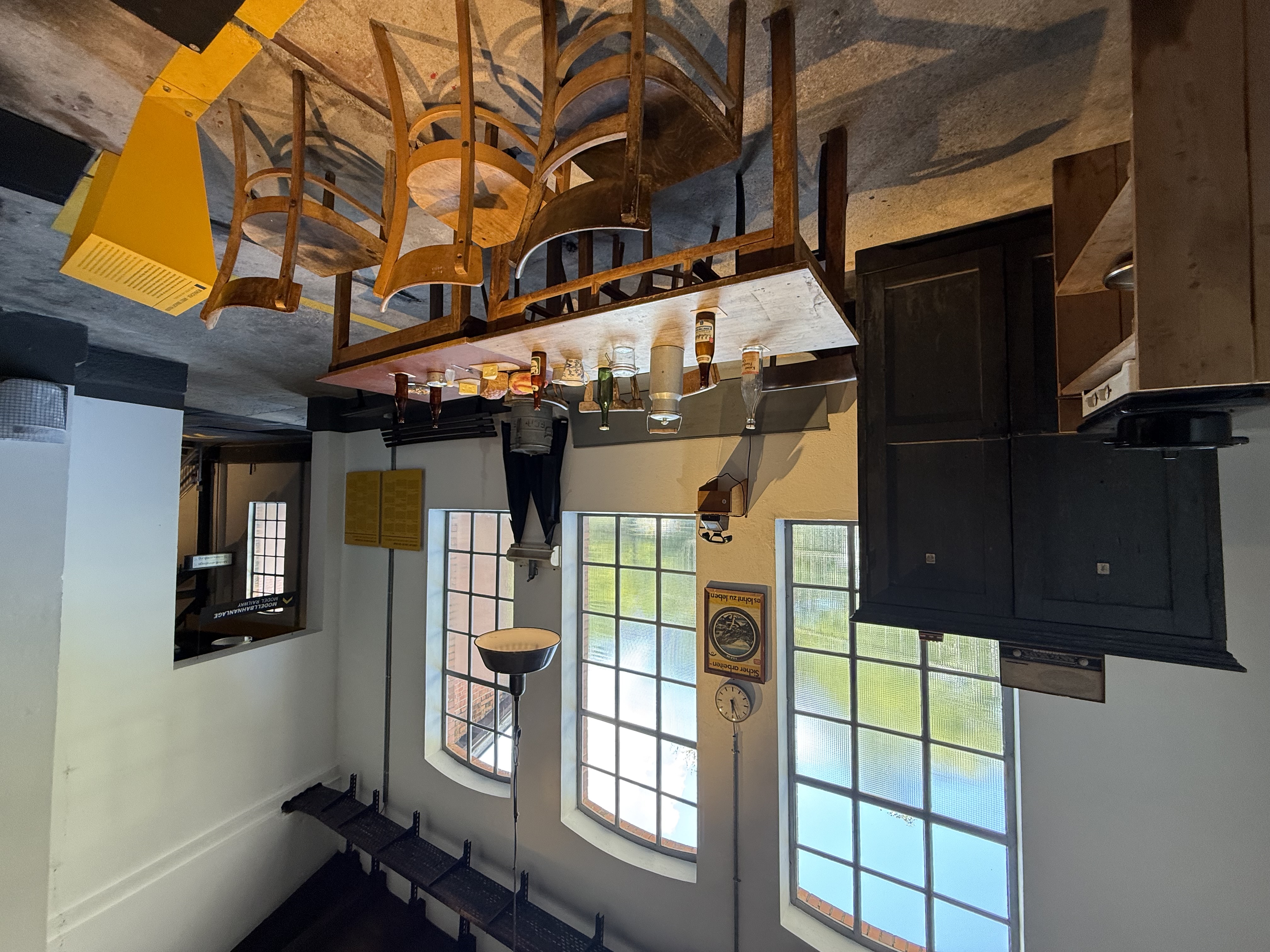
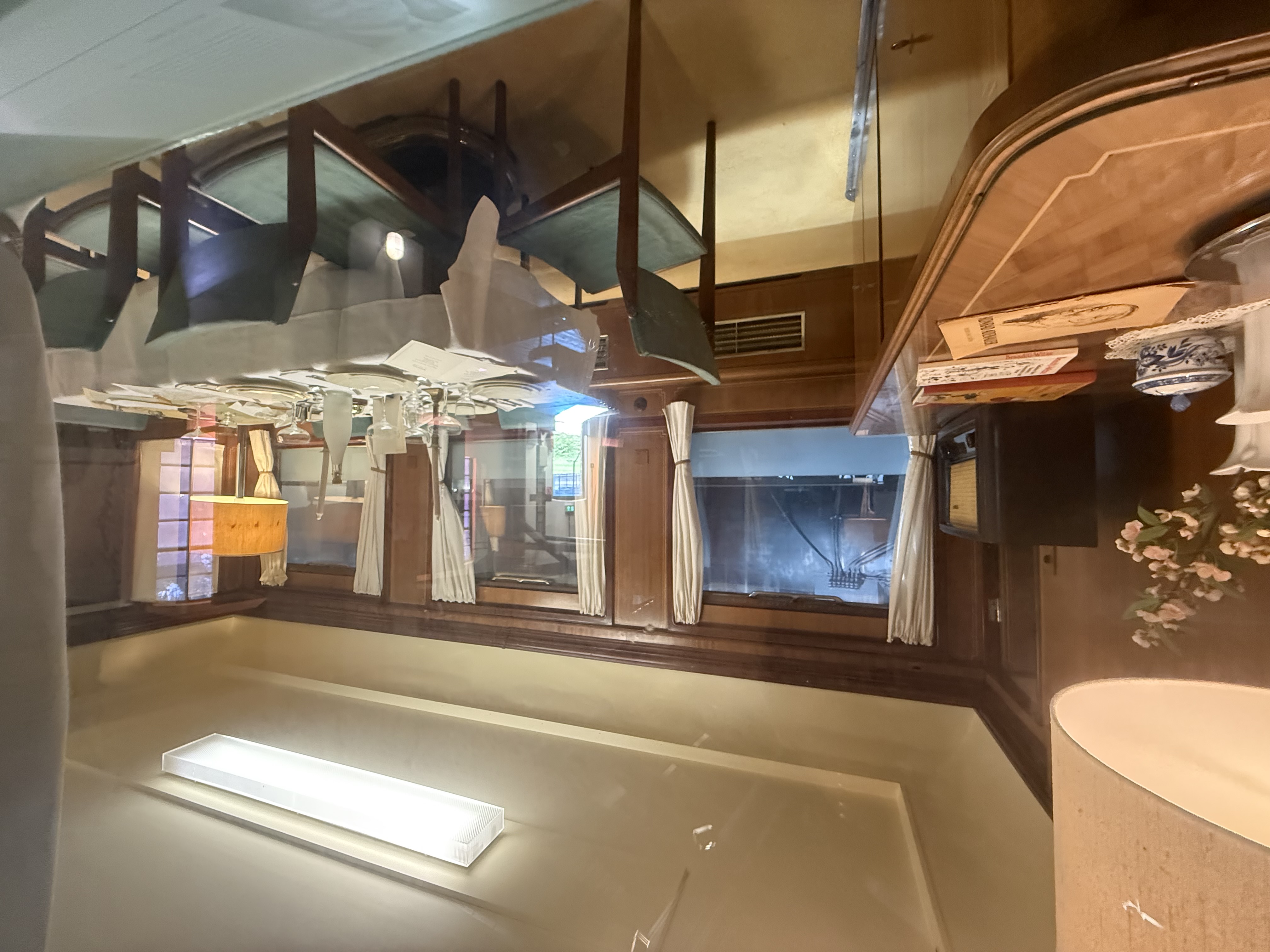
One thing I noticed right away is that the buildings are part of the museum. The old depot is still here, with the roundhouse, turntable, water towers, and equipment that kept the locomotives running. Walking through the yard, you get a sense of how much work went on every day when trains came in to be serviced.

Exhibits explain the mechanics of steam power and the importance of the Schiefe Ebene incline, while outdoor displays show how the entire system functioned. Many exhibits also include QR codes you can scan for extra details making it easy to dive deeper on your own. Major signs are in German and English, though smaller panels appear only in German. A staff member is usually nearby to answer questions, especially about engines under restoration.
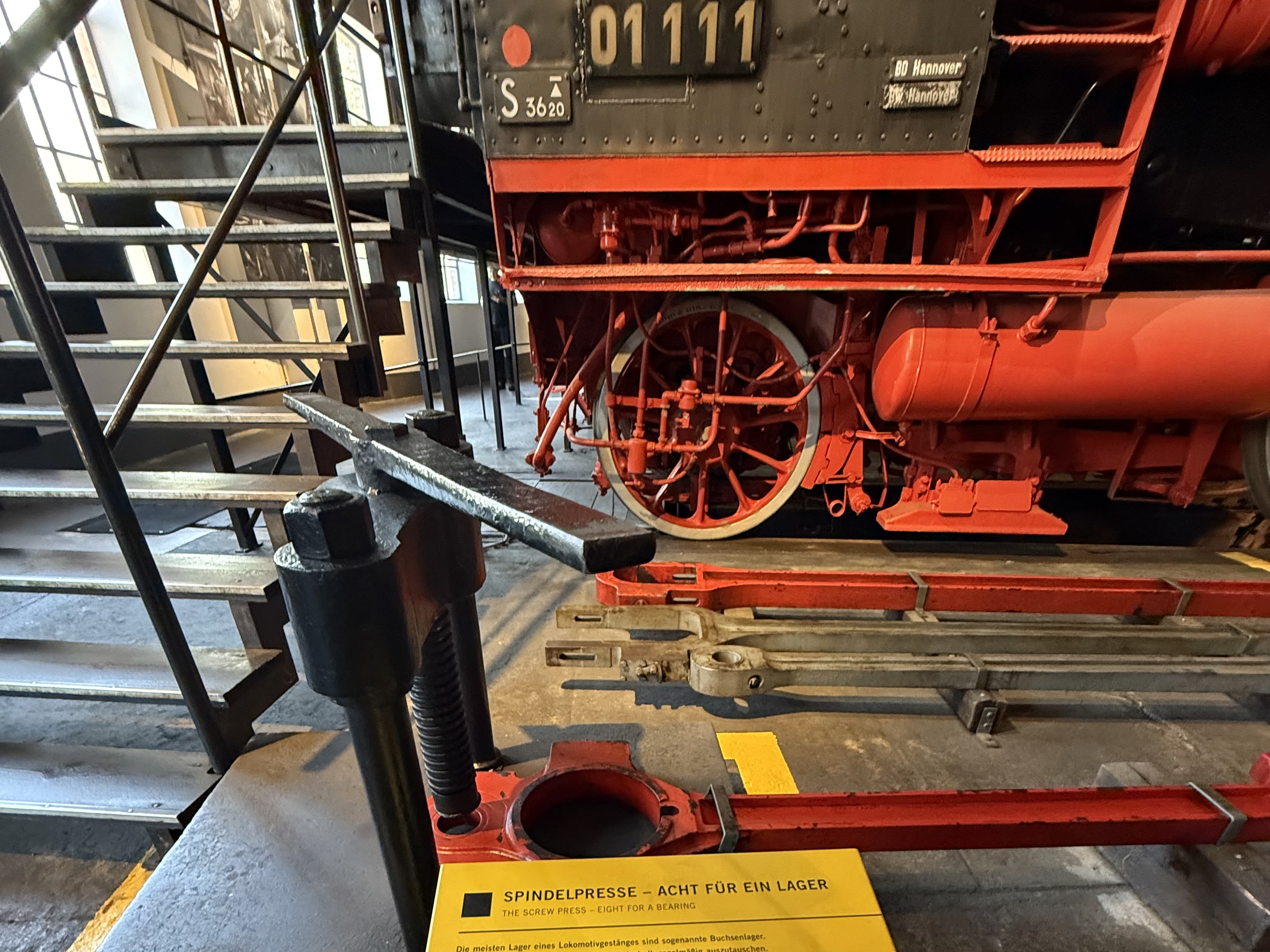
Allow at least two hours to explore this fascinating museum. A short walk from Neuenmarkt-Wirsberg railway station makes it easy to reach by train from Nuremberg or Bayreuth, and visitors by car can access it directly from the A9 autobahn. Some areas include uneven ground or steps, so those with limited mobility should take care.
The museum is open Tuesday through Sunday, 10 a.m.–5 p.m. in the summer and 10 a.m.–3 p.m. in the winter. It is closed on major holidays; check the museum website for current details.
Admission is €25 for adults, €19 for children and teens ages 6–16, and €53 for a family ticket. Special events may have separate pricing. To support the museum, consider joining the Friends of the German Steam Locomotive Museum.
Modern trains pass through the nearby station with barely a sound, sleek and efficient. The engines inside the roundhouse are different.
You can trace the motion of pistons and rods. You can imagine the heat of the firebox and the pressure building inside the boiler. Steam power was demanding, sometimes dangerous, always dependent on the skill of the people who ran it. The museum preserves both the machines and the labor that made them work.
Standing among those silent engines, I realized the visit felt familiar in a way I had not expected.
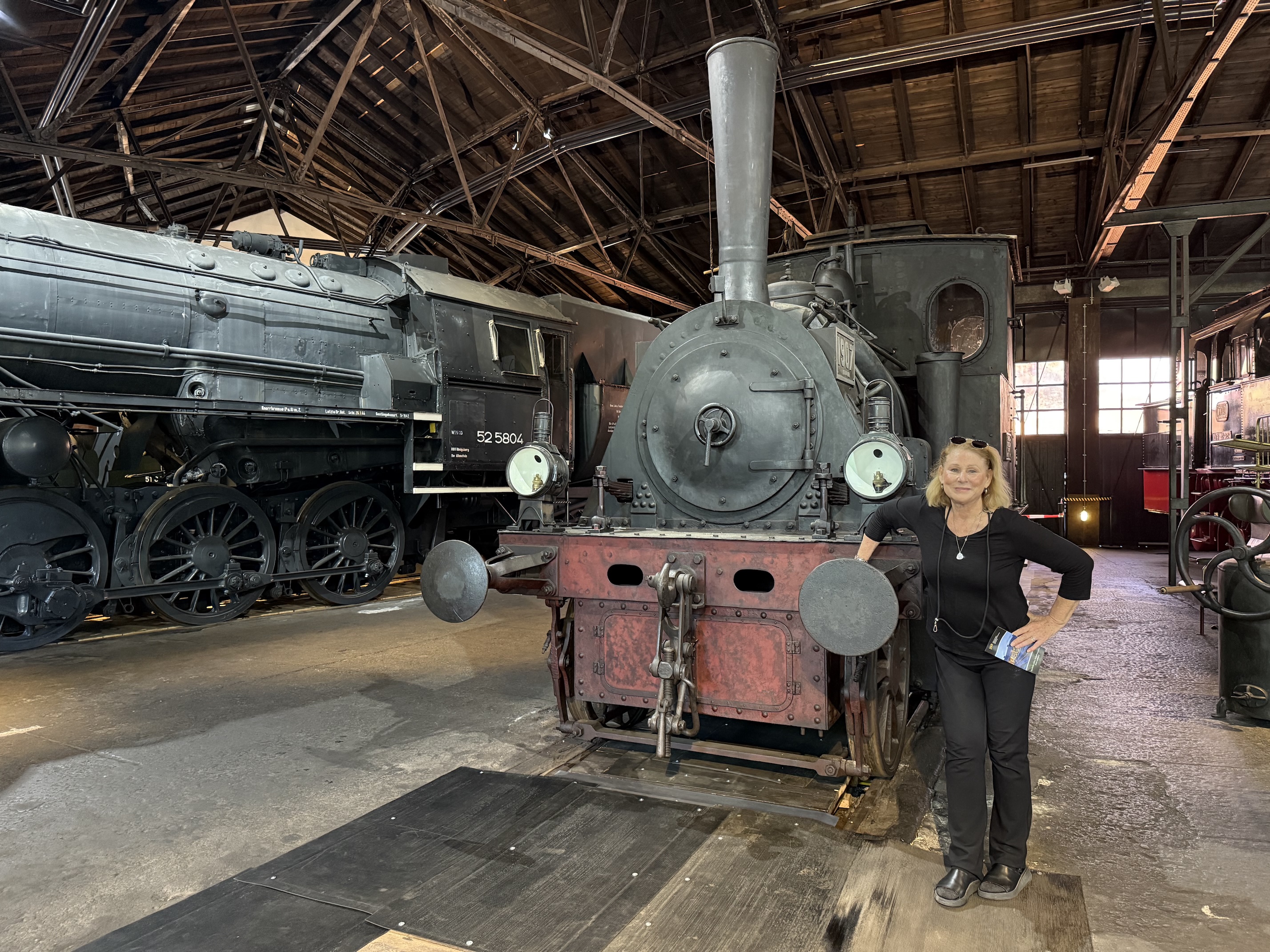
I come from a railroad family. My grandfather was an engineer on the Pennsylvania Railroad in Michigan, and my father worked as a brakeman. Railroading was not simply his job; it shaped the rhythm of our family life.
One of my earliest memories is riding with him in the caboose when I was a little girl. I remember the sway of the car, the metallic hum beneath my feet, and the feeling that I had been let behind the scenes of a world few really see. The landscape looked different from the back of a freight train — wider, somehow more alive.
On one trip, we brought home a bushel of peaches for my mother. They sat between us on the floor of the caboose, their sweetness mixing with the smell of diesel and steel. To me, it felt like an adventure. To my father, it was probably just another shift.
It wasn’t long before trains returned to my life. I rode with my Dad’s Amtrack pass on long trips to school, enjoying the chance to watch the scenery and let my mind wander. That familiar rhythm stuck with me over the years.
Standing in the roundhouse at Neuenmarkt, surrounded by locomotives built for another country and another century, I realized that railroads work their way into your bones. Not only through history and machinery, but through small moments that stay with you long after the train has passed.
And in that quiet Bavarian depot, the sound of those memories felt as real as steam.
* * *

Sharon Kurtz is a travel writer, photographer, and podcaster who turned a midlife pivot into her dream job. Based in Austin, Texas, she travels the world in search of museums, history, culture, and unexpected stories, sharing her journeys through writing and her podcast, Wander the World with Sharon. She believes the best travel experiences begin with curiosity and a willingness to follow where the story leads.
Find her work on Linktree, read her Wander the World digital magazine, follow her on Instagram, and listen to her monthly podcast here