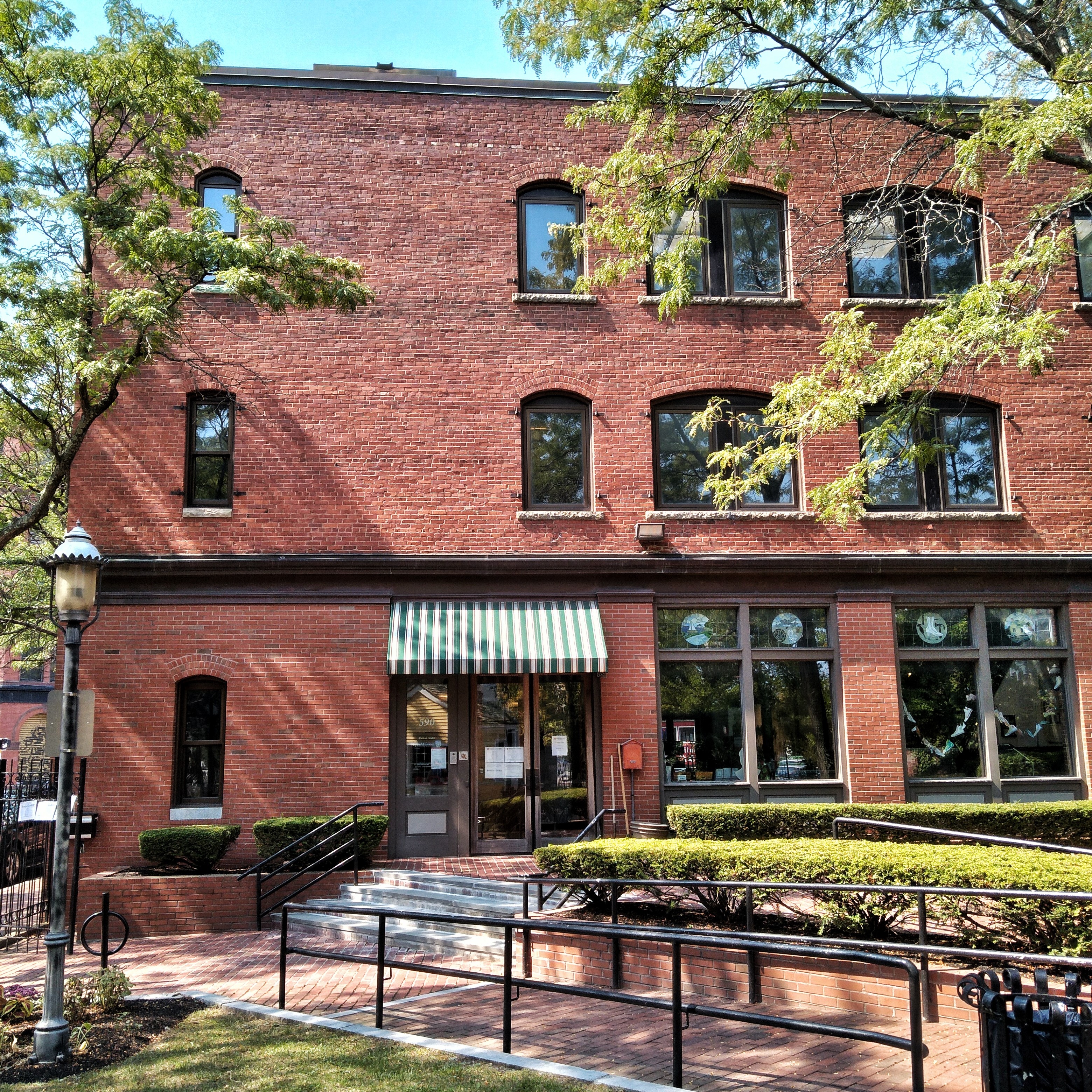
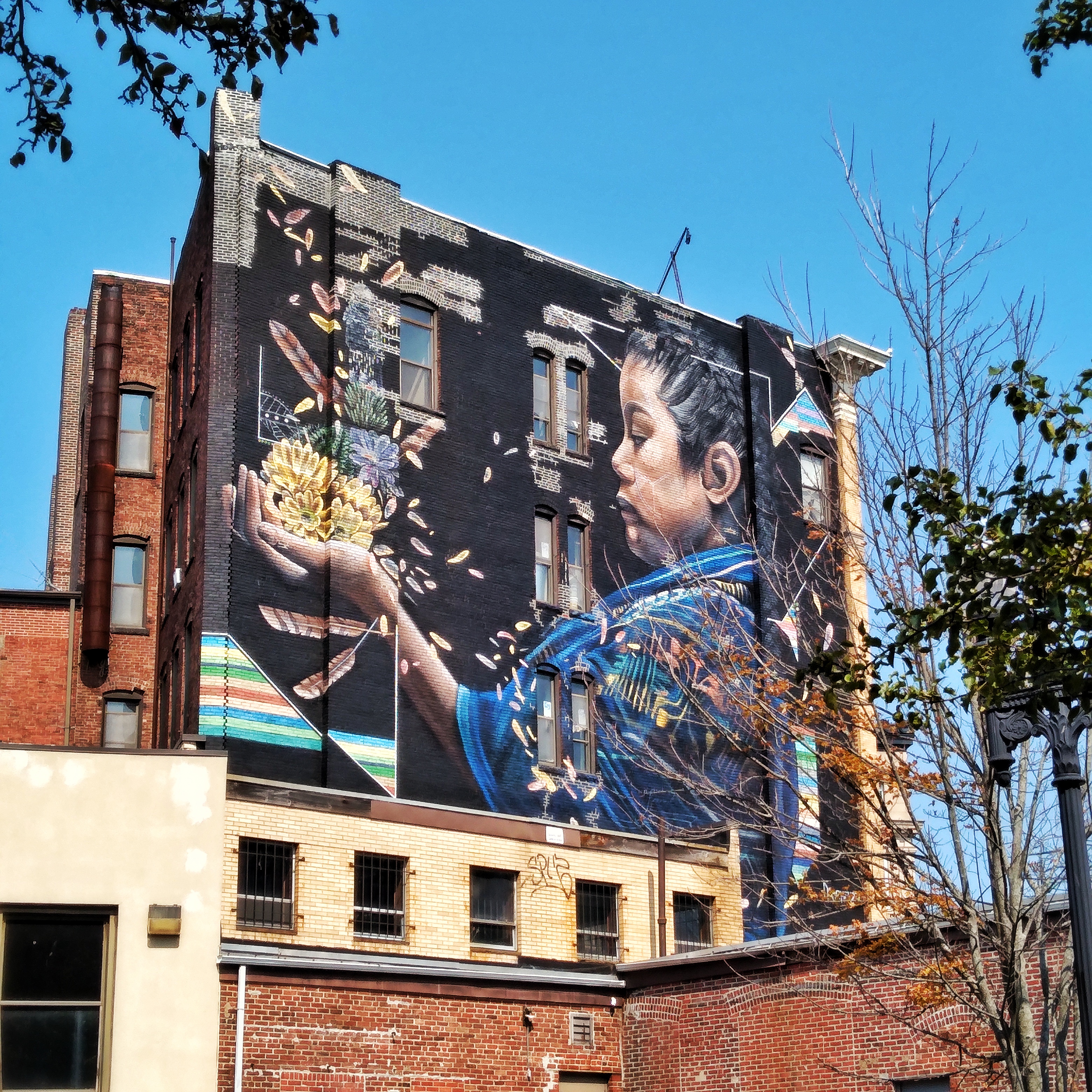
Founded in 1897 as a place to collect the history of the rapidly changing industrial city of Lynn, MA, Lynn Museum & Arts Center houses the community art galleries of LynnArts on the first floor and the artifact-based exhibits of Lynn Historical Society on the second floor. Set in the Downtown Cultural District described as “one of Massachusetts’ best kept secrets” by Mass Cultural Council, this perfectly sized museum is a quick visit to give a comprehensive overview of life in the so-called “city of sin” from its settlement by European colonists in 1629 to the present day.
The first floor space featured two distinct art exhibits. During my visit in 2022, the first was Lydia Newhall Breed: Art of a Community Legacy, which highlighted the work of a local printmaker and illustrator who passed away in late 2019. Breed’s woodcuts featured scenes from the Massachusetts coast, like lighthouses and boats, where her family has lived since the 17th century. In fact, Breed’s Hill in Boston was named after her ancestor. Besides Lydia N. Breed’s success as an artist, she was a founding member of The Boston Printmakers, which began in 1947 and celebrated its 75th anniversary in 2022. This exhibit was truly a community effort.
On the opposite side of the gallery was Khmer Identity: Shadows with modern art created by Khmer people from Cambodia. The paintings combine traditional motifs with modern illustrations that express their fear and grief surrounding the Pol Pot genocide and Khmer Rouge regime during the 1970s. The exhibit was designed in collaboration between Khmer language teacher Daveth Cheth, illustrator and Salem State graduate Cindy Sous, and MassArt graduate Davey Chhoeun. All three work at the Khmer Identity organization based in Lynn. This exhibit was sponsored by Lynn Cultural Council, along with a grant from Historic New England, which demonstrates the important contributions of Khmer language and traditions to New England culture as a whole.
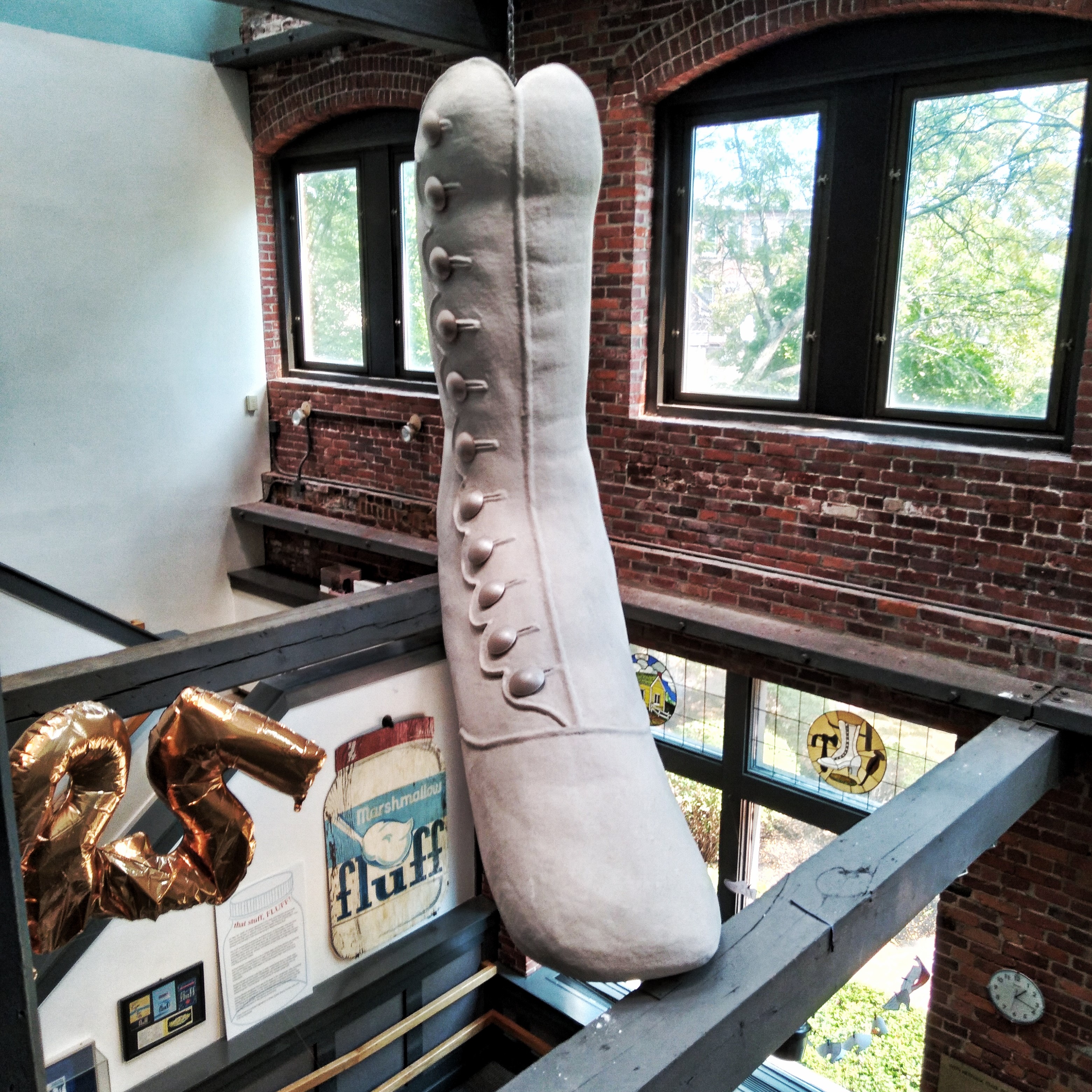
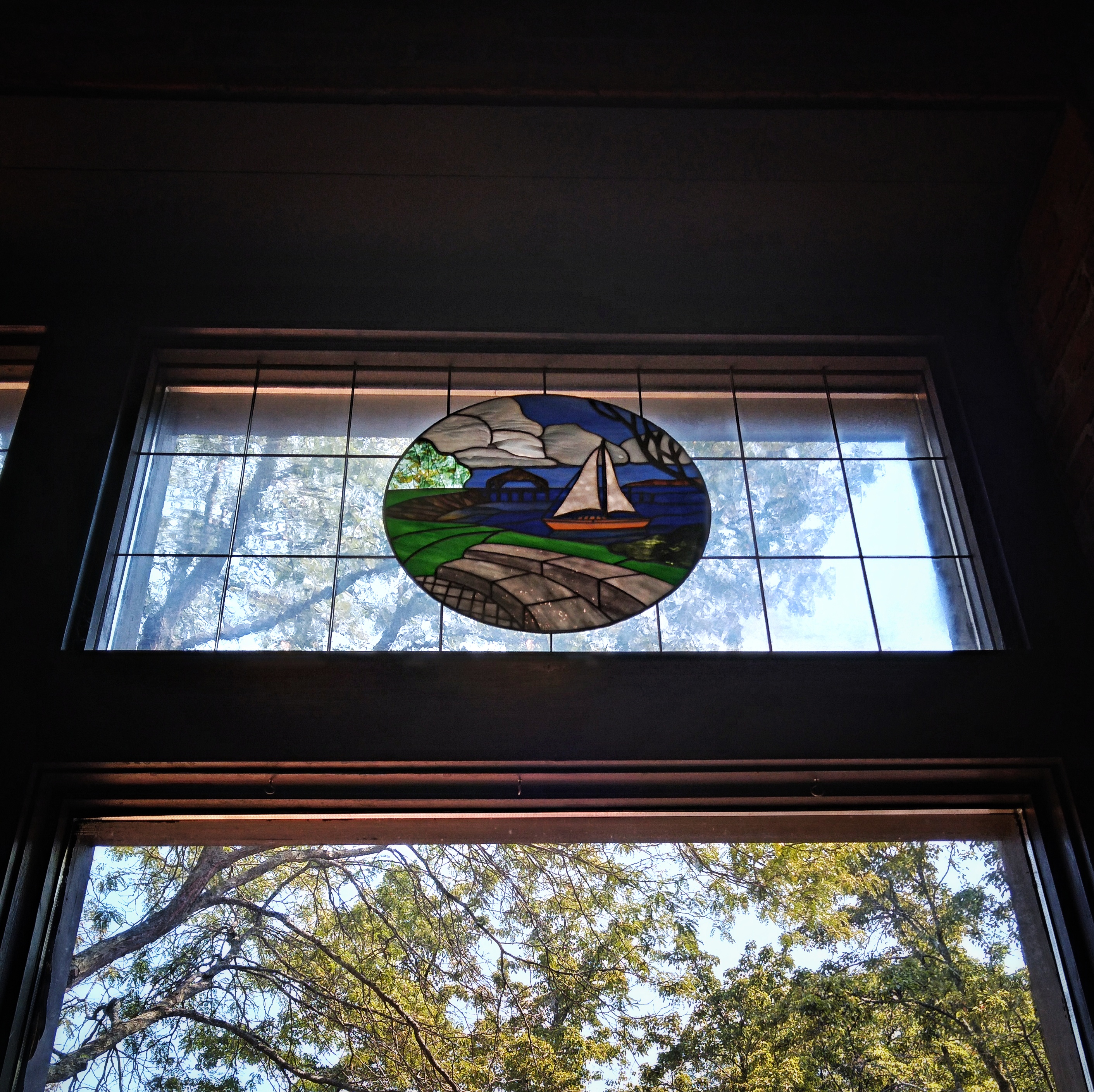
Also on the first floor were permanent installations related to Lynn history. An oversized can of Marshmallow fluff adorned the wall behind the admissions desk, while an enormous woman’s boot hung from the ceiling. In each of the windows was a round piece of stained glass highlighting different parts of Lynn history, including sailing, boot making, electrical engineering, and early colonial settlement.
Up on the second floor, while only the three exhibits were on display at the time of my visit, the museum had no shortage of Lynn history. From a cute yet educational diorama to political pieces from the abolitionist movement to the standard fire buckets and clocks that populate all historical museums in the USA, the building is chock full of great artifacts and excellent signage.
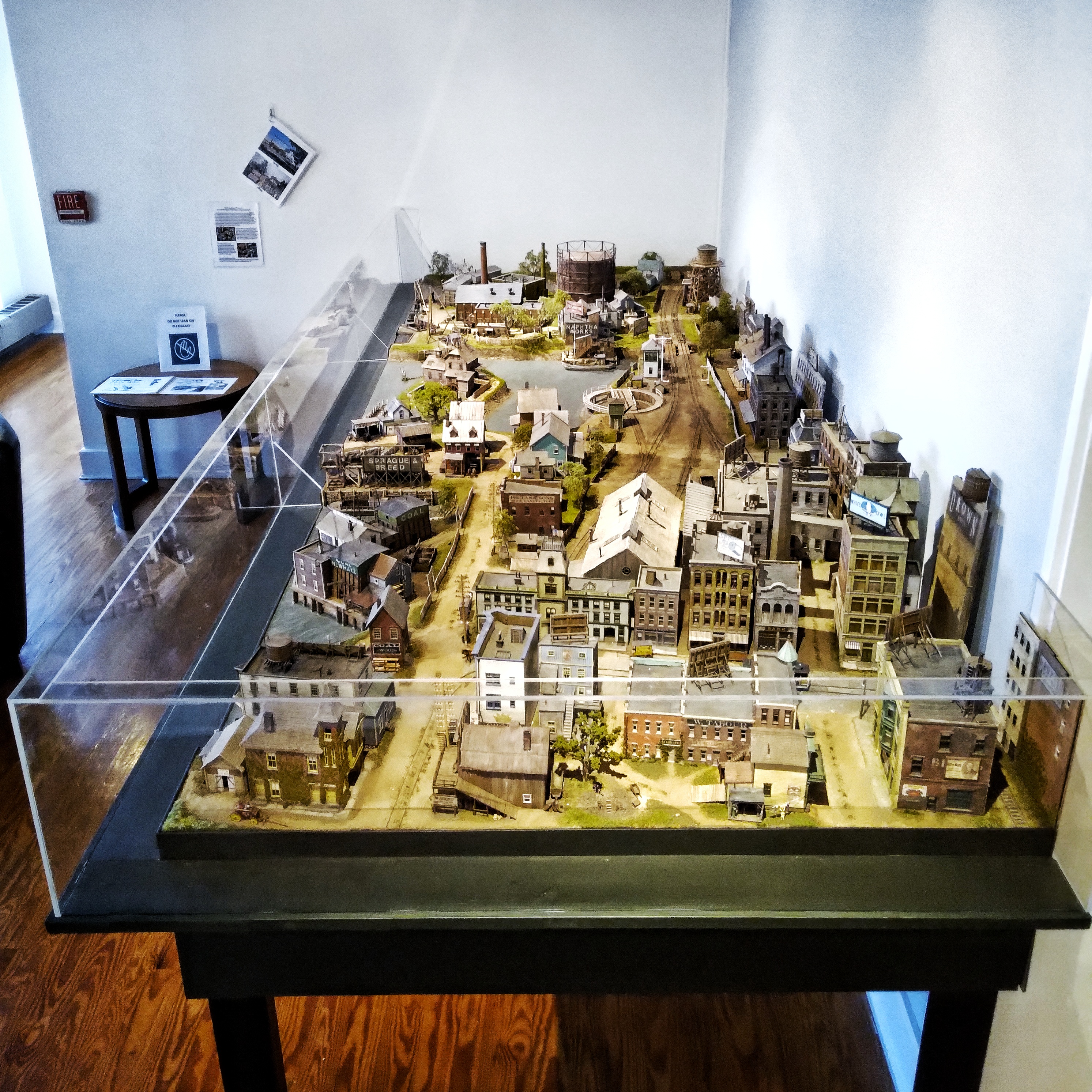
I love miniatures and dioramas of all sizes, so this 19th century recreation of the Lynn cityscape created by local artist Todd Gieg was a great find. The diorama gets its name from the Boston, Revere Beach, & Lynn Railroad, which had narrow-gauge rails measuring three feet wide (about a meter). Today, the MBTA’s Blue Line uses the railroad stations built for the BRB&L, but the tracks have been increased to standard-gauge, or a width of four feet, eight and a half inches (1.435 m). Alongside the diorama was a television playing a series of videos where Gieg describes the on-going research and construction process.
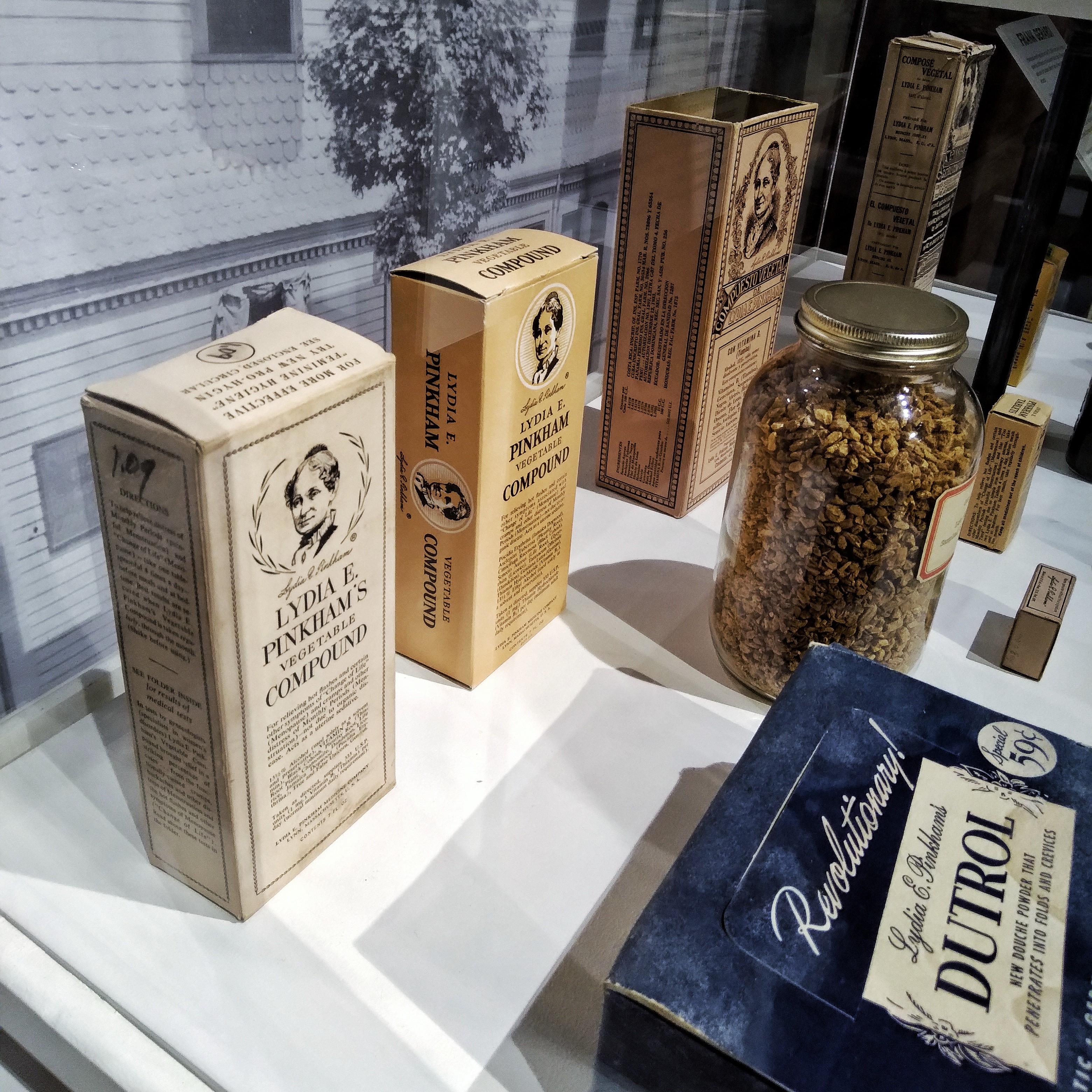
Like many cities and towns throughout New England, Lynn was heavily shaped by the Industrial Revolution during the 19th and 20th century. The way of working changed from the artistic creativity of craftsmen to the mass production of factories. The exhibit Industry & Craft: People at Work in Lynn argued that “industry and craft are intertwined”, as industrialists scaled traditional medicine for systemized manufacturing or enabled an ice harvest to cool communities into the summer. One case displayed packaging for Lydia E. Pinkham’s Vegetable Compote, a medicine debuting in 1875 as an equivalent to a women’s multivitamin plus ibuprofen with a main ingredient of alcohol, much like vitameatavegamin of I Love Lucy fame. This combination of ingredients is somewhat surprising, as Lydia Estes Pinkham was born into a Quaker family in Lynn. While Pinkham’s success as an entrepreneur was more thanks to her skills in marketing than the effectiveness of her product, she did contribute to the abolitionist and women’s rights movements. A version of the product with a somewhat lower alcohol content is still sold today.
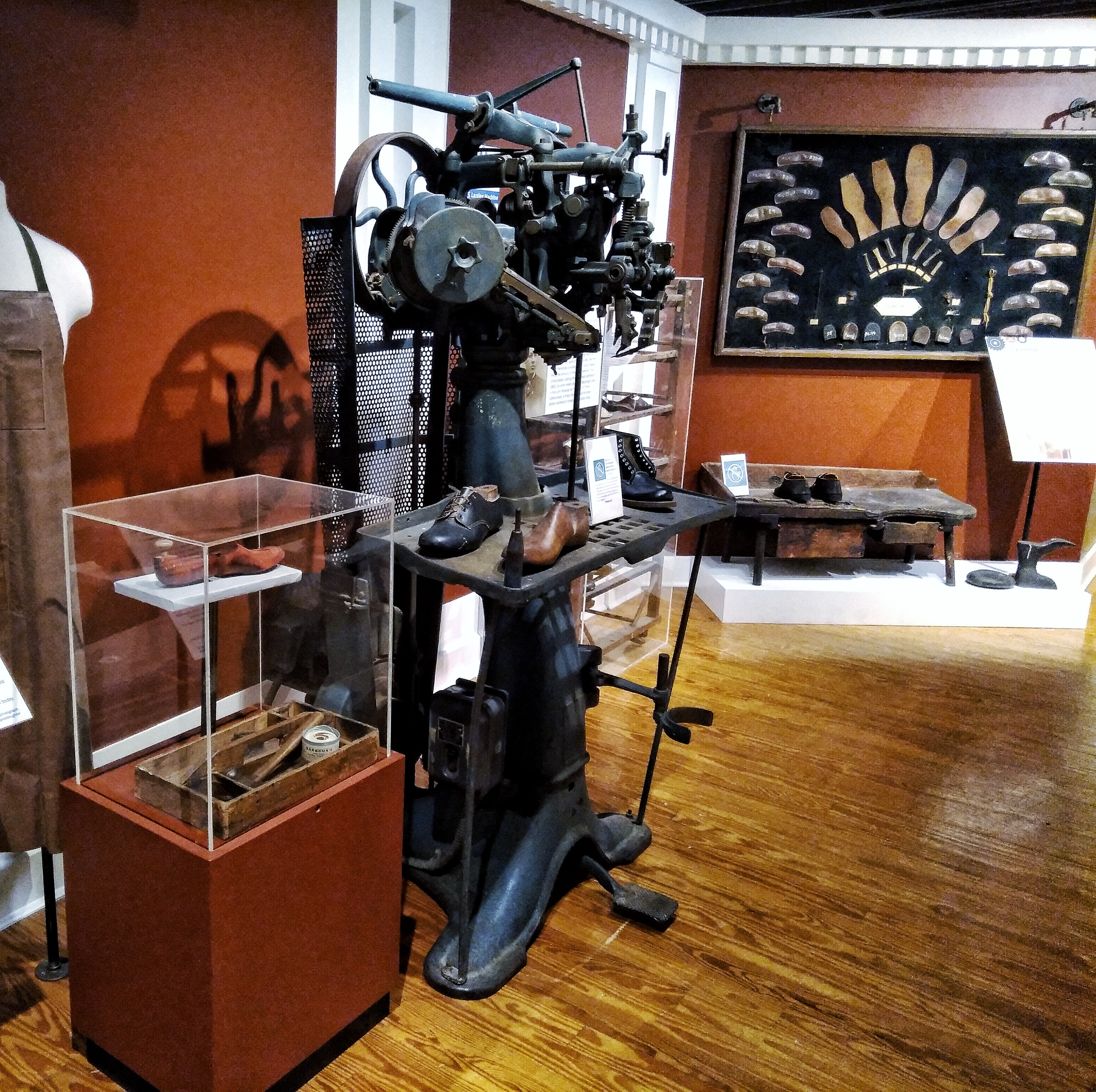
Many other artifacts were on display in this exhibit. A Krippendorf calculator invented by Lynn resident Paul Krippendorf was accompanied by a newspaper article explaining how the machine was used to make shoes in the 19th century. A full shoe making machine and several displays of lasts, the wooden foot-like forms used to shape shoes during production, demonstrated the interplay between machines and workers during the production process, a system still used by modern footwear manufacturers. A small loom showed the transition between hand powered to machine powered weaving, while a firebucket painted by Lynn Fire Club member Gideon Phillips in 1839 blurred the line between craft and art.
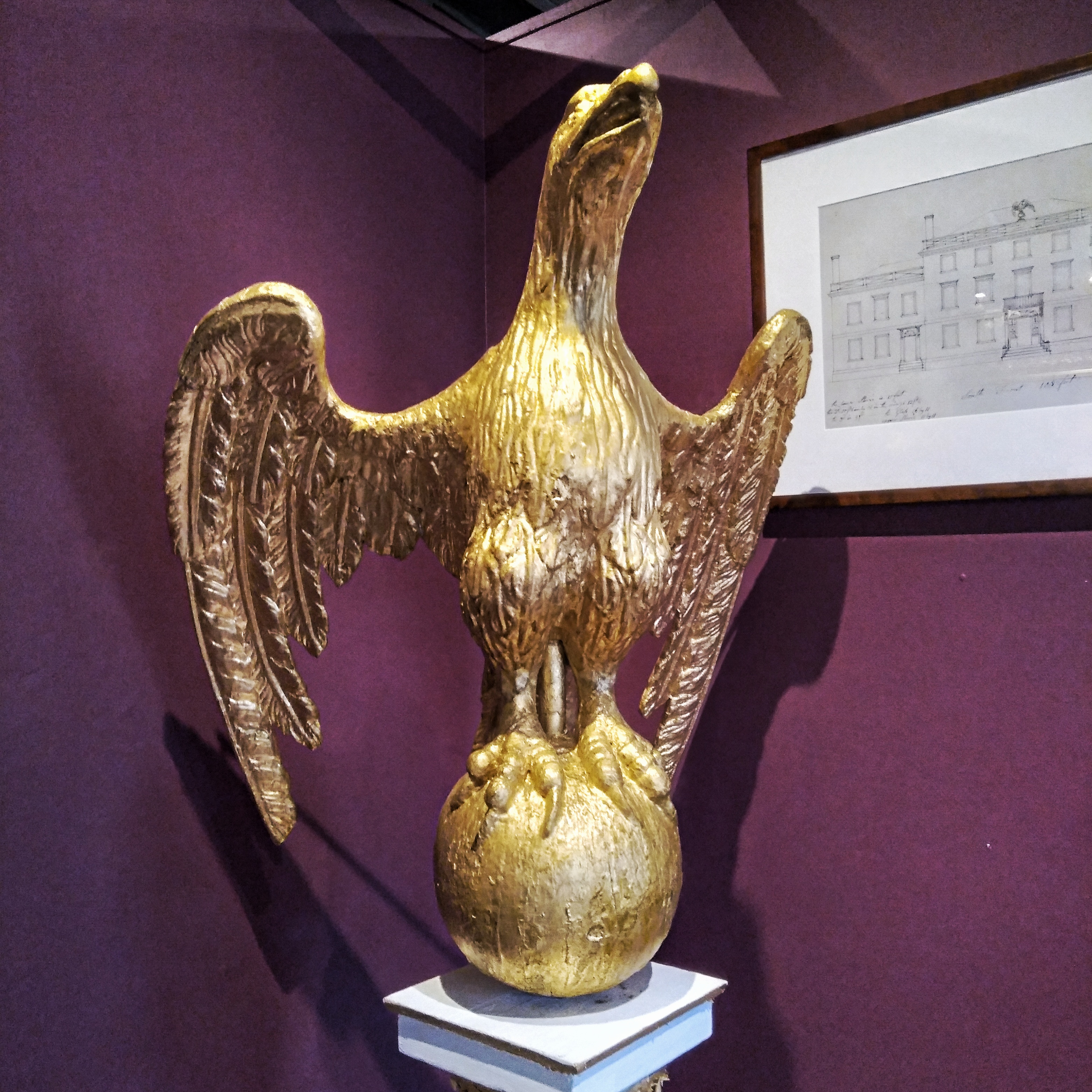
The cleverest exhibit was Collecting for: The Artifacts of Lynn, combining the history of manufacturing and abolition in Lynn with the techniques used to collect for a museum and curate an exhibit. One exhibit sign explained how collecting preserves fragments of a larger building, using its golden eagle as an example. The patriotic bird previously graced the top of Lynn Academy. Fun facts about the Eagle include its creation by famous local carver Samuel McIntire of Salem, the purchase of the eagle by Reverend Thomas Cushing Thatcher of First Parish, and the twenty-eight layers of paint removed from the eagle during conservation in 1991.
Another major theme in the exhibit was abolition and women’s rights. Because of its status as a Quaker town during the early to mid 19th century, Lynn was at the forefront of political movements. This section highlighted the work of Abby Kelley Foster and the Lynn Female Anti-Slavery Society, who worked with other abolitionists like Frederick Douglass and William Lloyd Garrison to ban slavery in the United States. They collected and sold gifts like the white ceramic pitcher depicting a slave auction and the pincushion with the famous image of a Black man arguing for his freedom. However, shoe manufacturing companies in Lynn greatly benefitted from the slave trade. Wealthy factory owner Cyrus Houghton made cheap brown shoes for his equally wealthy brother John W. Houghton to give enslaved workers on his plantation.
If you are short on time and cash but want to support local artists and learn a lot of history, this is an ideal museum. The museum is open Thursday and Friday from 10:00 a.m. to 5:00 p.m. and the second Saturday of the month from 10:00 a.m. to 2:00 p.m. Admission is $8 for adults; $5 for Lynn residents; $2 with an EBT or WIC card; and $0 for children under 12, Lynn Museum members, students, NEMA members, and Saturday visitors. You have a high chance of visiting free of charge! The main entrance is wheelchair accessible, and the museum has an elevator. Seating is available on the second floor near the diorama, although some of the exhibit space on the second floor suffers from low lighting. The gift shop has an impressive range of souvenirs. For those visiting the North Shore of Massachusetts, this is a great stop.
* * *

Abigail Epplett is a marketing consultant open to working with humanities-focused organizations. She holds an MA in Museum Education from Tufts University, where she researched the history of New England from Plymouth to the Civil War. To learn more about her adventures with museums, visit her current blog at abbyeppletthistorian.blogspot.com.
Abigail is Historian-In-Residence at the National Museum of Mental Health Project: https://www.nmmhproject.org/