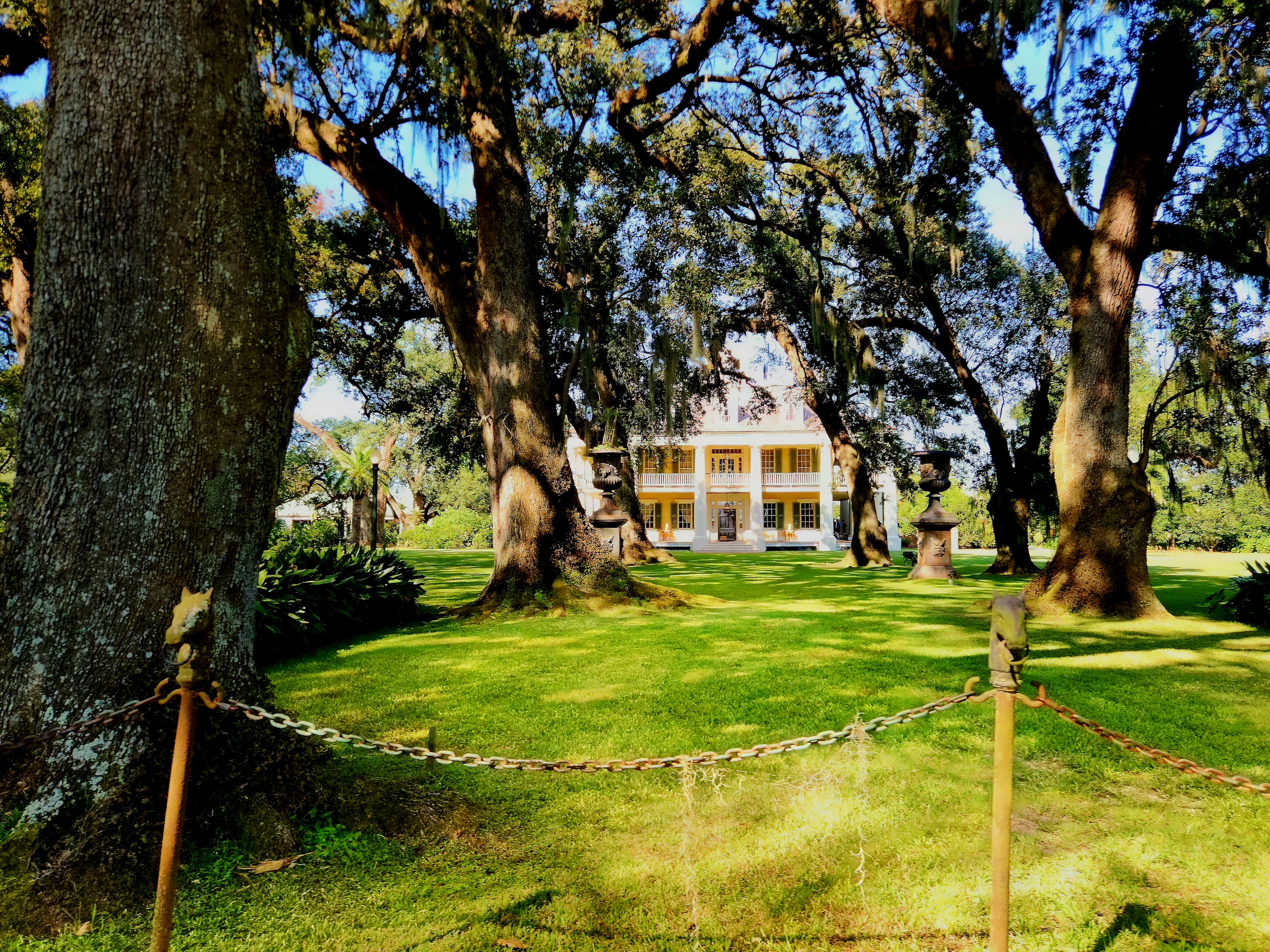
Houmas Plantation, known as The Sugar Palace in the mid-1800s, was purchased by John Burnside for $1 million. The property’s 12,000 acres were top-quality farm land, with 35 acres along the riverfront. When he died in 1881, Burnside, the “Sugar Prince”, had amassed a holding of ten of the most valuable plantations in Louisiana.
Today, Houmas House is surrounded by 38 acres of lush foliage planted throughout formal gardens. It is often called the Crown Jewel of Louisiana’s Great River Road—and they’re not wrong. The house is filled with period pieces, making it a museum in its own right. The Great River Road Museum next door is simply an added bonus.
First, let’s clarify the pronunciation: it’s HOE-muz (like a garden implement), and the origin of the name that comes from local Houmas Indian tribe. Long before French settlers came to the area, the Houmas Indians had settled the high ground at this bend in the Mississippi River. The river had provided fertile soil that supported huge fields of corn and sugar cane, and with foreign settlers came cotton, tobacco, and indigo.
Darrow is between New Orleans and Baton Rouge, and just an hour and a half from Lafayette.
The original Houmas House structure was built in 1774 of brick and cypress, with 18” thick walls, and called The French House. In the early 19th century, the Great Sugar Barons, partners Donaldson and Scott, recreated the space. In 1811, General Wade Hampton (of the Revolutionary War and the War of 1812) bought the property. In 1829, he enlarged the cottage to create a mansion for his wife, Mary Cantey Hampton. He created the Greek Revival Mansion that still stands sentry over the mighty Mississippi.
The Houmas Mansion has stood for over 240 years, and New Orleans businessman and preservationist Kevin Kelly bought the property in 2003. Today, Houmas House remains a private residence that offers tours. The mansion has been filled with art and artifacts and restored to an opulent antebellum sugarcane farm, making it one of the oldest and loveliest historic plantations in Louisiana.
Since Hush, Hush Sweet Charlotte was filmed here in 1964, the cameras have rolled nearly twenty more times for television series and movie productions—even Top Chef and The Bachelor have graced the grounds of Houmas House. When you have a stunning setting, people come.
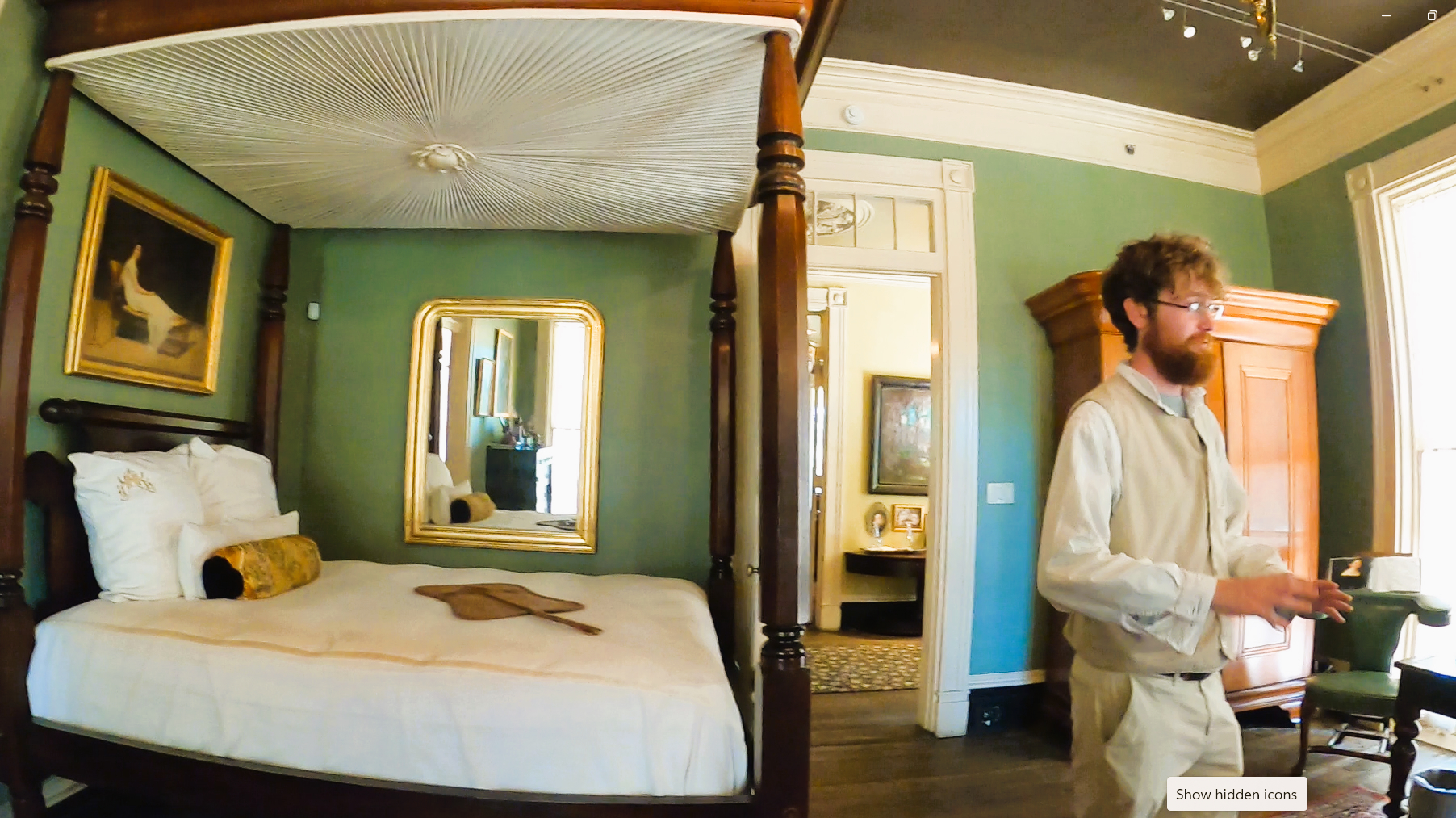
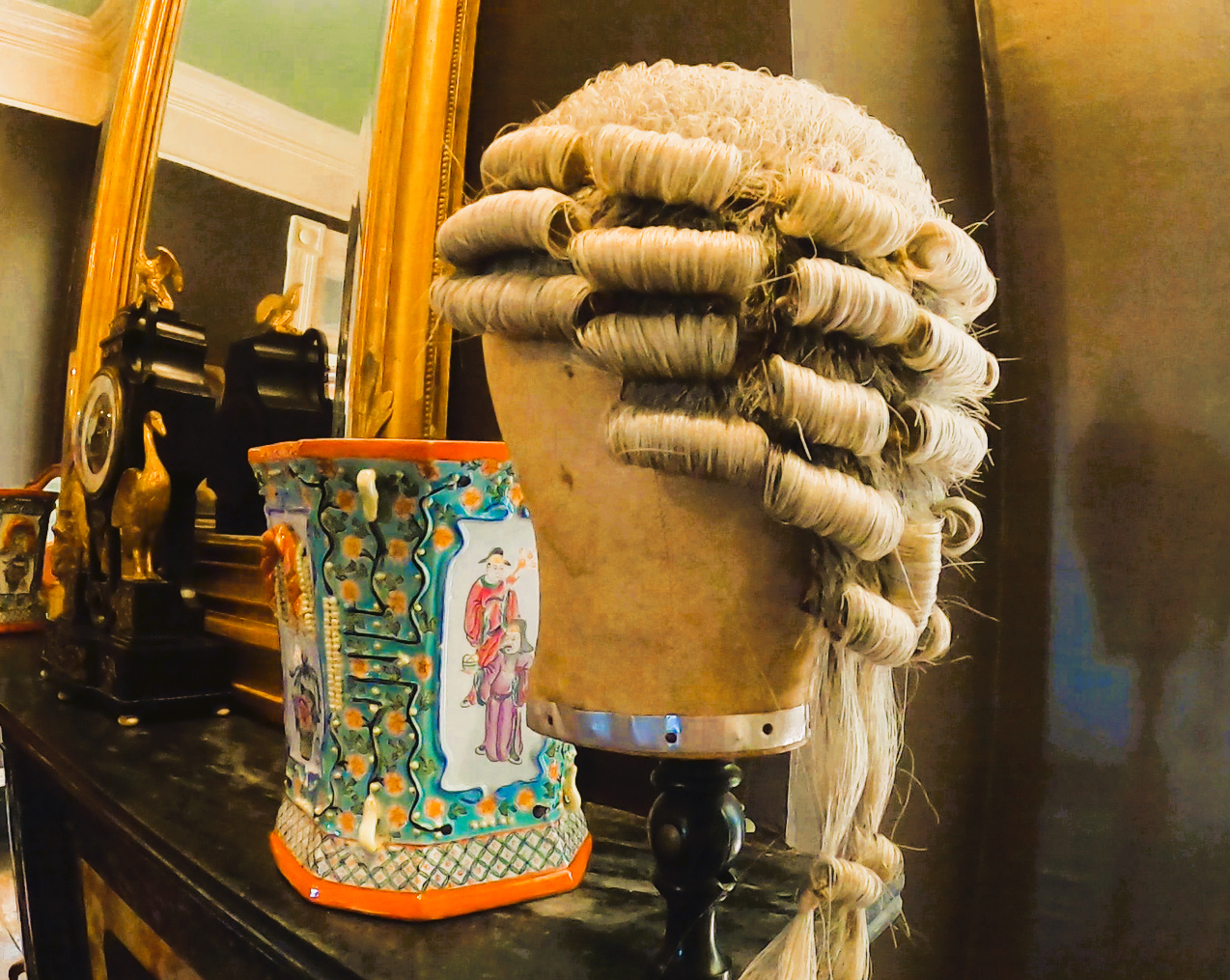
Houmas House offers tours led by guides in period dress. Sixteen rooms are decorated with period antiques, original artwork, and objects d’art. Stunning chandeliers hang from decorative ceiling medallions, and the freestanding curved staircase will take your breath away.
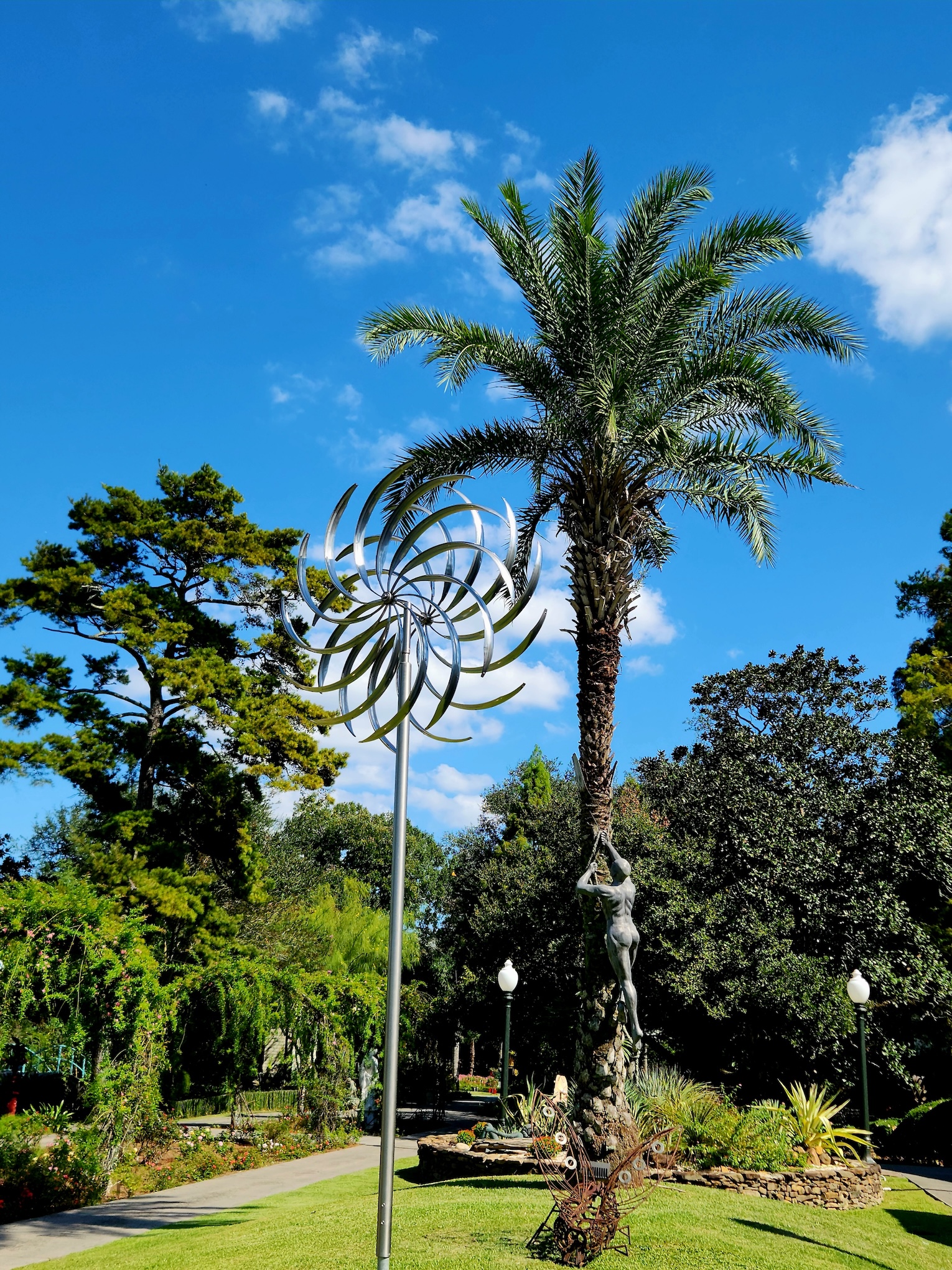
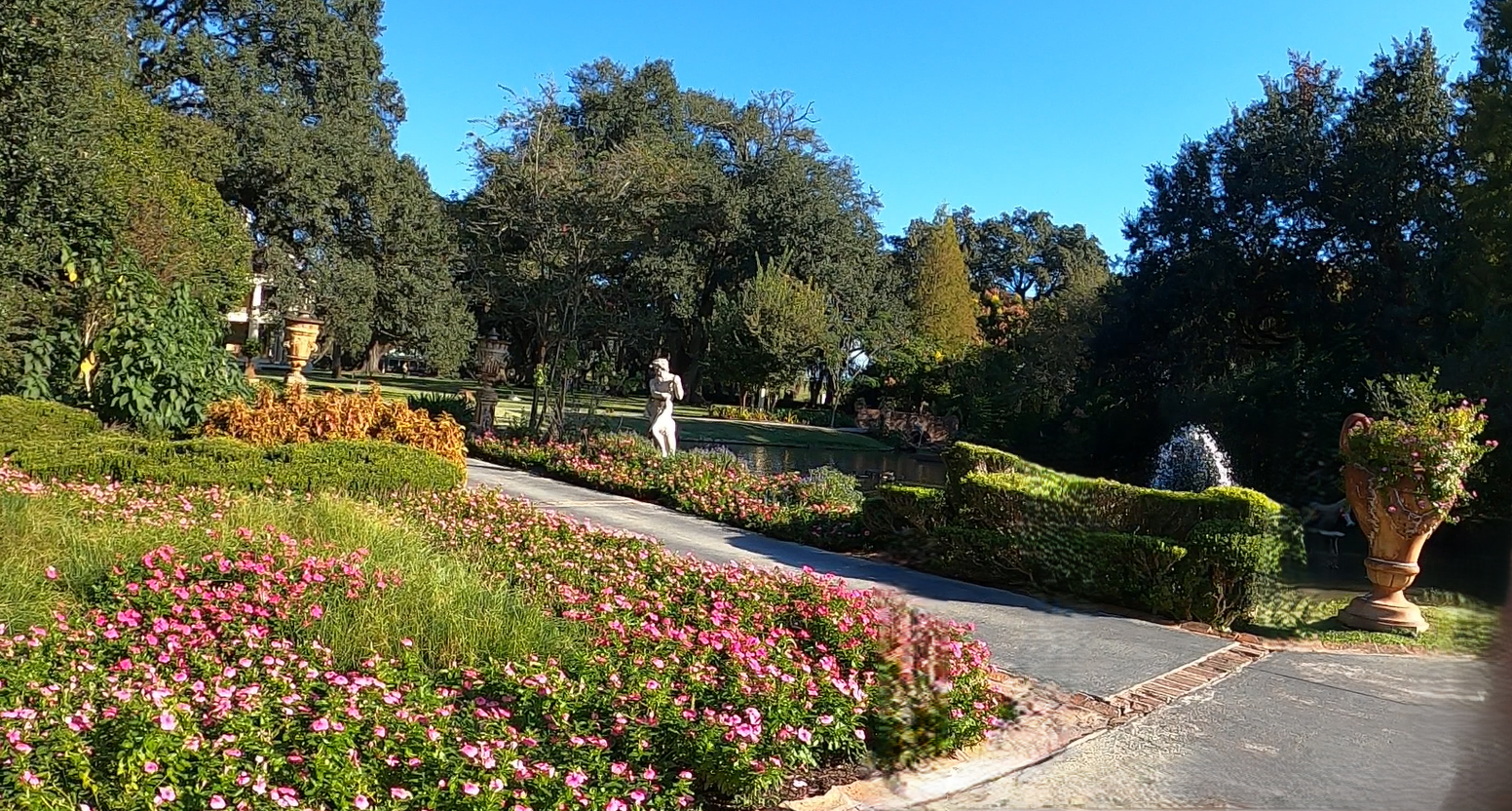
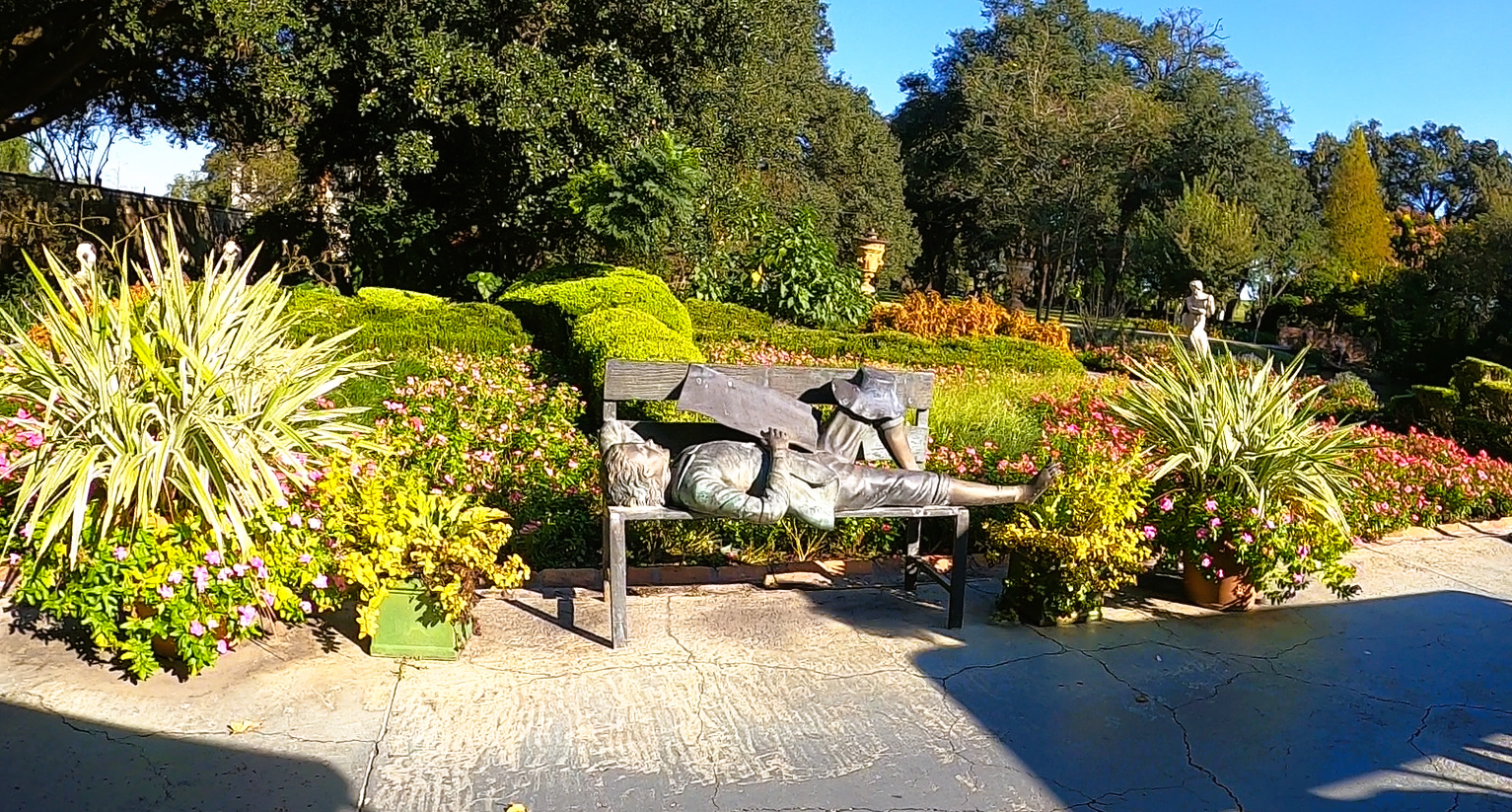
Houmas Gardens capture your attention at every turn. Garden paths and courtyards connect such treats for the eyes (and soul) as water fountains and sculptures in the Japanese Gardens, the Neptune Pavilion, and the Swan Pond. There are also vegetable gardens, which provide produce for restaurants throughout the property.
USA Today voted Houmas House as Louisiana’s top tourist attraction. Guided tours of the mansion are available between 9:30 am and 7 pm each day, and of the museum from 8 am until 4 pm. Visitors can create their own self-guided tour of the gardens between 9 am and 8 pm.
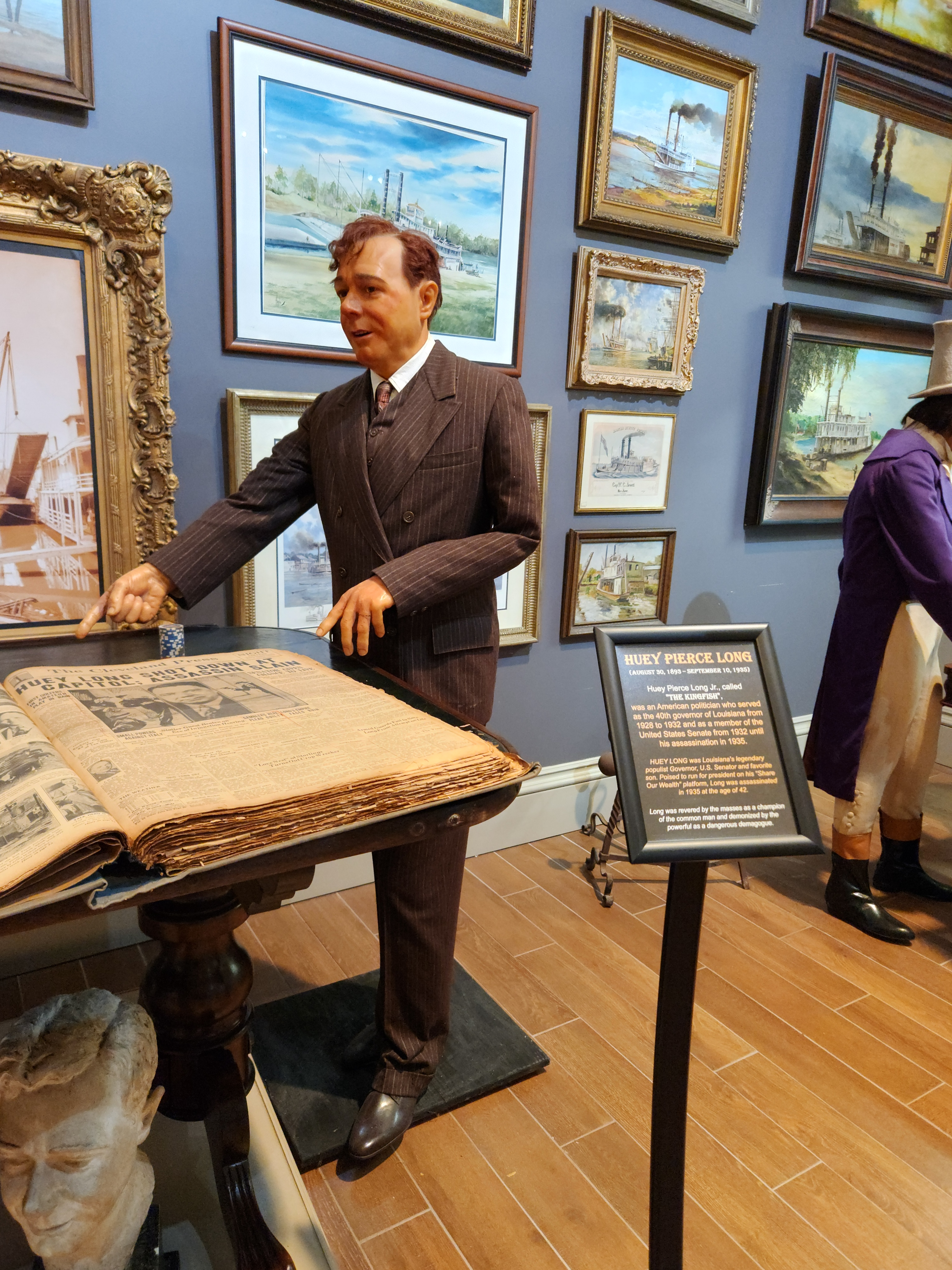
The Great River Road Museum’s mission is to give people a look into how people lived in the 1800s, beside the most important river in the country—the mighty Mississippi. From the wealthy sugar barons to the complicated history of enslaved people, the museum showcases Louisiana’s history and culture. The interpretive center displays the music and stories of the French, German, Spanish, Anglo-Americans, and Native Americans whose cultures flavored southern Louisiana. The additional flavors of immigrants, including Africans and Haitians, are evident in the cuisine.
The size and strength of the Mississippi River posed a challenge for early travelers. Conquering the powerful river meant doubling the size of this new territory. The Louisiana Territory would become a powerful addition to the size and economic power of what became the United States of America 250 years ago. The Louisiana Purchase also sparked westward expansion, and for the power-hungry men in charge, it became the prize, resulting in many battles.
I always say my people settled in the foothills of Virginia because the women in those wagons took one look at the Blue Ridge Mountains and said, “Not me, I’m not going over that. We’re staying RIGHT HERE.” I’m certain the sight of the roiling Mississippi elicited similar statements and started the settlement of the lower river basin.
Life-like exhibits owe their realism to figures from the New Orleans Musée Conti Wax Museum. A French Quarter cornerstone, the museum held visions of New Orleans history for 51 years. When it closed, many important exhibits found their way to The Great River Road Museum.
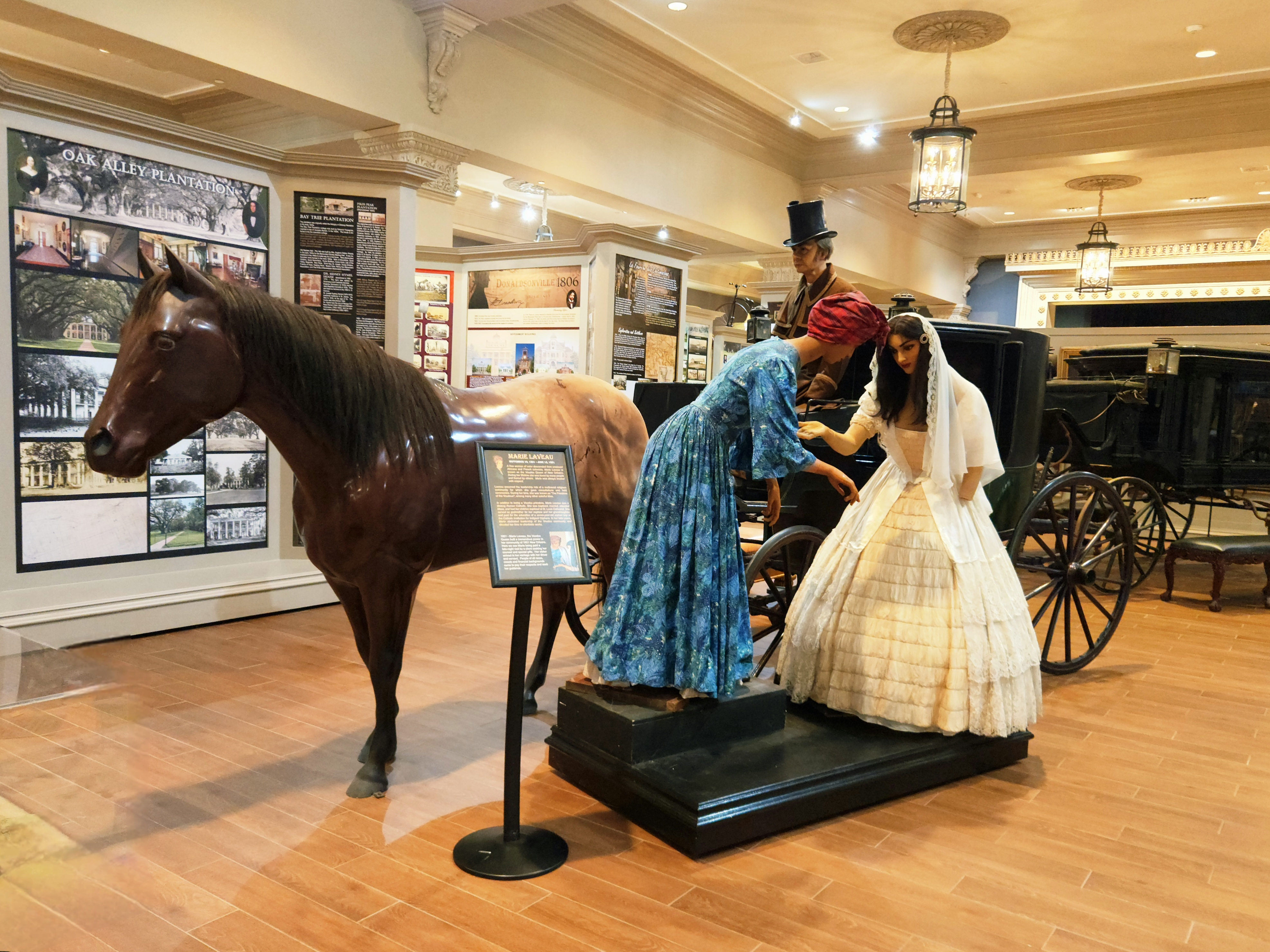
Native Americans called the massive river Misi-ziibi, meaning “Big River” or “Father of Waters”. That does the Mississippi justice. The French word was quite similar: Messipi. The mighty river is appropriately named, as it flows 2,320 miles, from Minnesota to the Gulf of Mexico (America), draining 32 states and two provinces of Canada, truly making it the Father of all water.
The Great River Road Museum exhibits tell the stories of Native American hunter-gatherers and the first Spanish explorer, de Soto. In 1862, French explorations proved water travel from the Great Lakes to the Gulf of Mexico was possible, and they declared the land “La Louisiane” in honor of King Louis XIV.
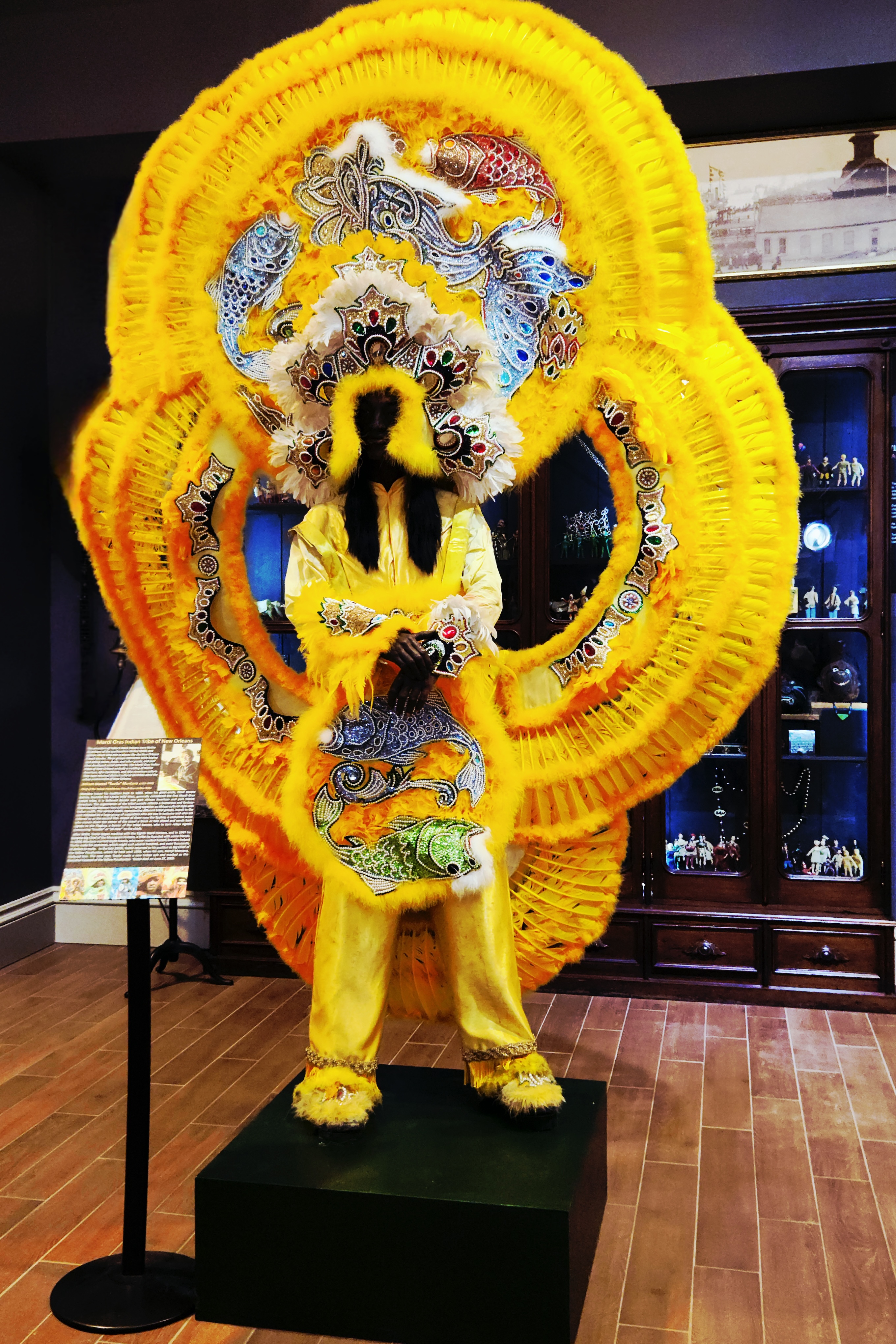
The Museum also shares the story of the Mardi Gras Indians. Also known as Black Masking Indians, they are a group of New Orleans inner-city African Americans who celebrate the Native Americans who sheltered runaway slaves in the 1800s. Group members spend a year designing elaborate, hand-beaded outfits for Mardi Gras, many of which are valued at thousands of dollars.
Another outstanding exhibit displays paintings, early photographs, and models of steamboats, paddlewheelers, and ships.
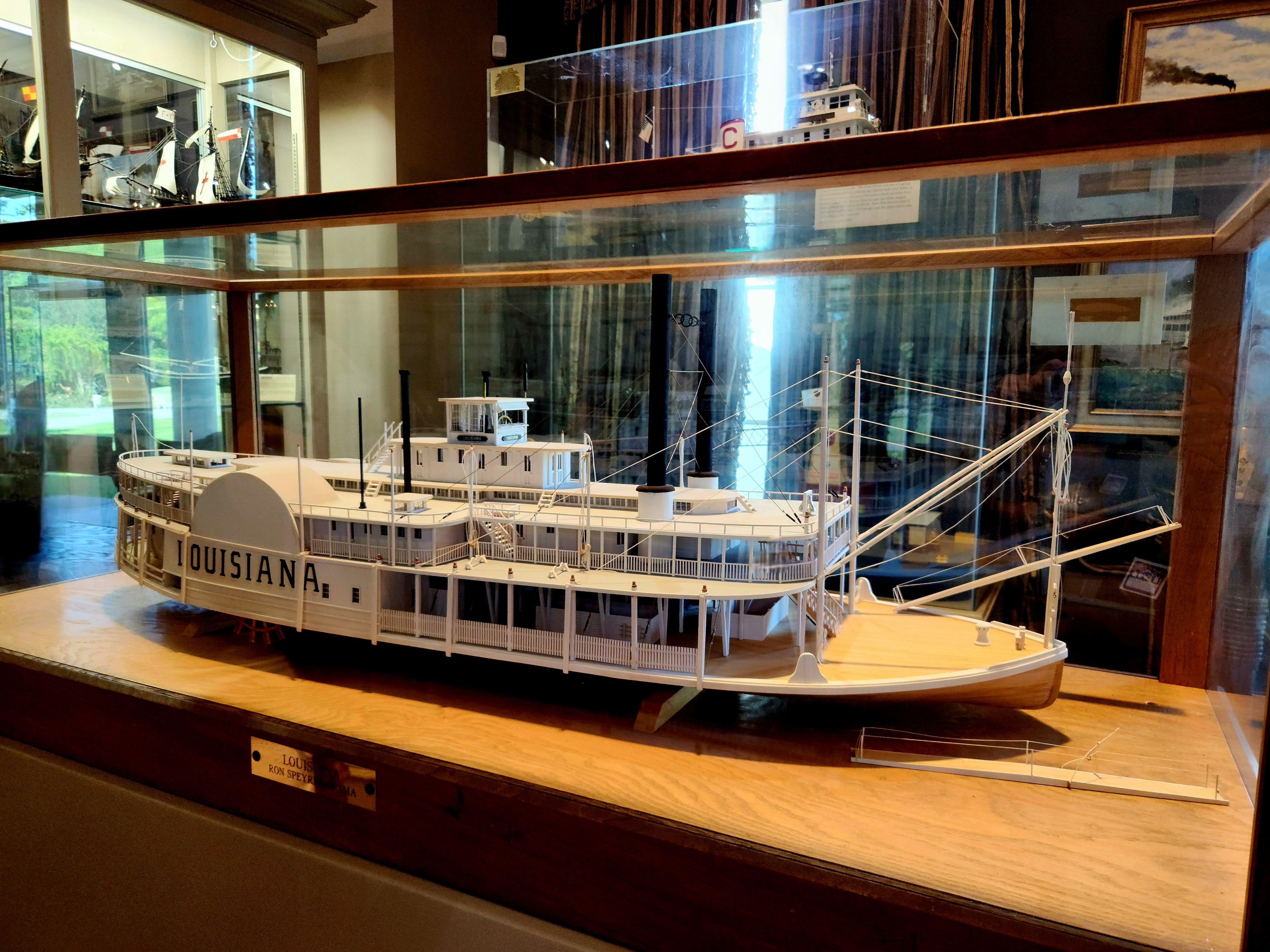
In 1803, President Thomas Jefferson appointed Robert Livingston as Minister to France. While there, he met Robert Fulton. Both men were interested in using steam to power boats. Livingston and Fulton partnered to develop steamboats. In 1811, the steam-powered paddlewheeler, New Orleans, was the first to navigate the western rivers of the Ohio and Mississippi to the City of New Orleans.
Displays also tell the story of Edith (Mrs. Theodore) Roosevelt’s 1903 journey with her children on the presidential yacht USS Mayflower down the Mississippi to New Orleans, with a stop at Houmas Plantation.

The four parishes of Louisiana that border the river, plus the three parishes divided by the river, are profiled. Maps of each parish show the location of the original plantations.
It is interesting to study the migration patterns that tell the story of the Mississippi River Basin and show two separate migrations from Ireland.
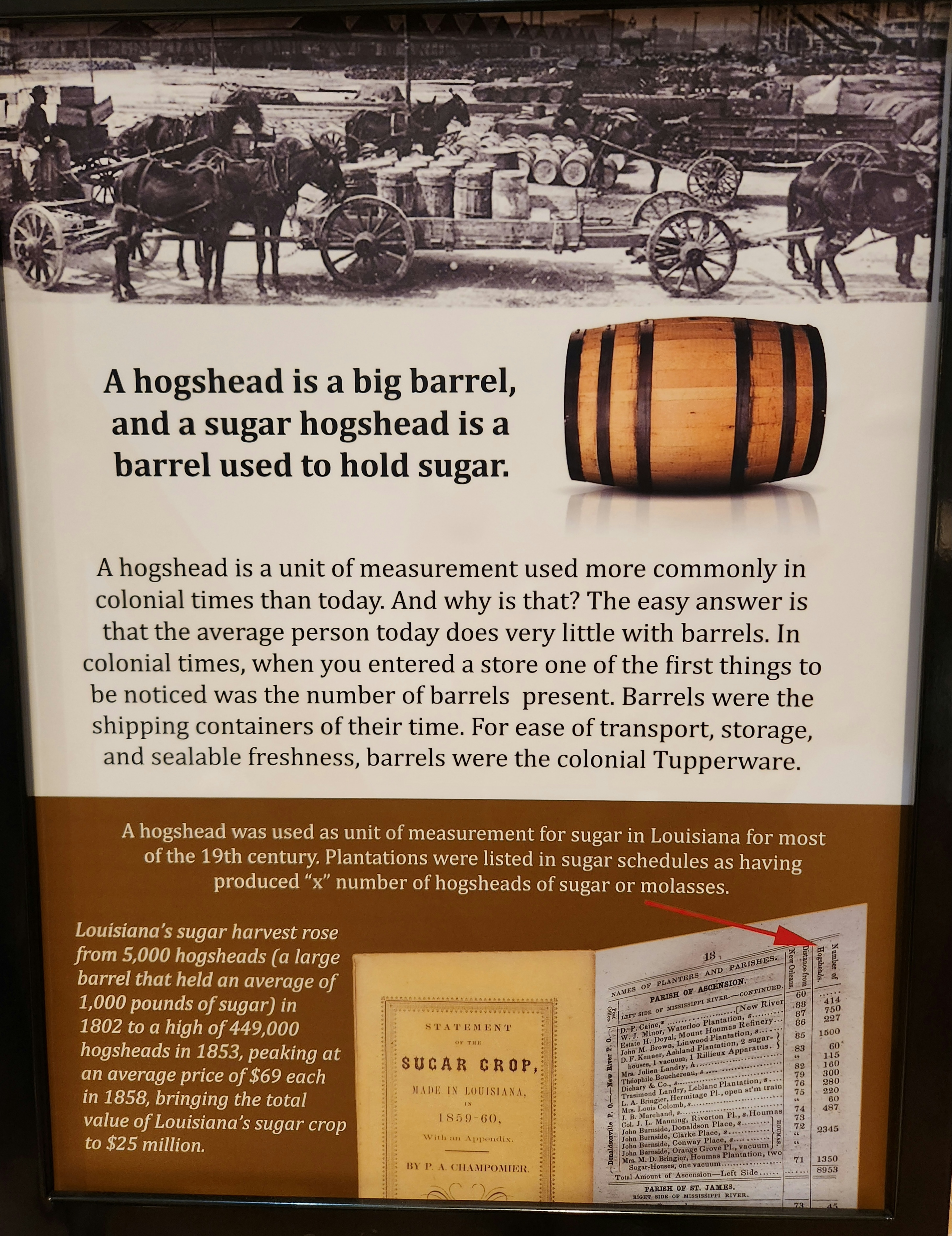
Granular sugar was first extracted from sugarcane at a New Orleans plantation by Etienne de Boré and Antoine Morin in 1795. We’ve been hooked on its sweetness ever since.
Before the Civil War, Louisiana produced most of the sugar in the United States. The stretch of river known as the “Sugar Coast” became one of the wealthiest regions in the country, home to a remarkable one-third of America’s millionaires. Plantation homes rose along the Mississippi, their fortunes tied directly to the harvest.
Life along the river followed the crop. Cane fields stretched for miles, and during harvest, the work didn’t let up—cutting, hauling, and boiling the juice into raw sugar before it spoiled. Steamboats carried the sugar north to market, while supplies and workers moved back downriver.
The contrast is hard to miss. Large homes stood near the fields that sustained them, and the entire system depended on the river and the labor behind it.
More of the area’s history is portrayed in this exhibit, telling the stories of the 1815 Battle of New Orleans and the leadership of Major General Andrew Jackson against British troops. This important port was considered a critical target by everyone.
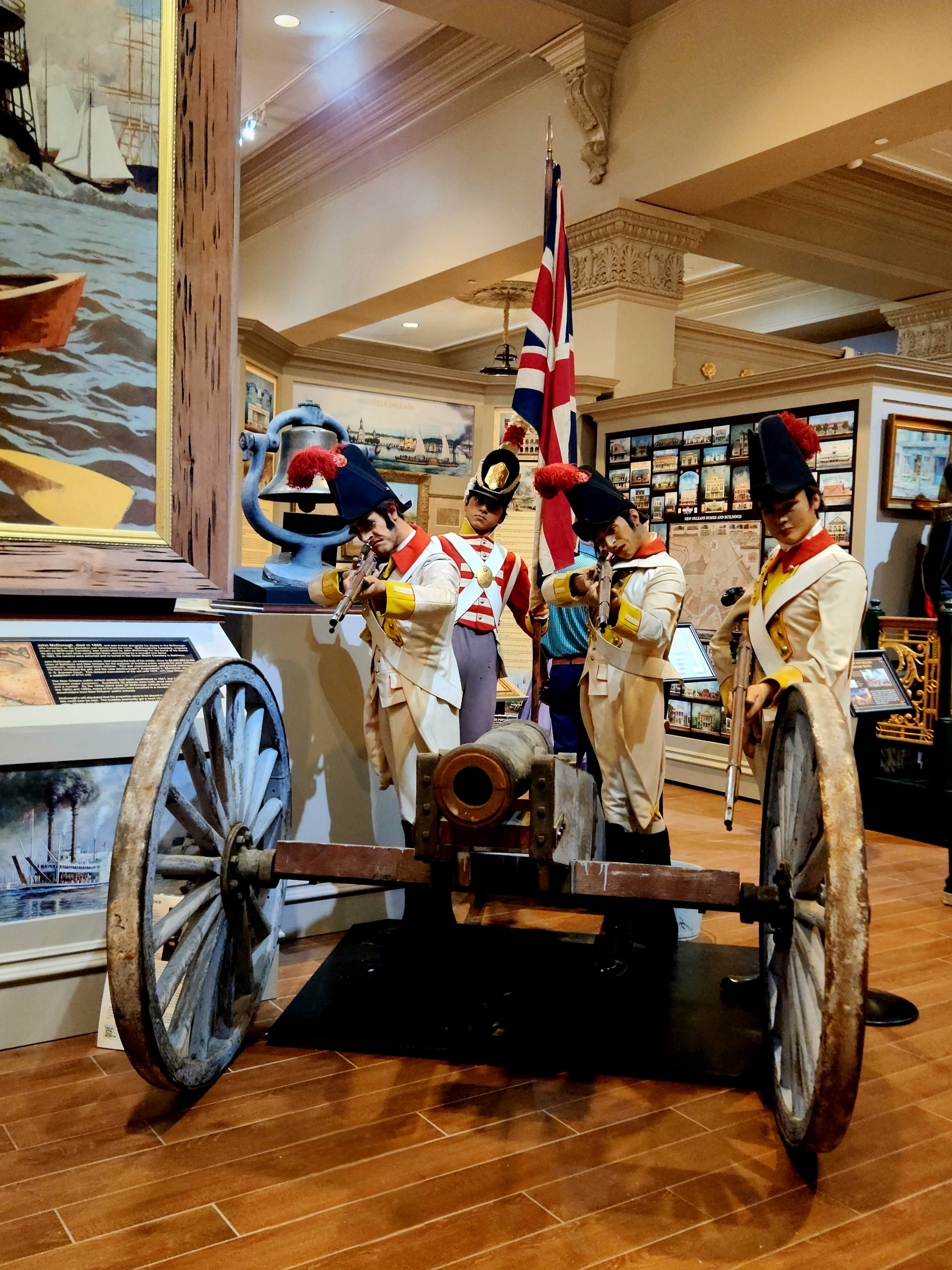
Fifty years later, New Orleans was again the focus of a Union capture during the Civil War. Once captured, the port town was occupied and defended by General Benjamin Butler. Stories of the pilfered area and the great increase in the wealth of the General and his brother during his year in the area open your eyes to the treachery of the occupation forces. His atrocious treatment of women added fuel to the flames, earning him the name “Beast”. Lincoln later recalled Butler and sent a replacement, who was appalled at what he learned.
Museum exhibits attempt to tell the whole story, the good, the bad, and even the ugly.
Pipes have held men’s attention (and affection) since 1500 BC, when indigenous peoples of the Americas used pipes to administer medicines, during religious ceremonies, and for officially sealing peace treaties. Yes, from the research, smoking quite likely began on American soil.
The Great River Road Museum holds a collection of 6,500 pipes. When a local man digging on the grounds of Houmas House found a pipe dating to around 1620, it became the catalyst for a lifelong interest. Today, the Museum showcases his collection of these useful and decorative objects.

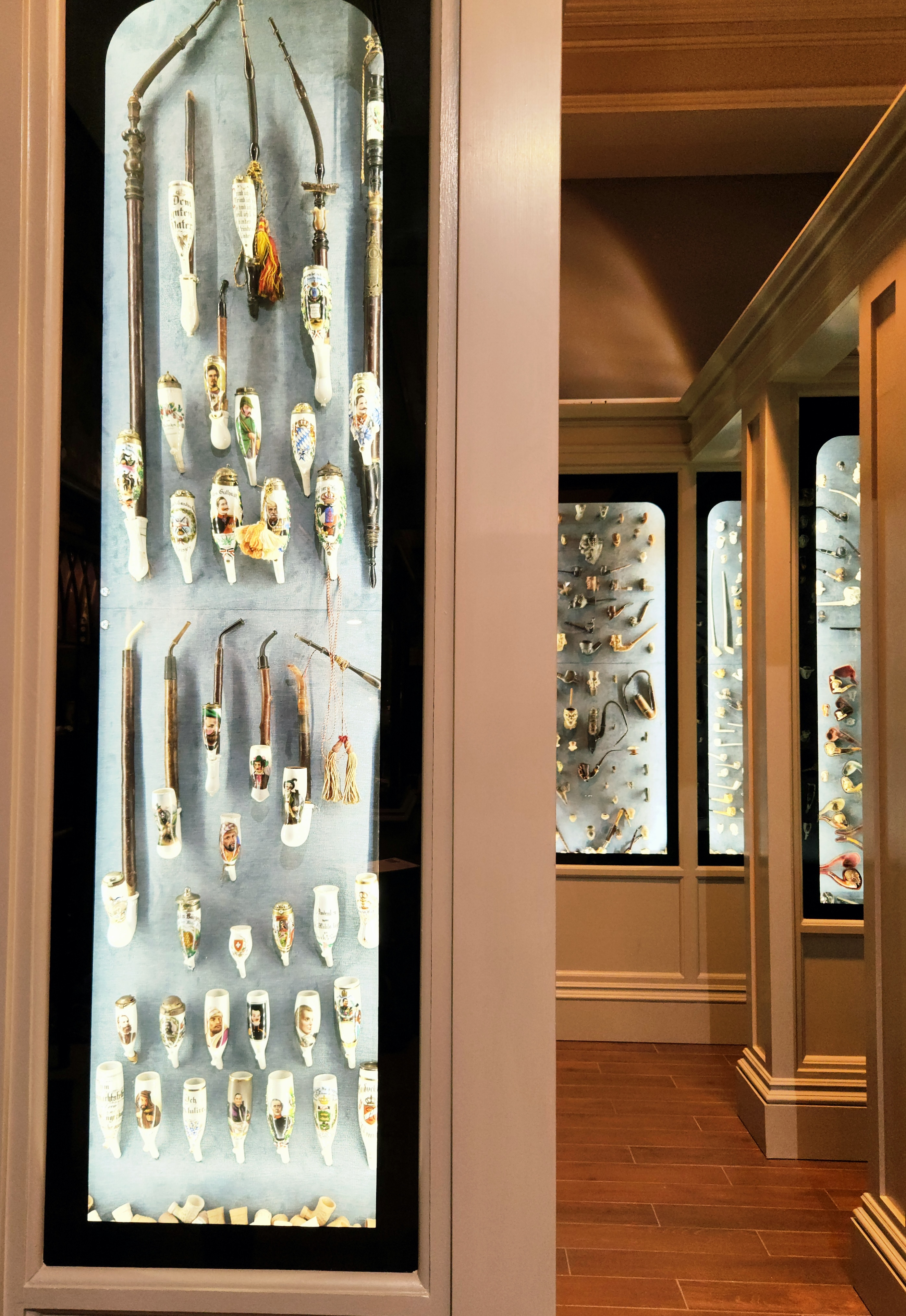
The exhibits seem to be endless. Take your time and soak in all the amazing history that is Louisiana.
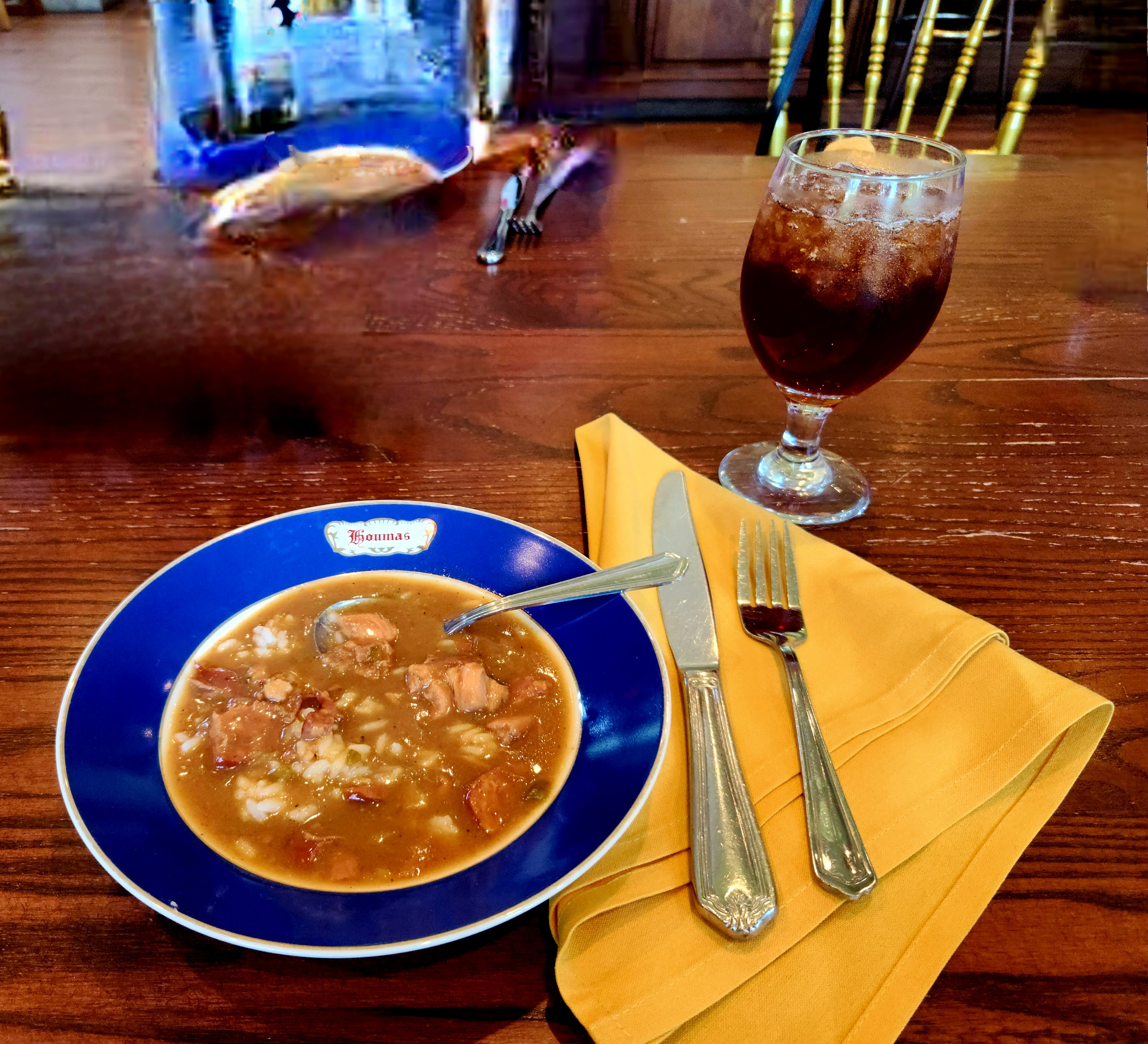
There are a variety of places to eat right on the grounds. Jeremy Langlois, Houmas House executive chef, oversees the restaurants’ operations and their award-winning dishes. Casual and fine dining options are available, and you may find yourself dining on china replicas of the pieces used when the Estate was occupied by General Wade Hampton and his family.
There is so much to see and do at Houmas, you will need to spend the day, and maybe the night. Fortunately, there are multiple restaurants and an Inn on the Estate. Visitors can enjoy farm-to-table dishes that include local produce in seasonal menus at:
The Carriage House Restaurant, open from 11 am – 8 pm (reservations recommended), offers menu items and daily specials. Located next to the Turtle Bar.
Dixie Café, open from 8 am – 2 pm, serves breakfast and, at lunch, offers an all-inclusive buffet inside The Great River Road Museum.
Latil’s Landing Restaurant (reservations required) offers fine dining in the mansion, with such dinner events as five-course tasting menus paired with wines.
Turtle Bar serves southern cocktails, so if you’ve never had a mint julep—now’s your chance.
Wine Cellars of Houmas House, the historic water cistern behind the mansion, has been converted to house the Estate’s extensive collection of wine.
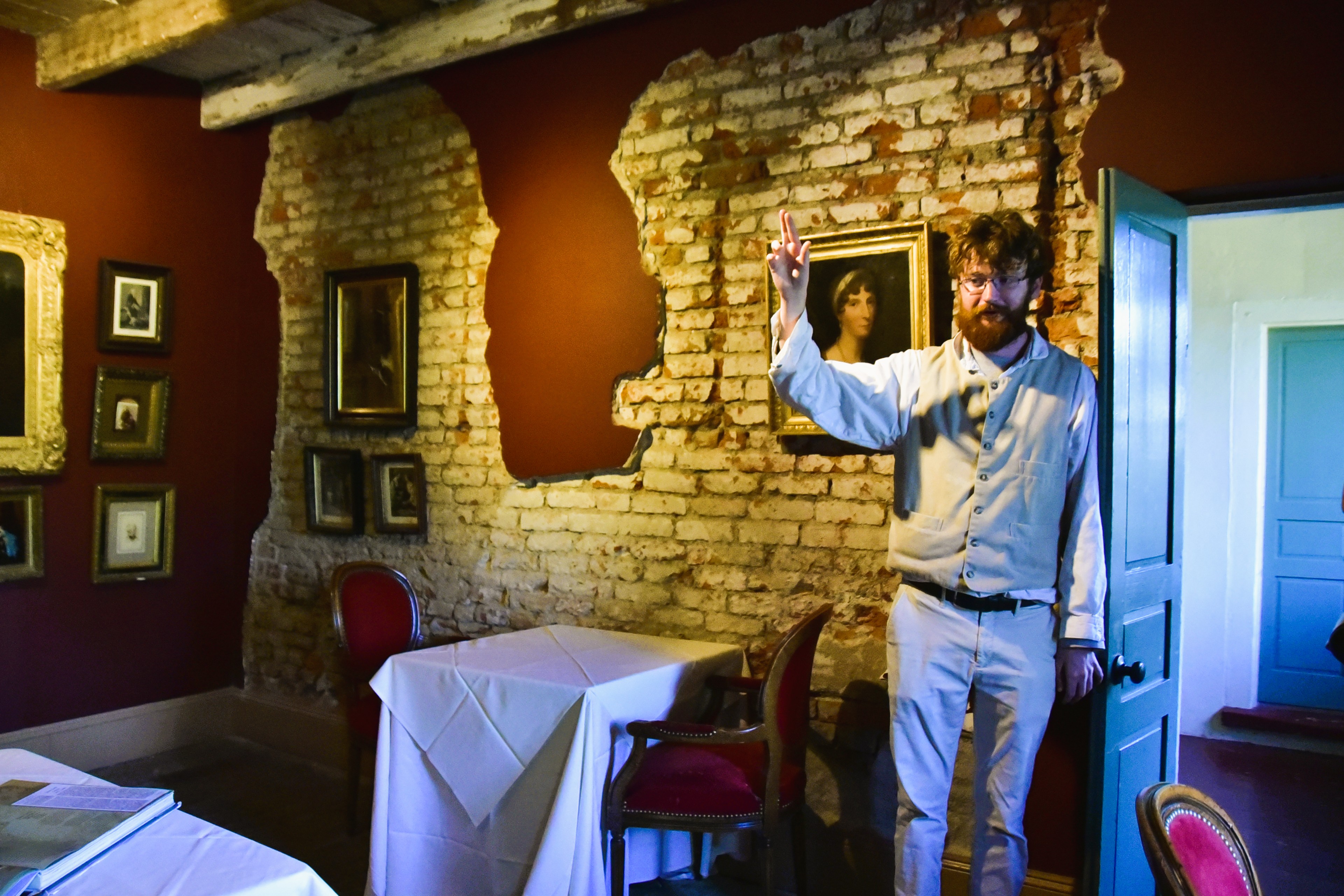
For the more adventurous of my readers, why not do as I did and spend an evening cooking with the world-famous Spuddy in nearby Vacherie? The three-hour class at Spuddy’s Cajun Cooking Experience will see you understanding and mastering the art of Cajun and Creole cooking, and then enjoying every delicious bite.
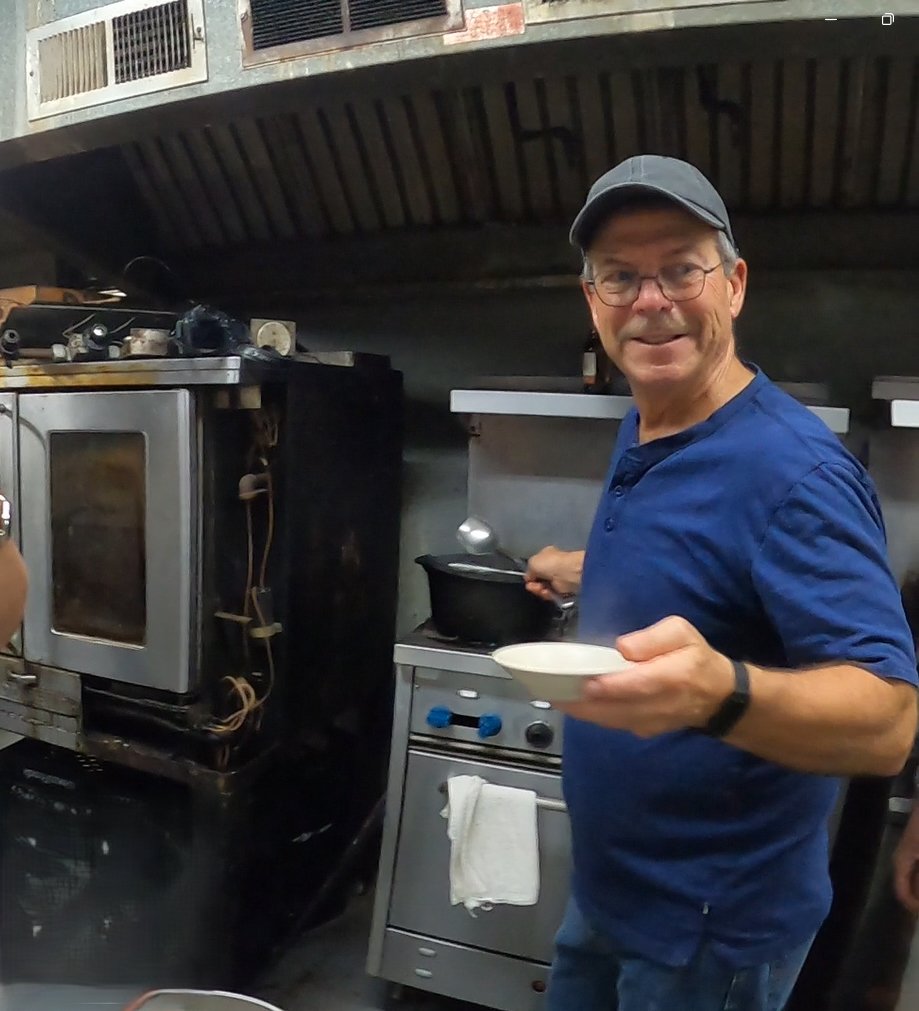
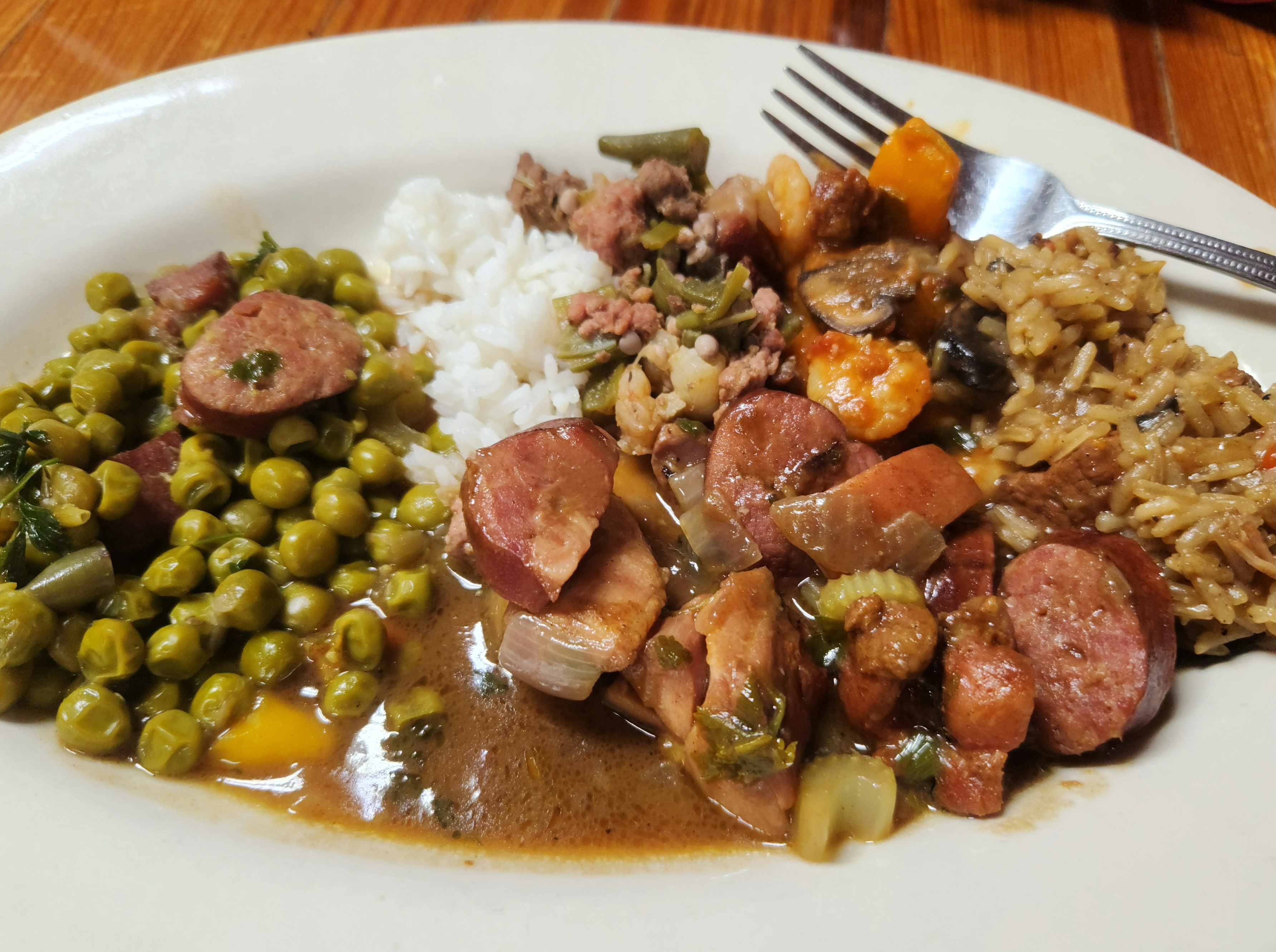
The food is so good, you’ll want to drive in circles, eating your way through Louisiana. Listen to Jo’s podcast “A Taste of Lafayette” on Big Blend Radio’s Food, Wine & Travel Show and read the article to get even more ideas.
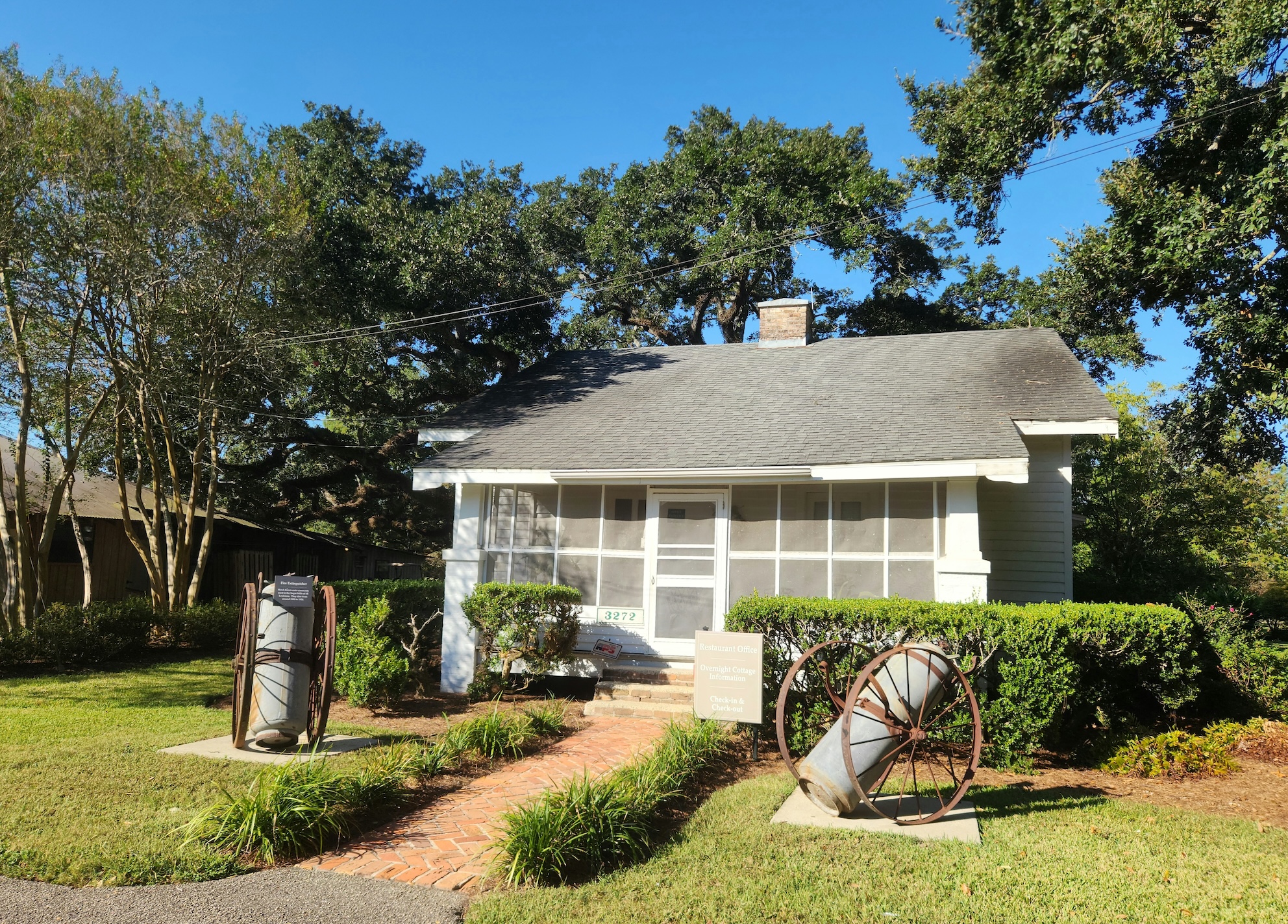
The most spectacular place to stay in Darrow is right on Houmas Estate grounds. The Inn at Houmas House has cottages tucked between centuries-old live oaks, and 21 units are filled with furnishings that take you back to the planters’ homes of the 1800s. A special touch of luxury in each cottage is the soaking tub. Did someone say “bubble bath”?
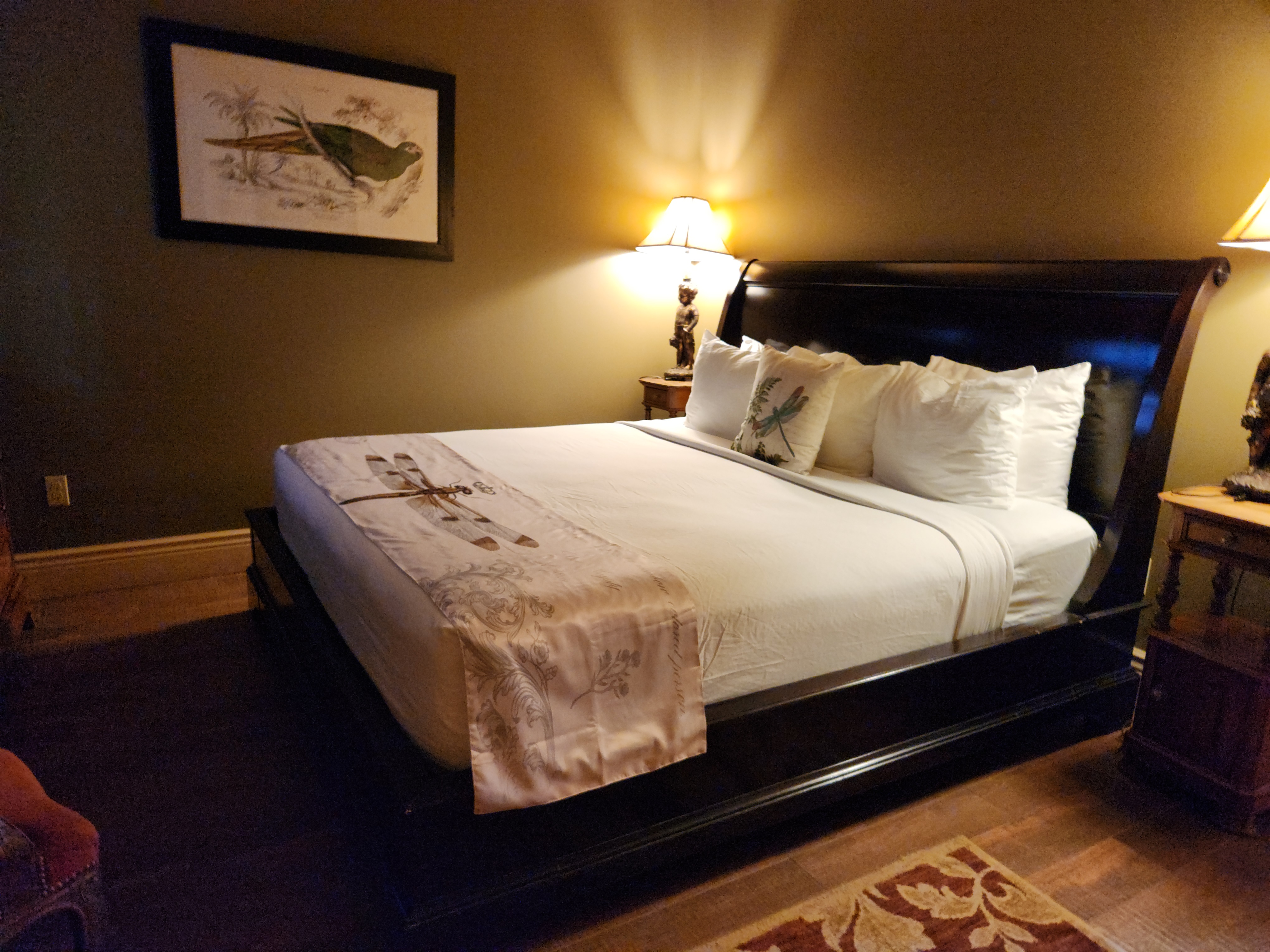
The Inn includes a breakfast buffet for two. While staying here, you have access to restaurants, Houmas House grounds, and a landing overlooking the Mississippi River.
Further along the Great River Road, you may also want to spend a night at the hauntingly lovely Oak Alley Plantation in Vacherie. Charming one- and two-bedroom cottages are available and offer after-hours access to the grounds. An evening stroll will have you viewing the river in short order.
Admission to Houmas House Mansion and Gardens
1-hour guided tours are offered:
adults $35; $25 teenagers 13-17; $15 children 6-12, and free for children under 6
Self-guided tour of the gardens start at $20 for adults
Combination tickets for Houmas House and the Great River Road Museum start at $55 for adults
Self-guided tours of the Gardens and Great River Road Museum start at $25 for adults
Special pricing is available for combo tickets visit both Houmas House Estate and Destrehan Plantation start at $51 for adults
* * *

Jo Clark is a travel writer, photographer, and podcaster. She calls the Grand Strand of South Carolina home, but enjoys visiting little-known corners of the globe in search of unique spots to share with her readers. It might be a caf