
The moment I stepped inside the Johnstown Flood Museum, the mood shifted instantly. Outside, it was a bright but chilly October day, the kind where the wind reminds you winter is waiting in the wings. Inside, however, time seemed to stand still.
I knew there had been a flood in Johnstown. What I didn’t know was the scale, the speed, or the staggering loss. Within minutes, this museum transformed what I thought I knew into something far more powerful and deeply human.
If you’re planning a visit or want to understand the human stories behind the disaster, this museum offers one of the most powerful historical experiences in Pennsylvania.
The writer was hosted.
Housed in a stately former Carnegie Library, the Johnstown Flood Museum feels like a guardian of memory. The grand French Gothic architecture contrasts with the tragedy it preserves. All the woodwork is Pennsylvania pine, and the stairway alcoves on the first floor are laid with white marble. The building functioned as a library until it was reopened as the Johnstown Flood Museum in 1973, and it is listed on the National Register of Historic Places.
The exhibits are thoughtfully arranged, guiding you step-by-step through the events leading up to the flood, the disaster itself, and the aftermath. It’s manageable in size, which allows you to take your time without feeling overwhelmed.
When I arrived, the staff greeted us warmly and gave a brief overview of what to expect, setting the tone for a meaningful visit.
Fun Fact: This was the very first Carnegie Library built.
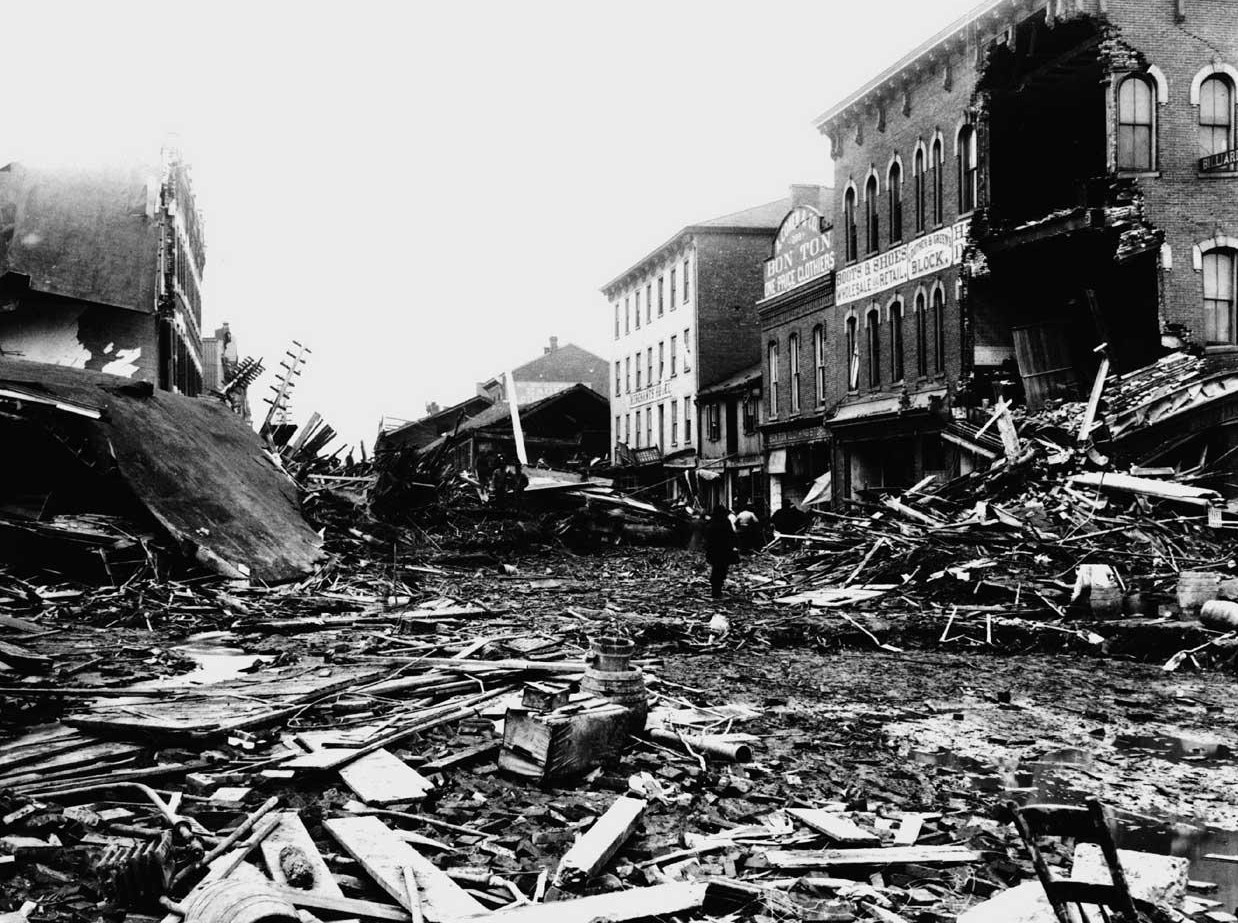
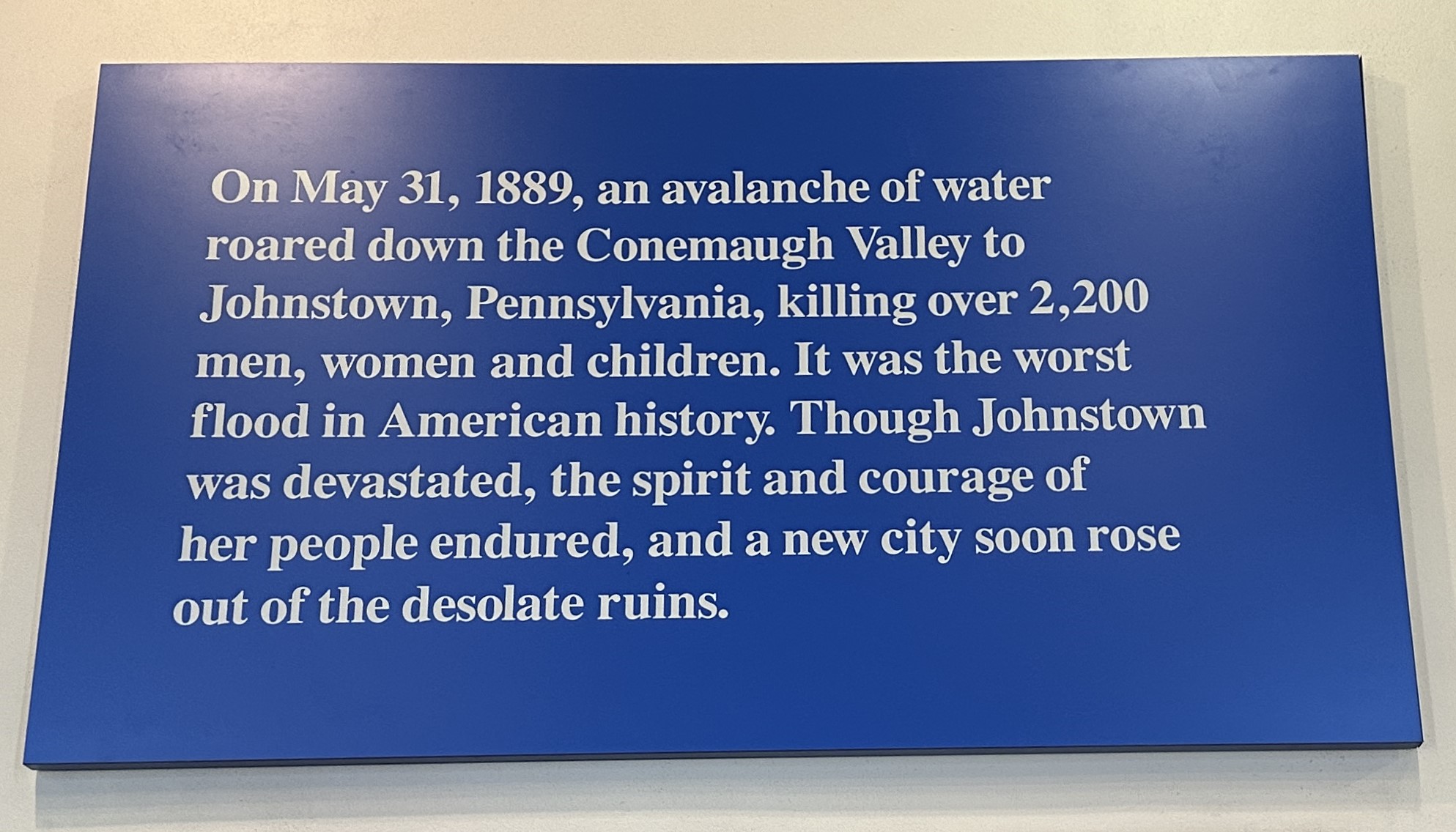
On May 31, 1889, the Johnstown Flood changed everything.
After days of relentless rain, the South Fork Dam failed, unleashing 20 million tons of water toward the town. In just 10 minutes, entire neighborhoods were erased. More than 2,200 people lost their lives, including 99 entire families.
As I stood reading the details, the numbers stopped feeling like statistics and started feeling personal.
According to museum historians, the flood remains one of the deadliest disasters in U.S. history, reshaping dam safety laws nationwide.
Standing there, it’s impossible not to think about how quickly life can change and how communities respond when everything is lost.
What struck me most, though, wasn’t just the devastation; it was the resilience. It would have been easy for this town to disappear. Instead, Johnstown rebuilt.
The Documentary Film
I’ll be honest, I left the theater in shock. Even knowing the outcome, seeing it unfold visually made the tragedy hit harder. The scale of loss and the speed of destruction were almost unimaginable.
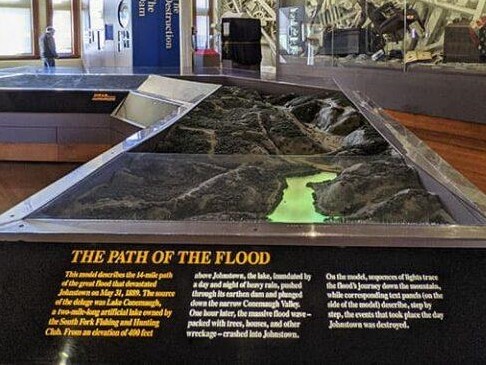
The Timeline Exhibit
This was the moment everything clicked for me. Watching how quickly the water moved from one area to another made the disaster feel immediate and unstoppable. Ten minutes. That’s all it took.

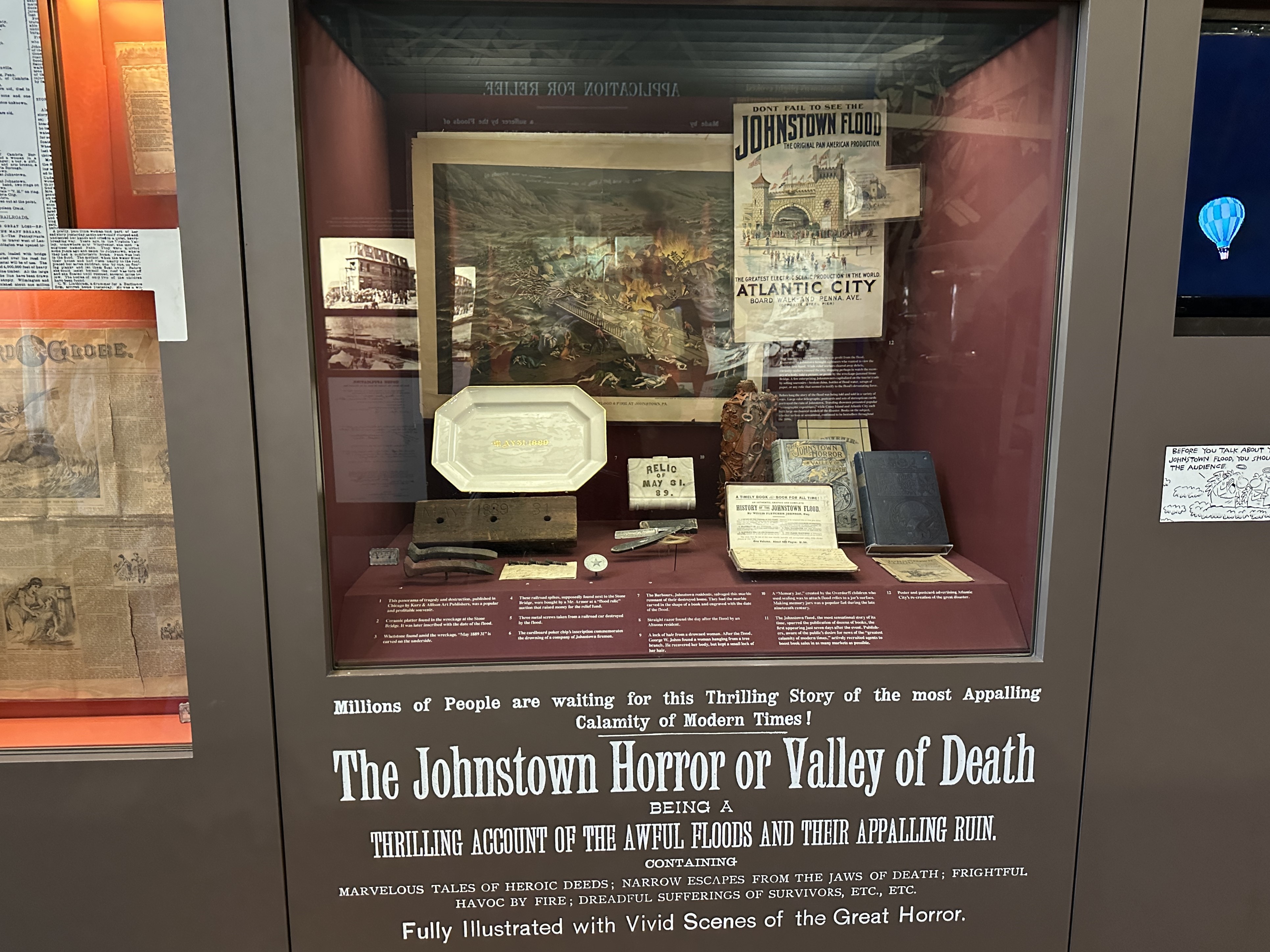
Artifacts from the Flood
One item that stayed with me was a bottle of water collected just two days after the flood. Simple, yet haunting. It made the event feel tangible in a way words alone cannot.
Historic Photographs
My husband had researched the flood beforehand, so he wasn’t as surprised by the facts, but even he found the images unsettling. Seeing the aftermath frozen in time adds another layer of understanding.
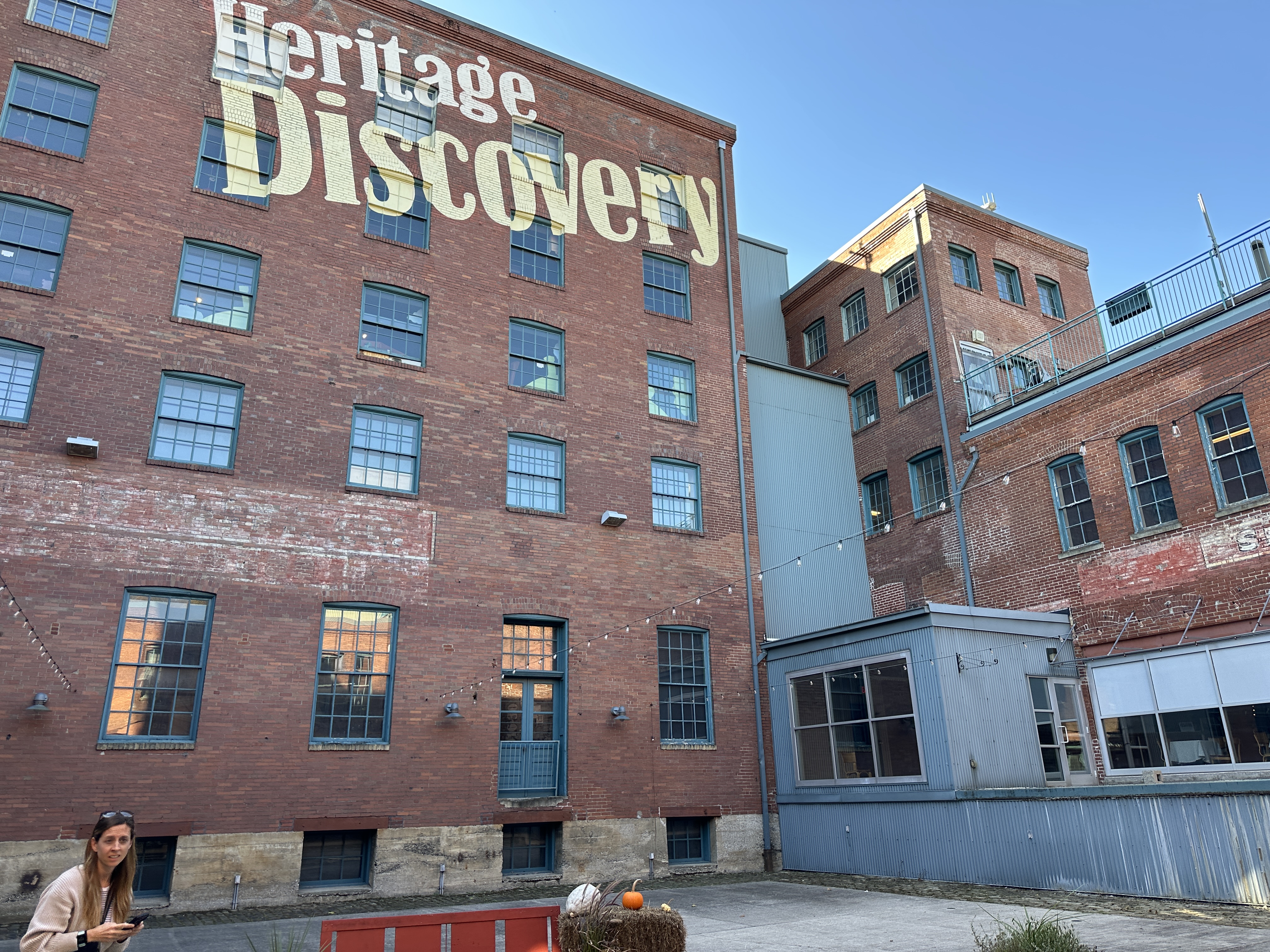
Before visiting the museum, I stopped at the Heritage Discovery Center, which pairs beautifully with this experience and provides additional context about the region.
If you’re planning a visit, consider adding:
Location: 304 Washington Street, Johnstown, PA 15901
Time Needed: 1–2 hours
Admission: $10 for adults, $8 for seniors, and $8 for children from 3-18 (children 2 and under are free)
Hours: Varies with season. Check the Johnstown Flood Museum website.
Parking info: Metered street parking is available and there is parking in nearby lots. Limited handicapped spots are available directly in front of the building on Washington Street.
Accessibility: The museum offers an elevator, accessible restrooms, and accessible entrance options.
Best For: History lovers, heritage travelers
Pair It With:
Travel Tip: Watch the documentary first. It provides essential context, making the exhibits far more meaningful.
How long should I plan for a visit?
Plan for about 1–2 hours, including time to watch the documentary.
Is it worth visiting if I already know about the flood?
Absolutely. Even my husband, who had done considerable research on the event, found that the visuals and artifacts added a deeper level of understanding.
Is the experience emotional?
Yes. The combination of personal stories, photographs, and historical context makes this a powerful and moving visit.
What surprised you most?
Not just the devastation, but the resilience. Johnstown didn’t disappear; it was rebuilt, and that story is just as important.
* * *

Robin O’Neal Smith is a freelance travel writer. She resides in Pennsylvania and travels all over the country searching for some adventure and a touch of luxury to inspire others to travel, visit that museum, enjoy a new experience, and eat delicious food.
Follow me on Instagram
Please subscribe to my YouTube Channel - https://www.youtube.com/@atouchofluxurytravel