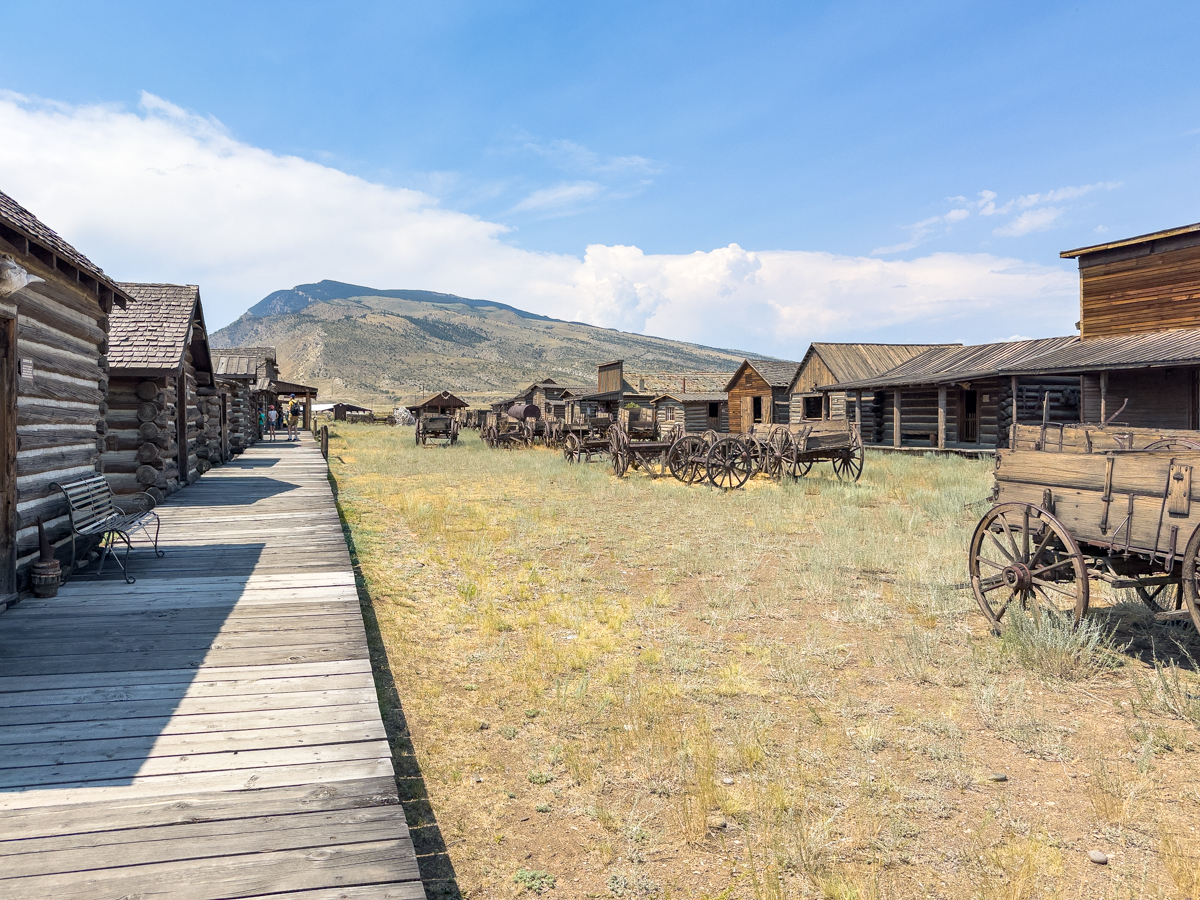
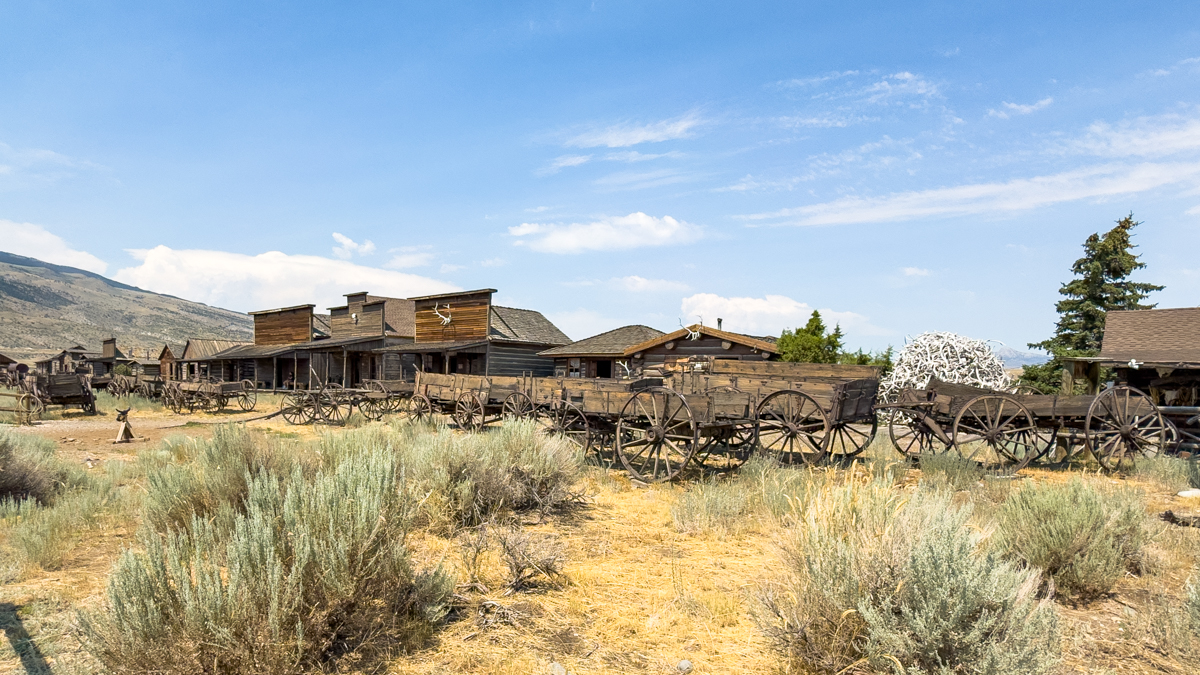
Old Trail Town in Cody, Wyoming, gives museum lovers the Old West with splinters, bullet holes, and a pulse. After decades of writing about cultural destinations for solo female travelers and couples, I look for places that move beyond display cases. This outdoor museum delivers frontier cabins, outlaw hideouts, Rivers Saloon, and a cemetery where names like Jeremiah “Liver-Eating” Johnston turn legend into something human. Bring curiosity, comfortable shoes, and a camera. Western history walks beside you.
Real people lived in these buildings.
Old Trail Town isn’t a museum where you drift from case to case under bright lights. You walk outdoors, follow numbered stops, and move past buildings that once belonged to the working West. Weathered logs, wagon wheels, uneven floors, and old doorways do a lot of the talking.
Old Trail Town offers visitors a self-guided tour of buildings from the late 1800s and early 1900s, many moved from sites across Wyoming and Montana. The result feels less like a staged frontier street and more like a rescue mission. Someone cared enough to save these structures before time, weather, or development erased them.
The boardwalk route starts with everyday life, which I always appreciate. Outlaw stories grab attention, but ordinary work built these towns.
The carpenter shop, blacksmith shops, post office, schoolhouse, granary, livery barn, and cabins show the practical side of frontier living. People needed tools repaired, horses shod, mail sorted, supplies stored, and shelter built before anyone had time for romantic ideas about the West.
As a photographer, I found myself slowing down at the rough boards, iron hinges, worn thresholds, and crooked doorways. Those details gave me the best sense of the place. Displays of hard use.
That’s one reason this historic site works well for museum lovers. It doesn’t overload you with theory. It gives you objects and spaces, then lets you connect the dots.
Bob Edgar, a native of Wyoming’s Big Horn Basin, developed an early interest in archaeology and history. After exploring the region and working for seven years as an archaeologist at the Buffalo Bill Historical Center (now the Buffalo Bill Center of the West), he saw historic buildings and frontier materials vanishing. In spring 1967, he began collecting those buildings and relics for display on the west side of Cody, near the area Buffalo Bill and his associates chose for the first town site of “Cody City” in 1895.
Crews took apart many Old Trail Town buildings, moved them to Cody, and rebuilt them on-site. Today, the collection includes 28 buildings dating from 1879 to 1901, nearly 100 horse-drawn vehicles, and extensive memorabilia tied to pioneers, settlers, and Native Americans of the Wyoming frontier.
Local ranchers, history buffs, and friends supported the project from the beginning. The museum now ranks as the largest collection of its kind in Wyoming and operates as a nonprofit educational facility dedicated to preserving Wyoming history.
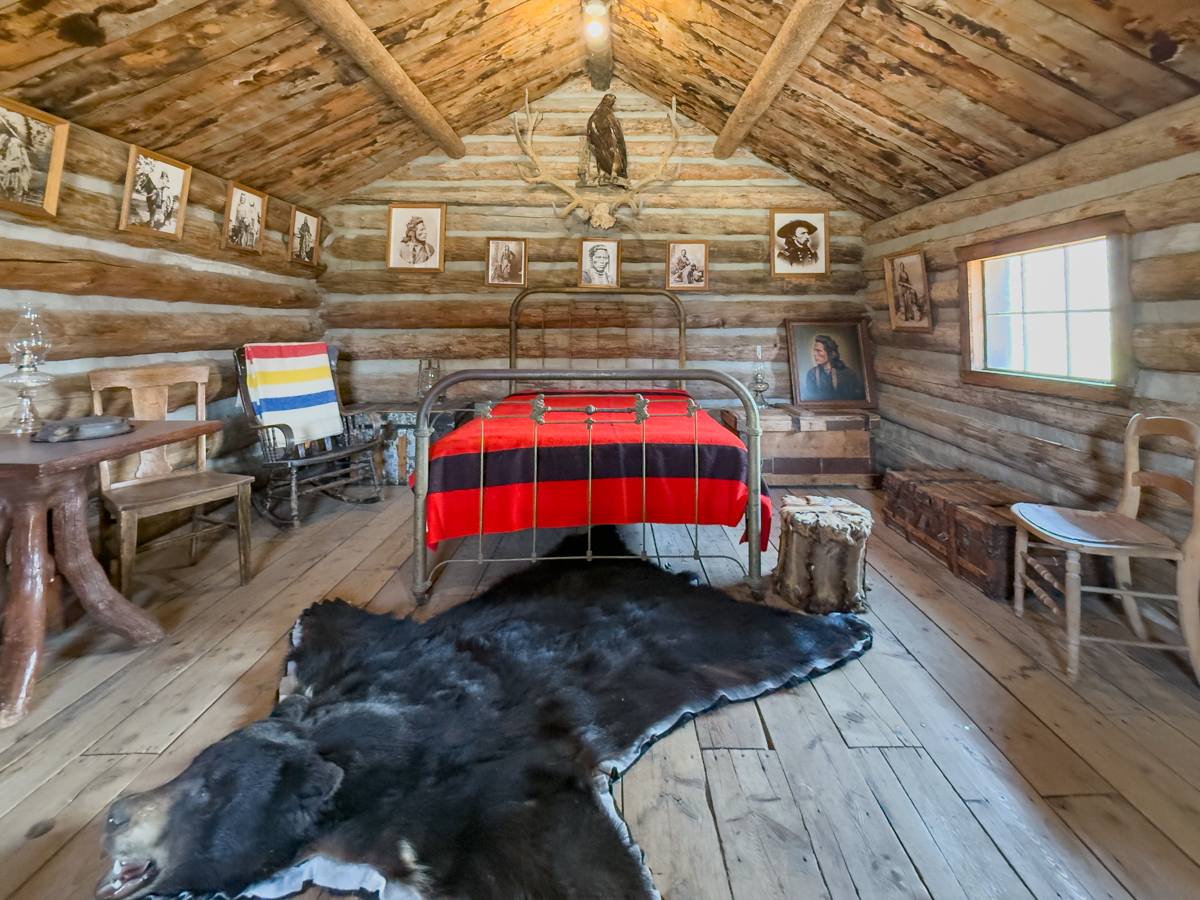
One of the strongest stops along the path connects to Curley, a Crow scout with the Custer Expedition. His cabin brings a major Western story into a compact, humble space.
History often arrives in books as battles, dates, and names. At this preserved frontier street, it arrives through a cabin and a life beyond the history-book paragraph.
For travelers who want more than rodeos, gift shops, and Yellowstone gateway talk, this trail gives Cody a rougher, more human edge.
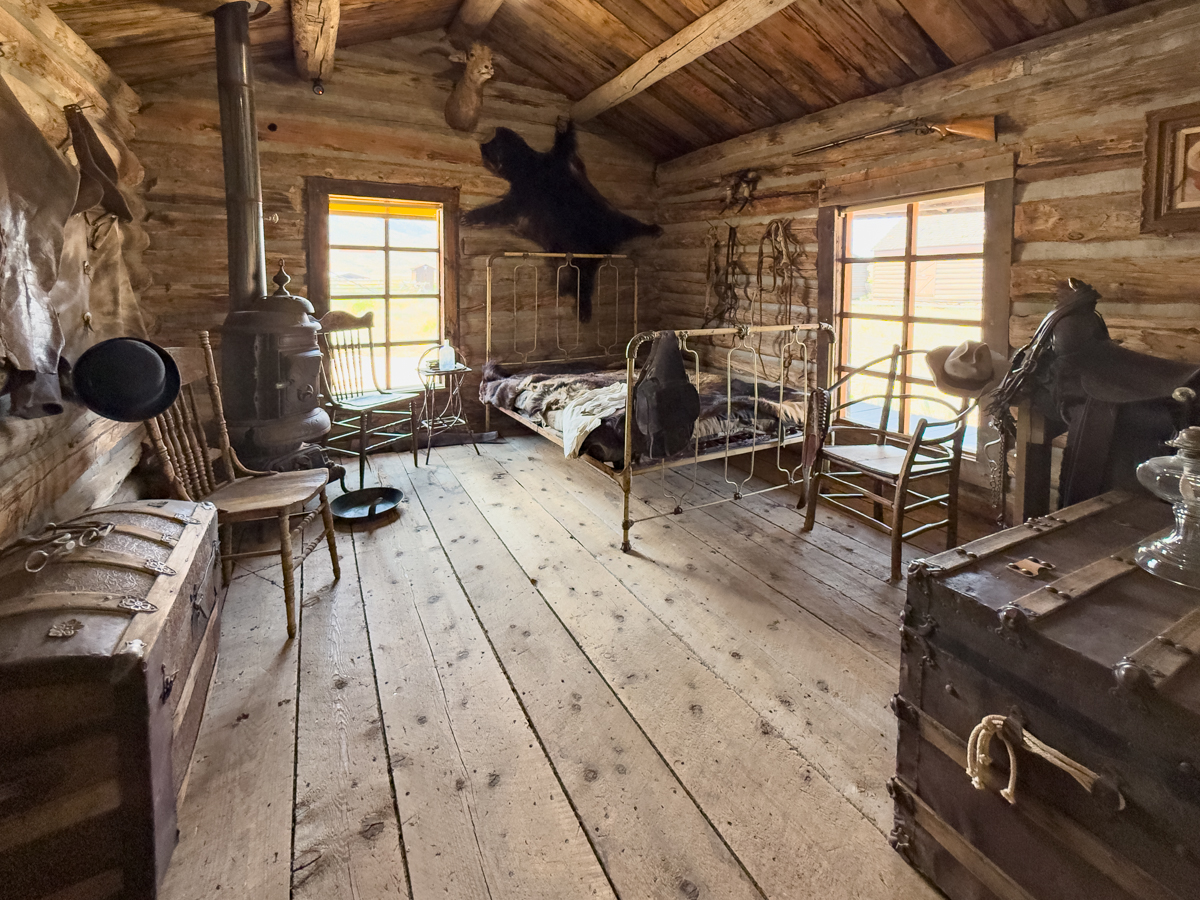
Old Trail Town preserves three buildings tied to the Hole in the Wall gang, including places linked to Butch Cassidy, the Sundance Kid, and Kid Curry.
The 1883 Hole in the Wall Cabin served as a famous hideout. The cabin connects visitors to the gang’s hideout culture. I say “culture” because outlaw life required more than a fast horse and a bad idea. These men needed routes, shelter, allies, timing, and places to disappear.
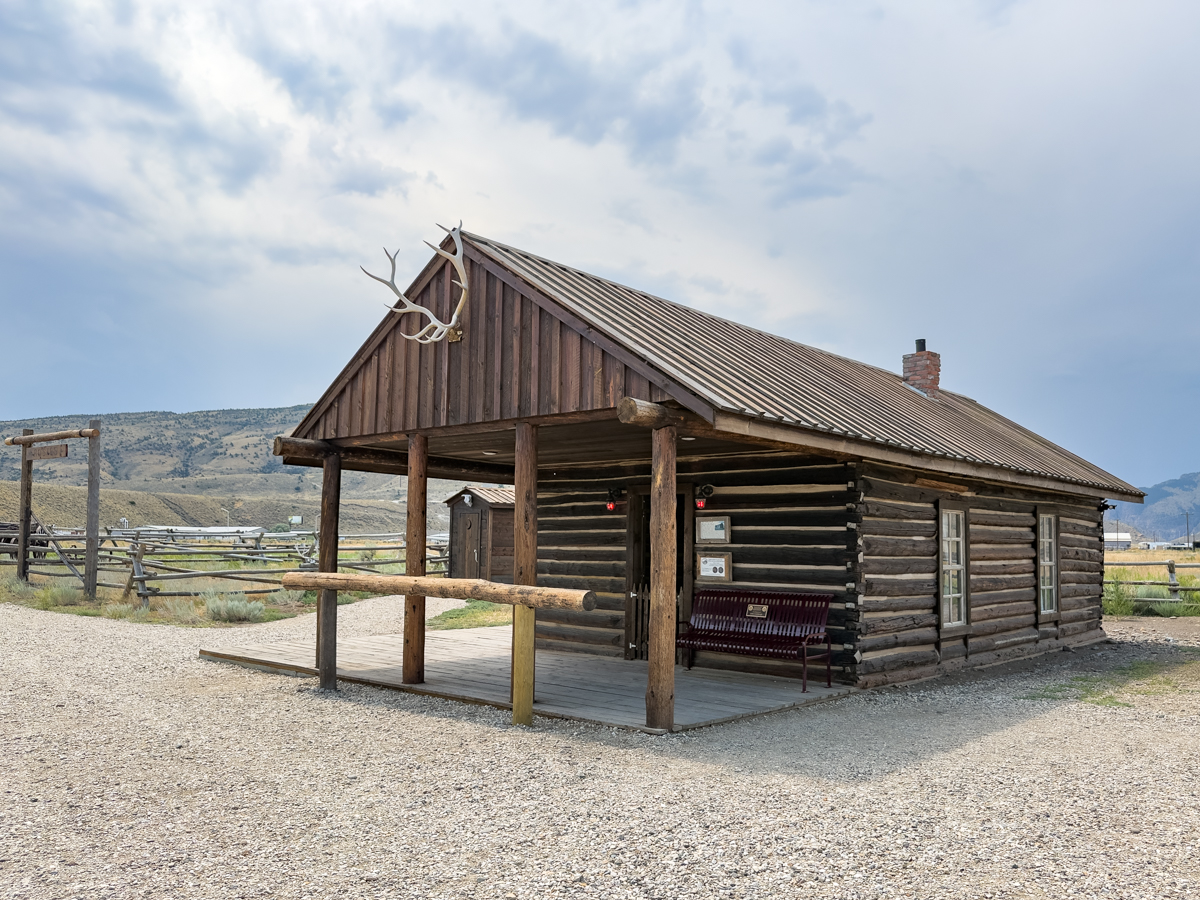
The 1897 Mud Spring Cabin sheltered Kid Curry and the Sundance Kid before the attempted Red Lodge Bank holdup.
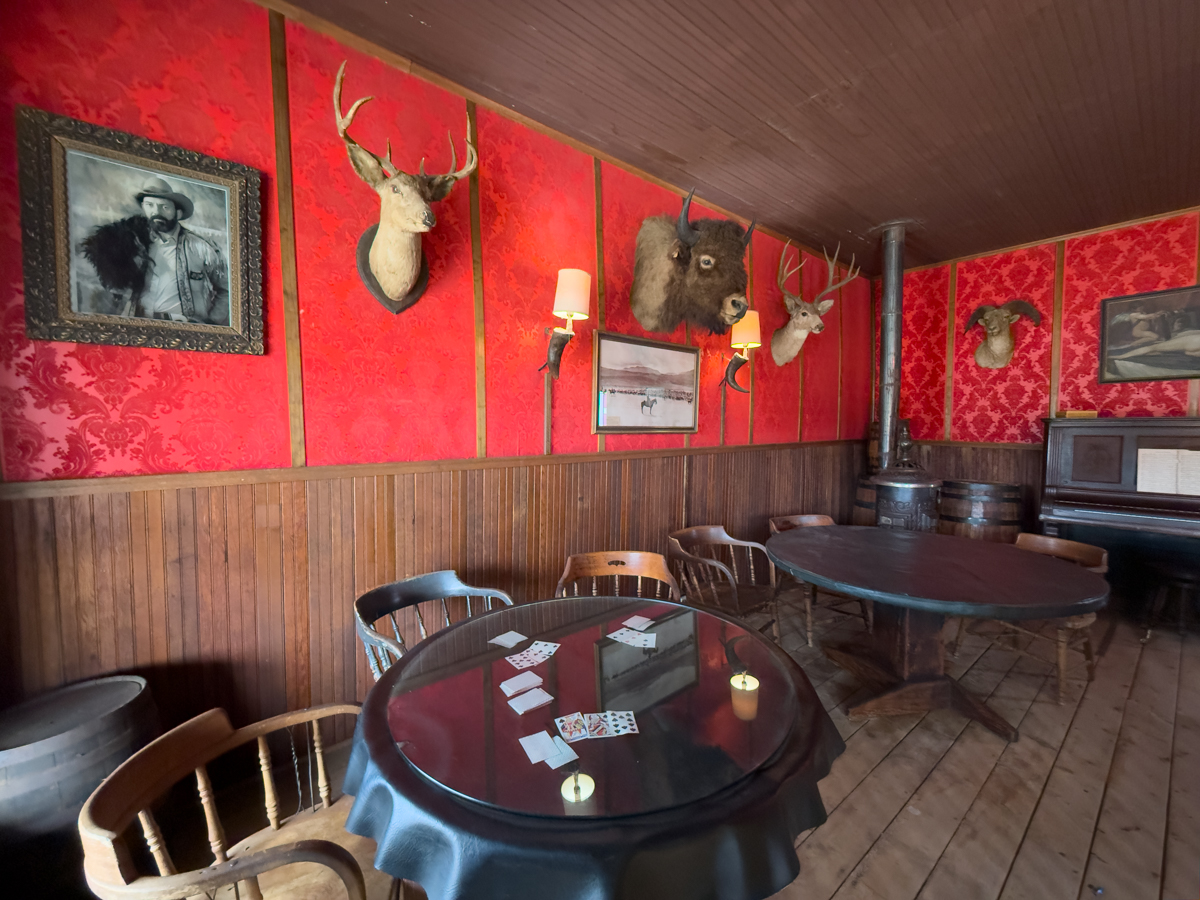
The 1888 Rivers Saloon was a favorite stop for Cassidy and a place where the gang plotted two bank robberies. Look for the bullet holes in the door. The Rivers Saloon is the oldest saloon from the Wyoming Territory remaining in northwest Wyoming.
These buildings give this Cody stop its outlaw pulse. You can almost hear rough plans taking shape in the room.
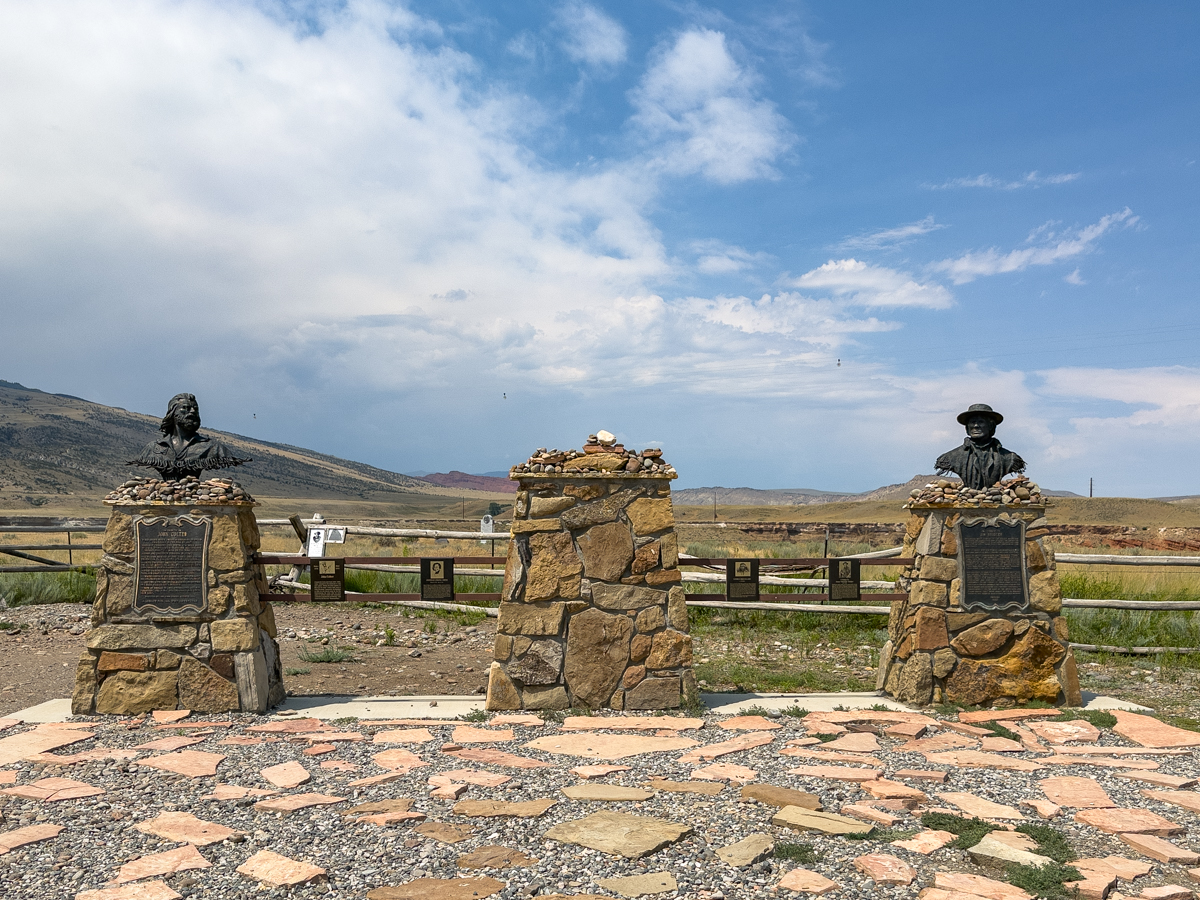
After wandering through the historical buildings, the graves bring the visit back full circle. The markers include names that sound like they were plucked straight from a Western novel, except they belong to real people.
Among them: Jeremiah “Liver Eating” Johnston, Jim White, Jack Stilwell, Phillip Vetter, W.A. Gallagher, Blind Bill Hoolihan, and Belle Drewry, known as the “Woman in Blue.”
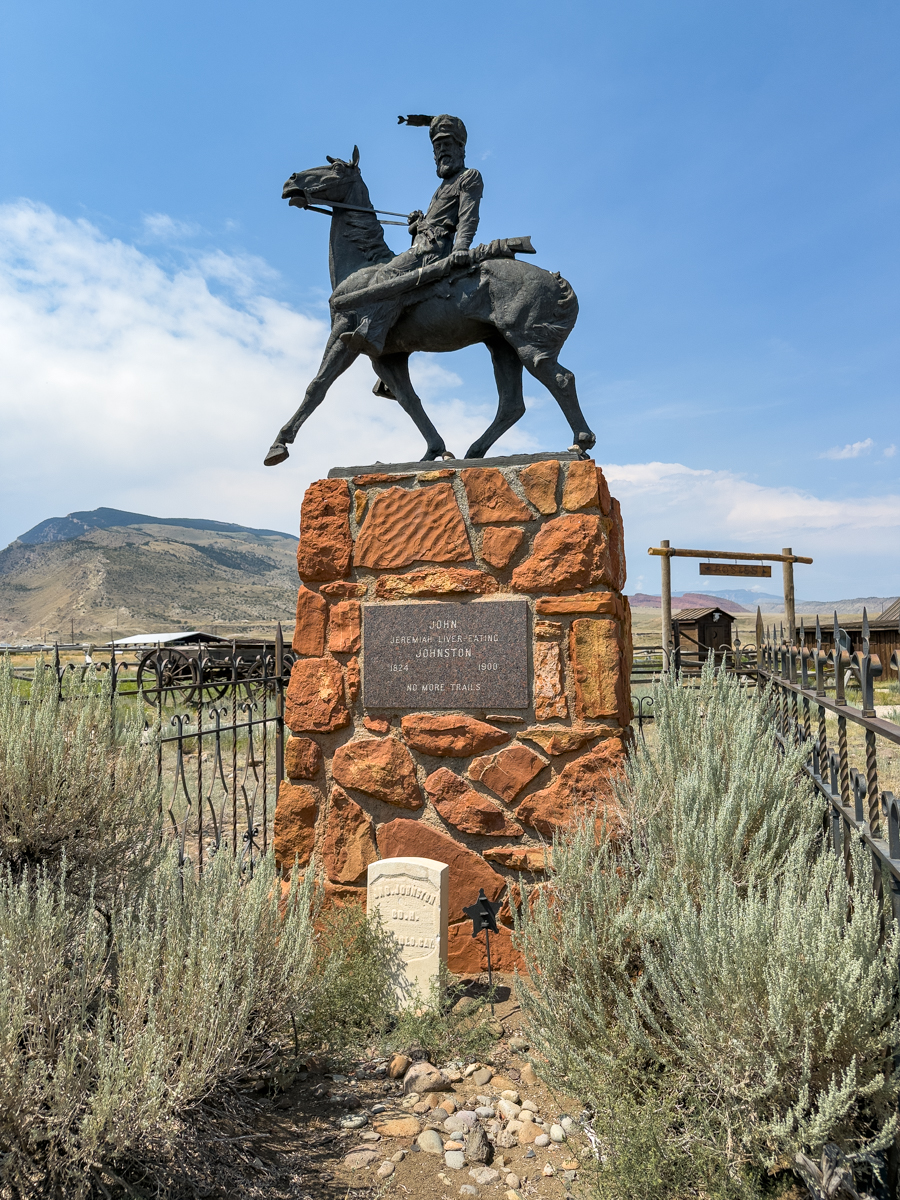
Johnston’s grave may draw the most curiosity. Born in New Jersey in 1824, Johnston later worked as a trapper, hunter, woodhawk, cutting and selling cordwood to fuel steamboats. This hard frontier job rarely makes the movie poster. He was also an Army scout, marshal, and Civil War veteran.
Johnston’s story also inspired the 1972 film Jeremiah Johnson, starring Robert Redford. Standing near Johnston’s grave cut through the movie legend. The name stopped feeling like a character and started feeling like a man.
In 1974, Old Trail Town received Johnston’s remains and reinterred him on June 8. More than 2,000 people attended the service, reportedly one of the largest in Wyoming history.
Belle Drewry’s past adds a darker turn. Her death connects to Rosie’s Roadhouse, another stop on the path. That link between building and burial gives the site a human thread: people didn’t just pass through these places. Their choices, dangers, and losses followed them.
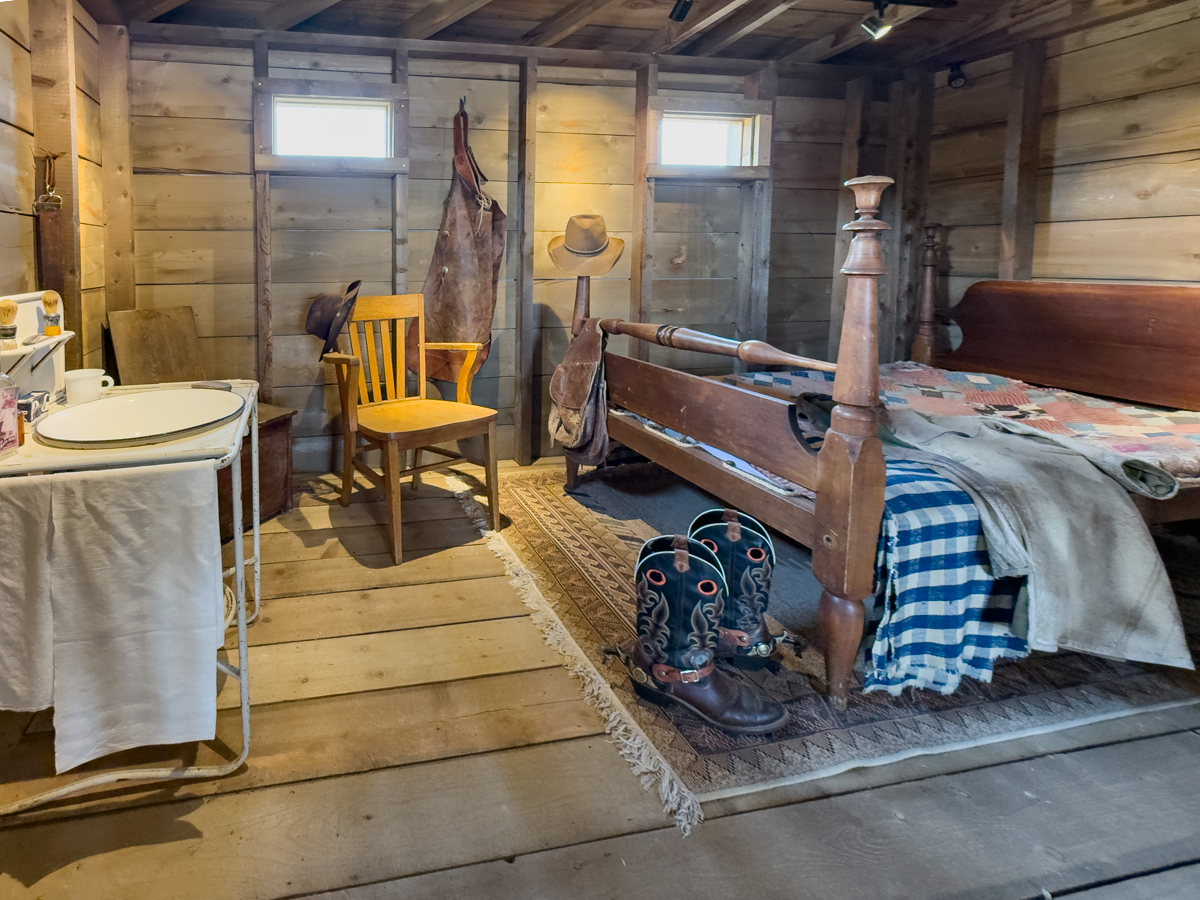
Rose Williams’ Roadhouse and Brothel may count among the most compelling buildings on the trail because it shows another side of frontier travel.
Roadhouses served people moving through hard country. They offered food, drink, lodging, company, and sometimes trouble. Rosie’s story includes freight routes, travelers, women working in limited circumstances, and a death that still gets attention more than a century later.
The building moved from Arland, Wyoming, to a junction on the freight route between Red Lodge and Meeteetse in 1890. Rosie, Belle Drewry, and Katie “Tahaunous” Durrant served travelers along that road until 1894. That year, Rosie died of cancer.
Belle Drewry, known as the “Woman in Blue,” died after Katie poisoned her. Belle now rests in the Old Trail Town cemetery.
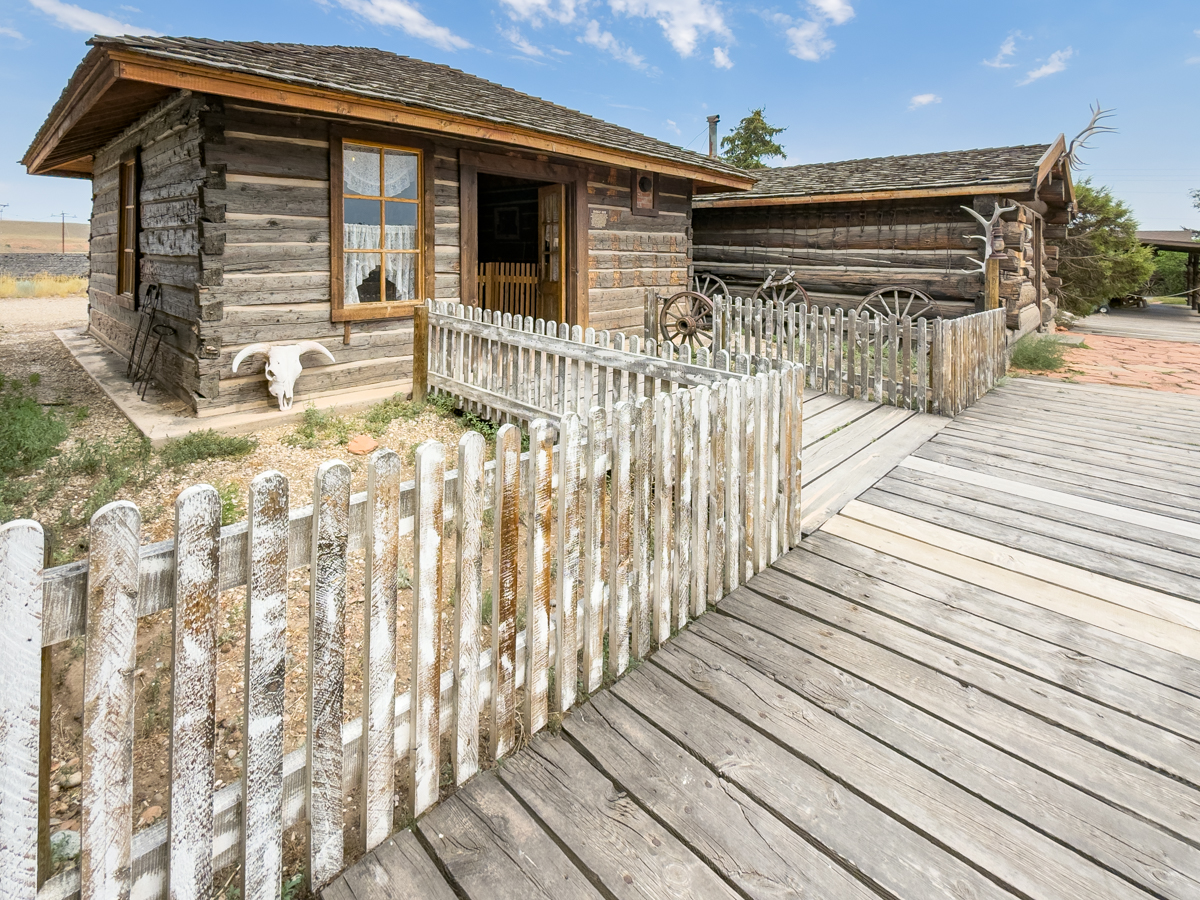
Cody has no shortage of Western attractions, but you’ll want to spend some time here because it brings the story outdoors and puts visitors face-to-face with the past.
You can move along the boardwalk at an easy pace, read the building signs, photograph details, and decide which stories are meaningful to you. Museum lovers will appreciate the preservation. Photographers will appreciate the texture. History buffs will appreciate the names.
Old Trail Town works because it doesn’t diminish the West. It gives visitors cabins, tools, saloons, graves, bullet holes, and women’s stories all in one walk. That mix makes the place worth your time.
Old Trail Town
1831 DeMaris Drive
Cody, WY 82414
307-587-5302
Open seasonally, May 15 to Sept. 30
Gates open at 8 a.m. daily
Last entrance at 5:15 p.m.
Admission: Adults $15, Seniors (65+) $14, Youth (6-17) $8, Children under 6 and Active Military - Free
Check the website before visiting.
The author was hosted.
* * *

Julie Diebolt Price is a seasoned photographer, author, and travel writer with over 35 years of experience. Her diverse career spans travel, documentary, corporate, stock, and event photography.
As a business entrepreneur, she leverages her extensive experience in various industries to teach aspiring photographers and business owners the essentials for success.
Julie focuses on what matters, learns by doing, and isn