Any British visitor to Dublin feels the weight of a collective and not always easy history, and worse, a sense of ignorance of a shared past that is largely untaught in UK schools. The city is full of buildings, erected as a show of political domination by London, later repurposed, for instance, the impressive Old Parliament House which became the Bank of Ireland after Irish MPs moved to Westminster in 1801. A walk along O’Connell Street, rising up at right angles to the river, is a parade of monuments: to Daniel O’Connell himself, ‘The Liberator’ who campaigned for Catholic Emancipation in the nineteenth century; to William Smith O’Brian, convicted of sedition and transported to Tasmania in the 1840s; to Sir John Gray who brought clean water to Dublin and James Larkin early twentieth century Trades Unionist.
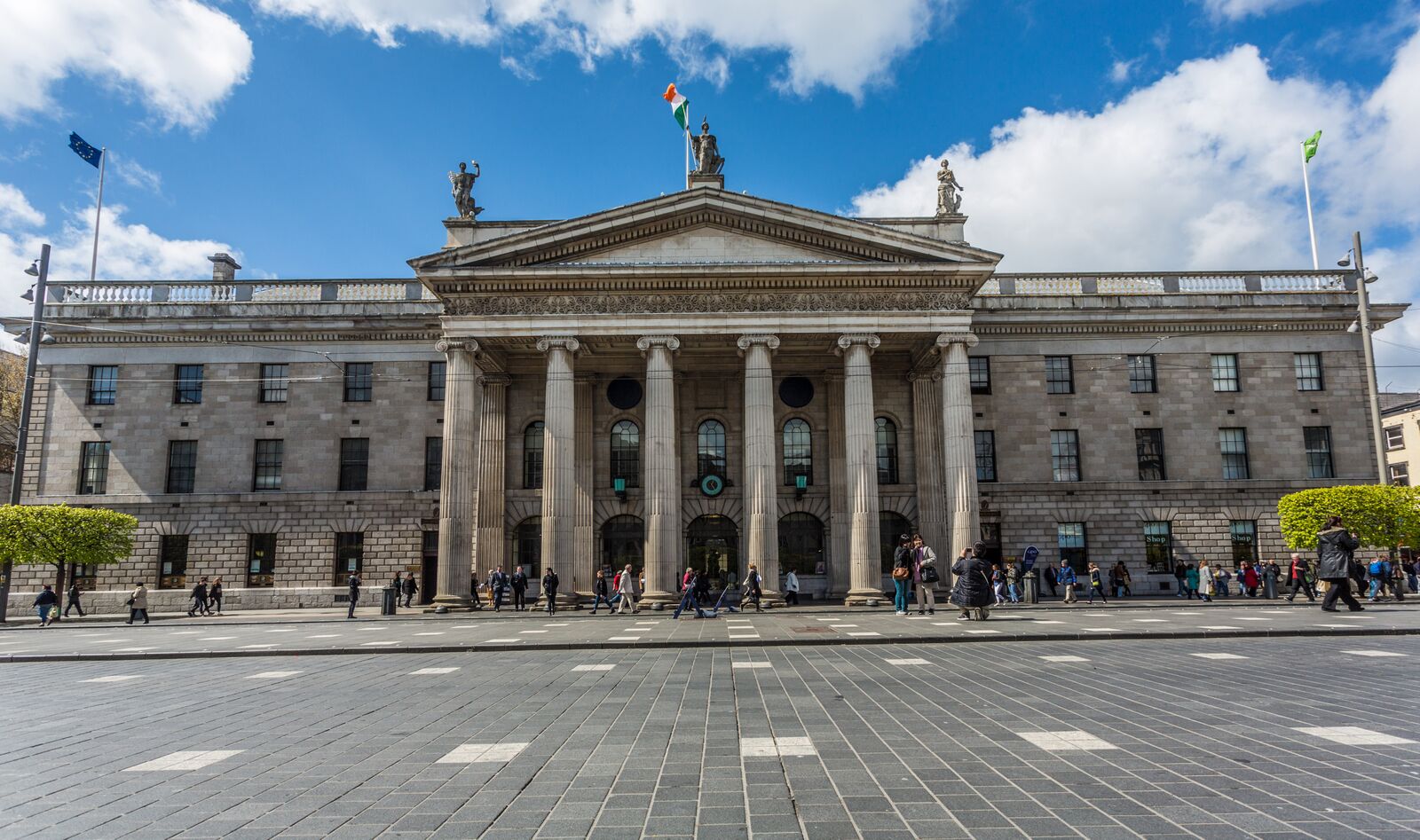
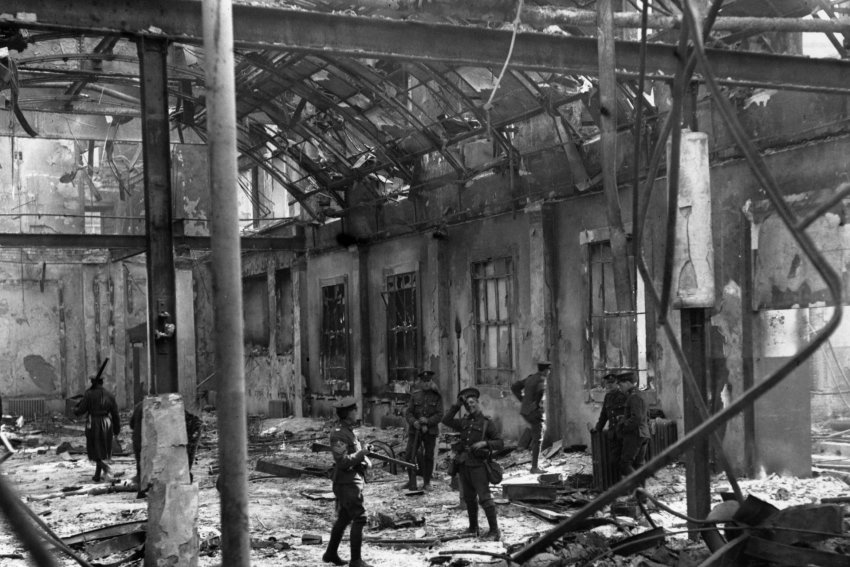
Incongruously towering above all these men, the space-age Spire of Dublin pierces the sky: unveiled in 2003, it replaced Dublin’s very own Nelson’s Column which was bombed by republicans in 1966, on the fiftieth anniversary of the Easter Rising. Look to the left of the Spire and you see the most symbolically important location of all, where the Rising itself took place, the imposing, classically fronted General Post Office, which was reduced to ruins over six days of fighting in 1916 (there are still visible bullet holes in the columns). Unlike many of the grand buildings, the GPO still fulfils its original function, a marvel to me, coming from a country where the post office is mired in scandal and branches are generally reduced to add-ons in other shops. It is quite worth a visit in itself. But head downstairs and there is a compact yet wonderfully evocative and educational exhibition dedicated to the history of the building and the fateful events of 1916.
The GPO Museum was opened to celebrate the centenary of the Rising in 2016 and has since won several awards. I don’t know how much ongoing work is put into it, but despite ten years of wear and tear, and developments in technology and display, it feels remarkably fresh. There are a lot of screens and interactivity, yet nothing, when I visited, was out of action. The exhibition is shoe-horned into a single, surprisingly small space, with dark walls, creating a bunker mentality so you feel under siege yourself. A careful design takes you on a winding journey through sixteen separate sections. Again, it’s convoluted, you often find yourself slightly confused and this feels entirely appropriate given the complexity of the subject. There’s a floorplan leaflet but you must keep your wits about you so as not to miss any of the sections – and you don’t want to miss them.
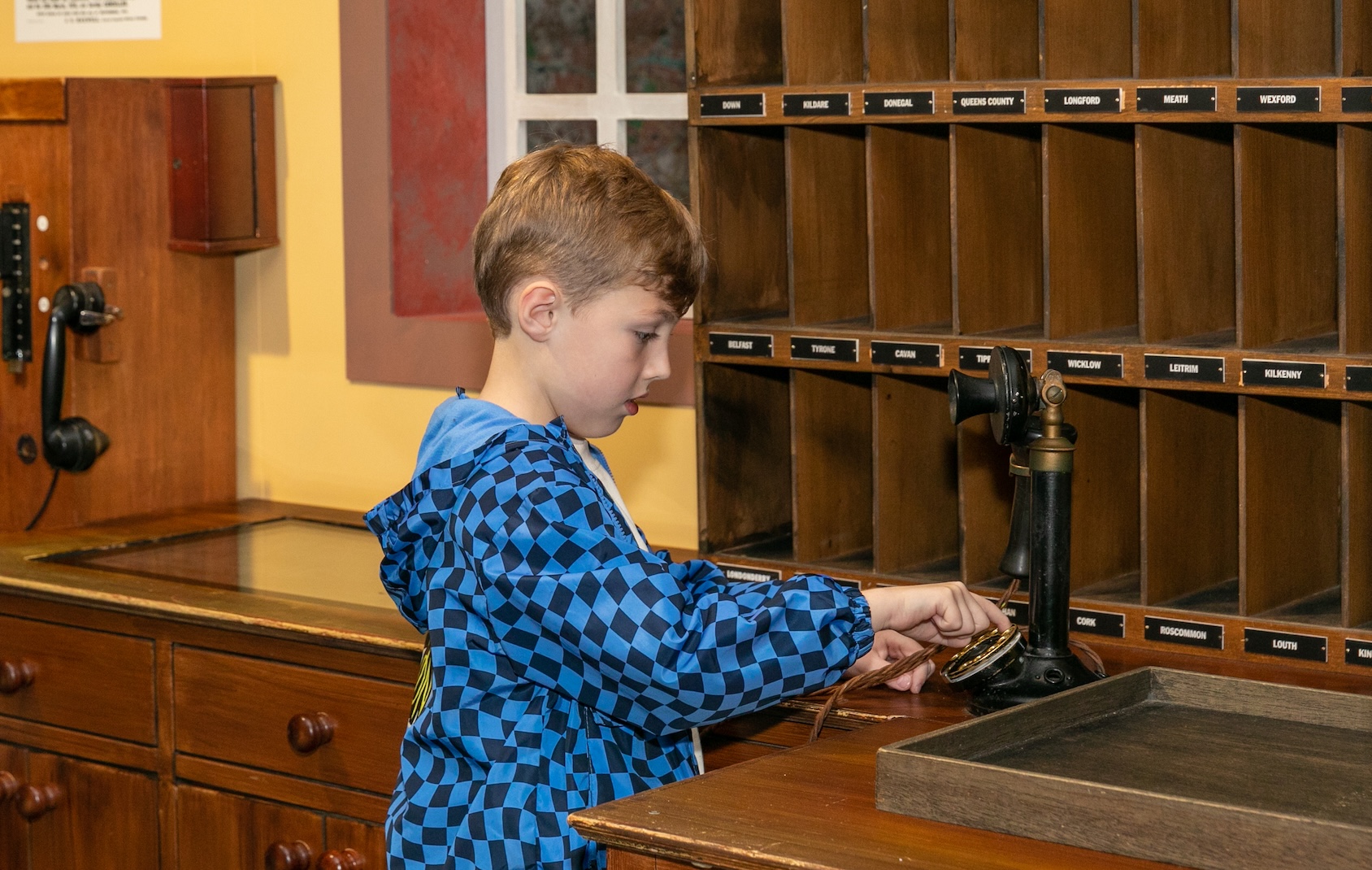
The first six displays deal with the background to 1916, ranging from the Irish cultural revival of the 1890s onwards, through the social and political context at home and abroad and some of the key figures and factions. The displays follow a consistent pattern – a packed vitrine of objects and images which are explained with written labels and a touchscreen display. You can home in on anything that interests you and find out a great deal about it. Beware, if you follow up everything, you would literally be there until closing time. There are open displays, for instance showing a post office interior, or the corner of a street, and big graphics of maps and timelines. It is varied, visually interesting but with the emphasis always on information: curating at its absolute best.
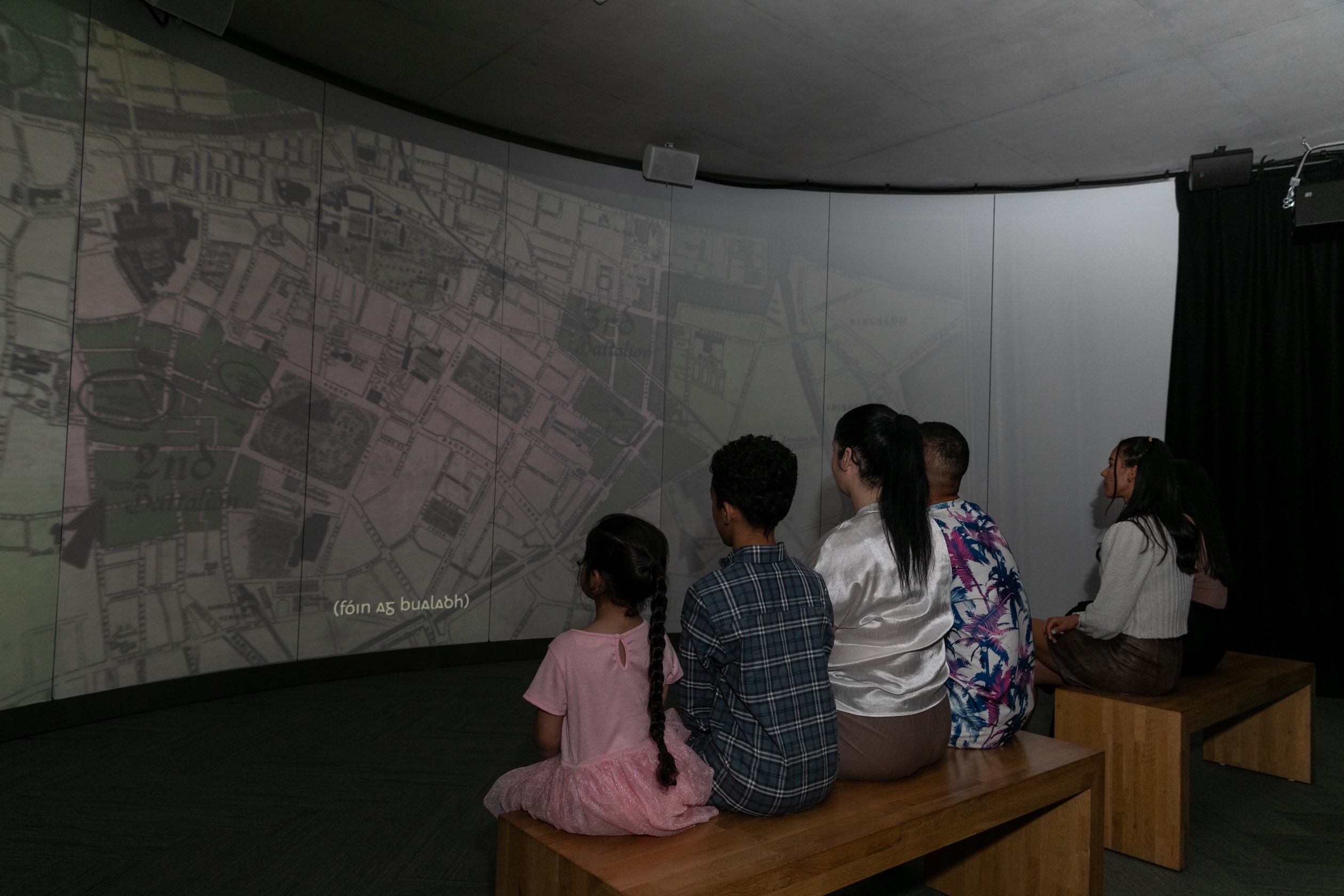
The centrepiece of the museum is a seventeen minute film, Fire and Steel, which looks is detail at the events of the Rising. I am not usually a big fan of extended video in museums, being generally too impatient to sit and listen, but this was pretty compelling. It uses a simple but effective device of a large, animated map which allows you to keep track of multiple, simultaneous events, and a commentary which homes in on particular moments using a mixture of live action, photographs and contemporary records. As someone who knew only the barest bones when I arrived, I was able to keep track of events and gain an understanding. The film is then backed up by four sections on the protagonists – rebels, GPO staff, bystanders and British forces. Particularly good use is made of short video interviews with historians and commentators who discuss issues like public support for the Rising with nuance and clarity: there’s no dumbing down here and no attempt to glorify those involved.
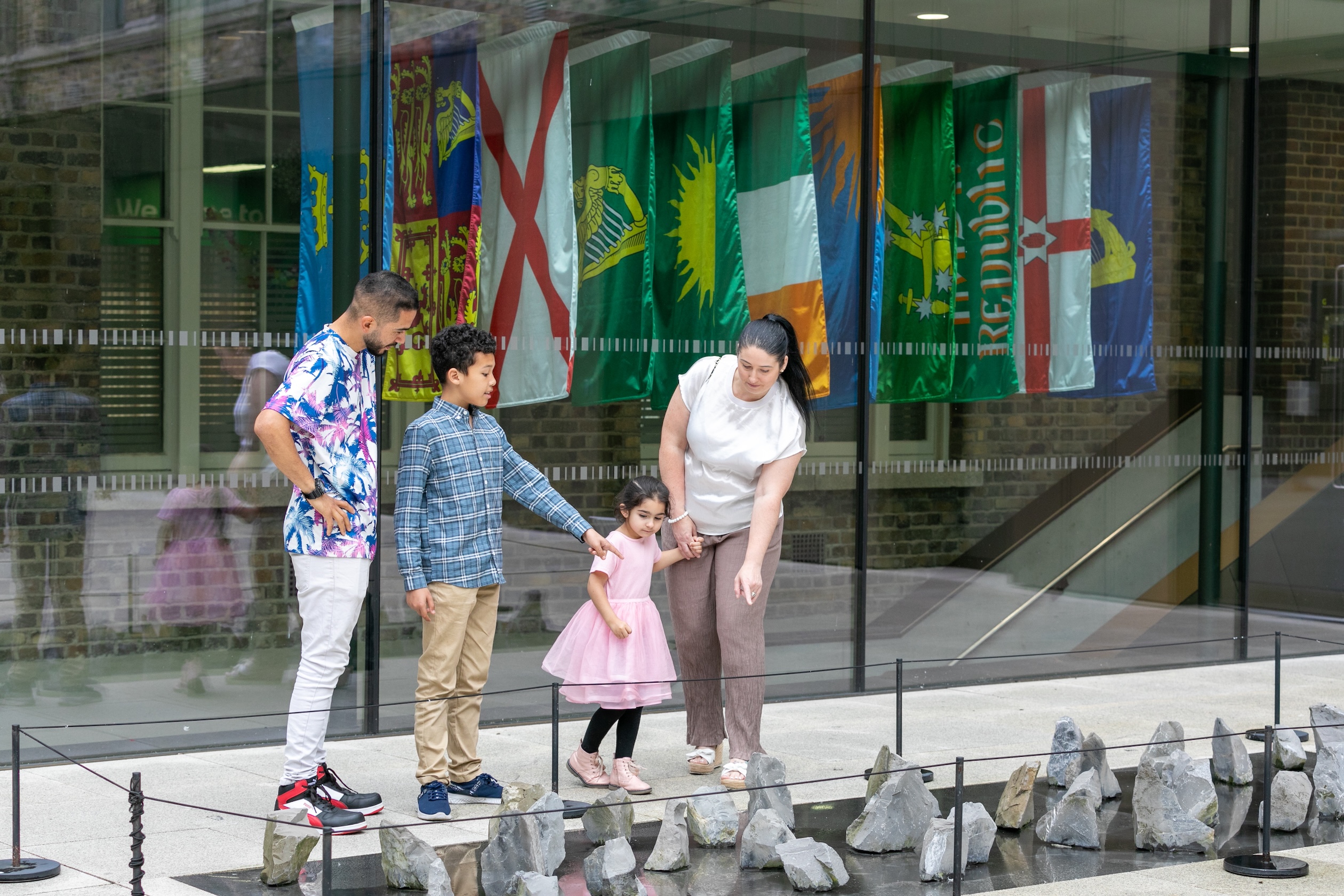
The last sections deal with the Aftermath: the initial, frequently bloody, retribution and the longer-term struggle for an Irish Republic. This part of the display then spills over, firstly with a history of the Irish flag, slightly awkwardly displayed in the foyer by the lifts and then into ground floor displays which look at the island of Ireland from 1900 to the present day and commemorations of 1916. There is less cohesion here, with slightly odd digressions into post box design, and the space, round two sides of a courtyard, with the café at one end, has less of the claustrophobic but effective intensity of the first room. An anticlimactic end, perhaps. Overall, however, I’ve rarely got as much information from, or been so engaged in, this type of historical narrative exhibition.
My advice would be to go early into your trip to Dublin: what you learn in the GPO museum deepens one’s experience of almost everywhere else. The walk up to the Castle takes on added resonance as you have just witnessed fighting there; Glasnevin Cemetery is full of relevant memorials; the eighteenth century Collins Barracks which now houses National Museum of Decorative Arts seem to echo with the boots of soldiers; even a visit to 14 Henrietta Street a fascinating social history museum of a house through time, takes on a politicised dimension as one realises how its fortunes were so dependent on changing rule from London. Most chillingly of all you can visit Kilmainham Gaol where the rebels were held and executed (although this is only by guided tour and gets booked up very quickly).
The GPO Museum is open Monday to Saturday, 10am 6 - 5pm and costs £15 for a standard adult ticket if you book in advance online (£17 on the door). It isn’t big, but you can spend a great deal of time there. My one caveat would be, that despite their best efforts, I don’t imagine it’s very child-friendly (although there were plenty of kids visiting and the film was definitely a hit). It is right in the centre of Dublin, an easy walk 10-12 minutes’ walk from the train and very accessible by tram and bus. There’s a small gift shop, and a café.
* * *

Catriona Miller is an independent art historian and writer on art based in the UK. She has taught and lectured on all aspects of art history and is currently researching women artists in British collections and issues of nationalism and identity in nineteenth-century landscape painting.
https://www.instagram.com/cmillerartlife/
https://twitter.com/cmillerartlife