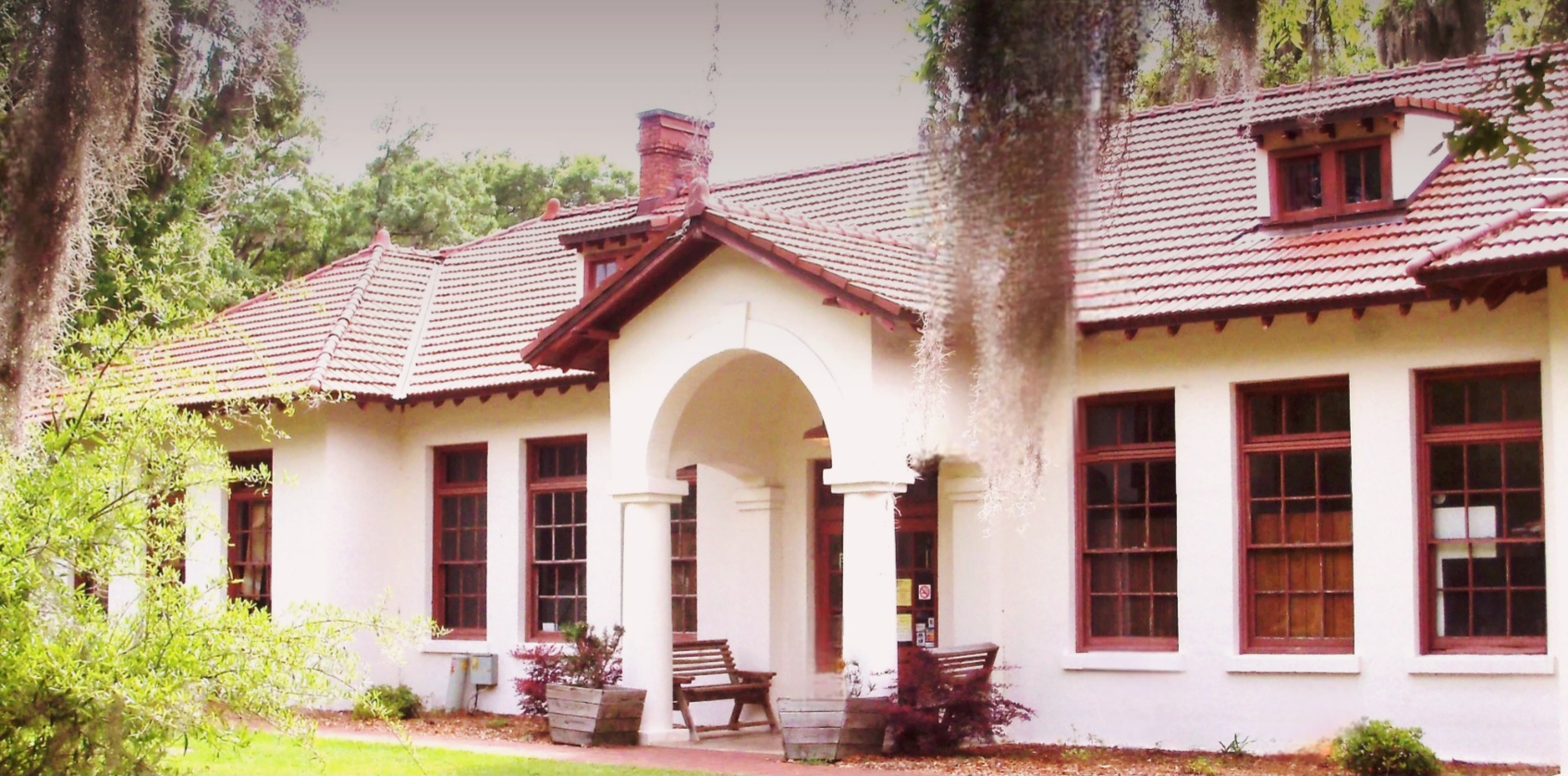
Penn Center was developed on St. Helena Island, one of the barrier islands of South Carolina. It is just about in the center of the Gullah Geechee Cultural Trail. The waters of the St. Helena and the Port Royal Sounds border St. Helena. The island’s first inhabitants were the Cusabo people, Native Americans who lived along the South Carolina coast long before European settlement.
Around 1520, Spaniards settled here, calling it Santa Elena. In the 1700s, the British took control of the island as part of Carolina.
The isolated islands were farmed by landowners using slave labor, primarily growing indigo and then rice. The workers developed a distinct language and culture that became known as Gullah. The enslaved along the coast were mostly from West Africa, prized for their knowledge of rice cultivation, and soon Carolina Gold Rice became a highly desired grain. It is still highly desirable, prized for the ability to change its characteristics depending upon how it is cooked.
Fast-forward to 1861, South Carolina was the first to secede and the first to fire a shot in what would become the Civil War. The deep-water Sound off St. Helena Island was an important stronghold, with Union troops immediately occupying the islands and landowners fleeing.
With plantation owners gone and thousands of formerly enslaved people suddenly responsible for their own futures, the Union faced an unprecedented challenge. In 1862, the Port Royal Experiment began establishing schools for freed people. It implemented plans to allow African Americans in the Sea Islands to continue working the rice plantations.
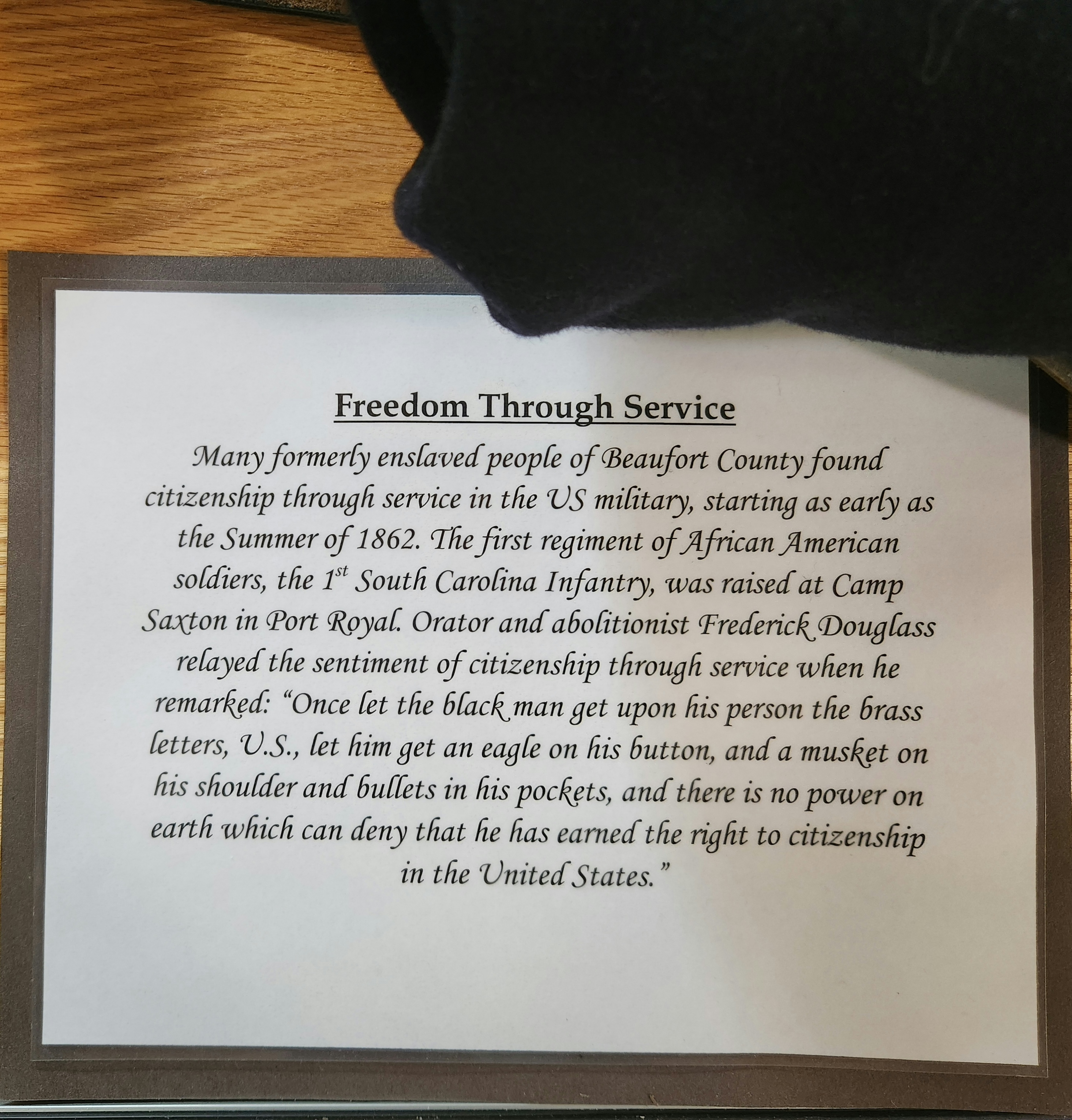
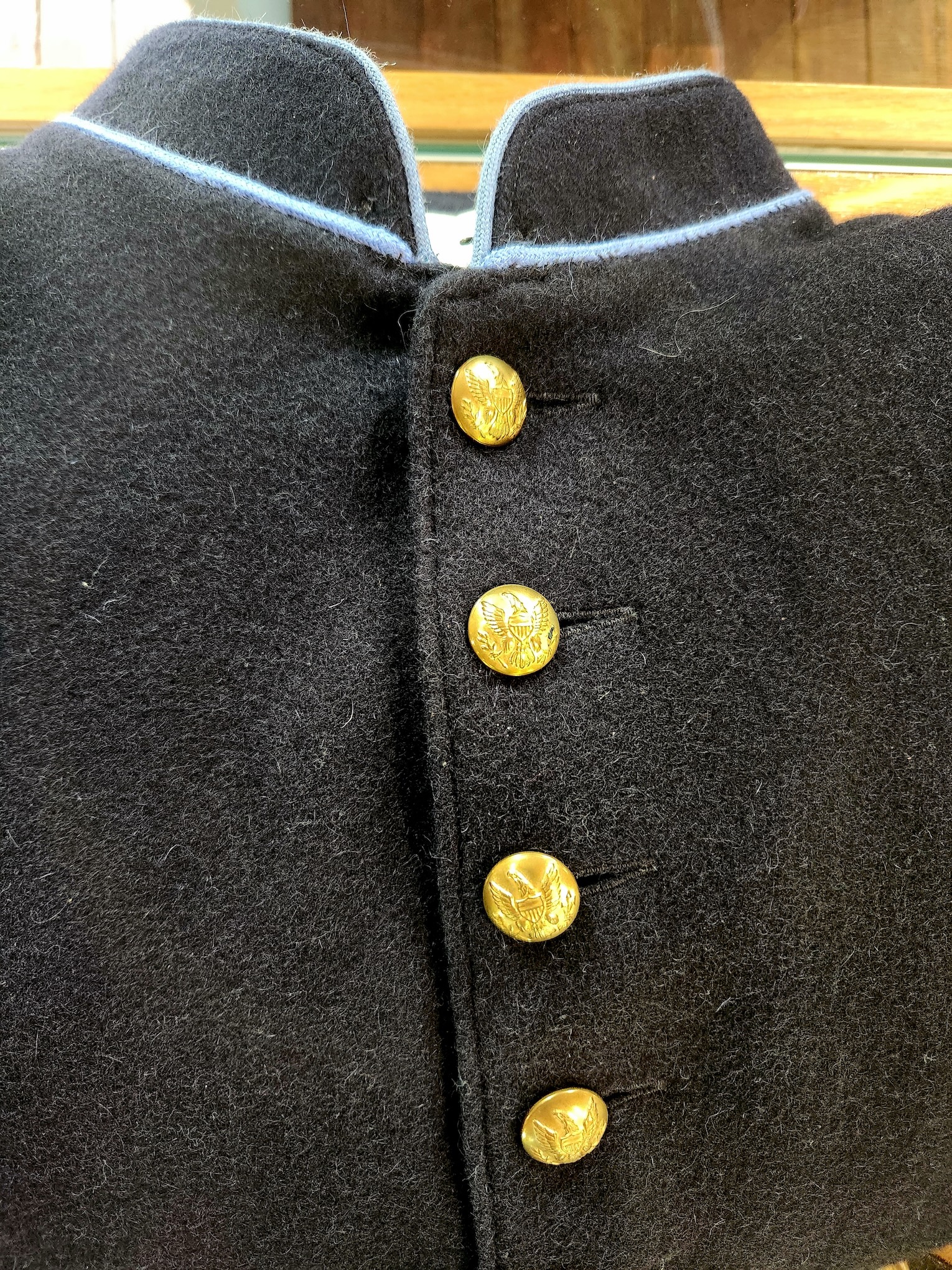
They worked for financial gain and eventually bought former plantations long before the war ended and before Reconstruction policies established strict guidelines. Some of the older men joined the United States Army. The Penn School is a success story of the Port Royal Experiment.
Penn School History
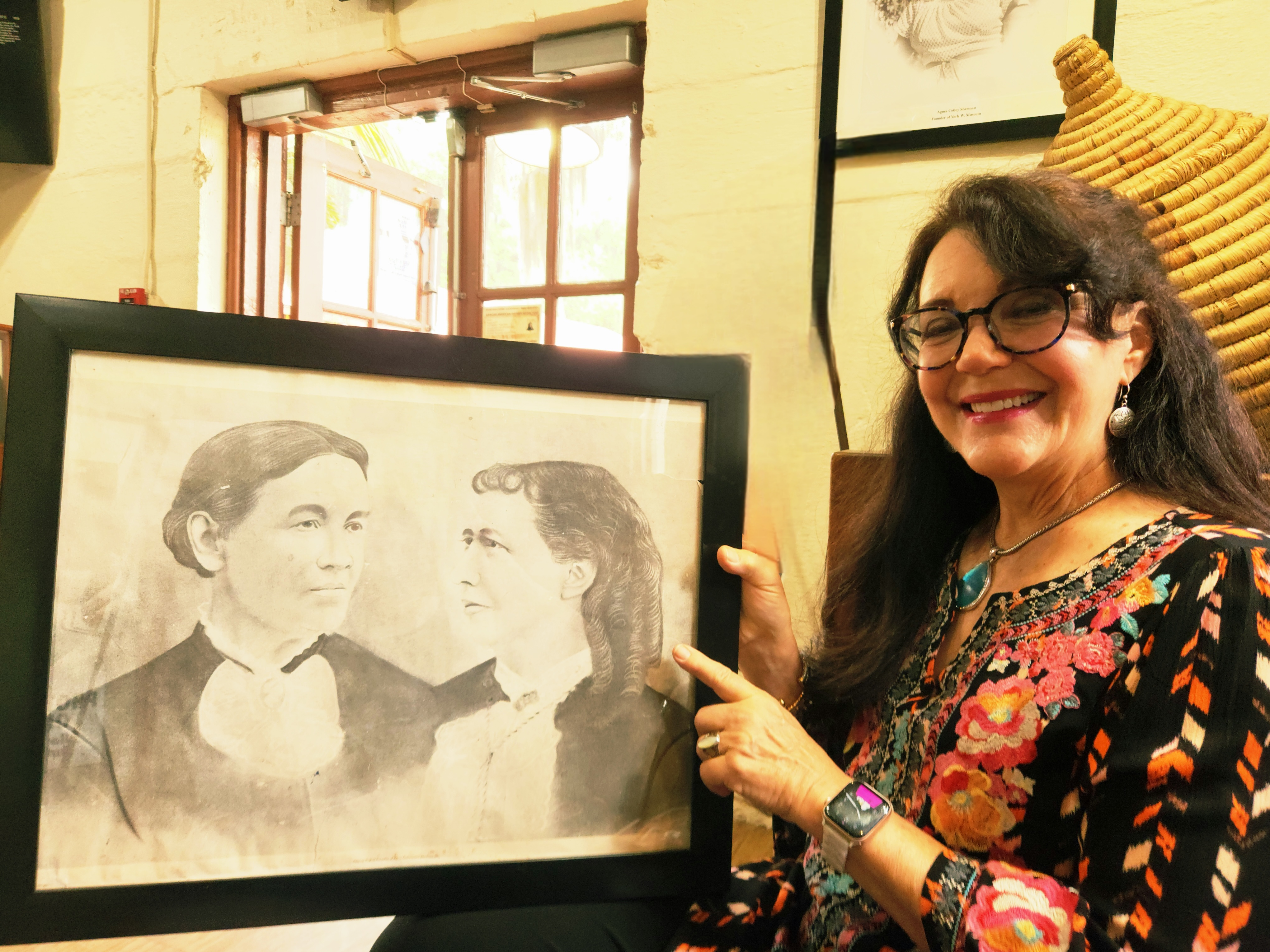
In 1862, two women from Pennsylvania, Unitarian missionary Laura Matilda Towne and Ellen Murray, her Quaker friend, came to St. Helena to teach formerly enslaved children. They arrived with contributions to co-found a school. They started their efforts with nine children around the dining room table at Oaks Plantation. Still, within a matter of weeks, the dining room was overcrowded with 80 eager students. The instruction team moved their classes to the Brick Church.
In 1865, a three-room building was constructed—the first school in the American South solely for the education of formerly enslaved people. Funding for the school came primarily from the private Society of Friends (the Quakers) in Philadelphia. It was named Penn School. Hasting Gantt, a former enslaved person from St. Helena Island, donated the land to establish a permanent school.
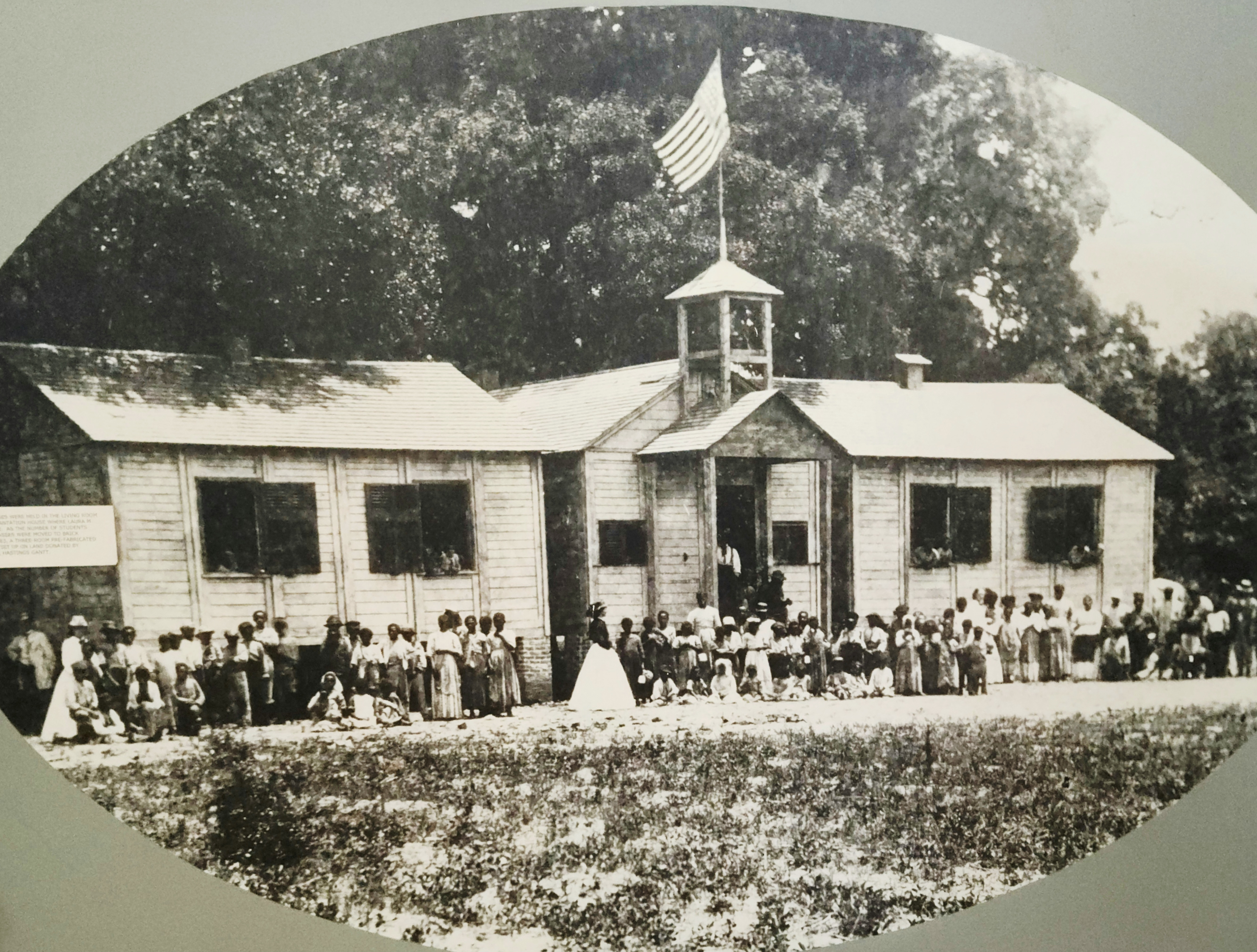
Between 1901 and 1917, Virginia’s Hampton Normal and Agricultural Institute (today Hampton University) sponsored the school. It began adding classes in agriculture and the trades, including wheelwrighting, blacksmithing, carpentry, basketmaking, and cobbling.
Barely surviving the Great Depression, the school enrollment dropped from 600 students to 262. Still struggling, and with a bridge to the mainland allowing students to attend school there, by 1948, the school evolved into the area agency, Penn Community Services.
Through each era, Penn School—and even its name—continued evolving as community needs changed. In 1950, Penn Center opened a day care center and began training midwives. Once again, a need arose, and Penn Center adapted.
Human Needs, Civil Rights, Dr. King, and a Lowcountry Author
The story didn’t end with education. During the Civil Rights Movement, when segregation was still the law across much of the South, Penn Center served as a safe gathering place for interracial meetings and conferences attended by human rights activists, including Dr. Martin Luther King, Jr. Dr. King and the Southern Christian Leadership Conference held strategy sessions here. Local residents—including a young Pat Conroy, who would later write so passionately about the Lowcountry—witnessed history unfolding.
For more than 150 years, Penn Center has continued to adapt, serving the community while preserving the culture and heritage of the Gullah people.
The 1970s arrived, and Penn Center was still in the business of teaching—this time, agricultural workers with the Peace Corps were acquiring skills before venturing overseas.
It is interesting to me that one of the ways of saying “Hello” in Gullah is “Wha’ hoppnin?” but another is simply “Peace.”
York W. Bailey Museum
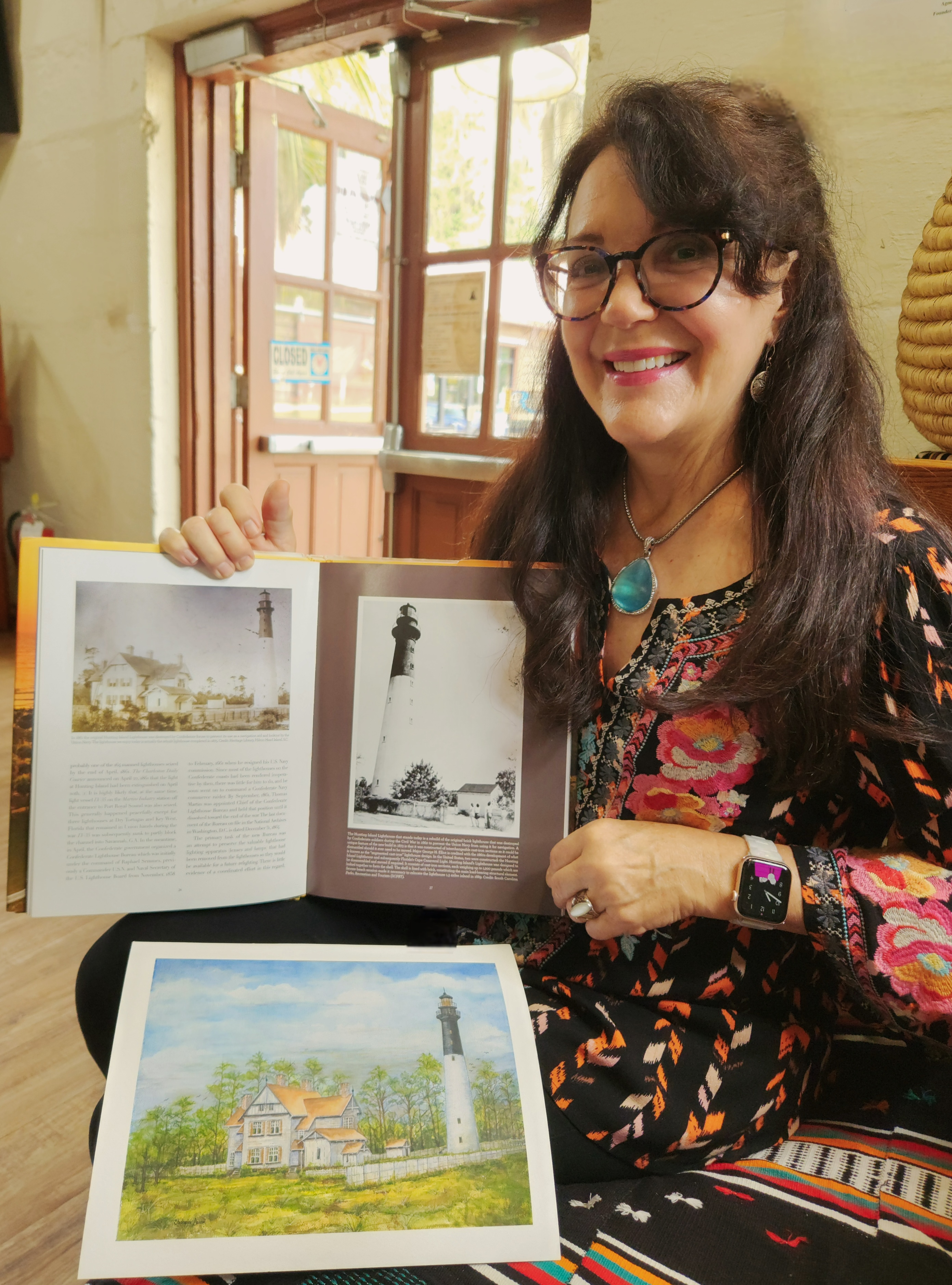
The York W. Bailey Museum is an integral part of the Penn Center Campus. It tells the story of Penn School and the West African people who formed a unique and distinct culture. It is staffed by knowledgeable workers and volunteers who clearly love telling the story of Penn School and answering visitors’ questions. My tour guide shared her own artistic talent with me, showing me her painting of the Hunting Island Lighthouse, modeled after a black-and-white photograph of the local icon.
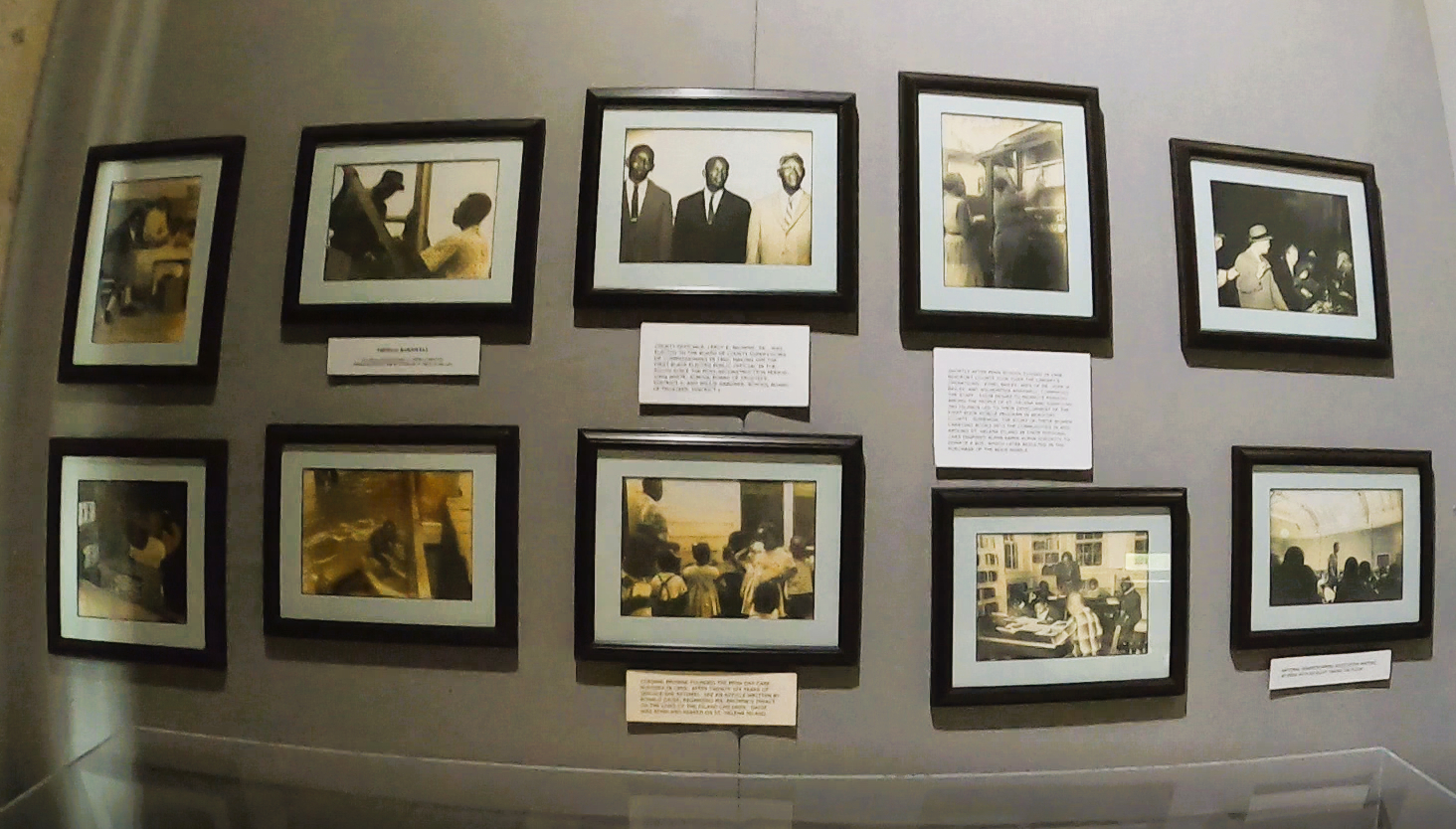
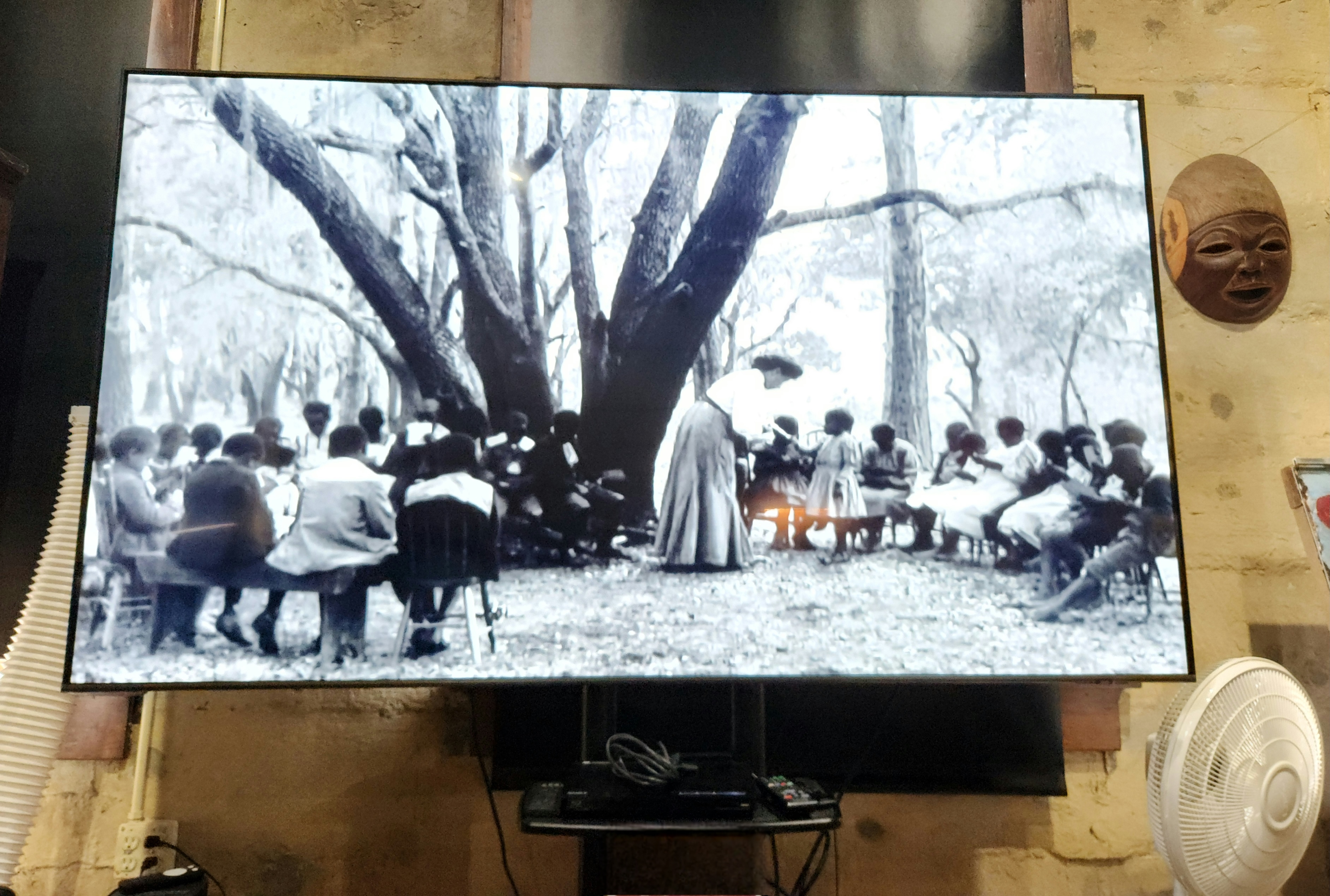
The first thing I remember about the York W. Bailey Museum at Penn Center isn’t a date, a display case, or even one particular exhibit. It is color. Black-and-white photographs line the walls in one section, preserving moments from the earliest recorded days of St. Helena Island and Penn School.
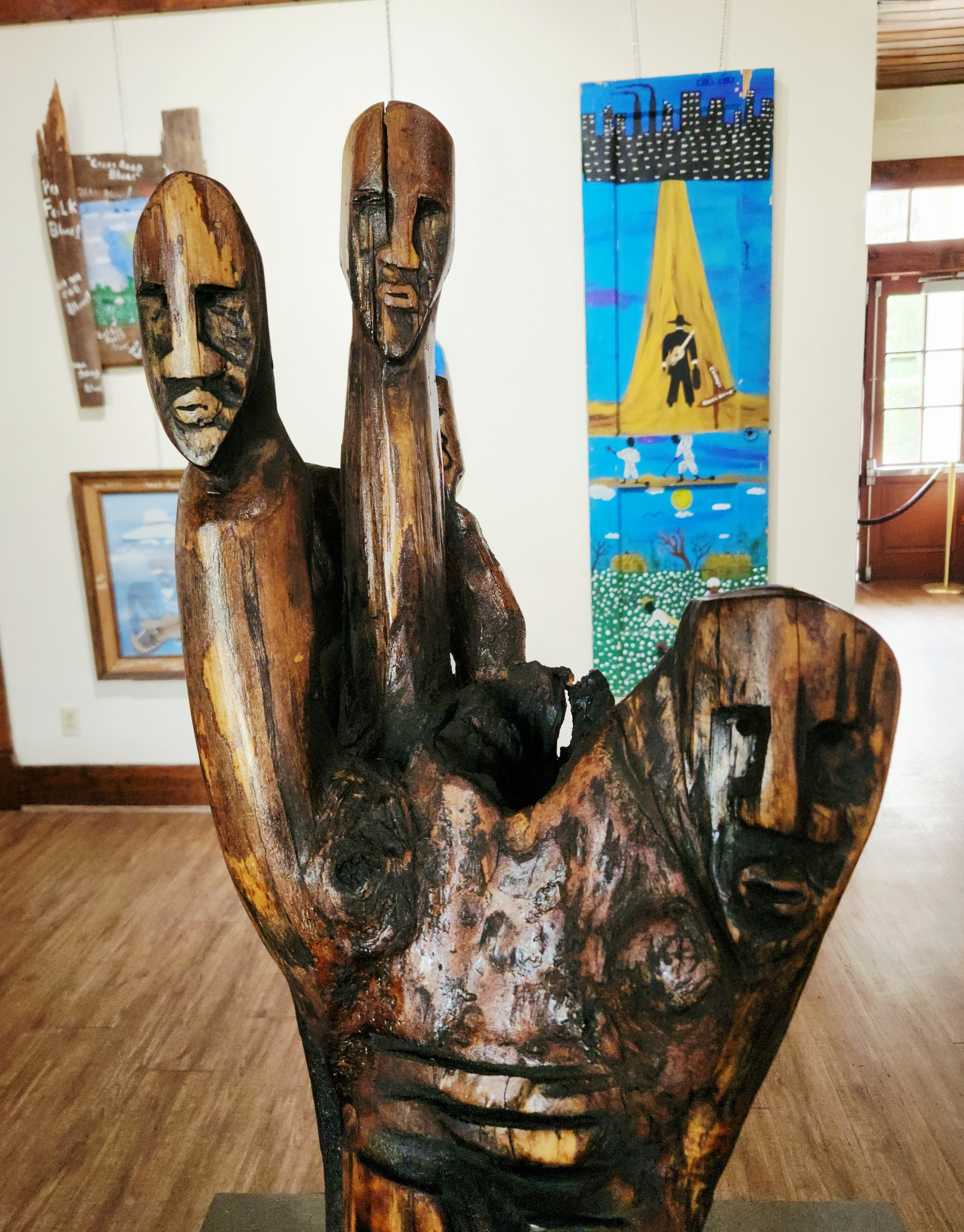
In the next room, vibrant African and Gullah artworks burst with color, life, and resilience. Together, they tell a story far larger than a school—one of people who endured, adapted, and preserved pieces of their heritage against impossible odds.
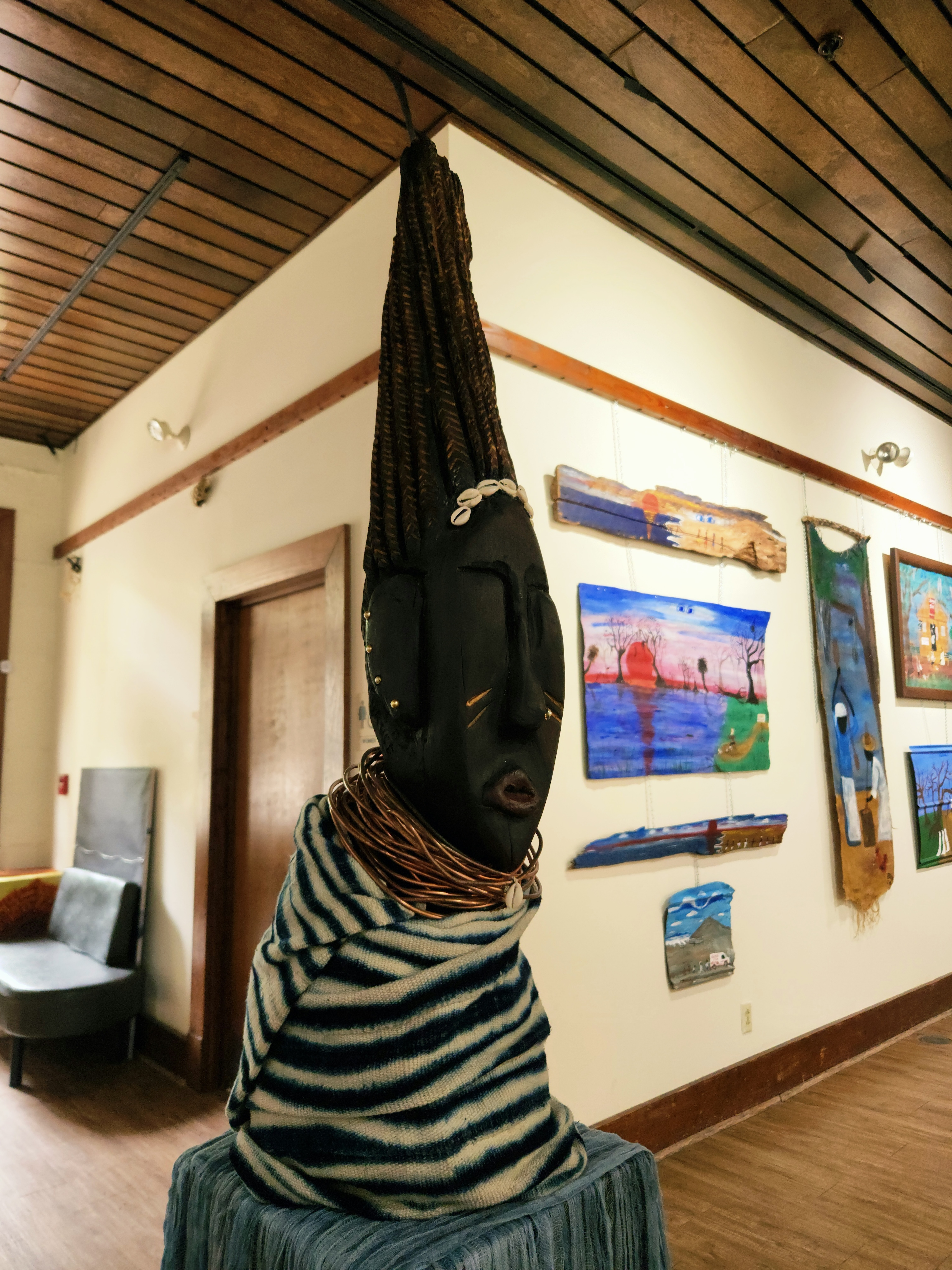
Visitors move slowly from room to room, stopping in front of photographs, reading exhibit panels, and studying artifacts that connect generations separated by more than a century.
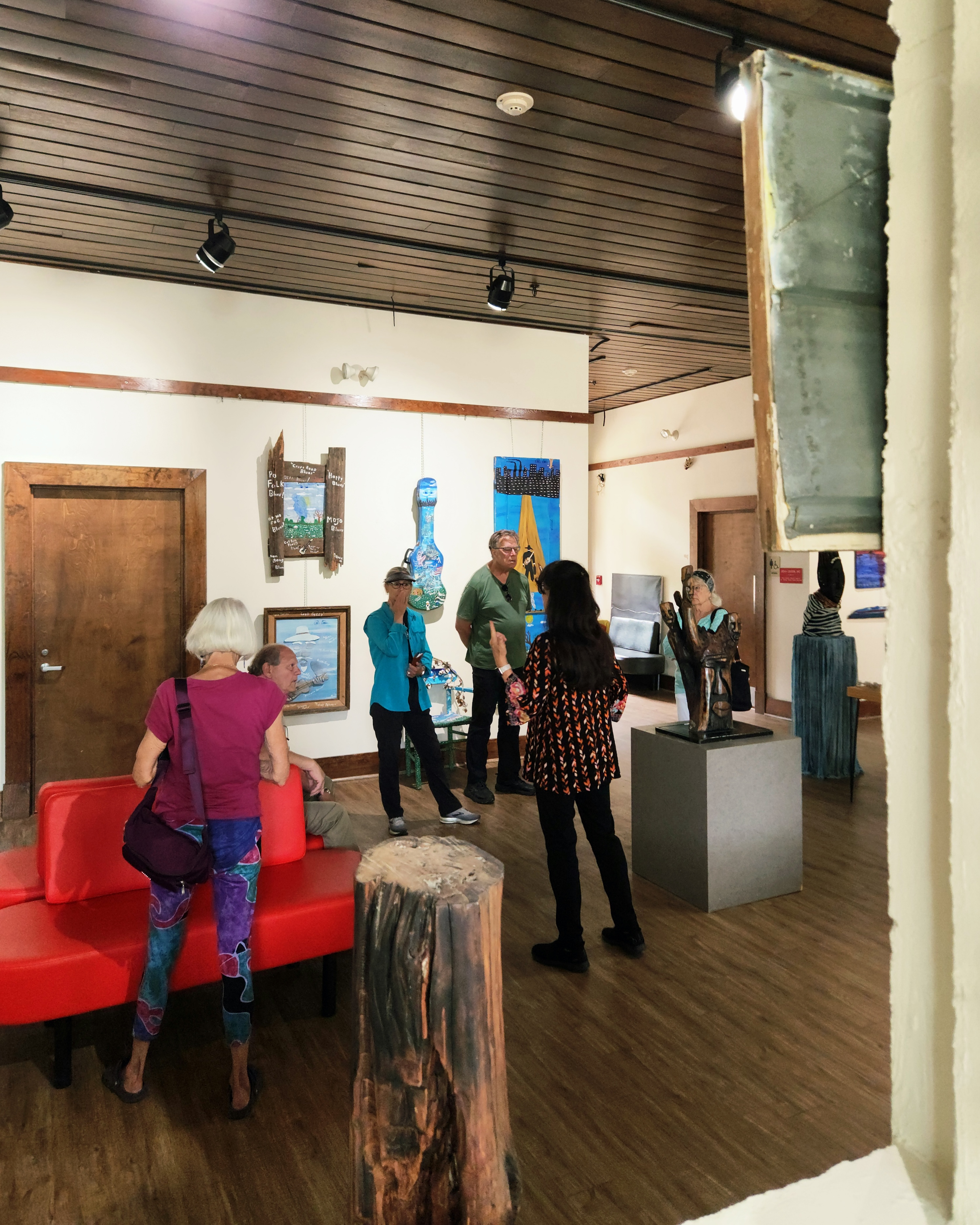
The history of the area and the school is told in a film. When I learned it was forty minutes long, I thought it might be too much, but I found myself hanging on every word.
A surprising number of artifacts are packed into this small museum. The size doesn’t make it feel skimpy; instead, it feels intimate, more personal somehow. And the Bailey Museum’s personal touch is just what is needed to share the story of Gullah culture on the Sea Islands.
The museum itself is named for someone whose story deserves to be told. African American York W. Bailey, born in 1881 on St. Helena, was a Penn School graduate. He went on to attend Hampton Institute in Virginia and graduated from Howard University with his doctoral degree in medicine. He returned to St. Helena as the first black doctor—and only physician for fifty years. His home could be a museum exhibit (but is still privately owned). The two-story house was ordered from Sears, shipped to Beaufort, and delivered to the island by boat. It was listed on the National Register of Historic Places in 1988.
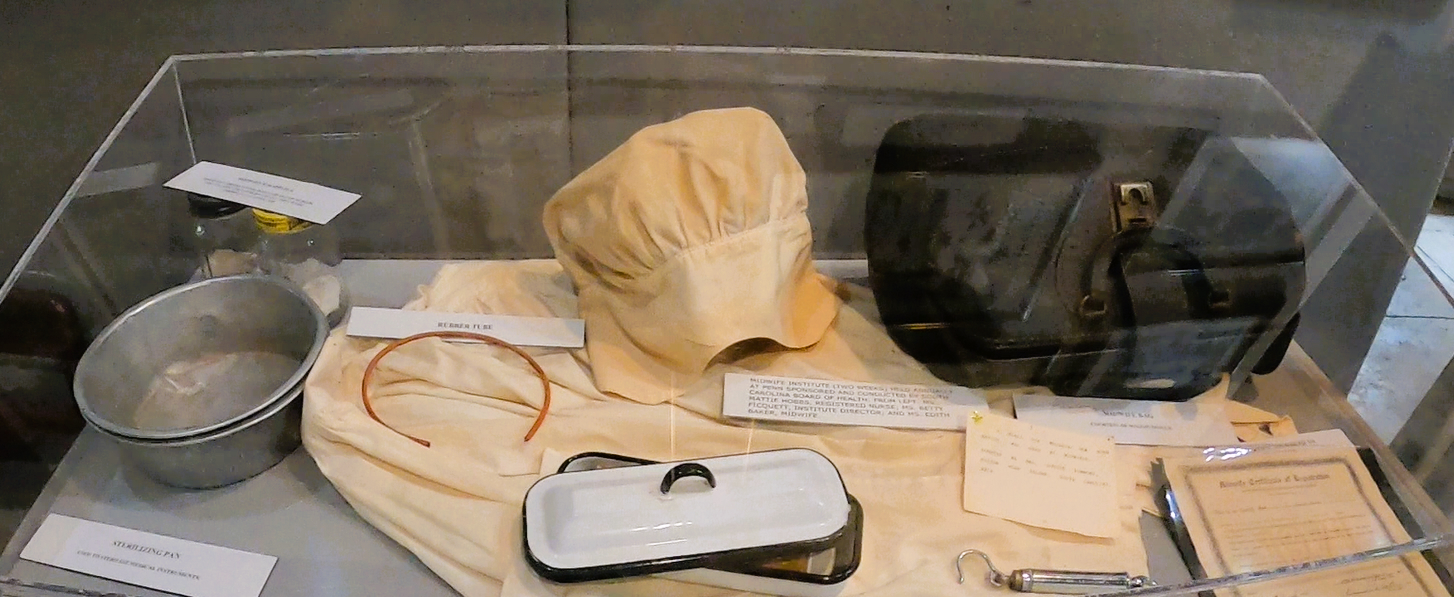
The Things That Survived
Looking at the African artifacts on display, I found myself wondering how some of these treasures survived at all. The people brought to these shores in chains were torn from their homes and packed into the holds of ships. Yet somehow traditions survived. Language survived. Art survived. Food survived. Music survived. The museum helps visitors understand that while much was taken, not everything was lost.
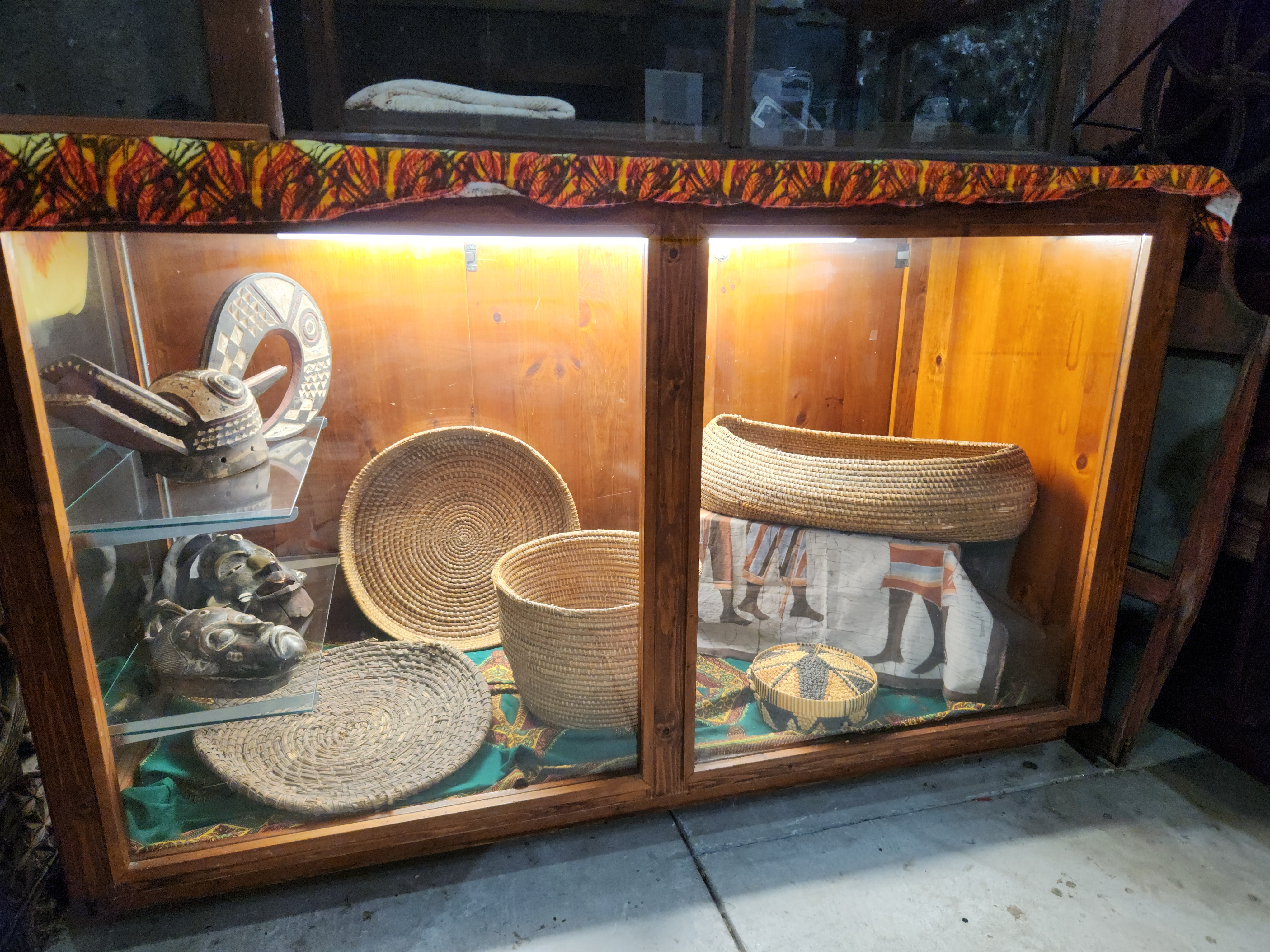
Many of the items exhibited at the Bailey Museum survived because somebody, somewhere, taught them. One generation taught the next. One brush stroke at a time, one sweetgrass basket at a time. One recipe at a time. One song at a time. One story at a time.
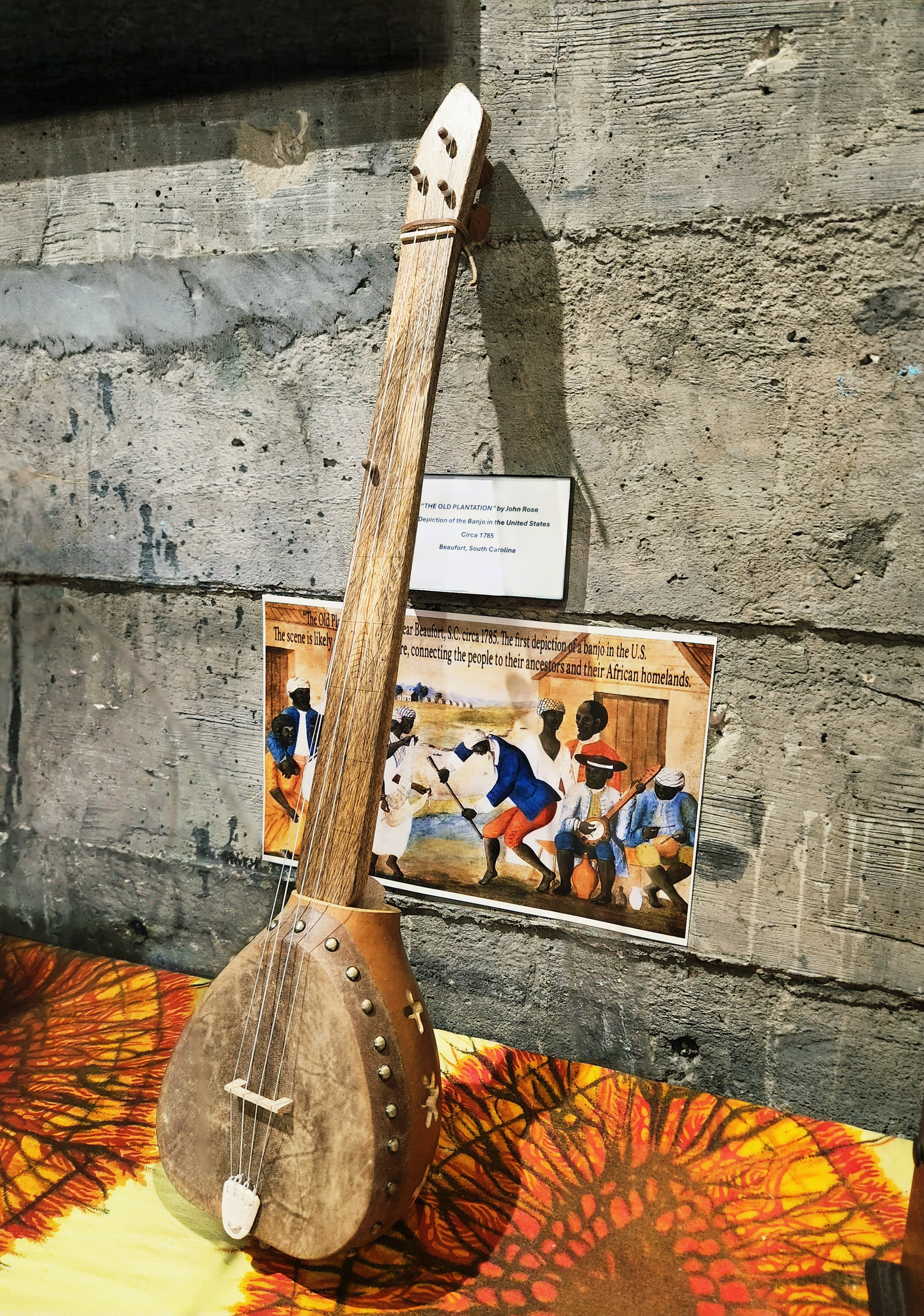
Penn School not only educated students, but it also preserved their culture, and Penn Center passed it along. History isn’t preserved because we write it down; it survives through cultural continuity because the people who knew how to do something kept doing it.
Sitting in a rocking chair on the porch of Hampton Plantation, outside Georgetown, I learned to weave a sweetgrass basket. With my rocker creaking on the porch floorboards, sweetgrass and pinestraw in my hands, a patient woman who learned the coiling technique at her grandmother’s knee guided my hands in the intricate steps.
History is an African tradition passed down through generations of Gullah artisans—to a porch at Hampton Plantation—and then goes home with a travel writer from Myrtle Beach. In this way, Gullah people preserved language, recipes, stories, songs, basket weaving, and traditions.
Still Teaching
One of Penn Center’s missions is to continue preserving and sharing Gullah history and culture. Visitors can deepen that understanding through presentations and workshops on topics ranging from batik dyeing to traditional Gullah cooking. And each November, Penn Center hosts its annual Heritage Days Celebration, bringing the culture, history, and traditions of the Gullah people to life. Somehow, 160 years later, visitors are still learning at Penn School.
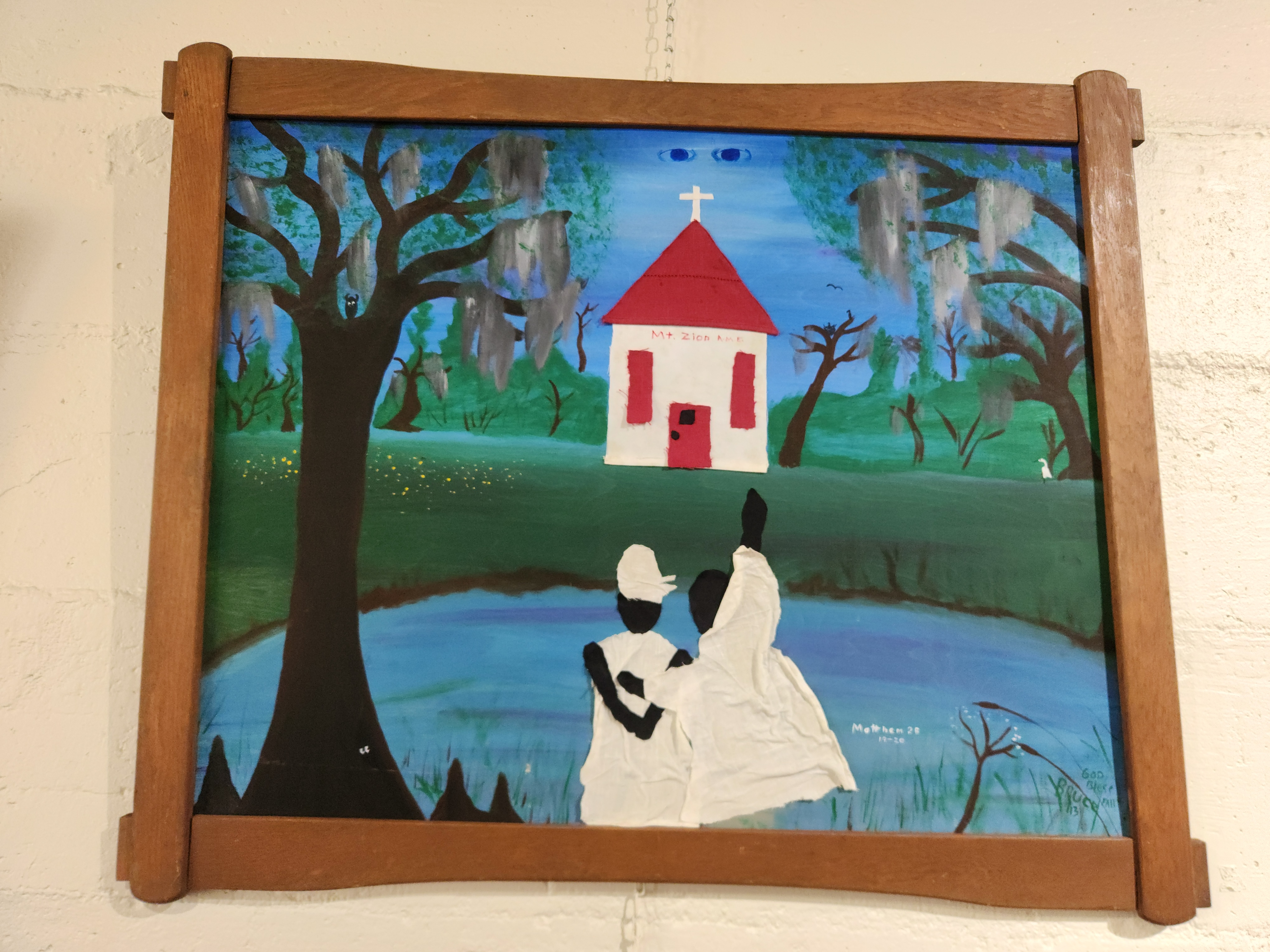
The photographs in the Bailey Museum tell the story of where the Gullah people have been. But the art tells the story of where they are now. Speaking of telling stories, the Bailey Museum has collected oral histories, interviewing many community leaders to document civil rights workers who were at Penn Center with Martin Luther King between 1963 and 1967.
Brick Baptist Church
Remember when Ms. Towne and Ms. Murray ran out of room at that dining room table and had to move their school to a church? This is the church. Across the road from the Bailey Museum stands the two-story Brick Baptist Church, built by enslaved people in 1855 (some bricks still show fingerprints.)
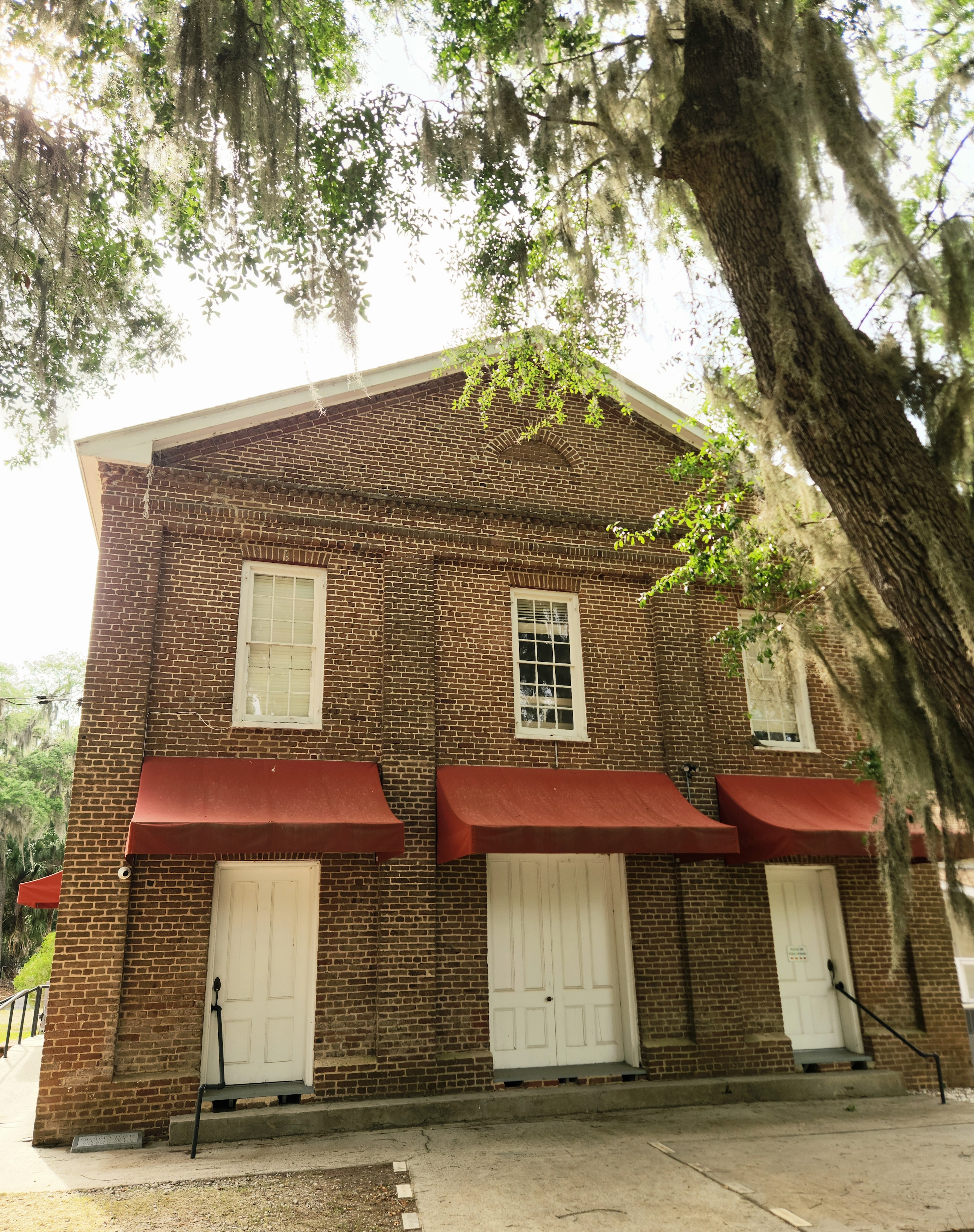
Constructed of brick and mortar, the Brick Baptist Church is the oldest church on St. Helena Island. The large sanctuary had an open balcony where enslaved people stood during church services, while white parishioners sat below.
As you bid farewell to the Gullah people at Penn Center, listen closely; you may hear, “Git ’long now. Peace.”
Learn more about the area by reading 2 Islands, a Lighthouse, & Secret Magic of the Lowcountry, and listen to this podcast about Hunting Island State Park.
* * *

Jo Clark is a travel writer, photographer, and podcaster. She calls the Grand Strand of South Carolina home, but enjoys visiting little-known corners of the globe in search of unique spots to share with her readers. It might be a caf