Georgia is home to dozens of state parks and historic sites, but few are as significant as Franklin D. Roosevelt's Little White House in Warm Springs. Nestled in a town of fewer than 500 residents, the modest retreat became far more than a presidential getaway. It was here that FDR found renewed purpose after polio, forged lasting connections with the people, and sought refuge from the pressures of leading the nation through the Great Depression and World War II. It was also here, on April 12, 1945, that he spent the final hours of his life.
Located about 75 miles south of Atlanta and just 20 minutes from Callaway Gardens, Warm Springs is easy to reach but feels worlds away from the bustle of modern life. Surrounded by pine forests and rolling hills, it remains much as FDR would have known it.
I remember vividly the first time I arrived in Warm Springs to visit the Little White House and Museum. I was a teenager, and it happened to be Memorial Day weekend, one of the few times each year when visitors were allowed to swim in the historic rehabilitation pools associated with the Georgia Warm Springs Foundation. As I stepped into the same 88-degree spring waters that had drawn FDR to Warm Springs decades earlier, I could not help but wonder why this small Georgia town meant so much to him.
At the time, I was already fascinated by Franklin and Eleanor Roosevelt, their remarkable lives, and the history of the Roosevelt administration. What I did not realize as I explored Warm Springs that day was that the visit would profoundly shape my understanding of our nation's 32nd president. It inspired a senior project on FDR and the March of Dimes, led to an internship at the Little White House, and eventually brought me to the Franklin D. Roosevelt Presidential Library in Hyde Park, New York. More importantly, it sparked a lifelong passion for history that continues to guide my work today.
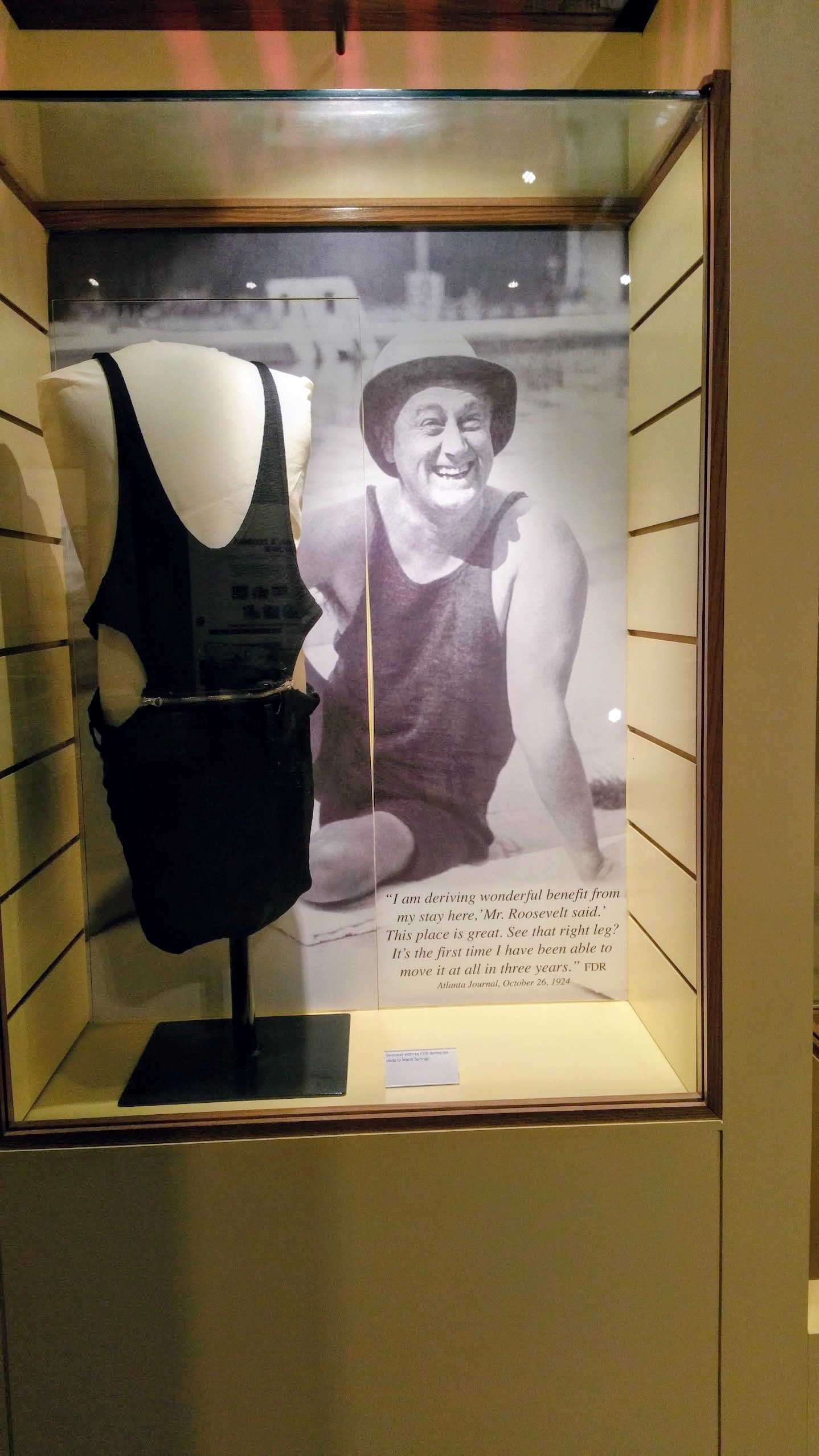
FDR was 42 years old when his train rolled into Warm Springs from New York on an October day in 1924, just three years after a devastating bout of infantile paralysis left him unable to walk on his own. He had heard reports of the area's natural mineral springs, which remain a constant 88 degrees year-round, and of polio patients who had experienced significant improvement after swimming in the warm waters. FDR arrived in Warm Springs hoping to find a miracle cure.
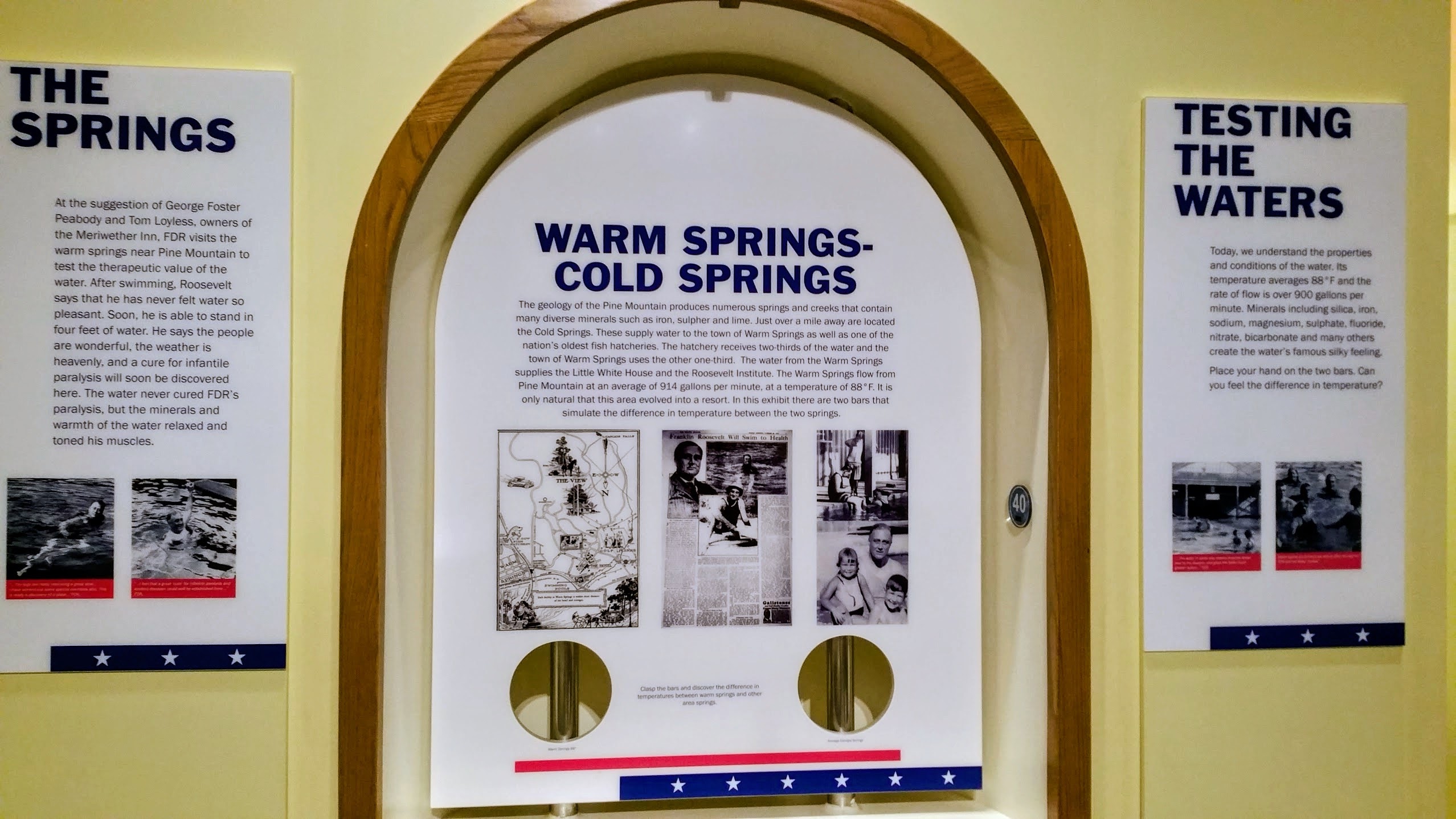
While he never regained the ability to walk unaided, he did discover something nearly as valuable. The waters provided relief for his weakened, atrophied muscles, and Warm Springs offered renewed optimism at a time when many believed both his physical recovery and political career were finished.
The only resort in town, the Meriwether Inn, was in poor condition when FDR first arrived. Yet he saw potential, and he purchased the property and the surrounding acreage. There, he established the Georgia Warm Springs Foundation, the first hospital in the United States dedicated solely to the rehabilitation of polio patients. The project became one of the most meaningful endeavors of FDR’s life. He relished spending time with fellow patients who shared his struggles, and they affectionately called him "Doc Roosevelt," a title he wore with pride.
Warm Springs remained deeply important to FDR throughout the rest of his life. During his presidency, he made 16 documented visits, returning whenever possible to escape the pressures of Washington. Yet Warm Springs was more than a retreat. Here, FDR witnessed firsthand the struggles of rural Americans, experiences that helped influence aspects of the New Deal, including programs such as the Rural Electrification Administration.
Warm Springs restored FDR's confidence, gave him a renewed sense of purpose, and helped shape the leader he would become. That profound connection is visible throughout both the museum and the Little White House itself.
Upon entering the Little White House Historic Site, visitors first pass through the ticket office and museum, both simple white structures that reflect the understated character of Warm Springs. I remember being immediately drawn to a beautifully restored cream-colored Willys Roadster on display. The two-seat convertible was a gift from FDR's brother-in-law, Hall Roosevelt, in 1940 and was specially modified with hand controls that allowed him to drive despite being unable to use his legs.
The museum provides an excellent introduction to FDR's life and his connection to Warm Springs. A timeline traces his journey from privileged New Yorker to president, while a short film explains how this small Georgia town became one of the most important places in his life. Throughout the exhibits, visitors gain a sense not just of FDR's story, but also of the close-knit community that embraced him. That same feeling still exists today. Whether speaking with staff, volunteers, or local residents, visitors are treated like neighbors.
I was especially drawn to the items related to FDR's lifelong passion for stamp collecting, a hobby I would later learn much more about at the FDR Library. An avid philatelist, he found relaxation in the pastime throughout his life, and several pieces from his personal collection are on display. Another standout artifact is the Warm Springs stagecoach, which FDR acquired along with the old Meriwether Inn. After it was restored, patients and staff often joined him for rides through town, sometimes dressed as figures such as George and Martha Washington.
The museum also explores the devastating impact of polio and the efforts to combat the disease. Visitors learn about the role of the March of Dimes, which FDR helped establish, and the development of the Salk vaccine in 1955 that ultimately helped bring the epidemic under control.
As visitors make their way through the final galleries, they encounter FDR's collection of walking sticks. Gifted by admirers from around the world, each one has its own unique design and character. Some are simple, while others are intricately carved or decorated. For me, the collection reflects the admiration people felt for FDR and the personal connection many felt to him.
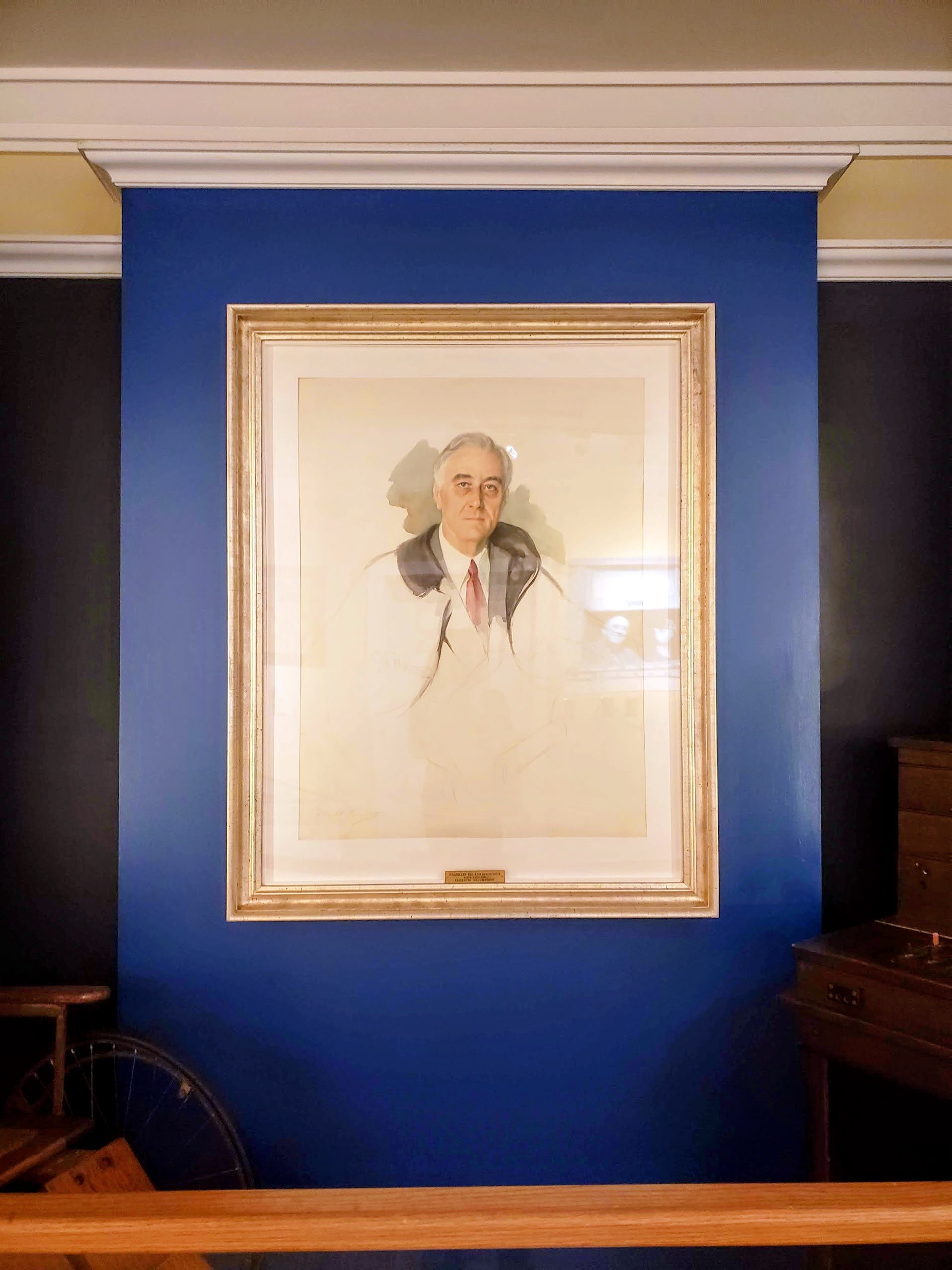
Nearby is a special exhibit dedicated to the famous Unfinished Portrait, the painting Elizabeth Shoumatoff was working on when FDR died on April 12, 1945. Even after viewing it on several occasions, it still gives me goosebumps. The unfinished canvas captures a moment when history suddenly changed course. Visitors can also compare it with a completed portrait Shoumatoff painted later. The two works are remarkably similar, though the most noticeable difference is FDR's blue tie in the finished version rather than the red one seen in the original.
From there, visitors step outside to the Walk of Flags and Stones, an open-air memorial honoring all fifty states and the District of Columbia. Each state contributed a native stone to accompany its flag. The path ultimately leads to the site's centerpiece, the Little White House itself.
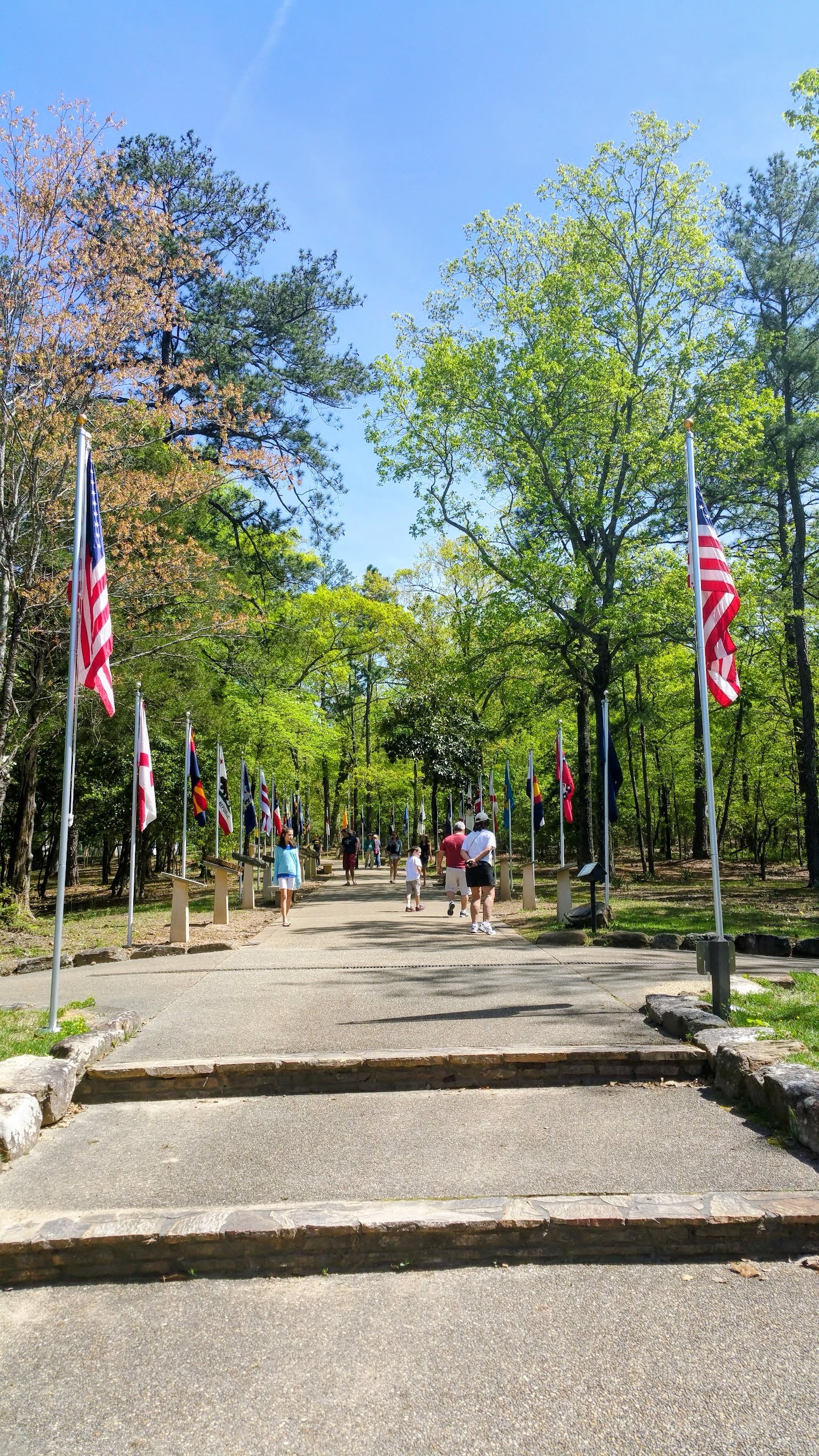
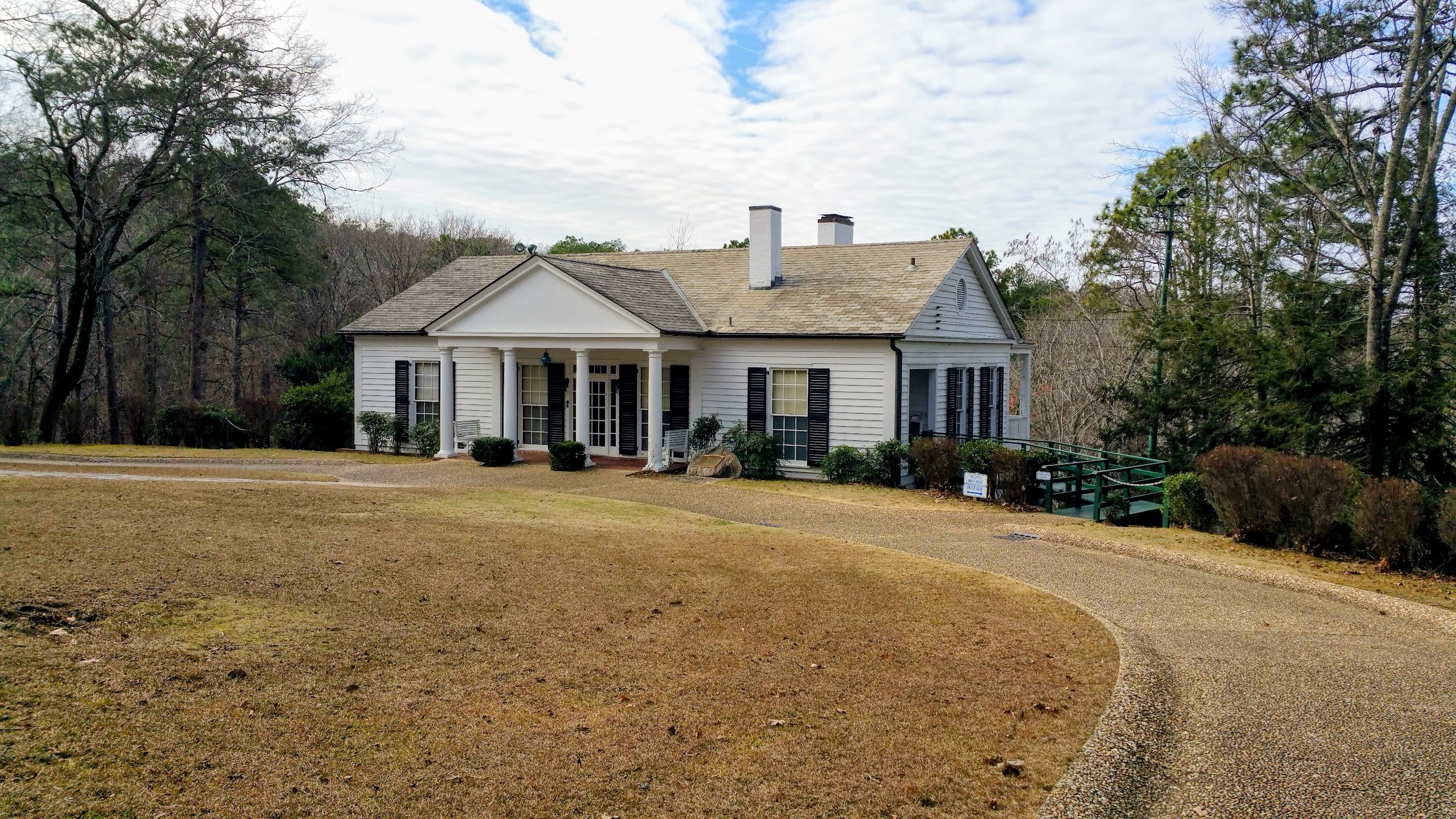
Before reaching the cottage, visitors pass two small guardhouses that once housed Secret Service agents and Marine sentries assigned to protect the president. The first time I approached the Little White House, I was struck by its simplicity. Nestled among towering Georgia pines, the home seemed almost to disappear into the landscape, making it difficult to believe that the most powerful leader in the free world resided here.
Built by FDR in 1932, the six-room residence reflects none of the grandeur typically associated with a president, especially one from a family as prominent as the Roosevelts. Constructed of native pine in the Colonial Revival style, it offered FDR a place to rest and reconnect with his neighbors and the patients at the Georgia Warm Springs Foundation.
As a high school student, I had the privilege of serving as a docent at the Little White House while completing a project on FDR and the March of Dimes. Even now, few experiences compare to being alone in the house as dusk settles through the windowpanes. The home remains remarkably unchanged, with simple furniture from Eleanor Roosevelt's Val-Kill Industries, FDR's beloved naval paintings, books, and personal belongings still in place.
The dark wood walls absorb the afternoon light, giving the rooms a quiet warmth that feels more like a family home than a presidential residence. The sun porch where FDR loved to sit and take in the view is now surrounded by mature trees that have grown up over the decades, obscuring much of the scenery he once enjoyed. Visitors can still see an original table and chairs from the porch on display in the museum.
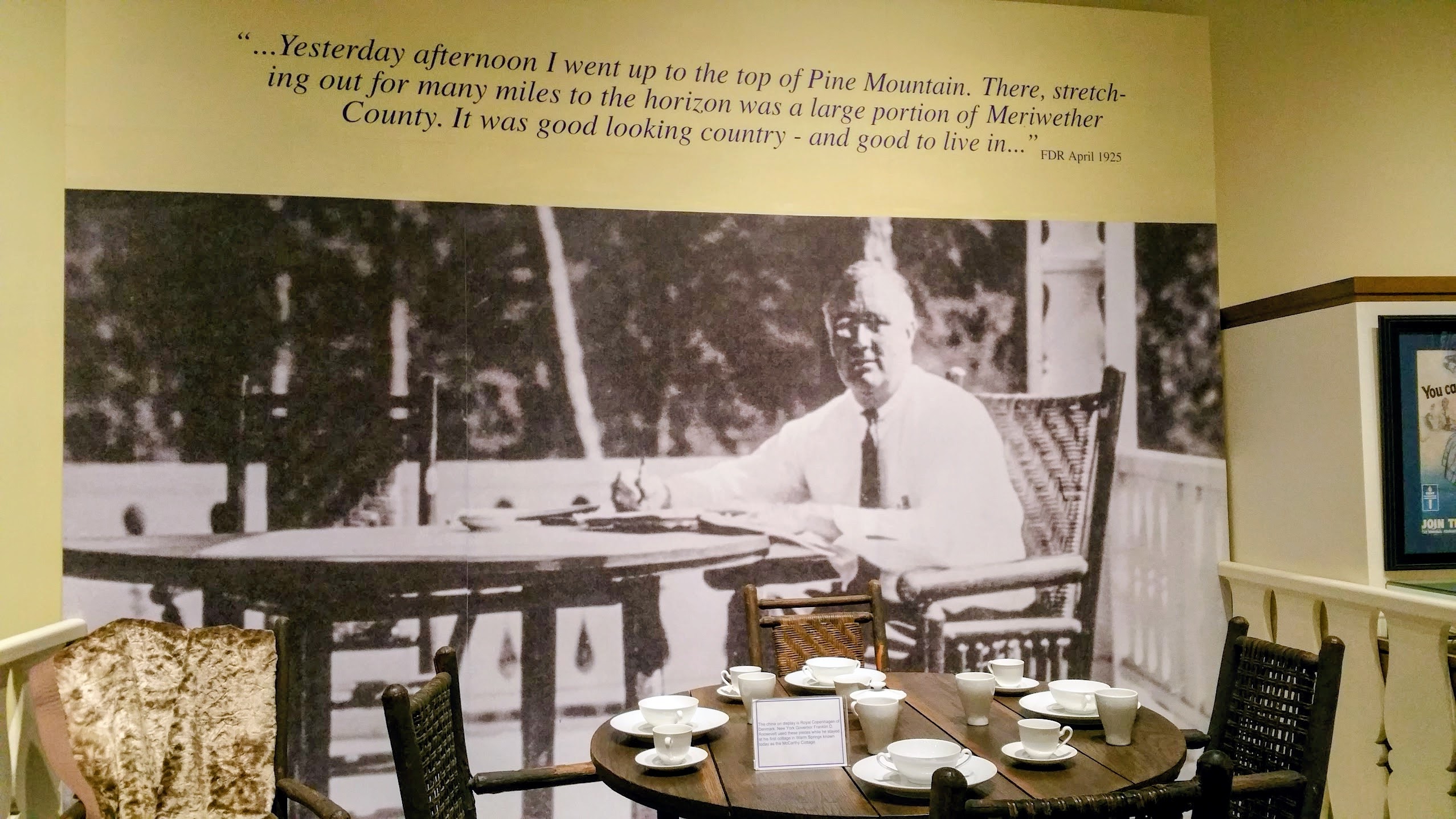
Just off FDR's bedroom is Eleanor Roosevelt's room. Although she was not a frequent visitor to Warm Springs, one of the Roosevelt children often accompanied their father on his trips. When Eleanor was not present, her room would typically be used by whichever child was visiting. Like much of the house, the room is simple and unpretentious, furnished with pieces from Val-Kill Industries. Years later, while working at Val-Kill in Hyde Park, I was struck by how the furnishings reflect the simplicity and comfort that both Franklin and Eleanor valued.
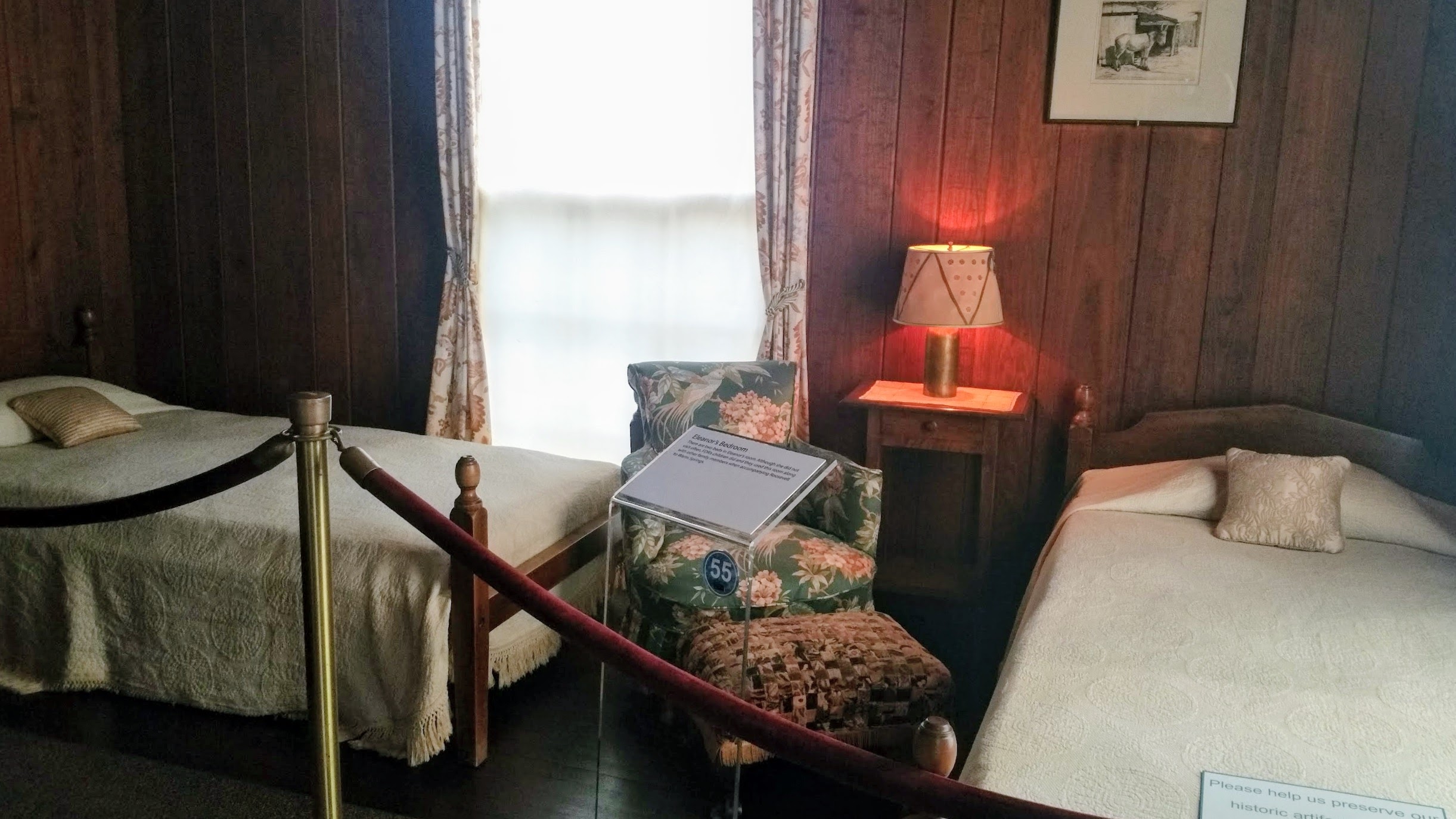
Near the front door, a small plaque points out scratches in the wood believed to have been left by FDR's beloved Scottish terrier, Fala. Another detail visitors should not miss is an inscription written in the kitchen by FDR's longtime cook, Daisy Bonner: "Daisy Bonner cook the 1st meal and the last one in this cottage for the President Roosevelt." Those simple words preserve the memory of a Black American woman who helped make this place feel like home.
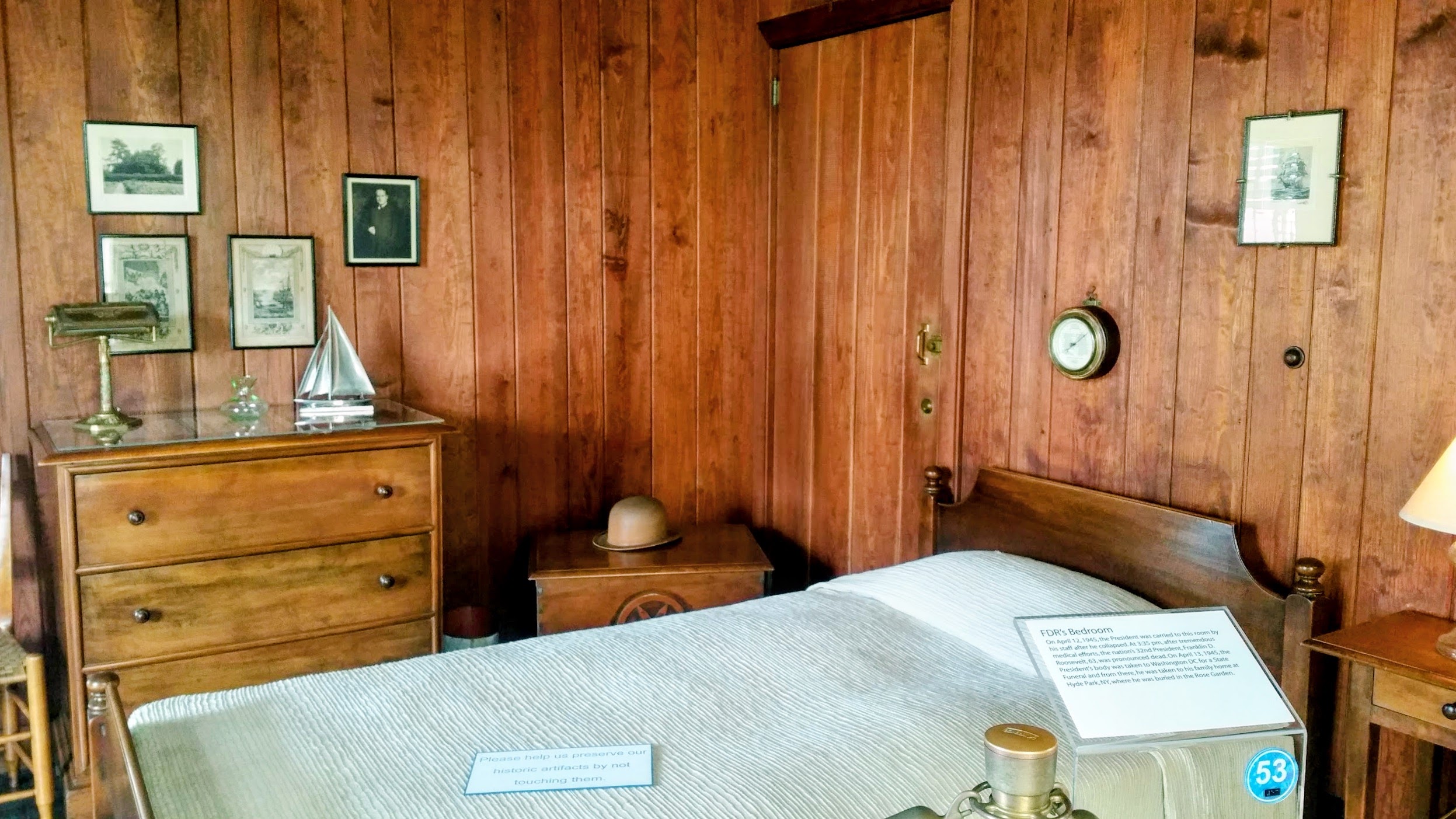
That connection remained strong until the end of FDR's life. In the spring of 1945, exhausted and in declining health, he returned to Warm Springs hoping to regain his strength before traveling to San Francisco for the opening conference of what would become the United Nations. Instead, on April 12, while sitting for the portrait by Shoumatoff, he suffered a cerebral hemorrhage and died later that day in the small bedroom that remains preserved exactly as it was.
For many visitors, myself included, that bedroom is the most moving part of the house. Standing there, it is difficult to comprehend that one of the most consequential figures of the twentieth century spent his final hours in such a humble setting.
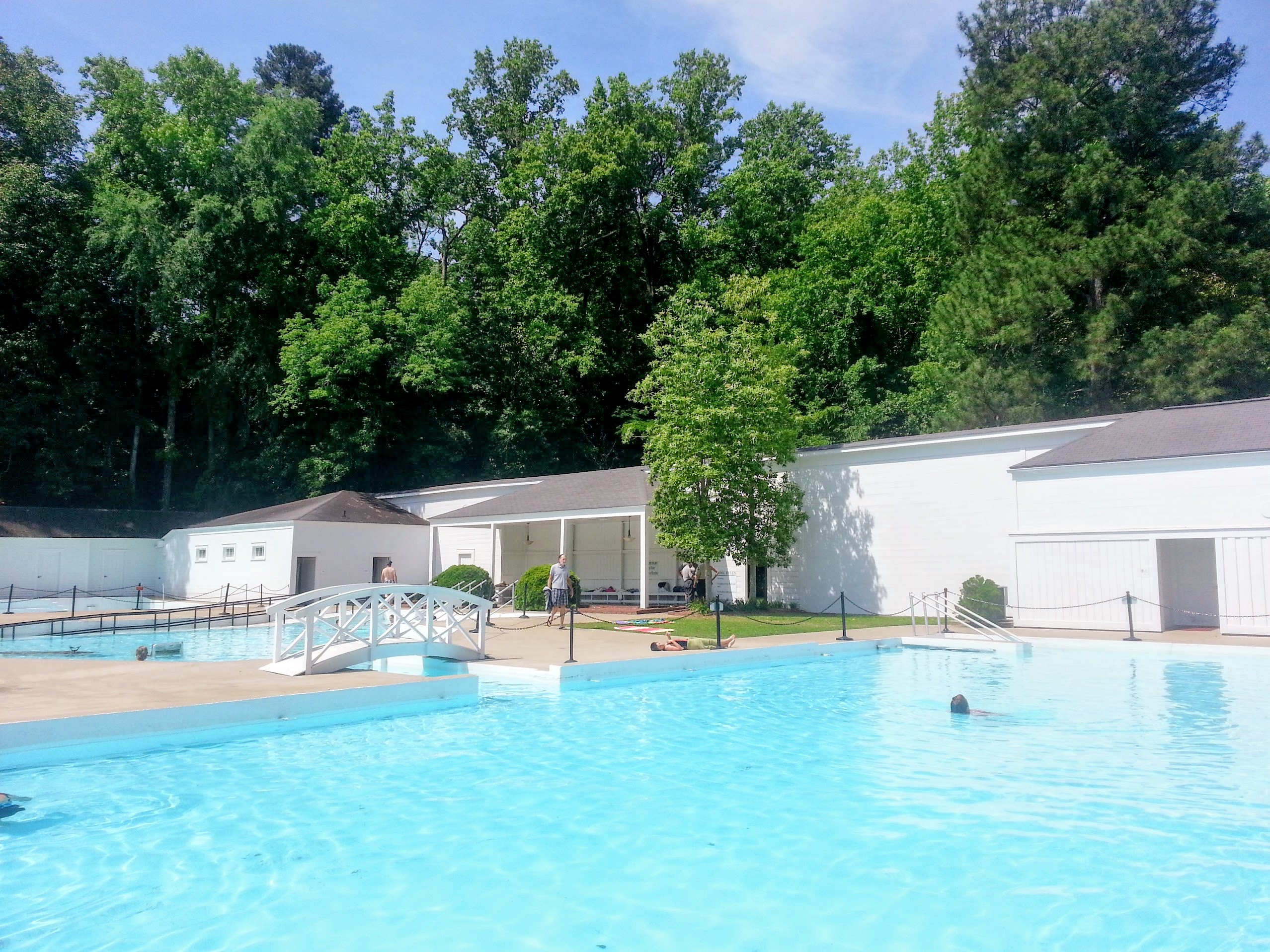
To fully understand why Warm Springs meant so much to FDR, visitors should make the short drive to the historic treatment pools, located about a mile from the Little White House. Included with admission, the site offers a deeper look at the rehabilitation center where FDR and thousands of other polio patients came seeking treatment, hope, and a sense of belonging.
Exhibits explore the history of the pools, the mineral-rich spring water first used by the Indigenous Muscogee people and later embraced by FDR, as well as the devastating impact of polio on American families. More importantly, they tell the story of how Warm Springs became a place of healing and renewed hope for people whose lives had been altered by the disease.
The pools themselves recently underwent an extensive preservation project. Having had the opportunity to swim in the pools on a few occasions during warm Southern summers, I still consider it one of the most memorable experiences of my high school years. While visitors can no longer swim in the pools regularly, they can still touch the natural spring waters. Feeling its warmth offers a tangible connection to the experience that first brought FDR to Warm Springs and inspired his commitment to helping others facing the same challenges.
Following FDR's death in 1945, efforts were made to preserve both the Little White House and the treatment pools. The site opened to the public in 1948, and in 1980, stewardship was transferred to the Georgia Department of Natural Resources, which continues to preserve the site today.
Beyond the Little White House and treatment pools, one final stop helps explain why FDR fell in love with this corner of Georgia. During World War II, his visits to Warm Springs became less frequent as the demands of leading a nation at war consumed much of his time and energy. Yet whenever he returned, he made the trip to Dowdell's Knob, the highest point in the Pine Mountain range.
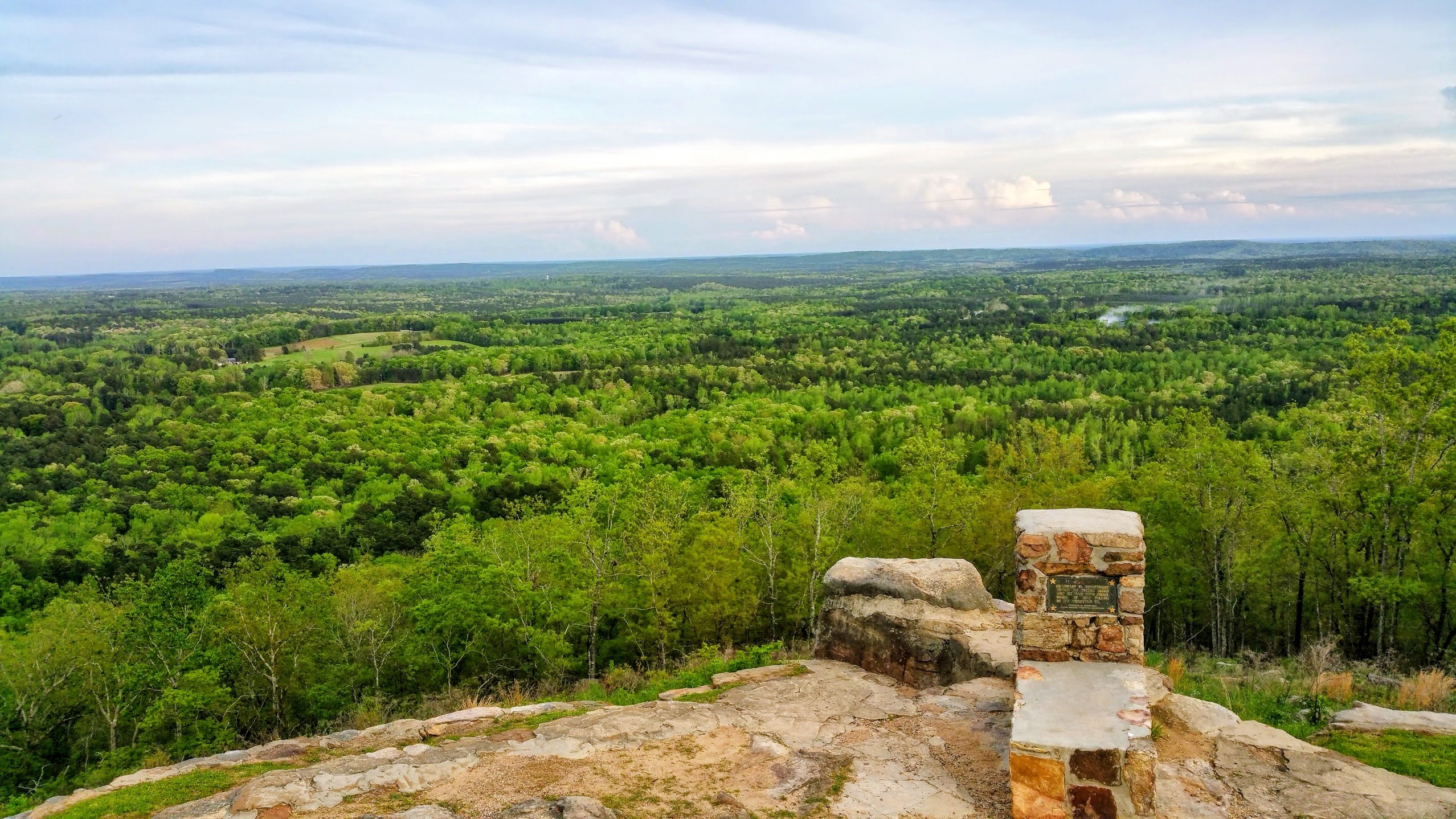
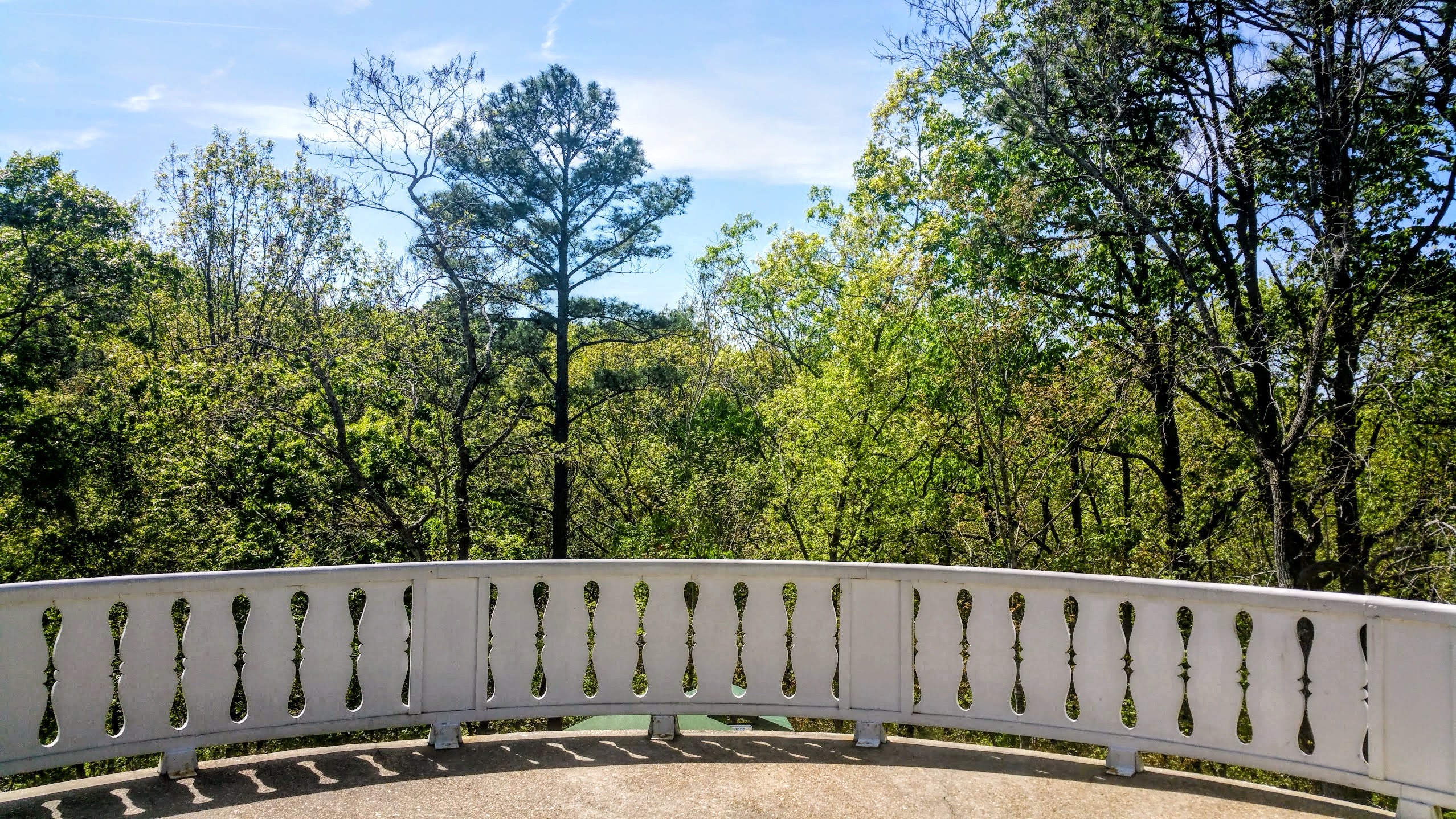
Located just over seven miles from the Little White House within F.D. Roosevelt State Park, Dowdell's Knob offers sweeping views of the Georgia countryside. From this vantage point, FDR could look across the rolling hills and watch the sun set beyond the horizon. It became a place of reflection and solitude where he could briefly escape the pressures of the presidency and contemplate the challenges facing the nation and the world.
FDR often enjoyed picnics there with family, friends, and staff. Just beyond the overlook stands the brick barbecue pit he had constructed at the site, which still remains today. Visitors can also see a bronze statue of FDR overlooking the landscape he admired so much. Over the years, I have had more than a few photographs taken beside that statue, and it remains one of my favorite spots in town. Whenever I visit Warm Springs, I always make time for Dowdell's Knob. Standing there at sunset, it is easy to understand why FDR returned again and again.
As the United States celebrates its 250th anniversary in 2026, many Americans will reflect on and visit iconic presidential homes such as Mount Vernon and Monticello. Yet it is equally important to remember places like the Little White House in Warm Springs, a far more modest retreat that held profound meaning for the nation's longest-serving president.
During some of the most turbulent years in American history, FDR came here seeking peace and renewal. At a time when the future of democracy seemed uncertain, and victory in World War II was far from guaranteed, the burdens of leadership weighed heavily upon him. Yet in this small Georgia town, surrounded by pine forests and people who embraced him, FDR found the strength to continue moving forward.
Today, visitors can still experience the quiet charm and hospitality that drew him back again and again. From the Little White House and historic treatment pools to the sweeping views at Dowdell's Knob, Warm Springs offers far more than a glimpse into presidential history. It tells the story of a community that helped shape a president and continues to leave a lasting impression on those who visit.
Standing where FDR once found comfort and purpose, it is difficult not to leave feeling inspired yourself.
Hours
Historic Site: 9:00 A.M. – 4:45 P.M.
Last admission ticket sold at 4:30 P.M.
Closed Thanksgiving, Christmas & New Year's Day.
The museum, grounds, house, and pools are self-guided during opening hours.
Historic Site Admission
Adults (18–61): $13.00
Seniors (62+): $9.75
Youth (6–17): $7.50
Children (under 6): Free
Phone Numbers
Historic Site: 706-655-5870
Gift Shop: 706-655-2311
Address
401 Little White House Road
Warm Springs, GA 31830
Meriwether County
Nearby Attractions
F.D. Roosevelt State Park
Pine Mountain, GA
Callaway Gardens
Local Lodging
Hotel Warm Springs
* * *

Holley Snaith is a historian and writer specializing in twentieth-century American history. Her interest in public history began in high school when she interned at Franklin D. Roosevelt’s Little White House in Warm Springs, Georgia. Her work has appeared in American Heritage Magazine and on the PBS American Masters website, and she has worked with the Franklin D. Roosevelt Presidential Library and Museum, the National Park Service at Eleanor Roosevelt’s home, Val-Kill, and the Richard Nixon Foundation. She is currently the host of the podcast Say It With History.