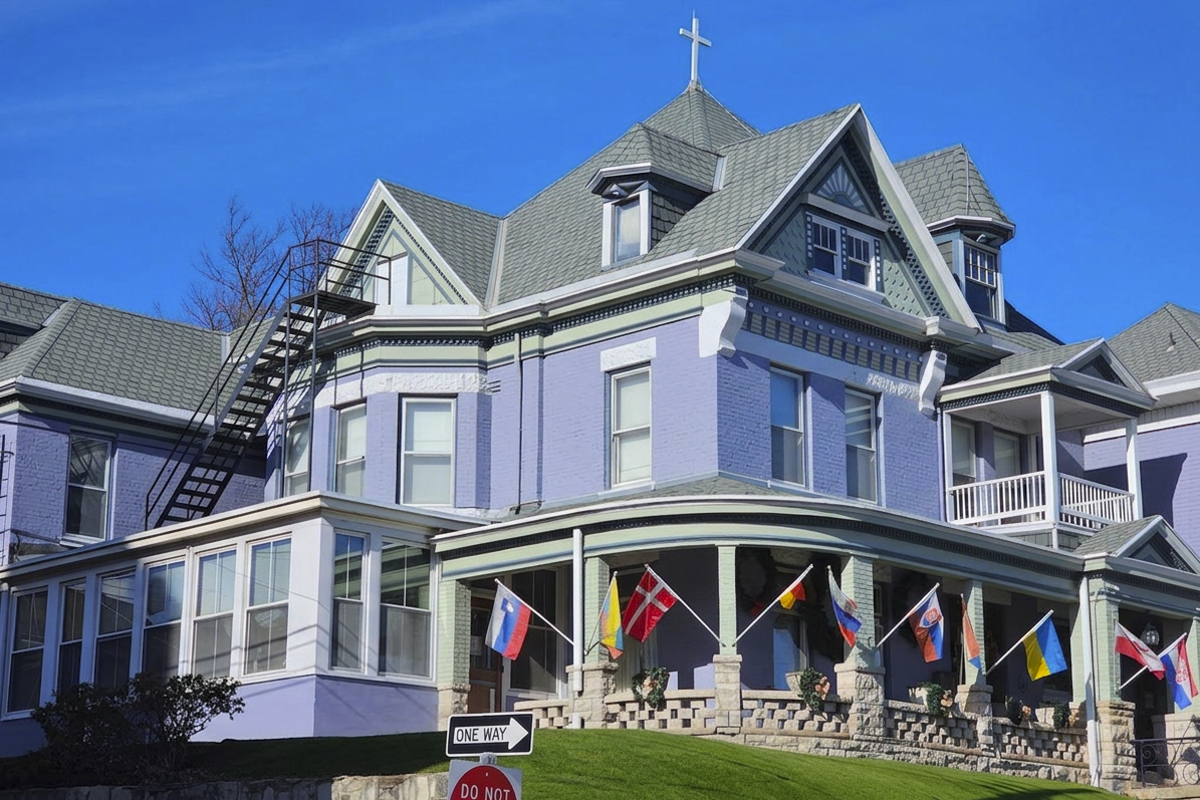
At first sight, the Victorian architecture was unmistakable. The beautiful three-story tower with gabled windows and ornate trim makes you understand how grand this old Queen Anne was and still is.
The Strawberry Hill Museum is one of the finest examples of a Queen Ann Style Victorian home you will ever come across. Built in 1887 atop Strawberry Hill, overlooking the confluence of the Kansas and Missouri Rivers, it is a testament to a society that stepped up to help and save children orphaned by the Spanish Flu.
In 1887, architect John G. Braecklein was assigned to build a Queen Anne Victorian home for attorney John Scroggs and his wife, Mary. This was to be Mister Braecklein’s first commission. When finished, it was thought to be the finest example of Queen Anne Style in all of Kansas City, Kansas, and beyond. The Scroggs and the Cruise Scroggs lived there until 1919.
The years 1918 and 1919 were devastating blows on the heels of World War I. The Spanish flu was wreaking havoc among young adults ages 20 to 40 throughout the United States. Kansas City, Kansas, was no exception.
Much of the neighborhood around the Scroggs home was built by Eastern Europeans. Who had moved up from the lowlands to Splitlog Hill, now Strawberry Hill, after the flood of 1903. Among the ethnicities were Croatian, Russian, Ukrainian, Slovakian, Slovenian, and more. There was plenty of work for the immigrants at the meat-packing warehouses just below the neighborhood in the Kansas City, Missouri, stockyards. These hardworking families were hit hard by the influenza, and many of the children became orphans.
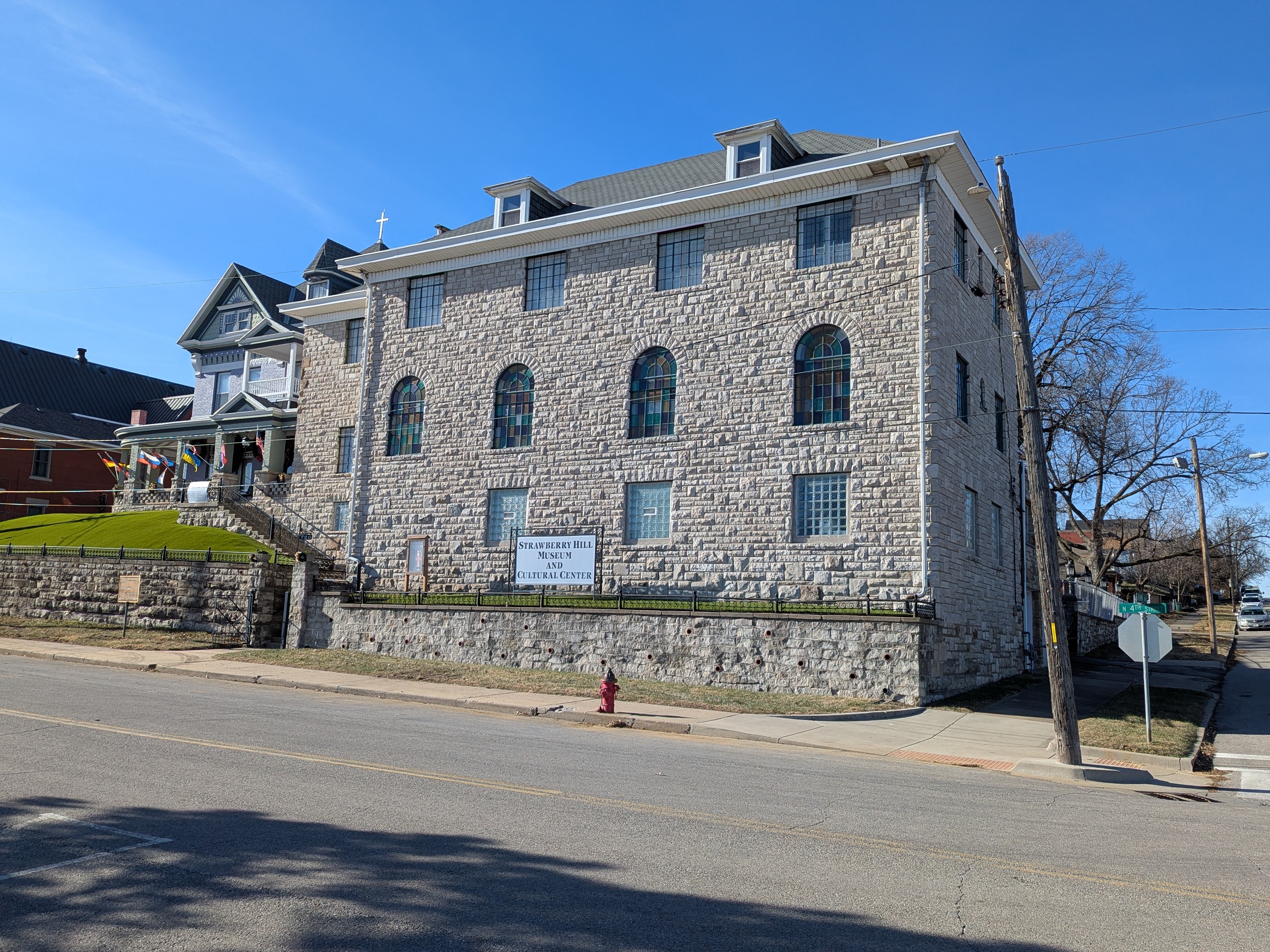
Monsignor Martin D. Krmpotic of St. John the Baptist Catholic Church, a Croatian Church, realized the need for an orphanage. Along with the Sisters of St. Francis, they were able to put $3,000 down on the Queen Anne home and, with the community’s help, buy the property for $15,400, a fraction of its worth, turning this magnificent home into a caring facility for the orphaned children.
The sisters ran the orphanage, day care, and school from 1919 to 1988. Many of the immigrants’ children learned English at the orphanage. The demand for housing for the youngsters grew so quickly that the building had to be added onto four times in eight years. When it closed as a children’s home, the nuns had cared for over 3,000 children. When it closed, the Strawberry Hill Ethnic Cultural Society bought it. It was turned into a museum to honor and preserve the memory of immigrants and their children.
After shutting down in 1988, the Strawberry Hill Ethnic Cultural Society (SHECS) bought the home and set about restoring it to the grand beauty it had in 1887.
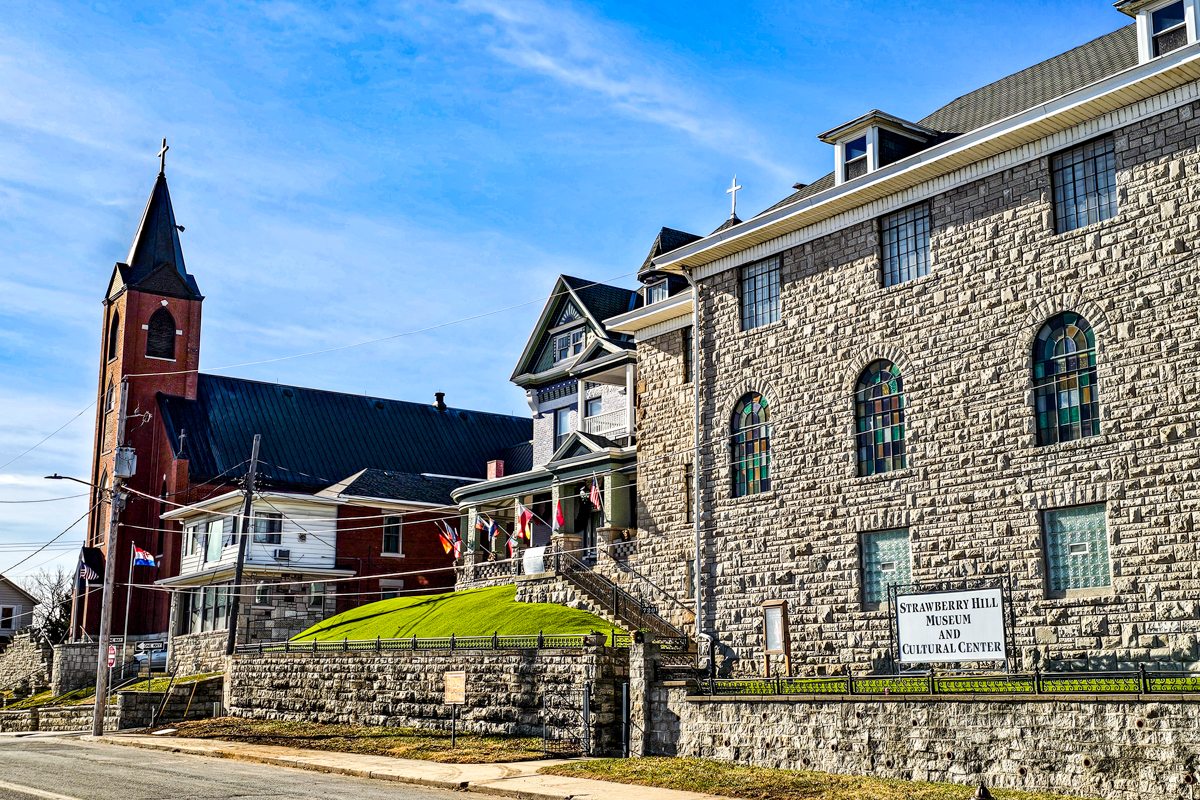
We were met at the door by a docent and members of the society. We were shown to the Sacred Heart Chapel. The chapel holds the history of many different churches that were formerly in close proximity to the museum. There were more than seven churches in this small area because each Eastern European ethnic group had its own church. Many people of that era said there was an ethnic church on every other block.
From the chapel, located in one of the house’s additions, we moved into the Cruise-Scroggs home. Over the years, the beauty of the woodwork and walls has been covered by paint and wallpaper. Although the Strawberry Hill Museum was opened in 1989, it has been an ongoing restoration project for 38 years, 1988-2026.
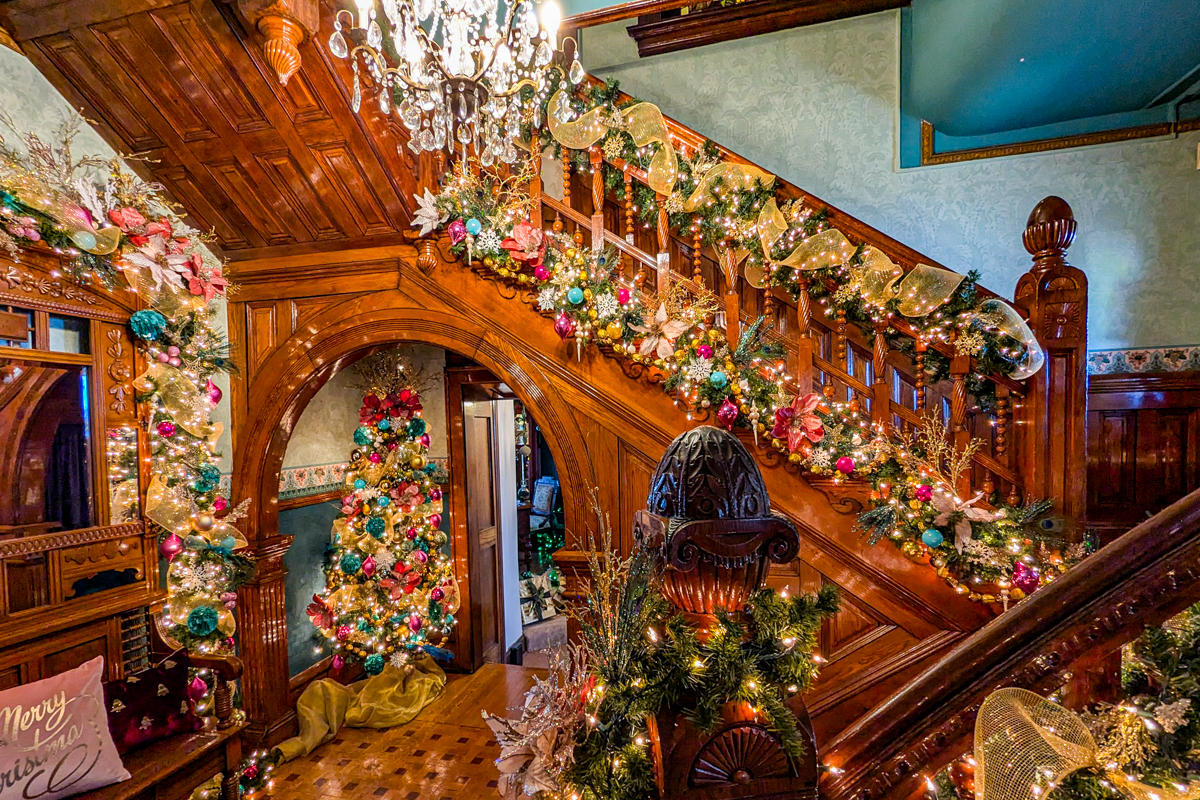
Walking through a small door opening, you are in the entry hallway beside a magnificent, handcrafted light walnut staircase and railing. Much of the woodwork throughout the home is oak and walnut. The Balustrades had been hand-spun to perfection. Above the landing, halfway up the stairs, is one of the many stained-glass windows in the home. We asked the docent, who, as an orphan, had lived in the home, how many there were, and she answered, “too many to count.” Just to the right of the staircase are the front doors.
The doors, like so much in this Queen Anne, are another piece of art. The stained glass in the two doors is the only matching stained glass in the whole home. As we entered the living room, we noticed it was an enormous pocket door. Our guide informed us that all the doors in the home, other than the entrance and exit doors, were original pocket doors, many of which the SHECS found in the basement.
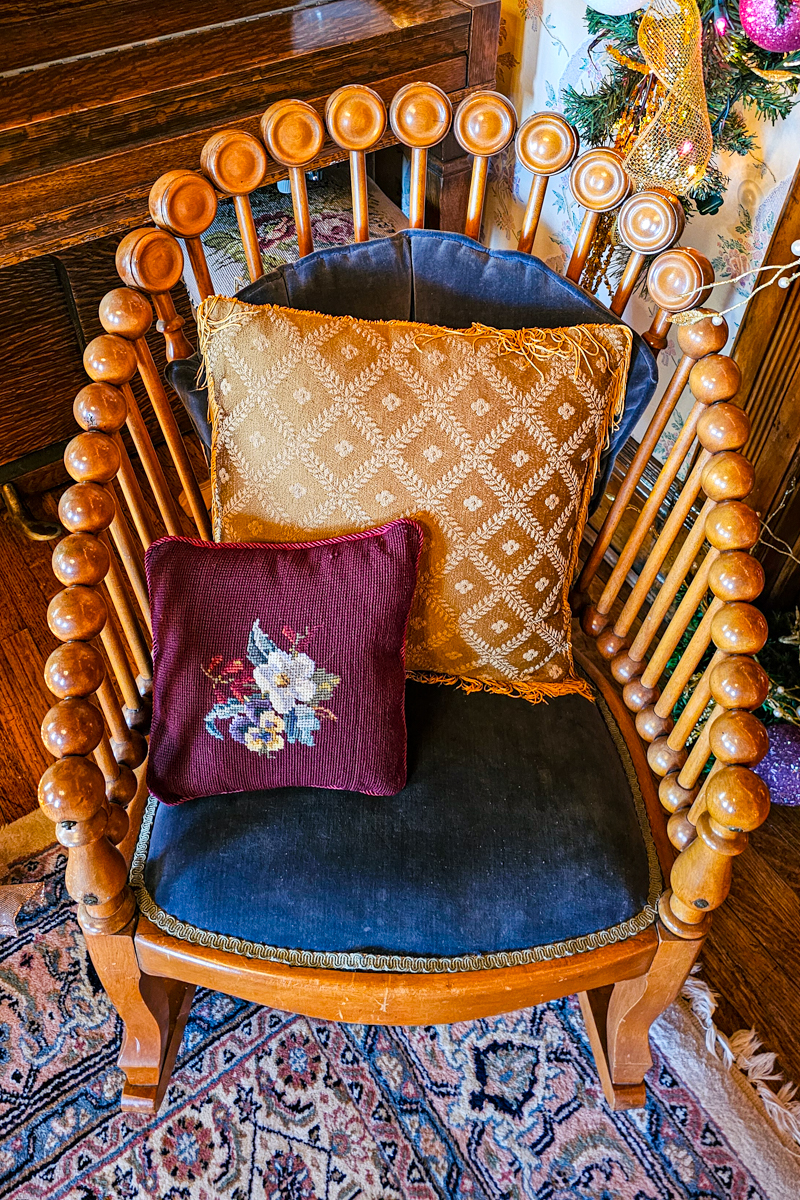
The living room was staged with period pieces, except for an unusual-looking chair. It is a George Hunzinger Lollipop platform rocking chair, and one of the only pieces from the family home to survive.
The walls in this architectural masterpiece are covered with Lincrusta wallcovering. This durable covering was invented in 1877 by Fredrick Walton and has stood the test of time, including being painted over.
Moving into the men’s parlor, one striking feature was the tiled fireplace. Two of the Queen Anne’s fireplaces have beautifully carved dark hardwood, with a tiled firebox featuring a floral pattern and two figures at the corners.
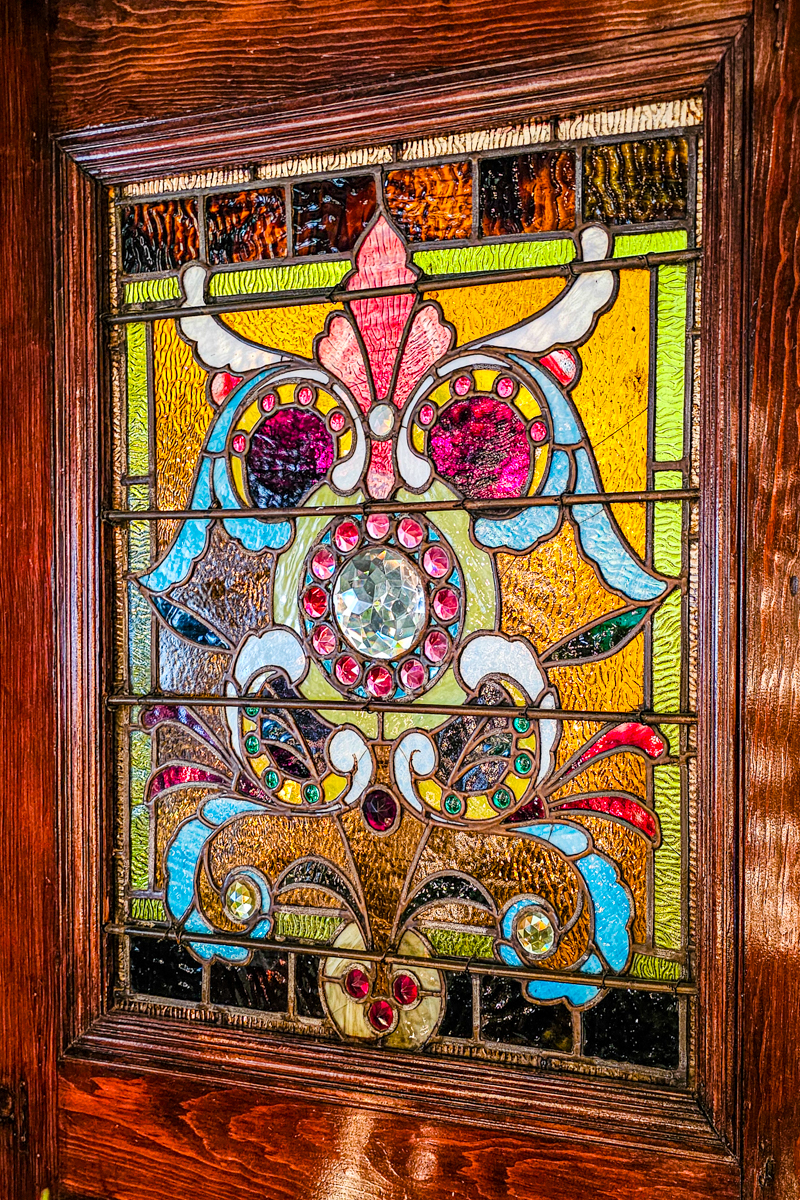
Each room has its own charm and individuality thanks to the fine carpentry and stained glass above every window and doorway. No two stained glass panels are the same throughout the home.
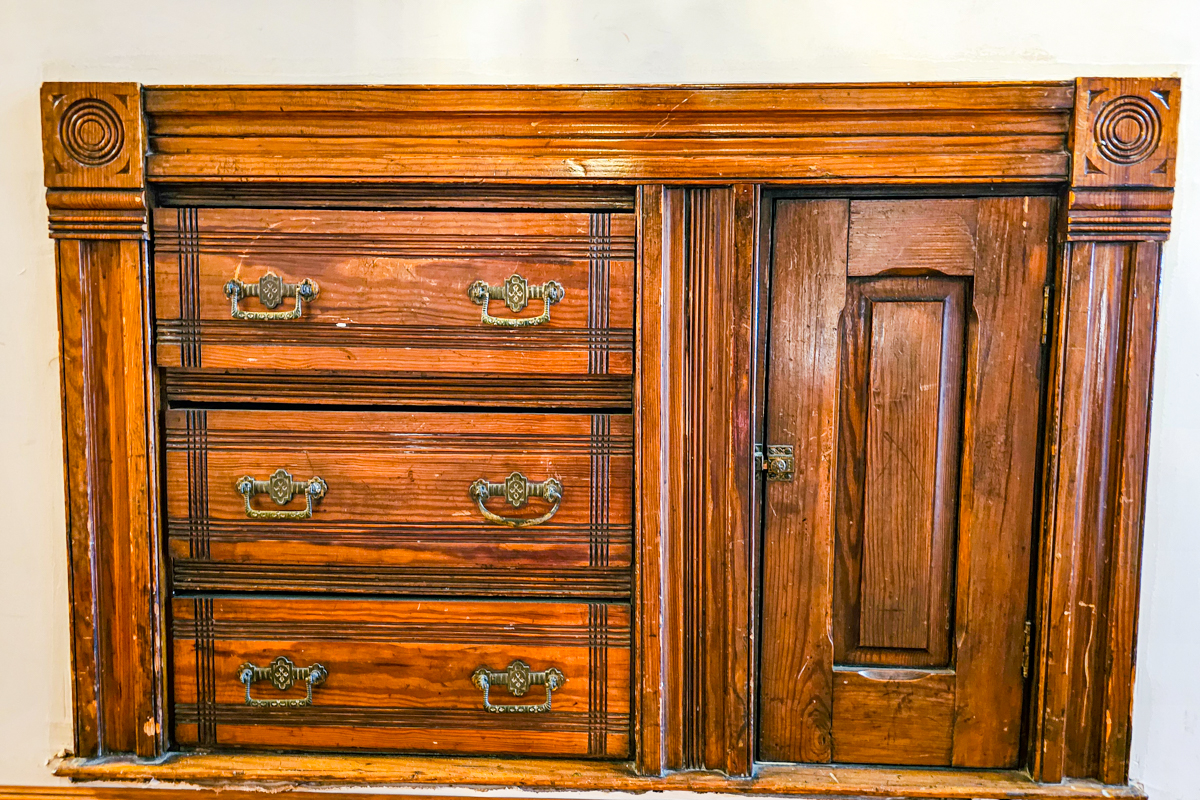
Many of the six bedrooms had drawers and cupboards built into the walls. These beautifully crafted features were not only space savers but also essential for maximizing the rooms’ square footage.
When the Sisters of St. Francis took over the Cruise-Croggs home in 1918, they quickly began turning it into an orphanage. By 1919, they opened their doors and hearts to the young children left parentless by the horrors of World War I and the devastating Spanish Flu. The majority of these children were Eastern Europeans, and many spoke no English.
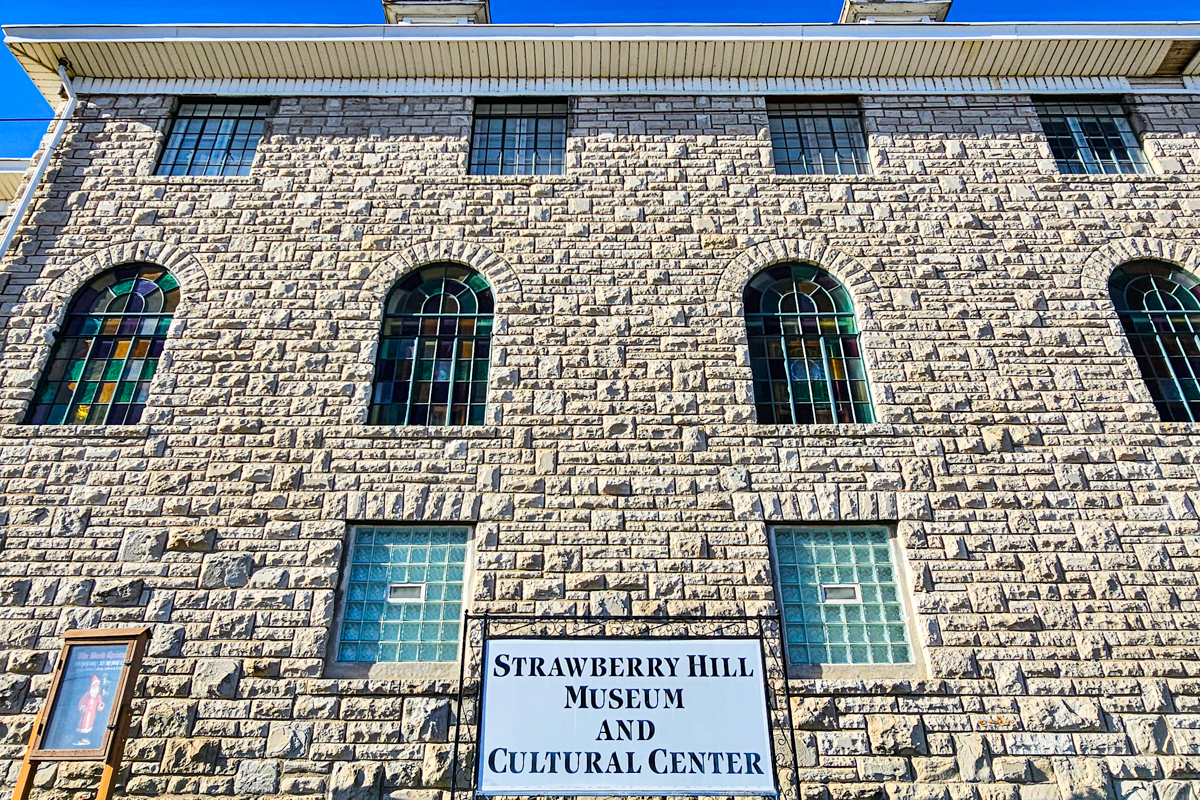
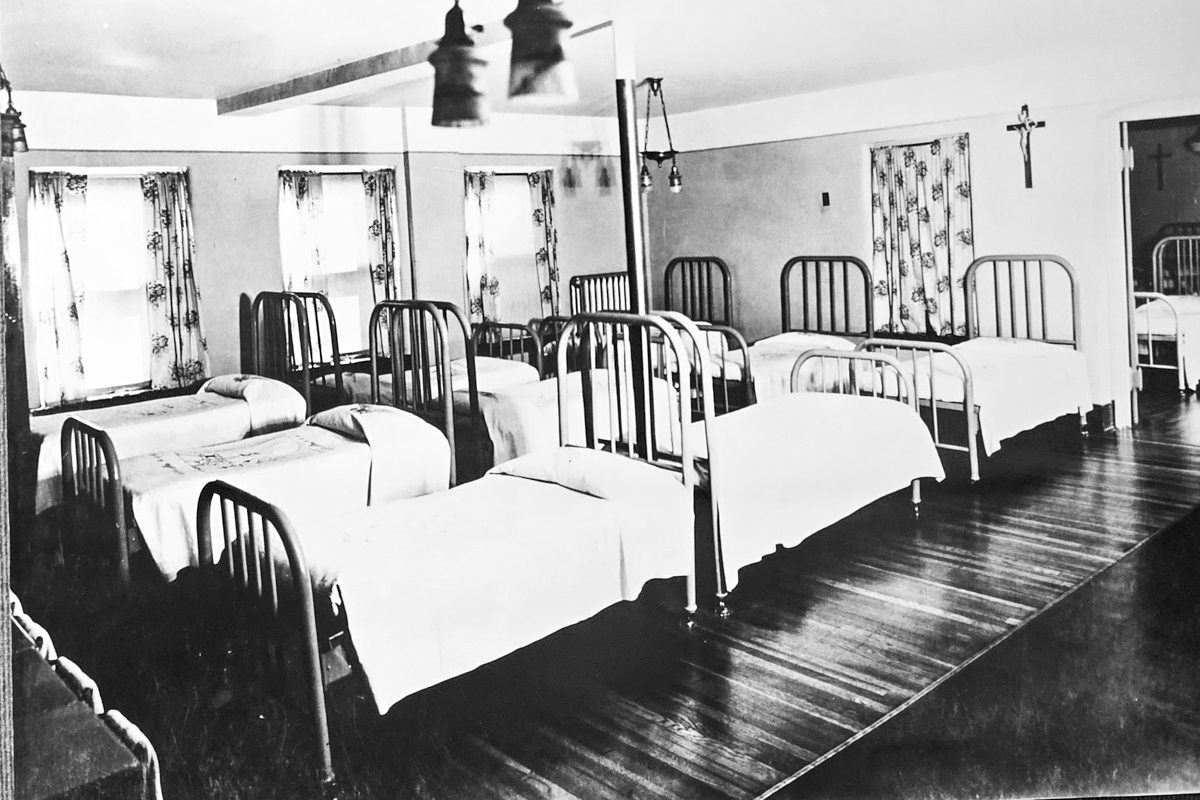
At first, there were only a handful of children, but by 1922, the nuns had to expand. With this first addition, they were able to house and school 32 children. Three more expansions took place over the next eight years to house and educate just over 70 children. The annexes now had a chapel, dormitories, a kitchen, a dining room, and a music and study area.
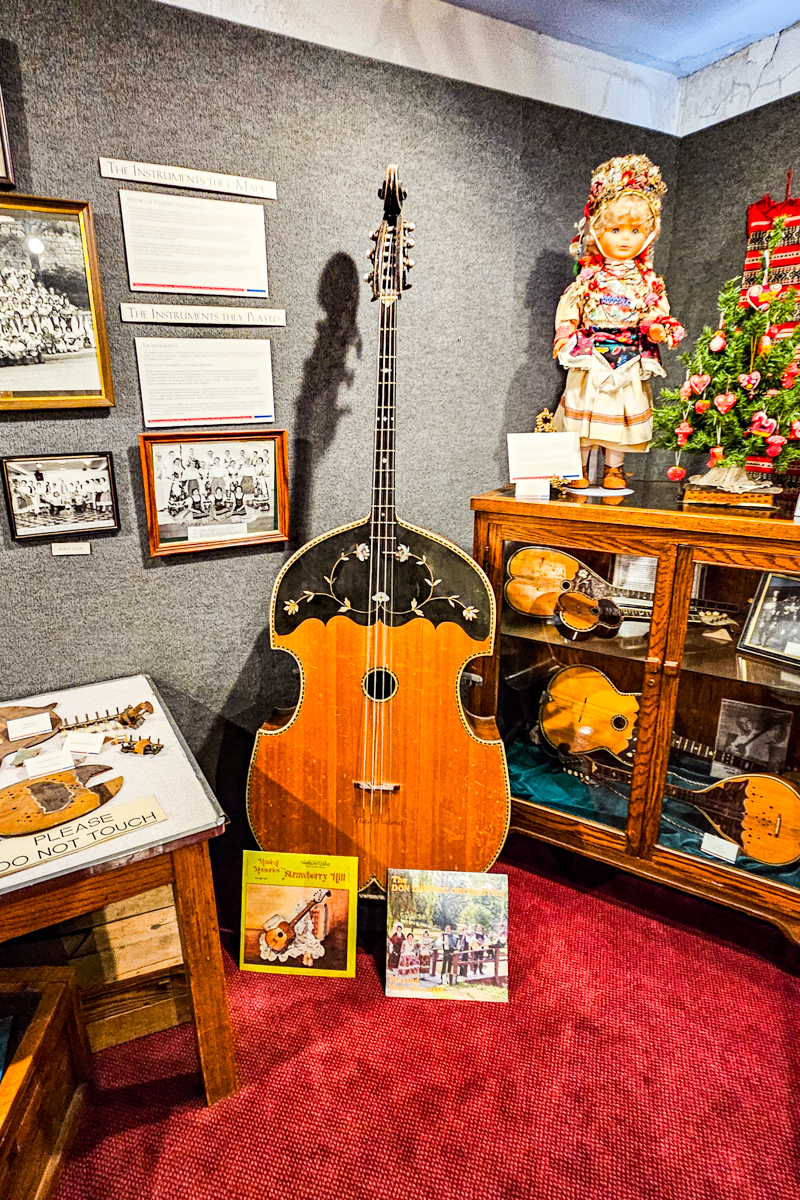
Our docent, whose firsthand knowledge led us room by room, explained the timeline of the changes with her personal stories from growing up there. She was even in several pictures as a child, playing with the band, and graduating. It brought these young people’s experiences to life.
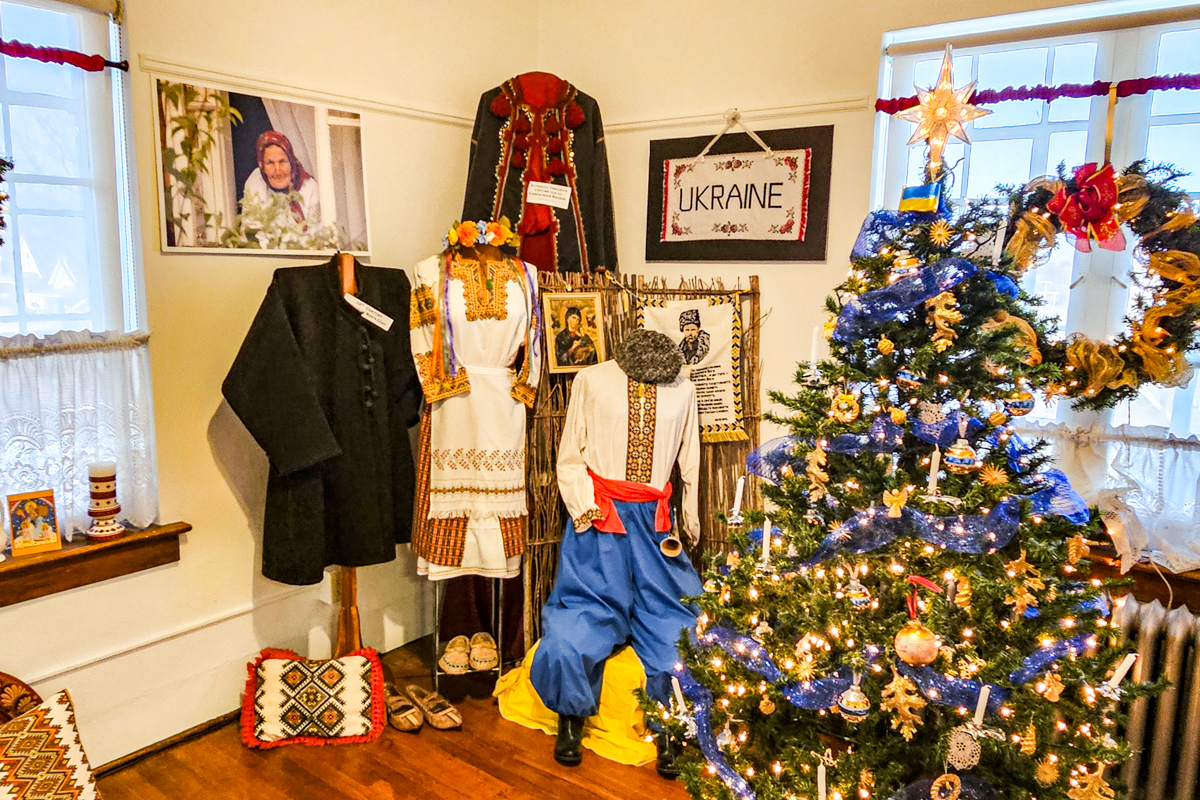
We were there at Christmas time. The home and orphanage, as you can see in some of the pictures, are beautifully decorated for the season. Several rooms in the orphanage display traditional holiday attire from each country of origin. The traditional clothing and decor were all donated by families of those raised there or by their relatives. It is a lovely, colorful display of the rich heritage of each of these children and the neighborhood’s original homelands.
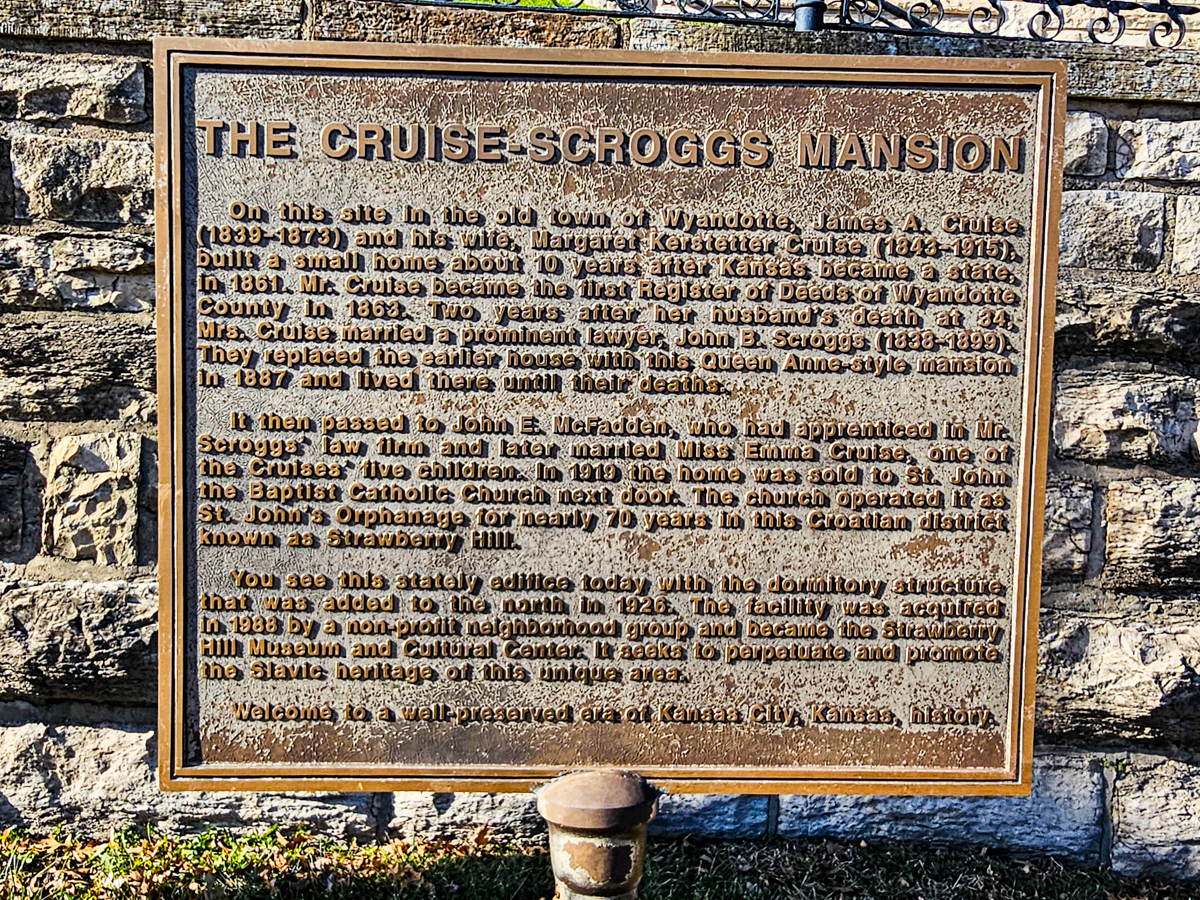
Strawberry Hill Museum and Cultural Center shows the beauty and decadence of 19th-century wealth, as well as generosity and care for the poor and downtrodden in times of need in the early 20th Century. It was not only a history lesson, but a truly moving experience.
* * *

Mary and Kevin are travel writers, travel photographers, and hotel scouts. They are based in Gozo, Malta. M&K travel internationally and domestically, looking for their next travel story.
Mary and Kevin are lifelong photographers and passionate travelers. Mary became a published travel writer in 2016, and Kevin began his career as a travel journalist in 2021. Today they work together, focusing on off-the-beaten-path, not-well-known, and in-the-shadow-of locations. They delve into art, music, food, and libations. In addition, they explore architecture, museums, parks, well-curated tours, history, agriculture, and the unexpected in micro-towns and big cities, domestically and internationally.