I was eight or nine. The last weekend of the Christmas holidays. School loomed large, I needed my own world. My parents, younger sister and I lived a short train hop from London so we often spent a treat day exploring museums and art galleries browsing the shiny shops and maybe popping into the Cartoon cinema in Leicester Square if it rained.
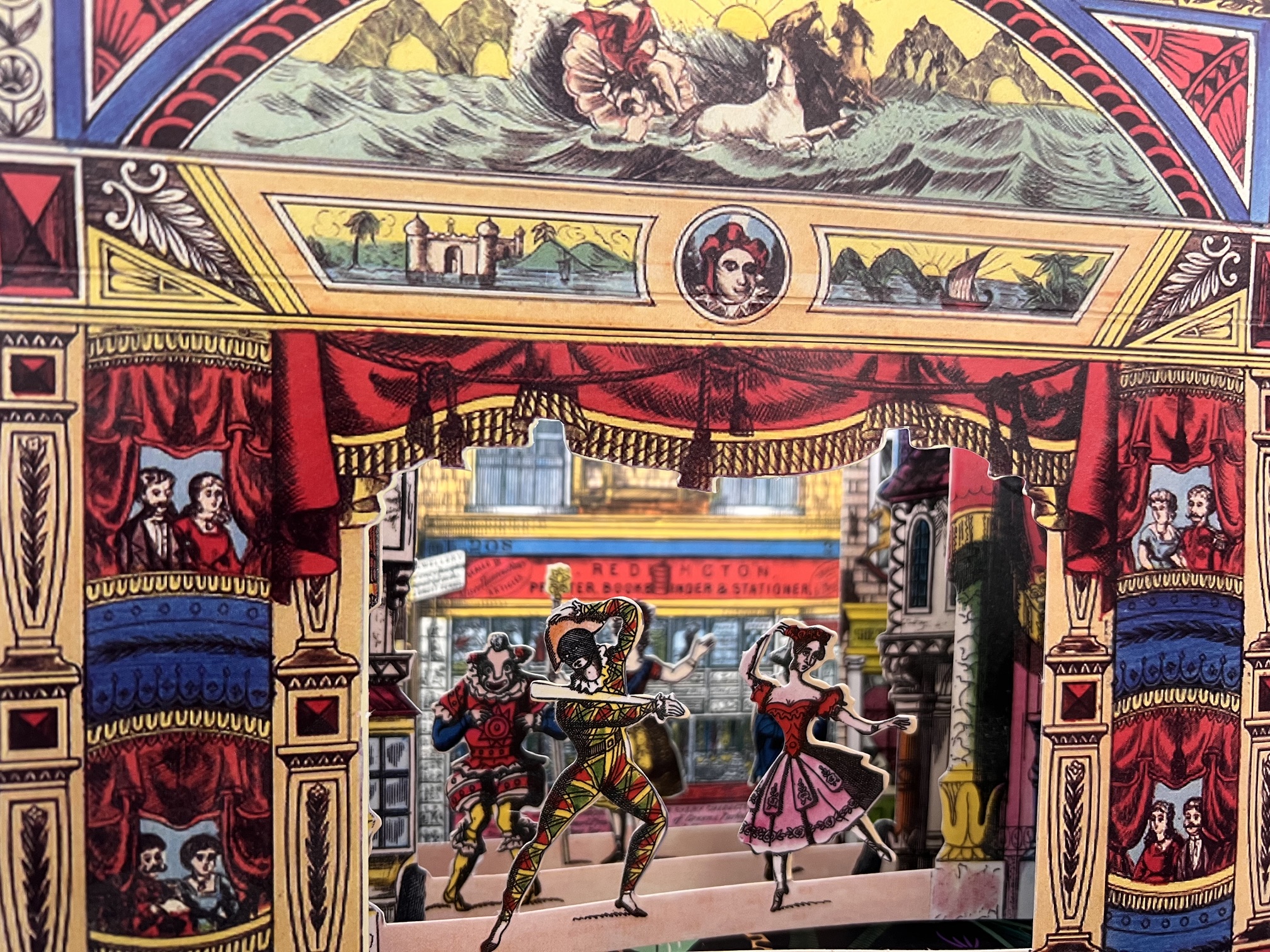
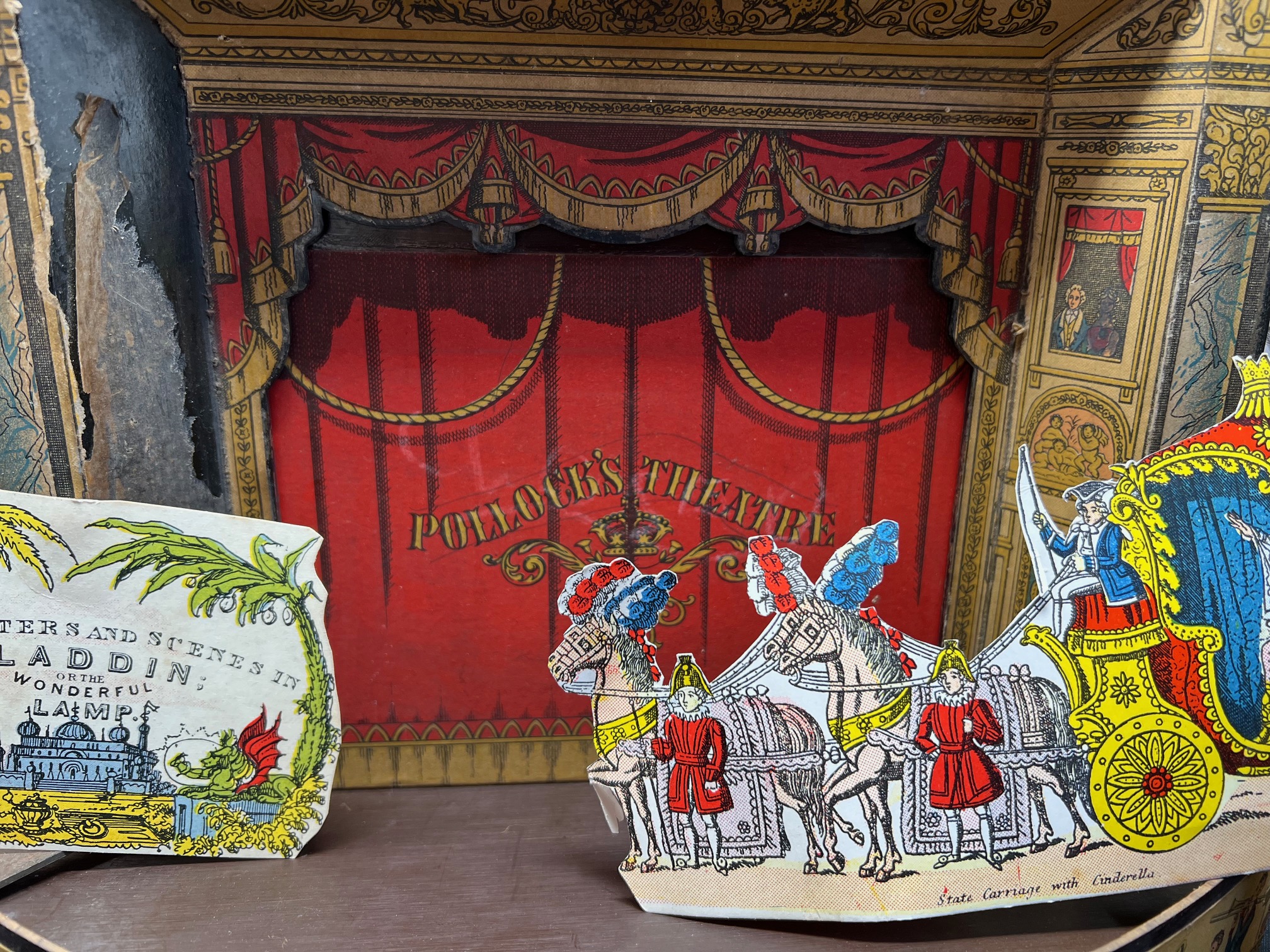
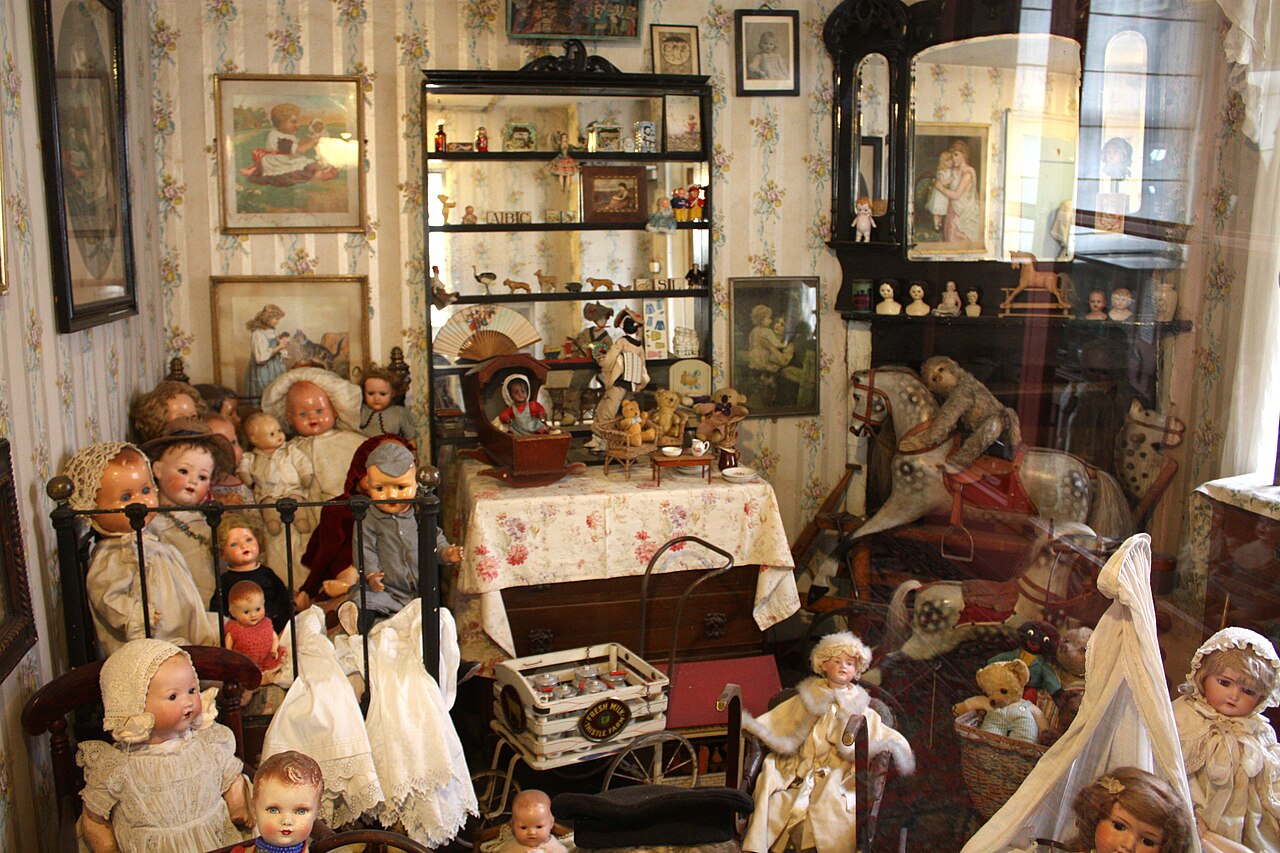
We walked briskly to my Dad’s march under leaden skies from The British Museum to the Pollock’s Toy Museum on Monmouth Street. Starting in an attic room by enthusiasts the Museum over the years in inverted tree style had branched downwards warmly enveloping the building with a crowd of toys and childhood ephemera. I was entranced by Roman pottery dolls, Victorian prams, much loved Teddy Bears and toys from around the world. Then I saw the toy and model theatres. Their tiny stages, ‘Penny Plain Twopence Coloured’ Victorian cut out cast, fairytale sets, changeable backdrops and scenery. ‘The Regency’, ‘The Adelphi’, ‘The Victoria’ conjuring performances from the twinkling Cinderella and Harlequinade to the thrillingly bloody ‘Jack The Giant Killer’ and ‘Blackbeard The Pirate’. In the shop I chose my DIY theatre and my plays ‘Aladdin’ and ‘Cinderella’. Next day I kept busy with scissors and glue gently smoothing any air bubbles from between the glued sandwich of thin printed card and the sturdier box card that would help with supporting the mini architectural world. Then carefully negotiating the fine details with a pair of snippy scissors once the glue was dry. The moral teachings of the Victorian parent seeping through time to remind me never to run with scissors.
I immersed myself in the task to quell the rising ‘Sunday feeling’, that immutable stomach knot that will not quieten its whispered ‘you haven’t finished your homework’ made worse on the last day of the Christmas holiday. I embellished Ali Baba’s cave with a little sprinkled glitter and carefully stuck a red glass pin through the clock face of the Cinderella’s ball backdrop so I could move the hands on to midnight when the time was right for the transformation.
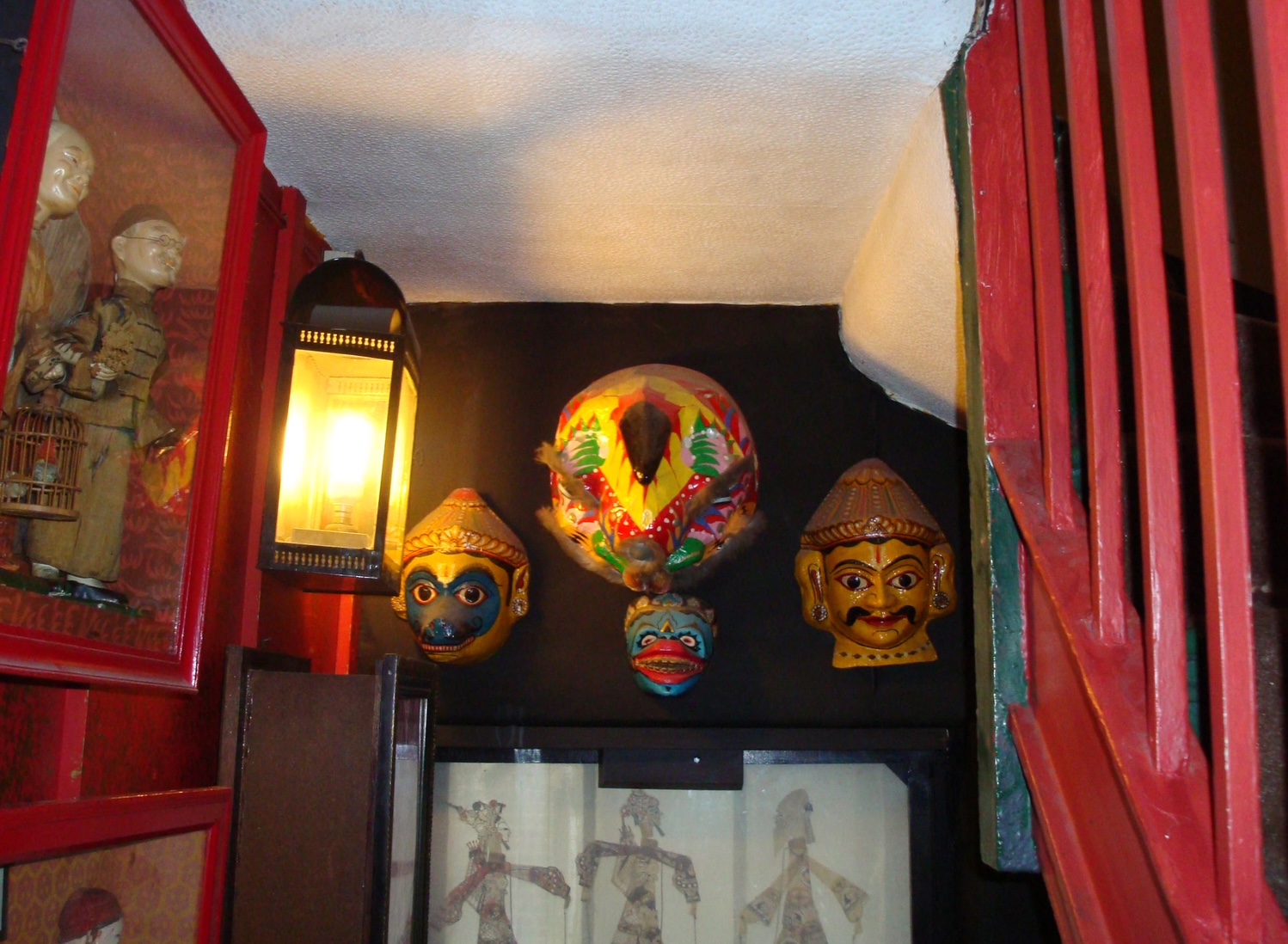
In my Mum’s words ‘we re-found the museum after it had moved’ to a new site on Scala Street. Still a magical place with creaky, windy stairs and a dark theatre space in the cellar I remember. An authoritative voice called us to the next performance. My sister and I sat on the floor in front of the darkened theatre. My parents on chairs behind us with two or three other audience members. We felt select, special. A man swept through a black curtain to one side of the stage and the stage lit up!
A visit to the tiny crammed Pollock’s Toy shop in Covent Garden is always a joy. It shares a name with the museum but is a separate business started after the fruit and veg market closed and the area was developed into the backdrop for street performers, upmarket shops and the eclectic market ringing to the sound of opera singers it is today.
A number of years ago I was entranced to find Coronation Street actor and long time Pollock’s Toy Museum supporter Peter Baldwin behind the till. This was the man who gave us that intimate performance at the museum, the man who disappeared behind the curtain all those years ago.
* * *
Heather Tweed is an artist, writer and researcher with a practice spanning more than twenty five years. Her exhibition work has been shown at the Venice Biennale, OXO Tower Wharf, Old Truman Brewery and Edinburgh Fringe. One of two British artists selected for the British Council