_-_Applicants_for_Admission_to_a_Casual_Ward_-_THC0021_-_Royal_Holloway,_University_of_London.jpg)
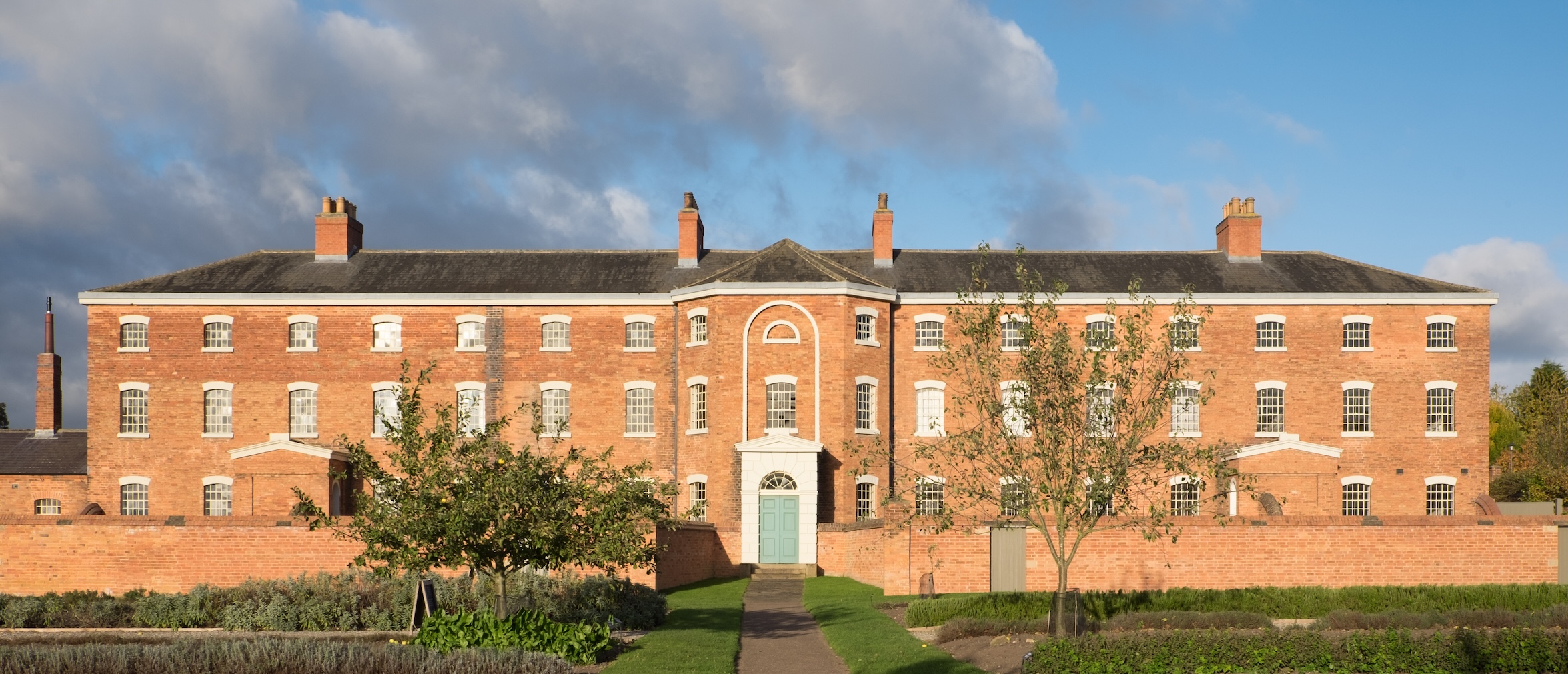
Above: Southwell Workhouse (Wikimedia Commons, By DeFacto - Own work, CC BY-SA 4.0)
We arrived at Southwell Workhouse with a sense of trepidation. This might be an interesting visit but it was probably going to be a bit grim. It is impossible not to conjure images of Oliver Twist or Luke Fildes’ vividly realist Applicants for Admission to a Casual Ward depicting the miserable plight of those seeking an emergency bed. The reality, on first impressions, is strikingly upbeat. Southwell is, by any standards, a beautiful building: institutional, certainly, but almost classical in its proportions and symmetry. Built of substantial brick, with a three-sided projecting and stone-dressed entrance and walled garden in front, it could almost be a minor stately home. The Workhouse was built to impress: in 1824, it was a state-of-the-art, new facility, the first of its kind, which aimed to rationalise, streamline and modernise poor relief.
Southwell is currently owned by the National Trust who claim it is the most complete workhouse in Britain. It is also one of the most historically significant. Designed by John Thomas Becher to promote ‘the frugal, beneficent, and careful administration of the poor laws’, it pioneered ‘indoor’ (institutional) relief in which those seeking aid were housed, clothed and put to work, rather than given traditional hand-outs. Becher was unapologetic in his desire to make the system as ‘repulsive as possible to able-bodied paupers’, whilst at the same time providing a safety net for the old, very young and infirm. His system was adopted as government policy with the 1834 Poor Law.
Today, you approach through the garden which, like everything else, was functional - it was where the residents laboured to grow their food - and enter the building in the same way as those seeking relief would have done two hundred years ago. Then, clothes and possessions were taken away and replaced by numbered uniforms. People were bathed and given a medical examination, then allocated a bed and food according to sex, age and ability to work. The first rooms are set out as they would have been in the mid-nineteenth century. The yard has a pile of rocks in one corner, ready for stone-breaking, and in the able-bodied day room you can try your hand at oakum-picking - basically separating the strands in thick rope. Work, even pointless work, was essential. The rooms are pristine white, regularly lime-washed for cleanliness and to provide more ‘work’: apparently up to forty layers of paint were discovered during restoration.
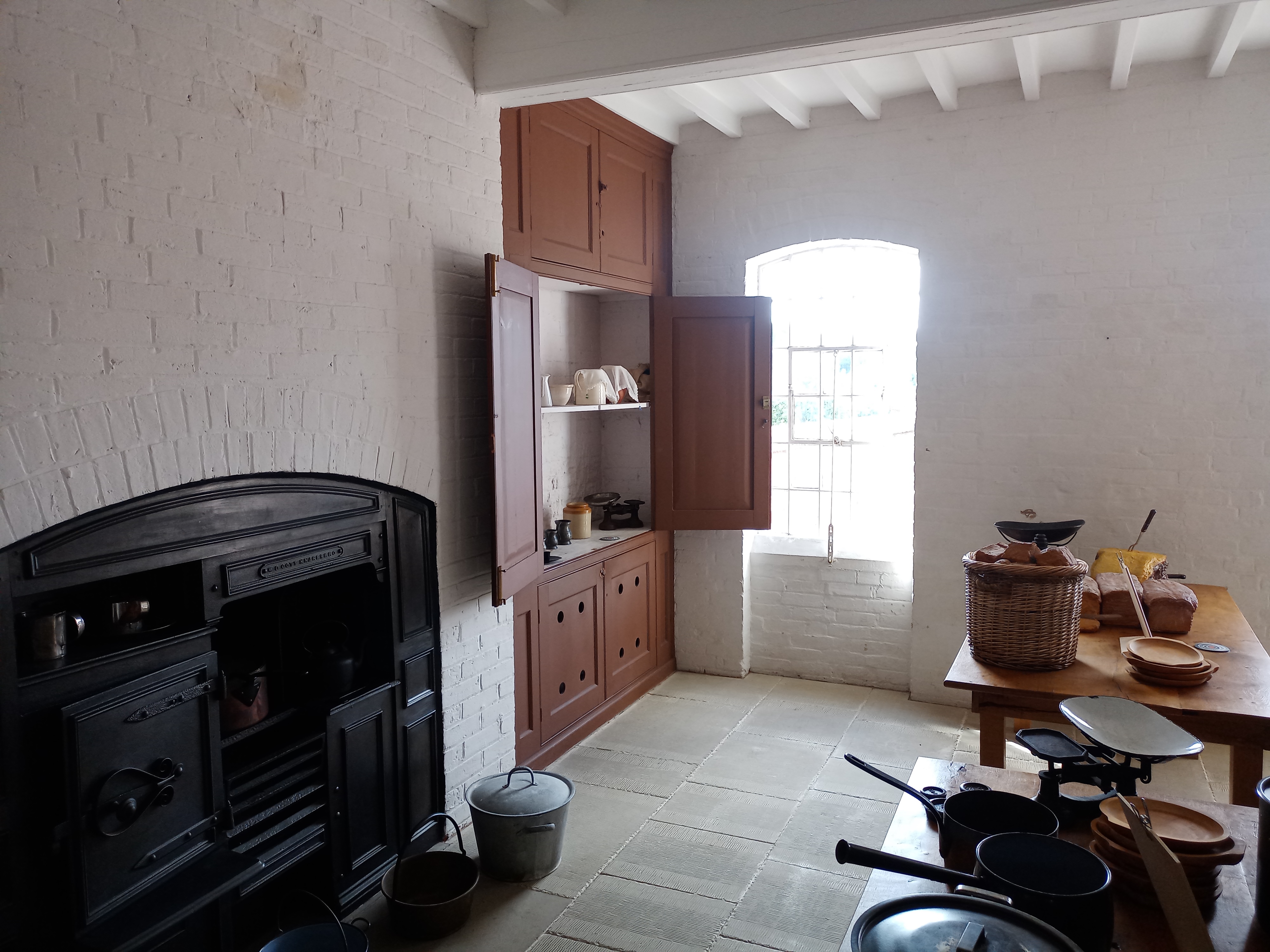
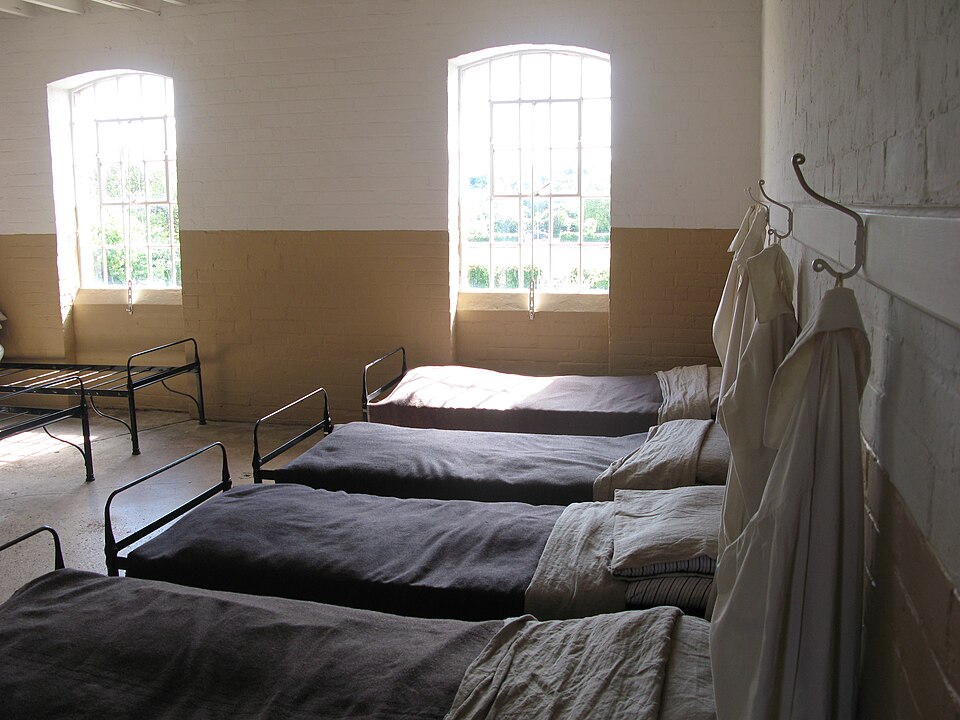
The dormitories contained a mixture of double and single beds, with some people forced to share, and literally nothing else. No private possessions of any kind were allowed. It is plain but not unnecessarily spartan – there are fireplaces in the rooms and the whole building feels, on a sunny day at least, surprisingly homely. There is an onsite laundry, with high-tech pull-out drying racks (cleanliness was another important feature) and kitchen which provided work for the women. Food was basic – huge amounts of bread, 14oz of suet pudding for each adult male on a Saturday, meat only three times a week, and yes, gruel every morning. Hardly exciting, but I can’t imagine being hungry.
The buildings themselves speak of scale and efficiency: 62 parishes supplied the workhouse with funds and representatives for the board of guardians (their meeting room is complete with portrait of Queen Victoria and harmonium for hymns). A live-in married couple were employed as Master and Mistress – their furnished room is also displayed. Up to 160 people could be housed at once, with the population peaking in winter when agricultural work was scarce. There was a schoolroom where children received a basic education such as would fit them for work as servants. It sounds enlightened until you remember that all but the very youngest were separated from their parents
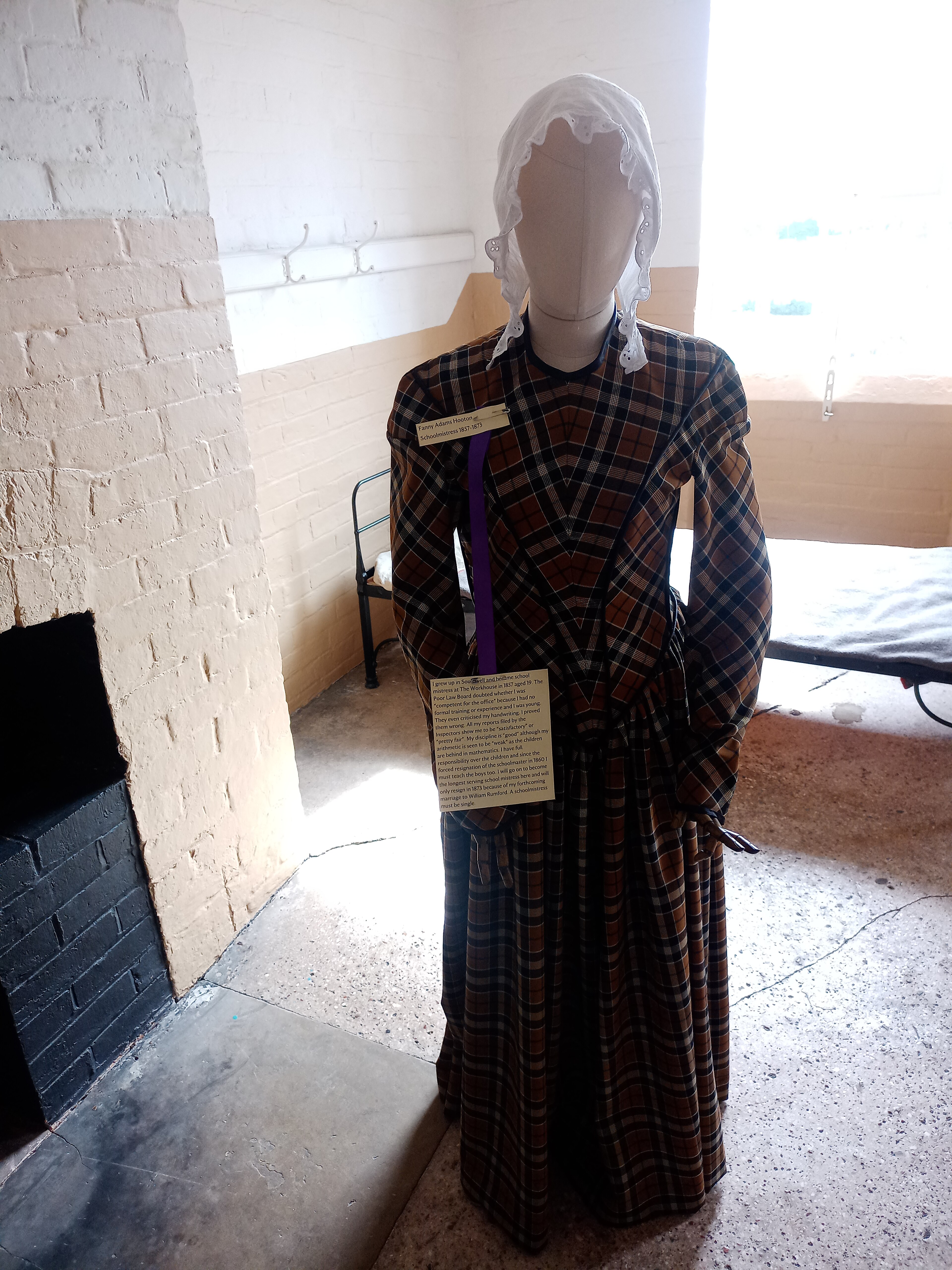
Displays within the buildings attempt to personalise, humanise and give a more rounded picture of workhouse life. Individuals’ stories are written on bed linen or attached to costumed mannequins, and gauze curtains printed with life-size photographs of costumed actors create an effective and eerie ghostlike presence. Hands on exhibits include, for instance, replicas of the thick, gaudily red uniforms. You gradually build up a sense of a well-intentioned system increasingly under pressure, and at the mercy of prejudice and corrupt individuals.
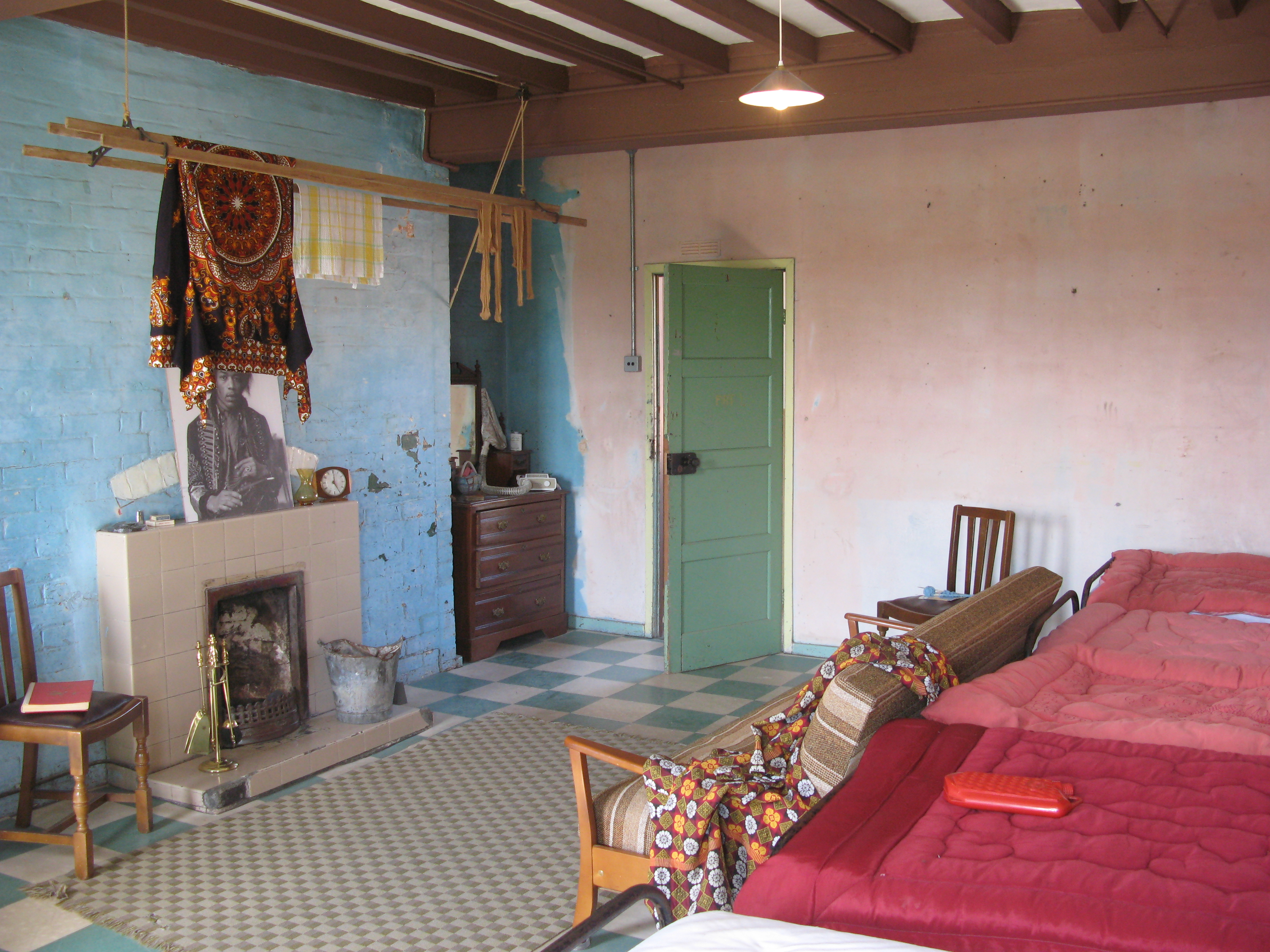
As you move through the rooms, you also move through time. By the 1930s, ideas had shifted and the building changed its name, to Greet House, and purpose. Accommodation for the elderly and basic bedsits for single parents, cosily decked out in 1970s prints, replaced the idea of universal residential provision. There are audio testimonies from those who remember staying as children and a powerful display about domestic abuse, which was why many ended up seeking refuge there. It is sobering to learn the buildings remained in use until the 1980s.
A second, smaller building, built in 1871 in a far more functional style, housed the Infirmary. Initially, ill residents were treated haphazardly by other inmates with the occasional appearance of a visiting doctor. Florence Nightingale was instrumental in campaigning for professionalised and more sanitary provision, and by 1899, Southwell had a live-in, trained nurse. In later life the Infirmary offered maternity services and functioned as a care home and this is the legacy which is focused on today. I don’t know whether it was imaginary, or a clever curatorial gimmick, but I could swear the place still smelt of antiseptic.
Arguably the National Trust are not the best organisation to look after Southwell. They have an aversion to labels and this is definitely not a museum full of objects. You have to piece together then stories to get even a partial sense of the place and I suspect that some people will find it simply too sanitised to chime with their idea of what a workhouse is. Equally, by illustrating the building’s whole history, until the last residents left in the 1980s, there is possibly an attempt to do too much, which dilutes the impact of the earlier rooms. However, I appreciated the admirable attempt to get beyond the Dickensian cliches.
There are a couple of guided tours scheduled each day and the website also mentions digital guides, although they did not seem to be available when we visited. As with all National Trust properties there are volunteers in each room who are generally very well informed.
The Workhouse is open Wednesday to Sunday, 10.30 until 3 pm, standard admission is £15 (although of course free for National Trust members). There is a decent café, all the usual National Trust facilities, walks and family activities. There is free parking and it is really only easily accessible by car.
If you are travelling into the area, don’t miss the town of Southwell itself, which has some beautiful Georgian brick houses and a minster with a fine Norman nave and some of the best naturalistic Medieval carvings in the country. The Southwell Leaves, as they are known, decorate the Chapter House, winding in extremely high relief around columns and providing cover for the faces of Green Men and animals. They are simply stunning. The Minster is open daily (although it is worth checking that there are no special events on) and free to visit. There is a handy public car park opposite.
* * *

Catriona Miller is an independent art historian and writer on art based in the UK. She has taught and lectured on all aspects of art history and is currently researching women artists in British collections and issues of nationalism and identity in nineteenth-century landscape painting.
https://www.instagram.com/cmillerartlife/
https://twitter.com/cmillerartlife