When my husband and I set out to follow the historic Gunsmoke Trail across Kansas, I expected to discover Old West towns, fascinating history, and maybe a few hidden gems along the way. What I didn't expect was to spend time completely captivated by rattlesnakes.
That may sound strange coming from someone who doesn't even like snakes.
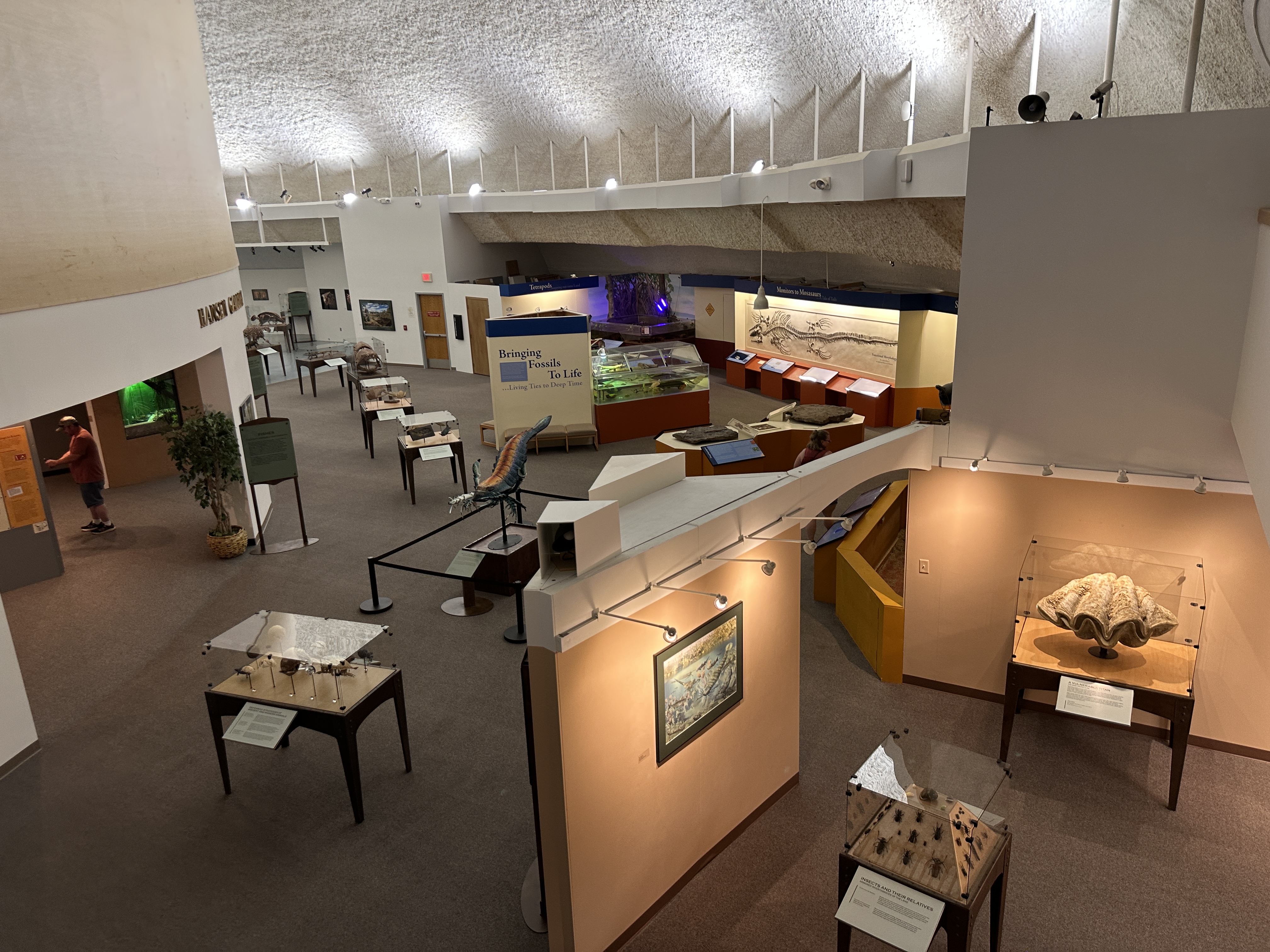
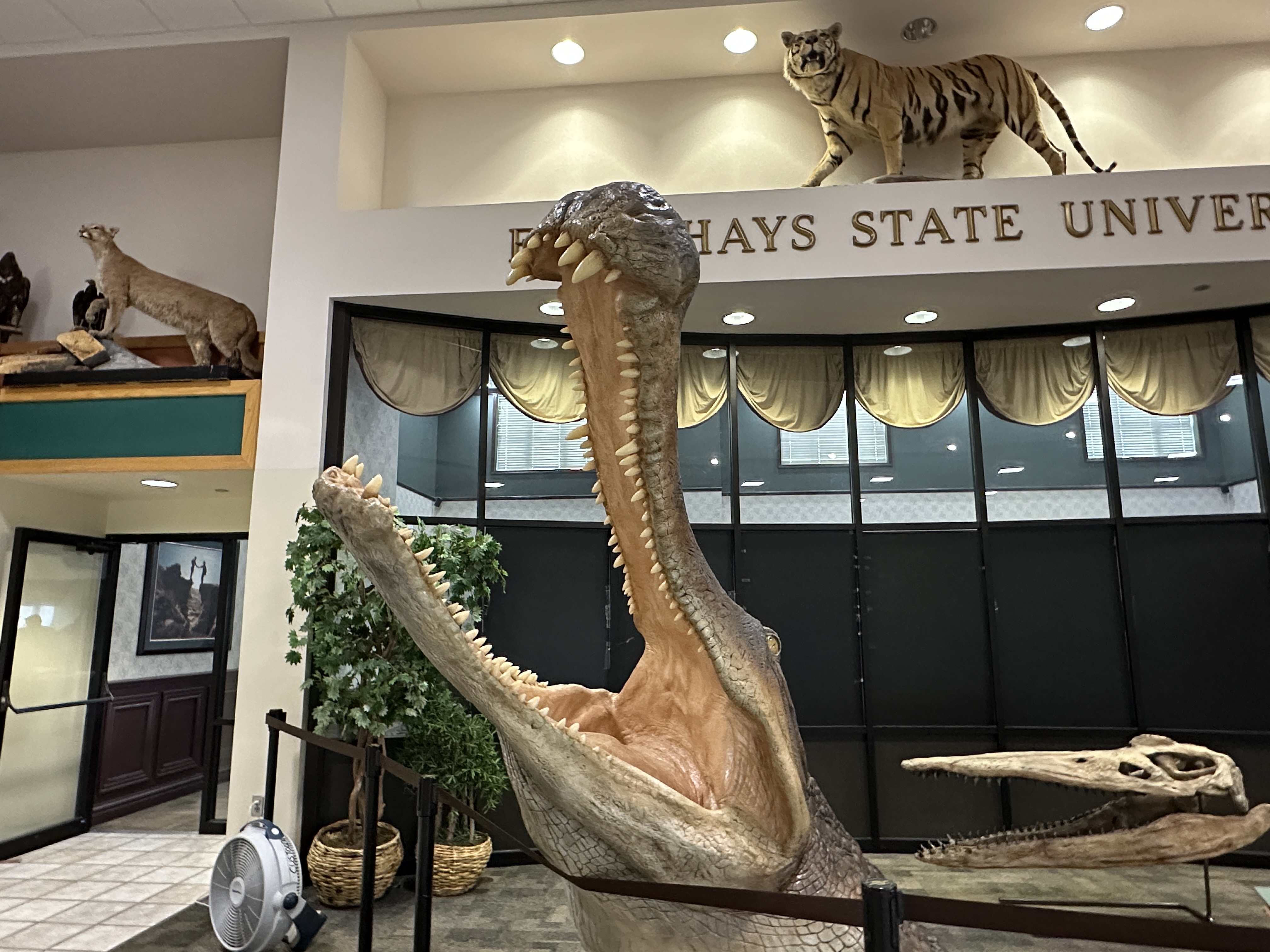
Our stop at the Sternberg Museum of Natural History in Hays turned out to be one of the biggest surprises of our road trip. I expected a small local museum with a handful of exhibits. Instead, I found a museum that kept surprising me. Every time I thought I'd seen the best exhibit, another one pulled me in. Before long, we'd wandered from dinosaur fossils to live reptiles to exhibits I never imagined I'd see in western Kansas.
If you're planning a Kansas road trip, don't make the mistake of driving past Hays without stopping here.
Located on the campus of Fort Hays State University, the Sternberg Museum of Natural History is named after famed fossil collector George F. Sternberg and his family, whose discoveries helped establish Kansas as one of America's premier fossil-hunting destinations.
Before this visit, I simply thought of Kansas as an endless prairie with beautiful sunflowers in the middle of the country. I'd never connected Kansas with giant marine reptiles. That changed in a hurry.
I was fascinated to learn that millions of years ago, much of Kansas lay beneath a vast inland sea. Suddenly, many of the fossils throughout the museum made perfect sense. It's amazing how one museum can completely change the way you think about an entire state.
We never felt rushed. The layout made it easy to wander wherever our curiosity took us, and we ended up spending much longer here than we'd expected. Our destination marketing organization guide, Janet Kuhn, accompanied us to the museum, but we explored everything on our own, taking our time and lingering wherever something caught our attention.
If someone had asked before our trip which exhibit would become my favorite, snakes would have ranked somewhere near the bottom of the list.
Yet that's exactly where I spent the most time.
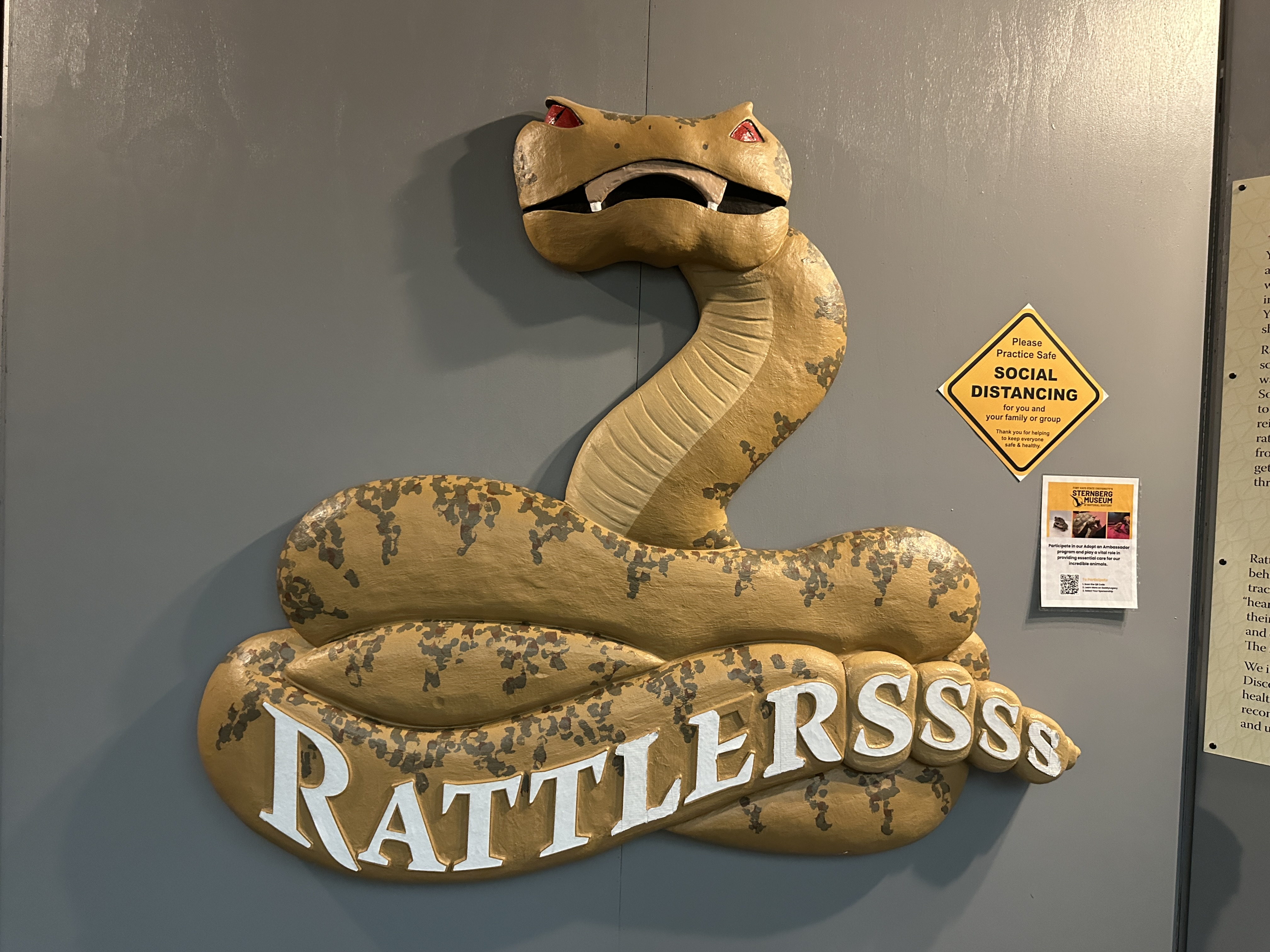
The exhibit, Rattlerssss: From Fear to Fascination, includes 40 rattlesnakes from around the US. Seeing so many different rattlers together was both eye-opening and slightly intimidating. They certainly caught my attention. I found myself watching them over and over as they flicked their tongues, quietly observing visitors from behind the glass.

Several times I felt like they were looking right at me and wishing they could sink their fangs into me. I'll admit it. I was very grateful there was glass between us.
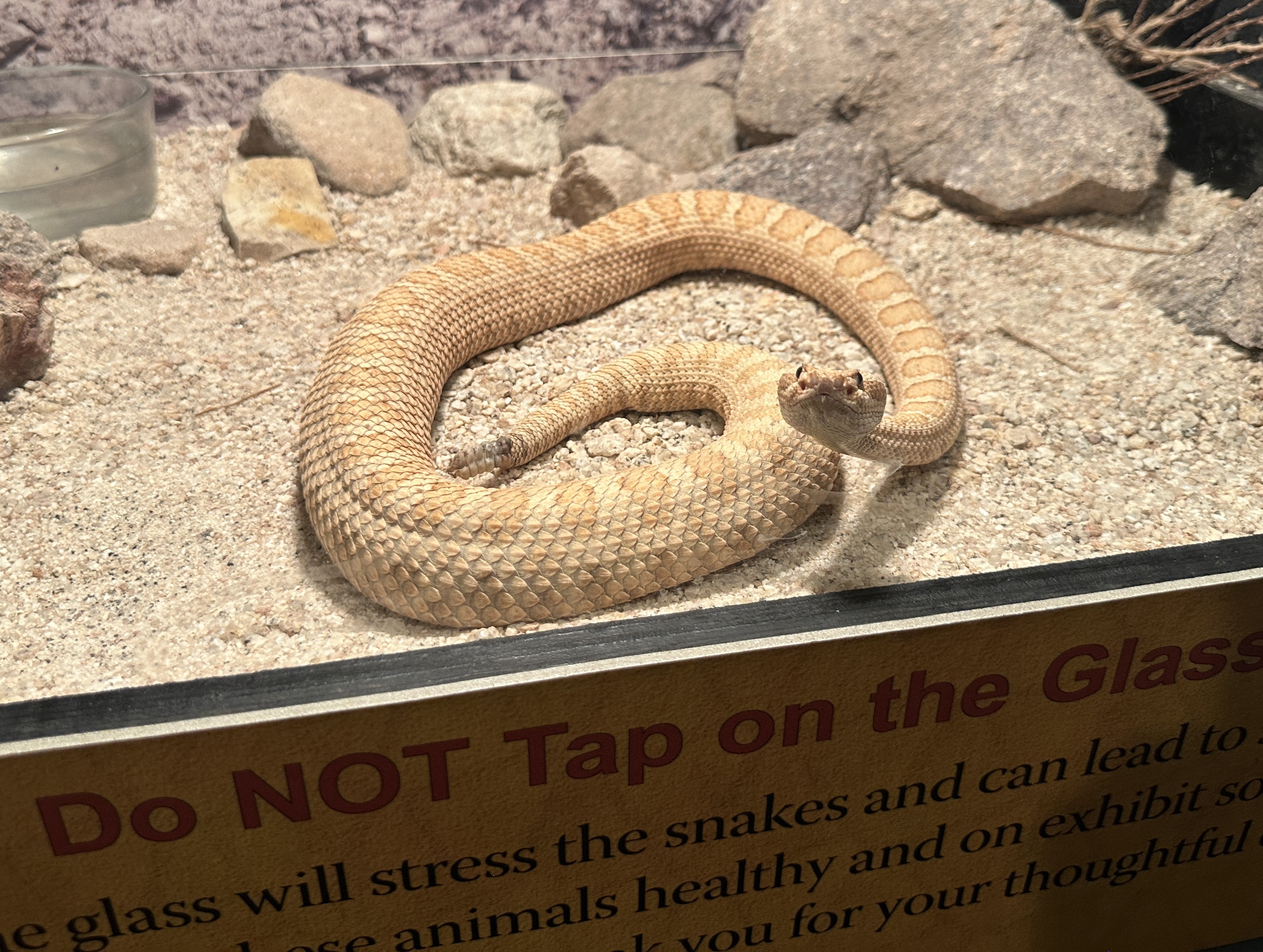
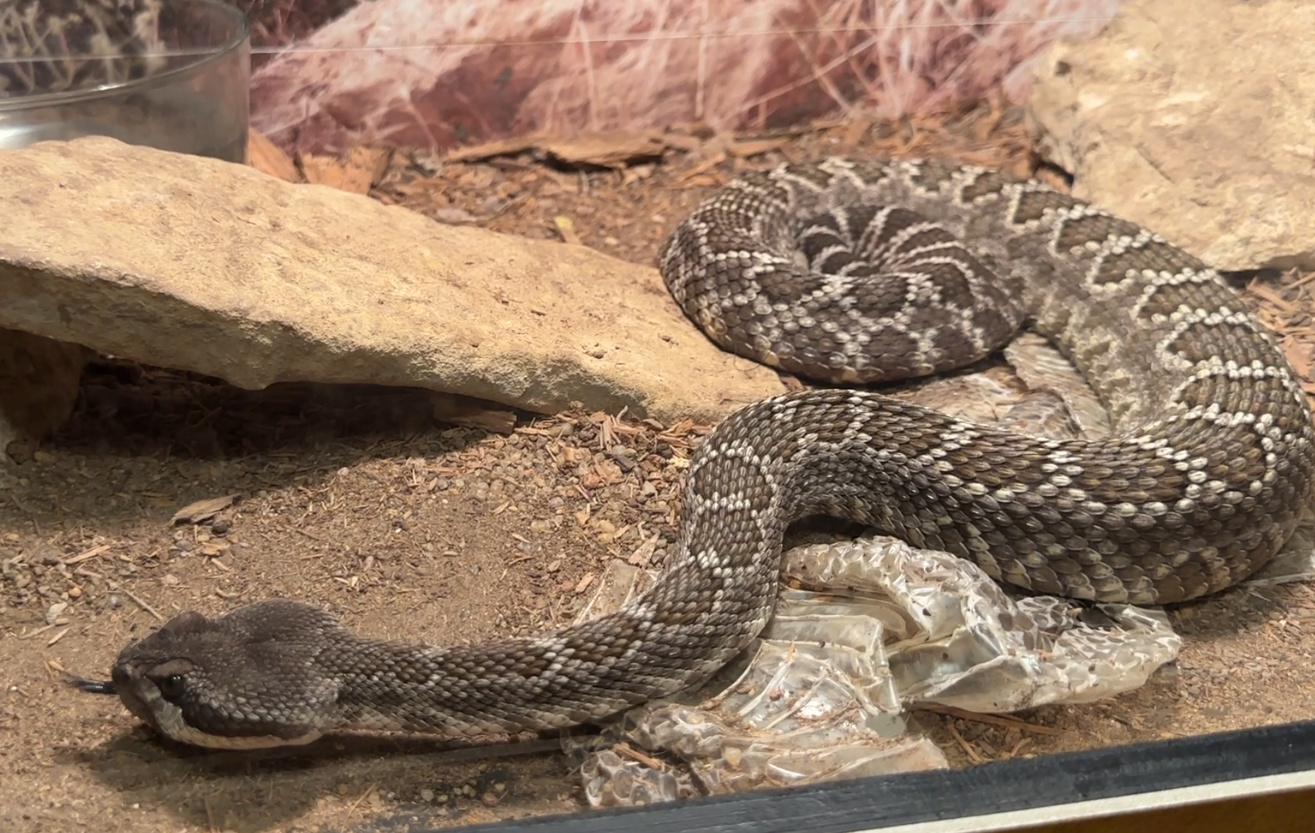
Despite my uneasiness, I couldn't stop taking pictures. In fact, many of the photos I brought home from the museum were of snakes, something I never would have predicted before walking through the doors.
Sometimes the exhibits that challenge our comfort zone become the ones we remember most.
One exhibit completely fooled me.
When I first spotted the famous shrunken head, I honestly thought it had to be a replica made of plastic.
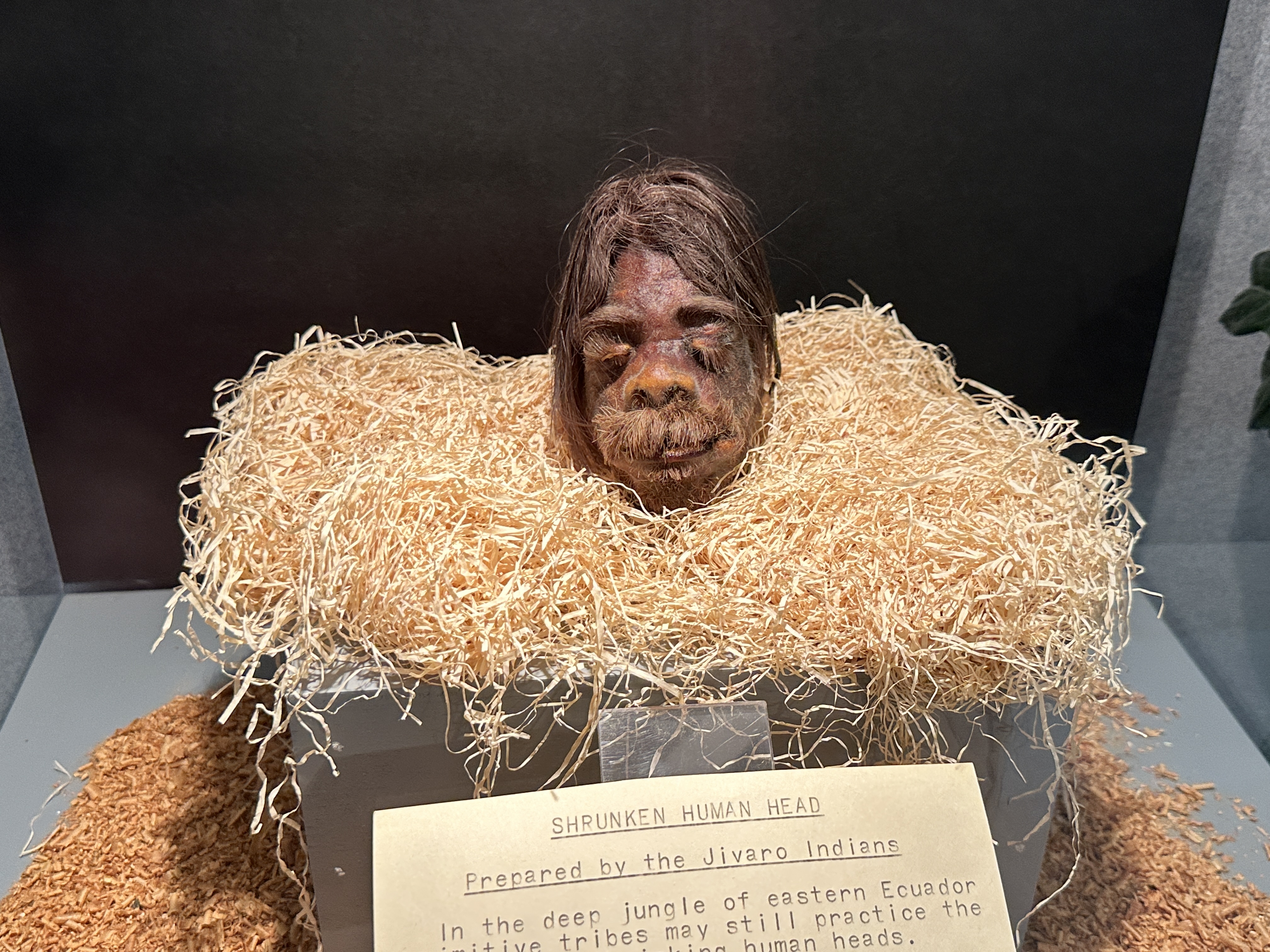
It wasn't until I read the accompanying information that I realized it was authentic. Learning about the cultural traditions behind the practice and discovering that it still exists in some parts of the world was both unforgettable and sobering.
In fact, this is one I couldn’t get off my mind, and thought it might give me nightmares.
It's one of those exhibits that makes you stop, read every word, and leave with a new perspective.
Seeing those fossils made it easier to picture Kansas underwater millions of years ago.
I couldn't have picked a favorite fossil if I tried. Together, they told the story of a Kansas I'd never imagined.
Standing among the fossil displays of Kansas's history, once an inland sea, made the history feel real rather than something found only in textbooks.
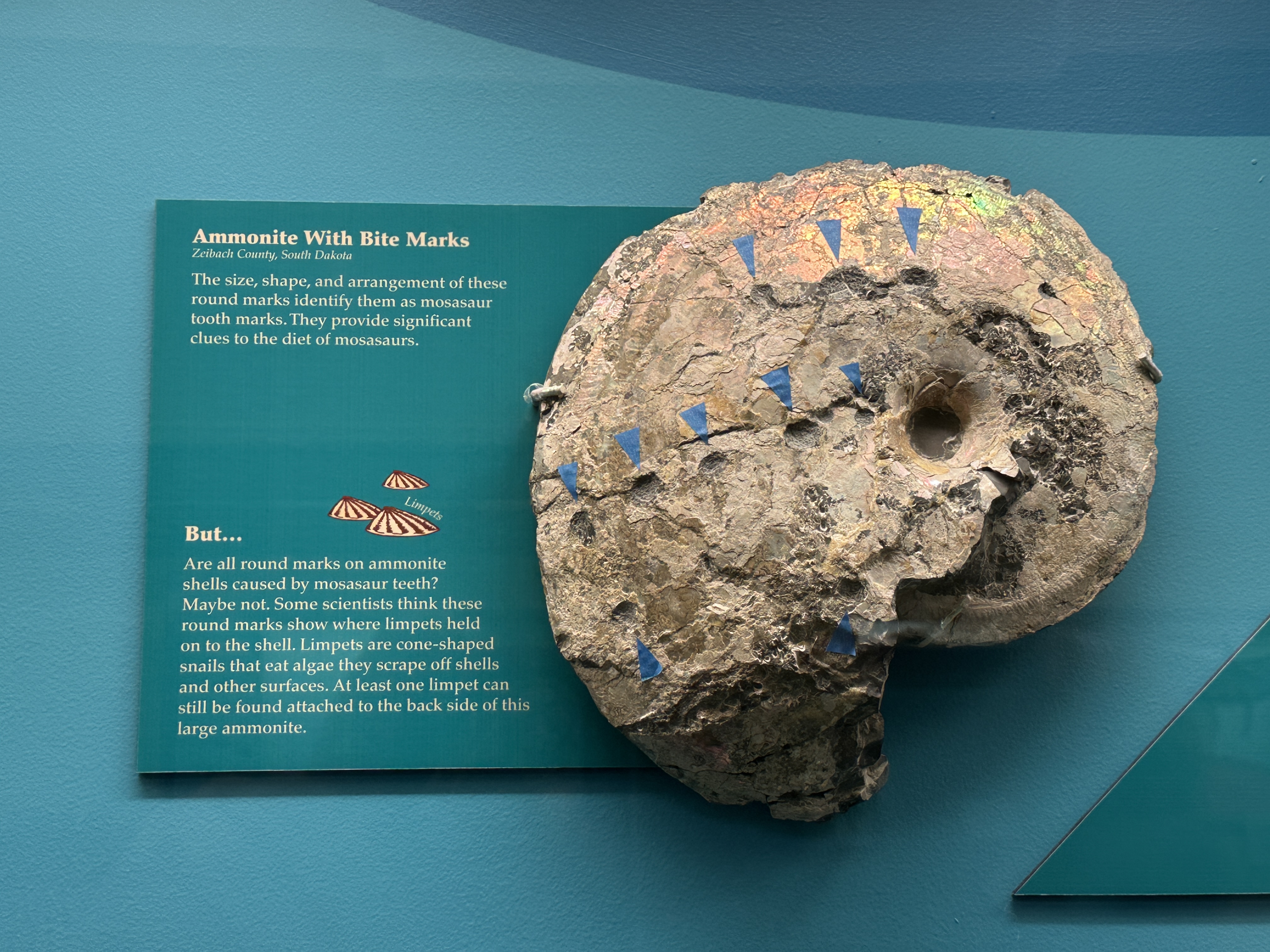
I'll never drive across Kansas again without imagining what once swam where highways now stretch across the prairie.
The skeleton displays were another favorite.
The mammoth skeleton stopped me in my tracks. I knew it would be large, but standing beneath it made me realize just how enormous these animals really were.

Seeing the skeletons up close made me notice details I'd never have picked up from a picture in a book.
Just when I thought I'd seen everything, I turned a corner and encountered one very animated dinosaur.
The life-sized animatronic dinosaur doesn't simply stand there.
It moves, and it growls.
And yes, it startled me.
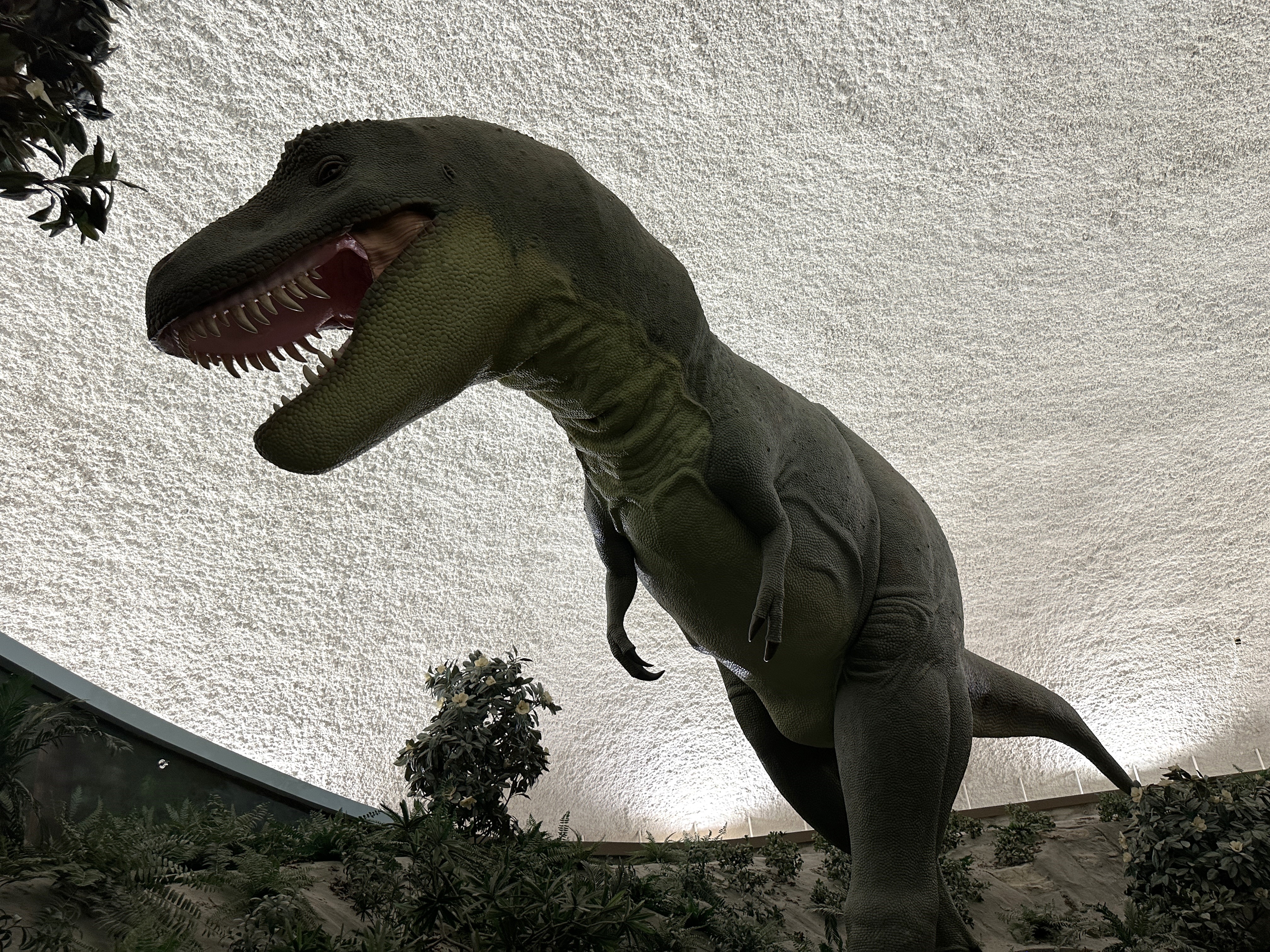
I actually jumped before realizing what was happening, then laughed at myself and spent several more minutes watching it come to life. It was activated by a motion sensor. And I found myself trying to figure out where the sensor was so I could make it growl again. Children nearby seemed equally entertained, making it one of the museum's most popular attractions.
Our visit to the Sternberg Museum was just one highlight during several days exploring Hays.
Before arriving at the museum, we had visited renowned limestone sculptor Pete Felten, whose incredible limestone craftsmanship showcases another side of western Kansas' artistic heritage.
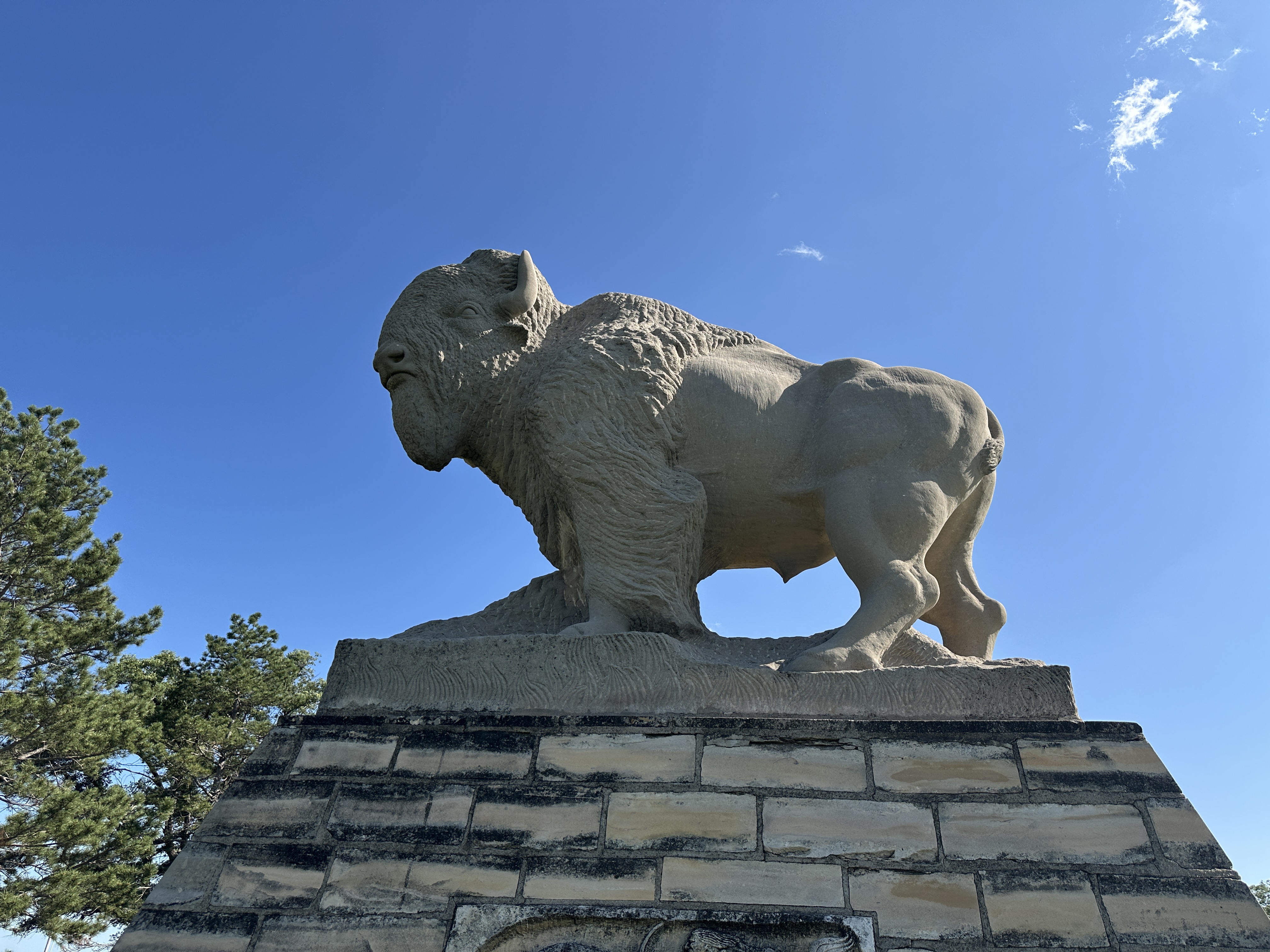
During our stay, we also explored downtown Hays, admired many of the city's public art and sculptures, toured Fort Hays, and visited the Ellis County Historical Society Museum.
By the time we left Hays, I realized we'd packed far more into our visit than we'd planned. Between museums, public art, Fort Hays, and great meals, the town kept giving us reasons to stay a little longer.
Of course, no road trip is complete without good food.
One of our favorite meals was at Gella's Diner, where we enjoyed delicious food after a day filled with sightseeing. Combined with several other local restaurants, By the end of our stay, we were glad we hadn't treated Hays as just another overnight stop.
The Sternberg Museum of Natural History is an easy addition to any western Kansas itinerary.
Address: Sternberg Museum of Natural History, 3000 Sternberg Drive, Hays, Kansas 67601
Hours: Hours of operation are subject to change throughout the year, depending on the season. Check their website for current operating hours.
They are closed Thanksgiving Day, Christmas Eve, Christmas Day, New Year's Eve, and New Year's Day.
How much time to visit: At least two hours.
Parking: Free
Accessibility: Wide hallways and galleries. Elevators are available.
Tip: Wear comfortable shoes and don't rush.
Some of the most memorable details are easy to overlook if you're trying to move through too quickly. Slow down, read the exhibit panels, and spend a few extra minutes observing the live animals. You may discover, as I did, that an exhibit you expected to breeze past becomes your favorite.
The Sternberg Museum wasn't just another roadside attraction. What began as another stop on our Gunsmoke Trail road trip became one of the most memorable experiences of our visit to Hays. Looking back, the thing I remember most isn't the dinosaurs. It's the rattlesnakes and the shrunken head, things I never would have predicted before walking through the front doors.
I arrived expecting a small local museum.
I left convinced that the Sternberg Museum of Natural History deserves a place on every Kansas travel itinerary.
* * *

Robin O’Neal Smith is a freelance travel writer. She resides in Pennsylvania and travels all over the country searching for some adventure and a touch of luxury to inspire others to travel, visit that museum, enjoy a new experience, and eat delicious food.
Follow me on Instagram
Please subscribe to my YouTube Channel - https://www.youtube.com/@atouchofluxurytravel