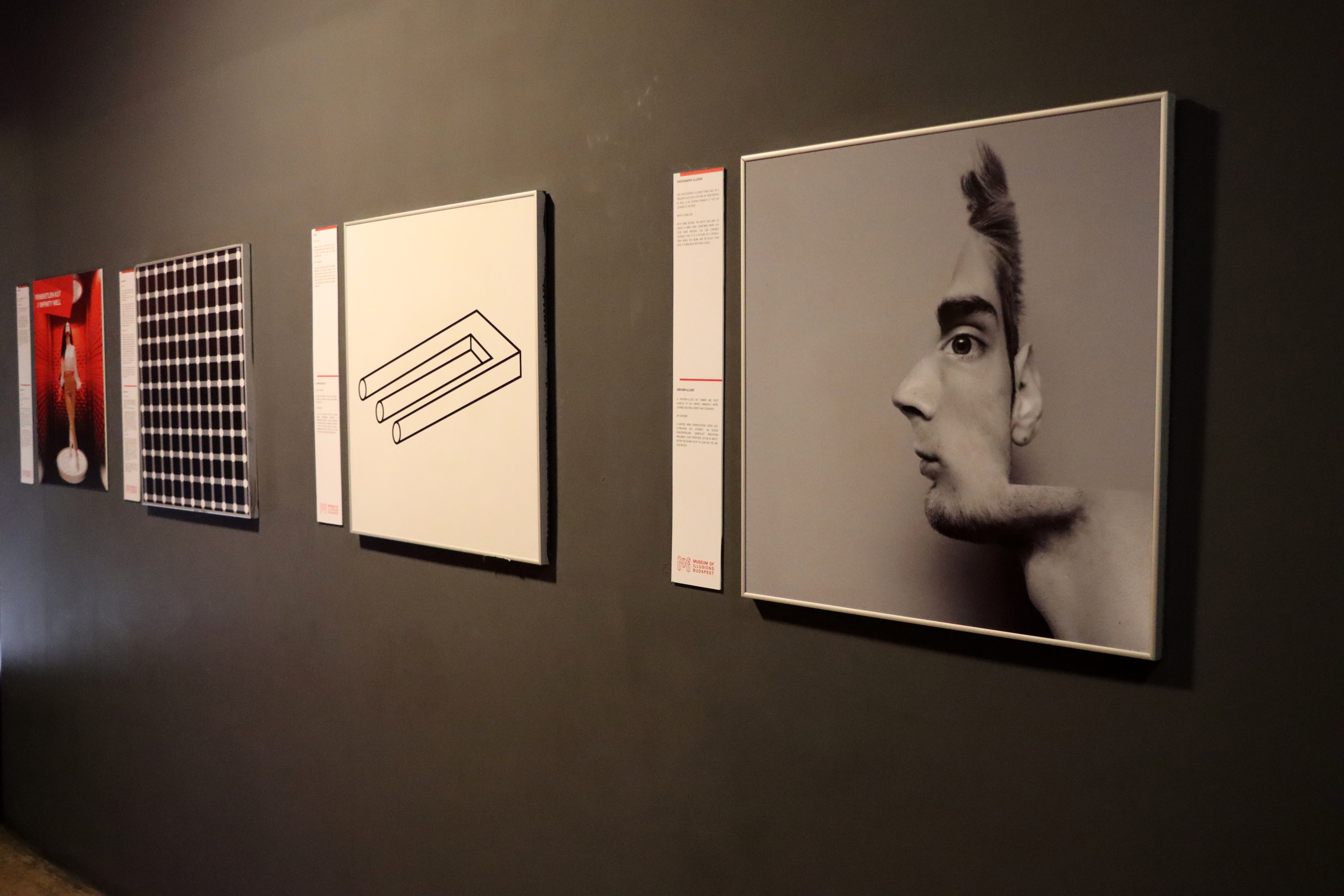
We were quite intrigued by the thought of visiting the Museum of Illusions in Budapest when we were in Europe, enjoying another week of adventure. My friends and I had never been to this country before, and with only seven days to explore this fabulous city, we narrowed our focus on what we absolutely had to see.
Thankfully, Mary, Kevin, and I suffer from the same “Where’s the next museum I can see syndrome” and are always thrilled when learning more about the people, places, and cultures of wherever we happen to be. Many folks love spending time in museums; whether they’re art, history, science, or play, there’s a museum (or two) for everyone. Hearing about this place – which offers an intriguing visual experience that’s both fun and a little “huh, what just happened?” reaction from guests- was certainly appealing.
The Museum of Illusions is a Croatian franchise, dreamed up and built by two Croatian architects, founded in 2015 and now present in 50 different cities worldwide. The Budapest location opened its doors on December 1st, 2021, and houses a permanent exhibition covering an impressive 500 square meters of fun. We were surprised and delighted to learn we’d be visiting the largest illusion-themed museum in the region. It was going to be something we’d all write home about – that was for sure!
Although the franchise locations are generally uniform, they also consider aspects and characteristics of the places they are in. We discovered that this museum in particular was determined from the outset to create a Budapest-specific local feature for one of the installations, which turned out to be my favorite.
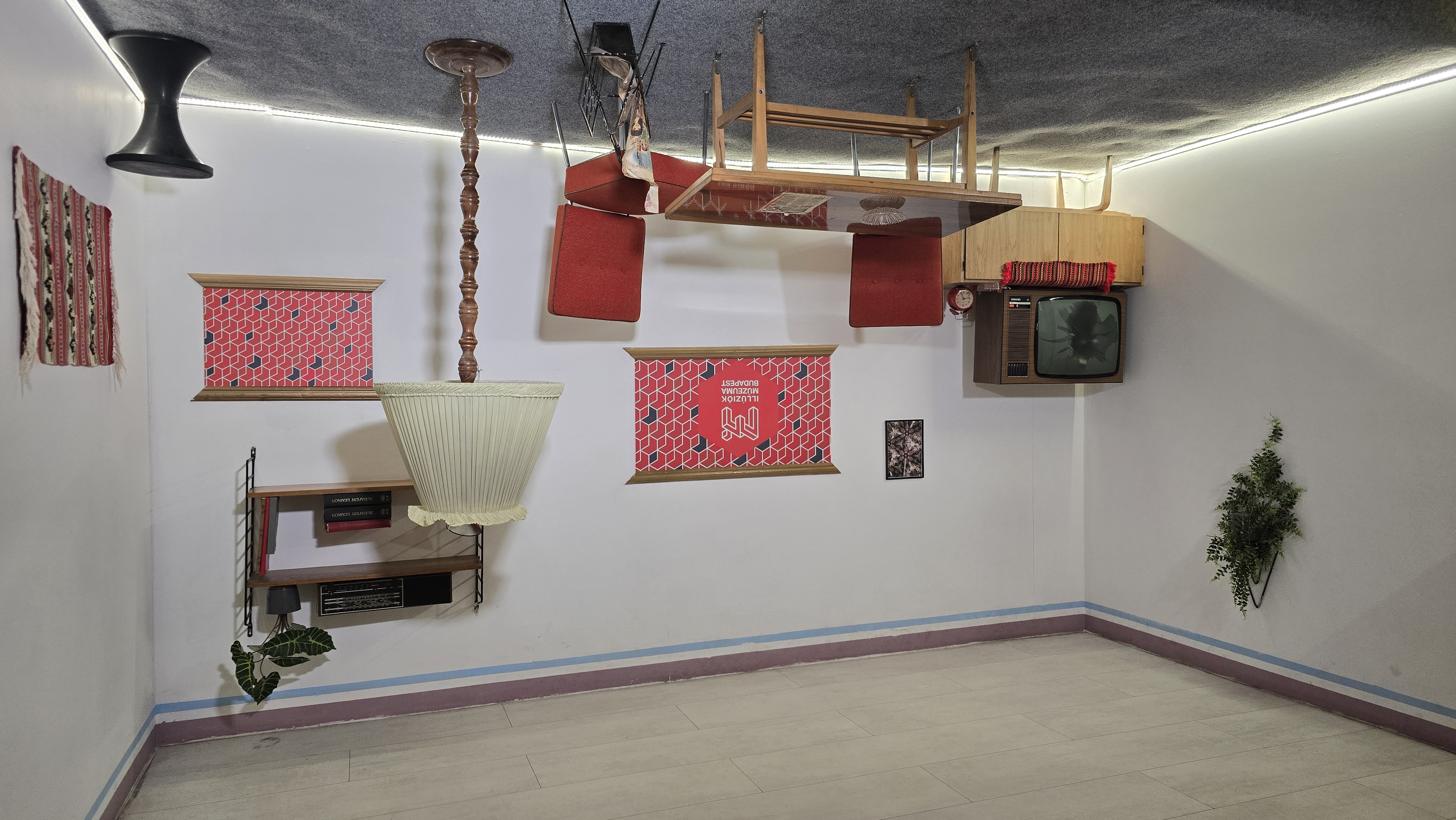
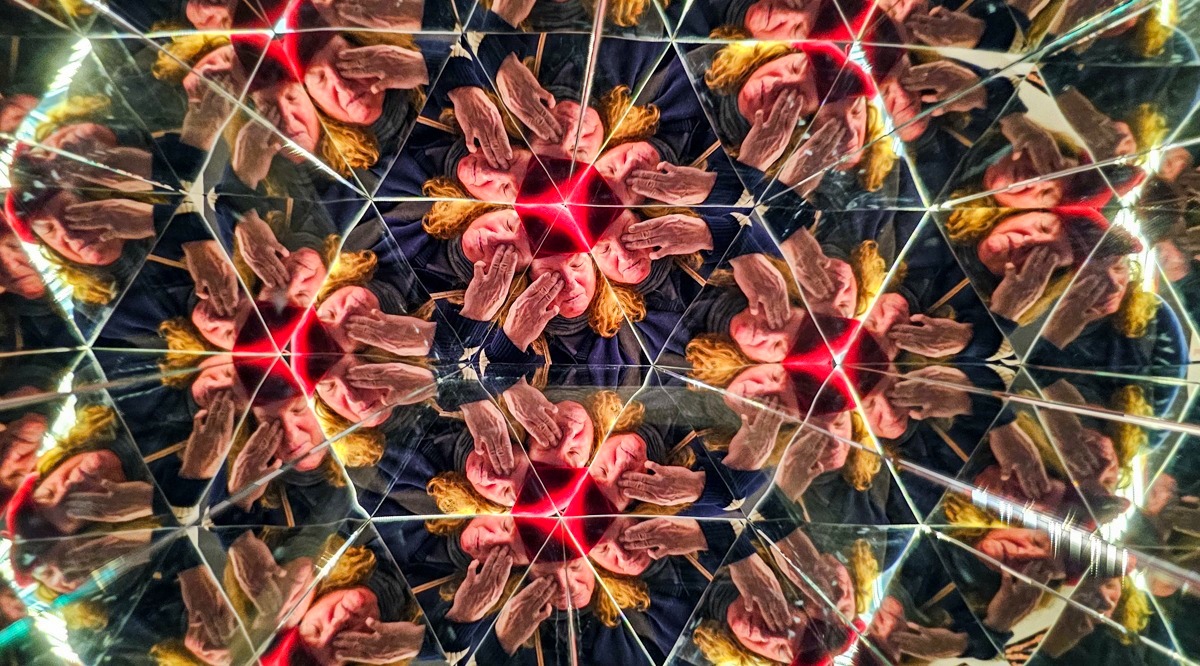
As soon as we walked in and handed our coats and tickets to the attendant, the three of us were anxious to see what lay just beyond the entrance. Set up in front of us was what they call “The upside-down room.” (pictured at top of article) I stopped a staff member walking by and asked if there was a meaning behind this illusion – I thought it was so quirky and unique. “Ahhh,” the young woman smiled at us. “As a matter of fact, we wanted to recreate a ruin bar: This room is based on the look of Púder Bárszínház.” Of course, yours truly looked at her blankly and was grateful when she told us that Púder is one of Budapest’s most exciting bohemian gastropubs. Hmmm, another place was then plugged into our radar.
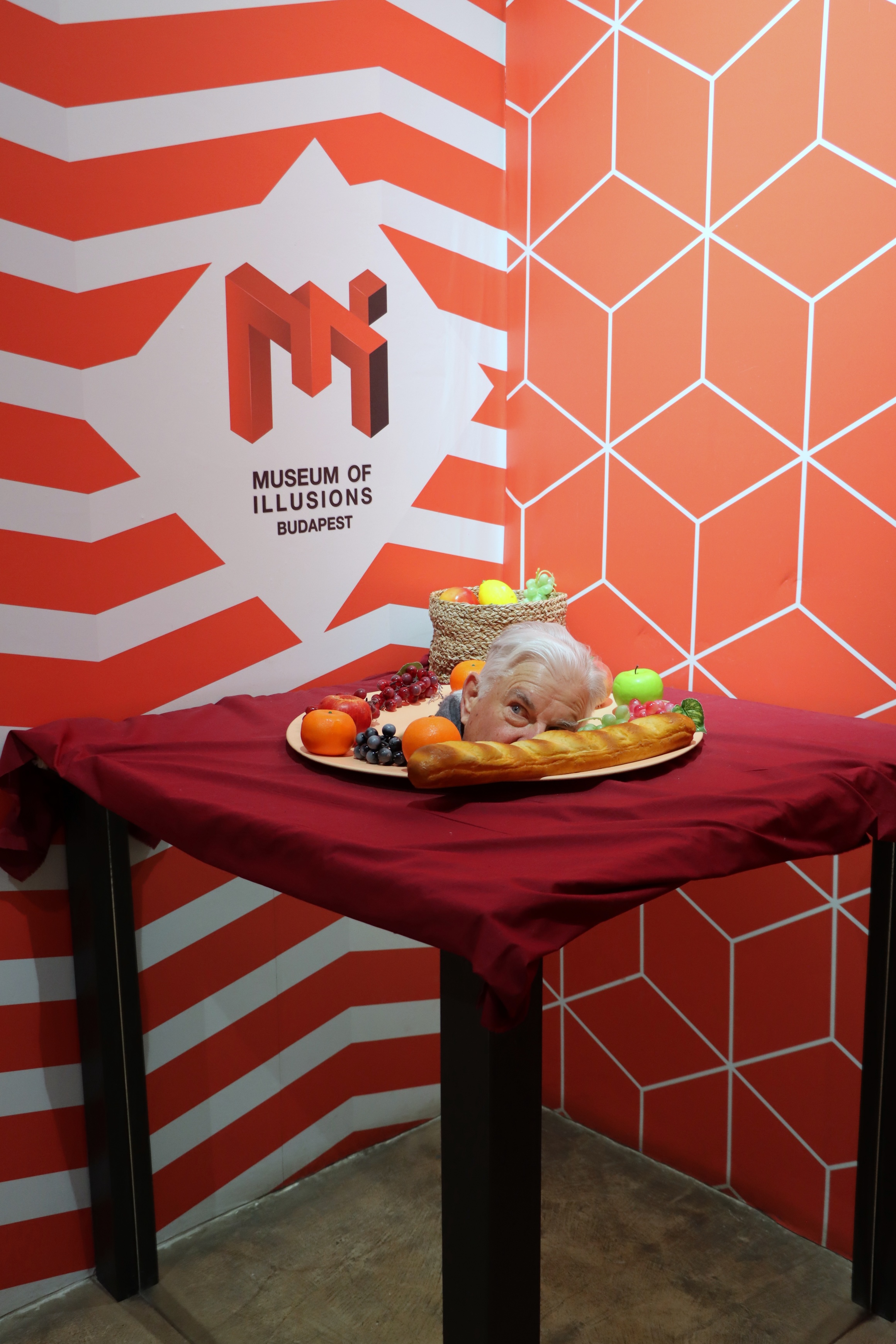
In one area of the museum, my friend Kevin crouched behind a brightly patterned curtain and popped his head out onto a platter of salads and fruit at a dining table. Seeing him like that had his wife Mary and me chuckling. Even funnier was listening to Kevin moaning and groaning as he tried to get back up on his feet again – old knees and creaking joints weren’t happy with him.
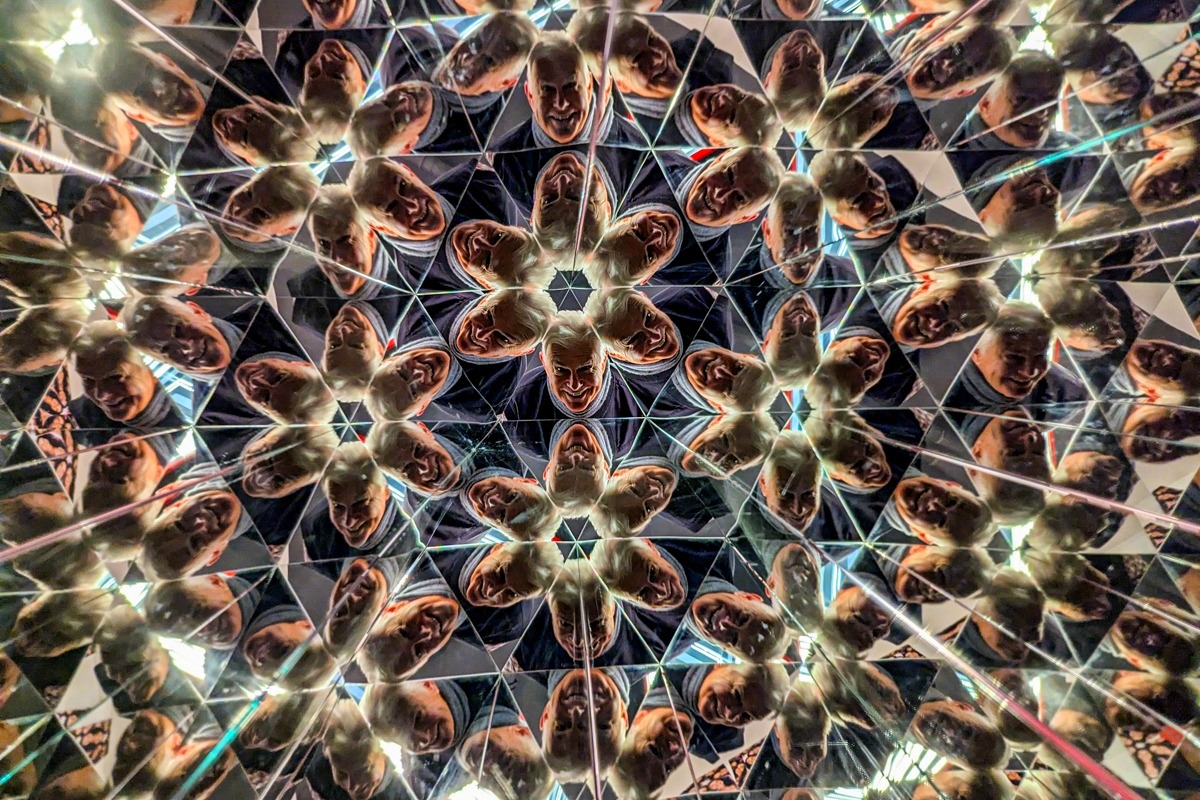
There was a room inside the museum where one person would sit at a card table, and the surrounding mirrors would make it appear as if four identical players were holding up their lucky or unlucky dealt hands. Another room made a person appear taller/shorter and farther away or closer, depending on where they stood. You could sit at the end of a kaleidoscope set up in one area, only to see a gazillion images of yourself when peering through the other end. One room made people appear to be skillfully climbing the exterior wall of a city building, as if they were superheroes or villains- take your pick.
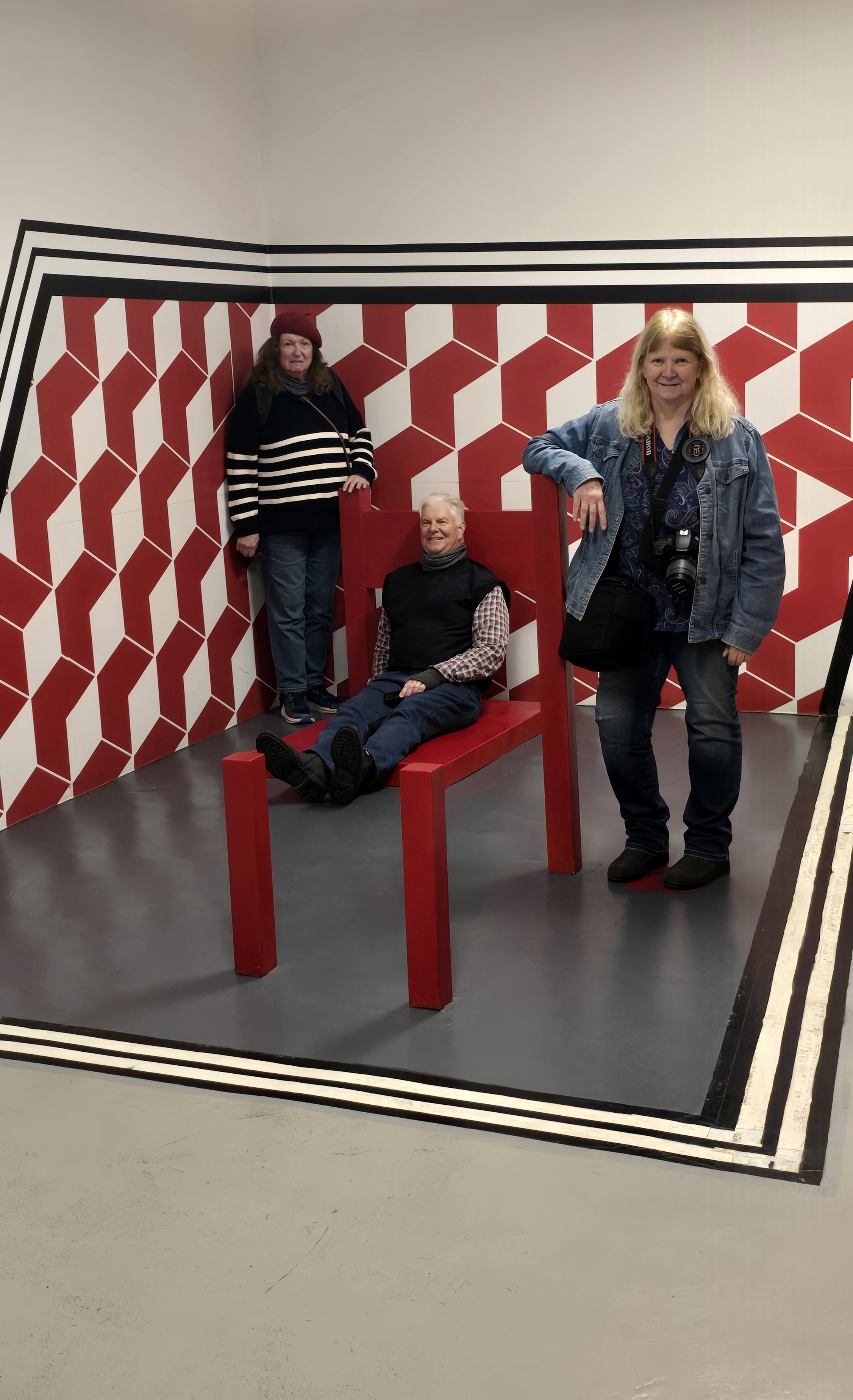
The three of us laughed when we walked into one display. We couldn’t really tell what would happen once we were posed by the person manning the area at that time. Kevin reclined on a makeshift chair; I stood nearby, and Mary stood behind him. The staff person who took our photo handed the camera back to me and waited for our reactions. Kevin looked like a teeny-tiny little person! Mary and I looked like his babysitters! It was hysterical!
In yet another room, known as ‘the intelligence playroom,’ guests were invited to play, compete, and learn with Dilemma activities, wooden puzzles, and other fun matches that explored a person’s cognitive abilities. That room was challenging, as some of the games were crafty and hard to figure out on the first few tries.
Make sure you experience the Ames room, the Reversed room, the Infinity room, the Anti-Gravity room, the Vortex Tunnel, the Beuchet Chair Illusion, and the Infinity Tunnel while inside. All of them are sure to trick you. (Well, they did me…)
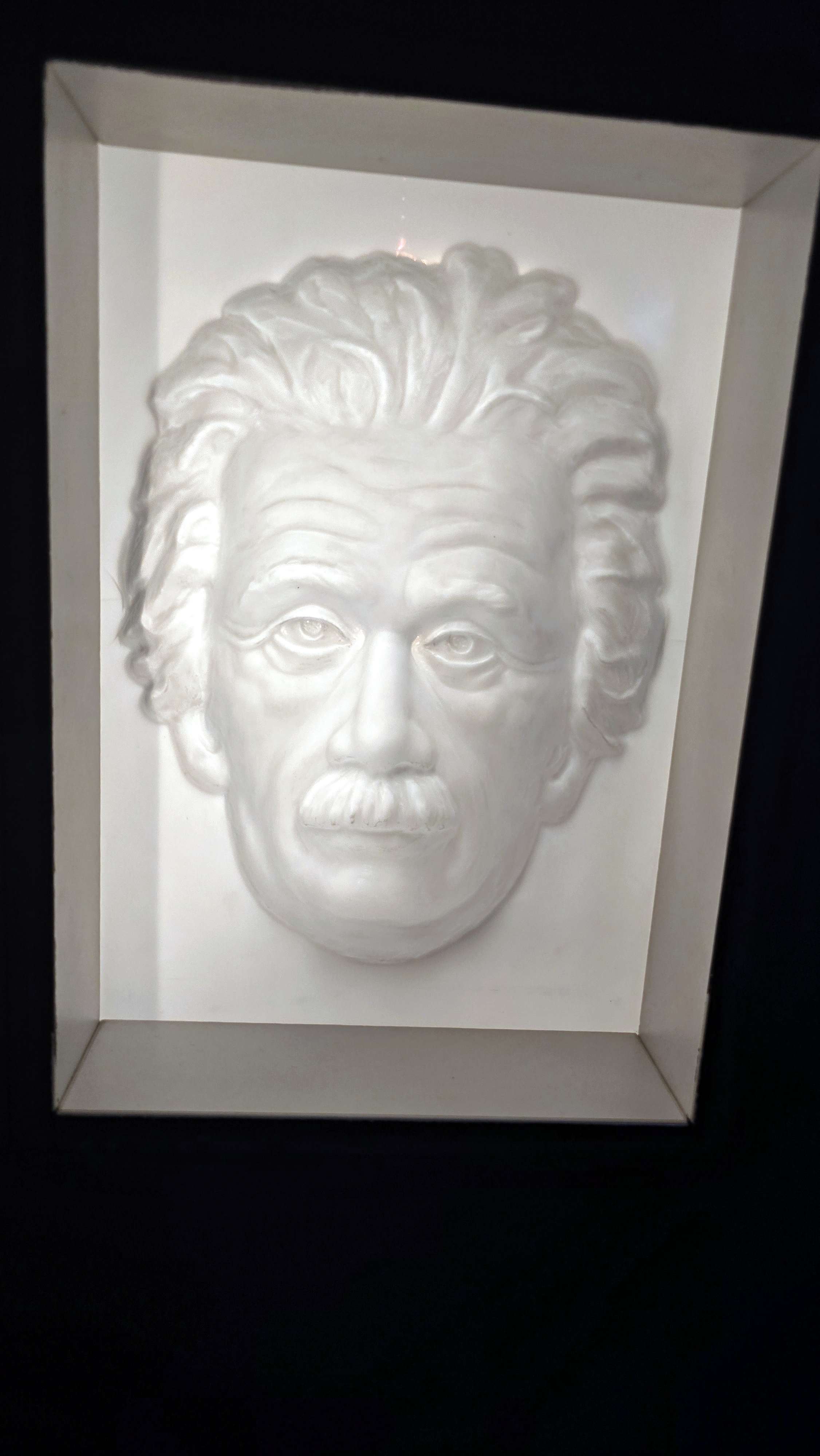
The museum boasts a hologram, a clone table, a kaleidoscope, Rubin’s vase, the hollow-face illusion, turntables, several moving-as-in-dizzying exhibits, and a tricky stick. We spent about two hours playing our way through the museum and saw others heading back in for some more fun as we were leaving to grab some lunch. It was so much fun – and seemed as if we were kids again, with all of the real-life stressors long forgotten.
It’s a wicked cool place to go if you’re on Instagram a lot. There are limitless opportunities to show your followers where you are, what you’re up to, and how much fun a museum like this one can be. We loved it!
Address: 1065 Budapest, Bajcsy-Zsilinszky ut 3
Hours: Tues-Thurs & Sun 10 am – 7 pm, Friday and Saturday 10 am – 8 pm.
I suggest taking the metro at Deák Ferenc Square, about a 5-minute walk away. Parking spots on the street there are hard to come by, and the fees are quite high.
* * *

Theresa St. John is a freelance travel writer, photographer, and videographer based in Saratoga Springs, New York. She is interested in WWII history, museums, food, slavery, the Underground Railroad, interviewing interesting people, restaurant reviews, local travel, anything ghost-related, and the Erie Canal, among other things. Theresa loves to travel and sinks her feet into the moments of places she visits. Her photography essays, along with the written word, help tell the story to readers everywhere.