.jpg)
.jpg)
Every Sunday, my wife and I settle in with a giant bowl of popcorn for an evening of PBS. This is not merely because we are middle aged—we’ve always been this way. Lately, as our favorite mysteries and historic dramas started, we noticed a new sponsor among the pre-show acknowledgements: The Yerkes Observatory. This functioning, historic observatory in the unlikely location of Lake Geneva, WI was now open to visitors. We were understandably intrigued—our nerdiness knows no bounds.
In late June, we kicked off a weekend road trip with a surprise (to me) tour of the Yerkes. The observatory is actually located just outside the small town of Lake Geneva, WI in the even smaller town of Williams Bay, WI. The drive in was a relaxing journey through quaint, upper-midwestern Americana.
We arrived early and strolled around the grounds. The observatory sits on fifty curated acres. We later learned that the beautiful landscape was originally designed by Frederick Law Olmsted, who designed New York’s Central Park, and my beloved Lake Park in Milwaukee. The restoration of the grounds now includes a five hive apiary and a pollinator prairie among other emerging features.
About a dozen of us gathered at the doors and were shown into the observatory’s lobby where we were treated to a display of indigenous artwork and innovation, including photos and brief stories of constellations in Ojibwe culture.
We were on the once-a-week Hidden Spaces Tour, led by Executive Director Dennis Kois. He began by answering our most immediate question: Why an observatory in Lake Geneva, of all places??? Without spoiling the story, it’s based on the fact that the observatory was a project of the University of Chicago, filled with turn-of-the-twentieth-century Chicago politics and personalities.
The gorgeous architecture is filled with astronomical references and more than a few irreverent jokes.
The observatory still houses the world’s largest refracting lenses (40inches!) in their original, 64 foot long telescope. It was used to create glass-plate photos of celestial bodies, a collection that is now in heavy demand for scientific comparison to current observations. The inside tour began with the photo facilities and then moved upstairs.
Above the glass plate archives was a long hallway that doubled as a pinhole camera. At one end, up a short climb along narrow, spiral stairs, was a large mirror telescope that still collects data for astronomers today. At the other end was the entry to the old University of Chicago dormitory rooms. This hot and stuffy corridor was where Edwin Hubble and Carl Sagan lived during their graduate studies. My wife and I quietly mused about whether Sagan used the pool table that still dominated one of the rooms.
.jpg)
We continued through the upper floor, past a collection of artifacts to the larger telescope. The enormity of it is jaw-dropping. The telescope is so large, in fact, that in order to use it, the observatory moves the floor around it up and down, rather than raise and lower the telescope itself.
Throughout the tour, Mr. Kois took every opportunity to credit the unnamed women who worked at the observatory, performing the rigorous, sometimes dangerous tasks before the lead scientists would apply the final maths and slap their names on the discoveries.
The tour concluded at the opposite end of the lobby where we began, a hallway filled with surprising treats for the scientifically and historically minded, including a beautiful display of some of the work that Gerard Kuiper did during his time there.
.jpg)
Whether you enjoy history, architecture, astronomy, or any combination, The Yerkes Observatory is a must-see. There are a variety of tours available, including kid-friendly options and nighttime telescope observations. Reservations are needed, and prices range from $20 (Kids Need Space tour) to $140 (NIght Sky Observation).
* * *
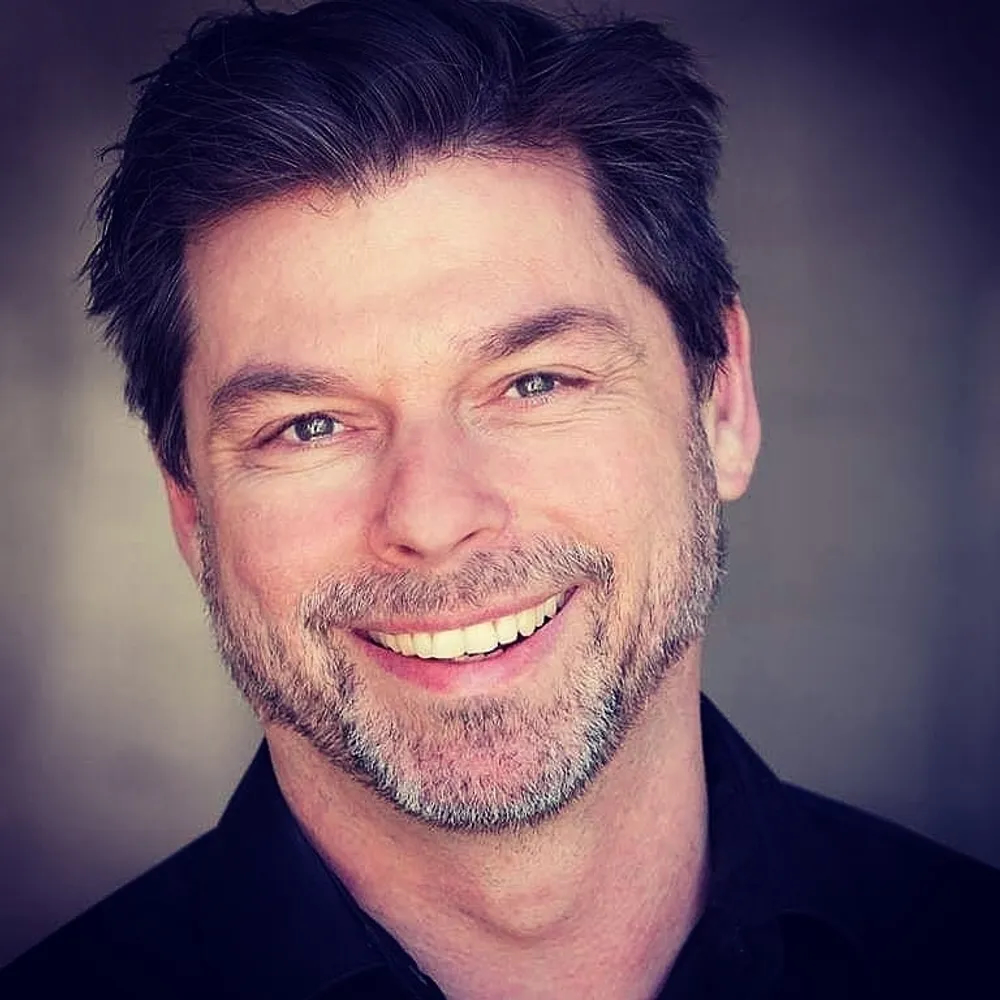
Joshua Parkes is a former actor from Milwaukee, WI. Years ago, he taught science to kids through theatrical performances at Discovery World Museum. He is the author of the REPROBATE series, available on Amazon. His short works have been featured in Punk Noir Magazine and Pegasus Literary. Joshua is the author of a dozen Purim Spiels that have been produced all over the United States. His novel, THE DUST BEHIND THE DOOR will be available spring of 2027 from Koehler Books.