From the outside, Strangers’ Hall looked like any other old house tucked into the streets of Norwich, in the east of England, and I felt a flicker of disappointment as I stood before it. It was not to last.
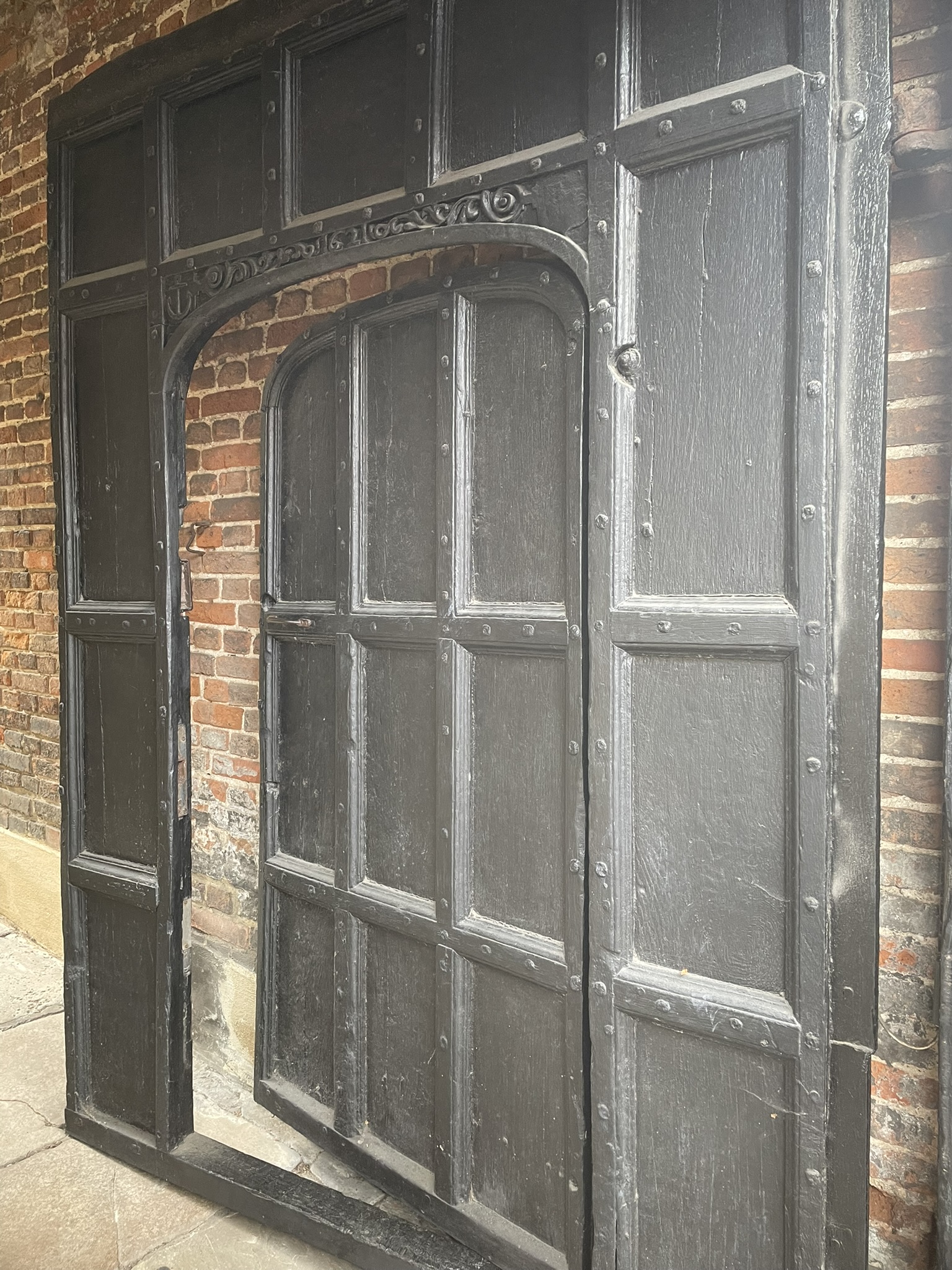
The first thing that caught my eye was the large, slightly decorative wicket door standing open as we stepped inside. My excitement rose at once. Wicket doors date back to the medieval period, allowing people to pass through without opening the heavy main gate, and this one felt like a promise of what was to come.
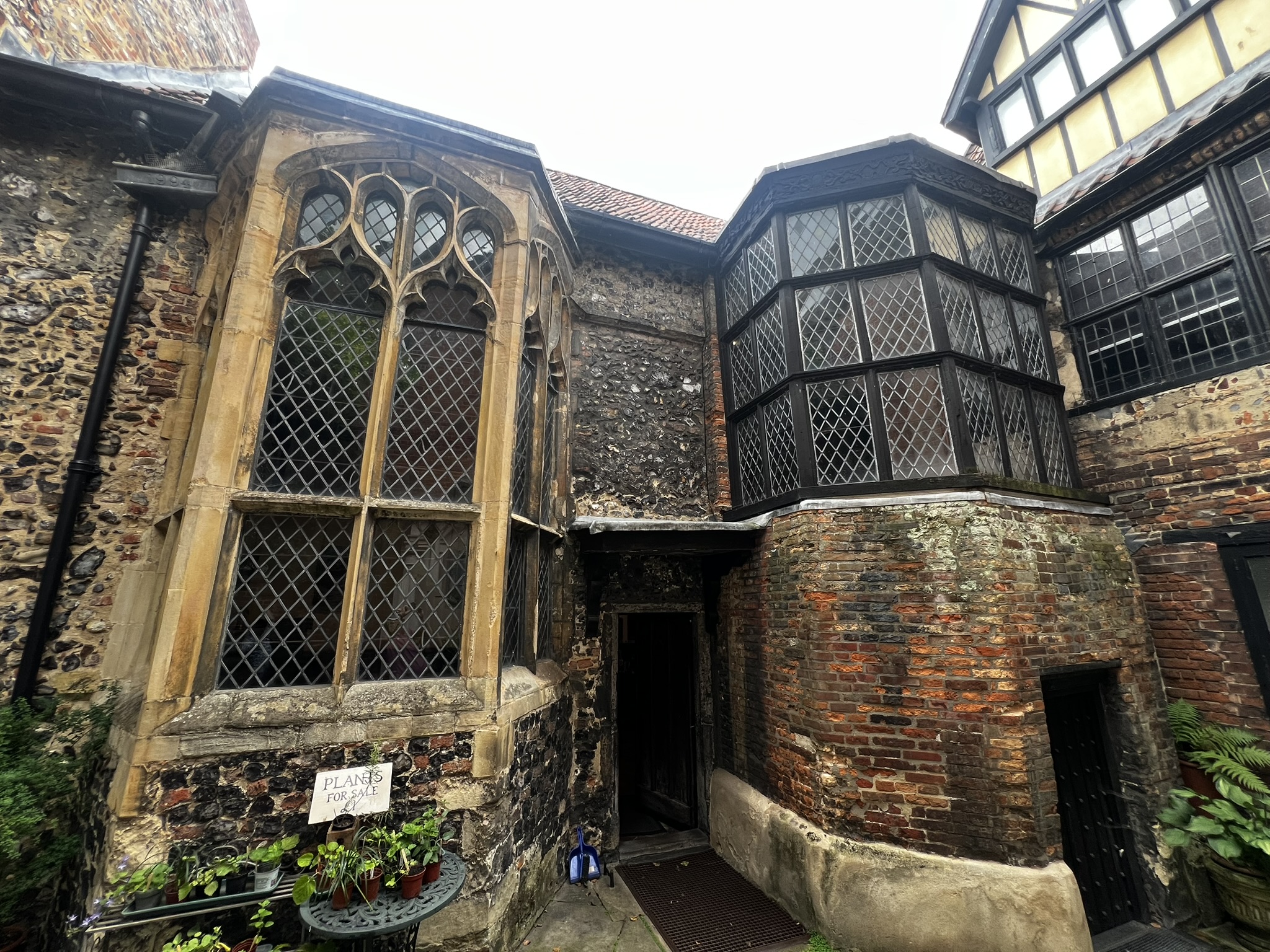
We stepped into the courtyard and were met by a Tudor façade. The shift from the street to this enclosed space felt like stepping backwards in time.
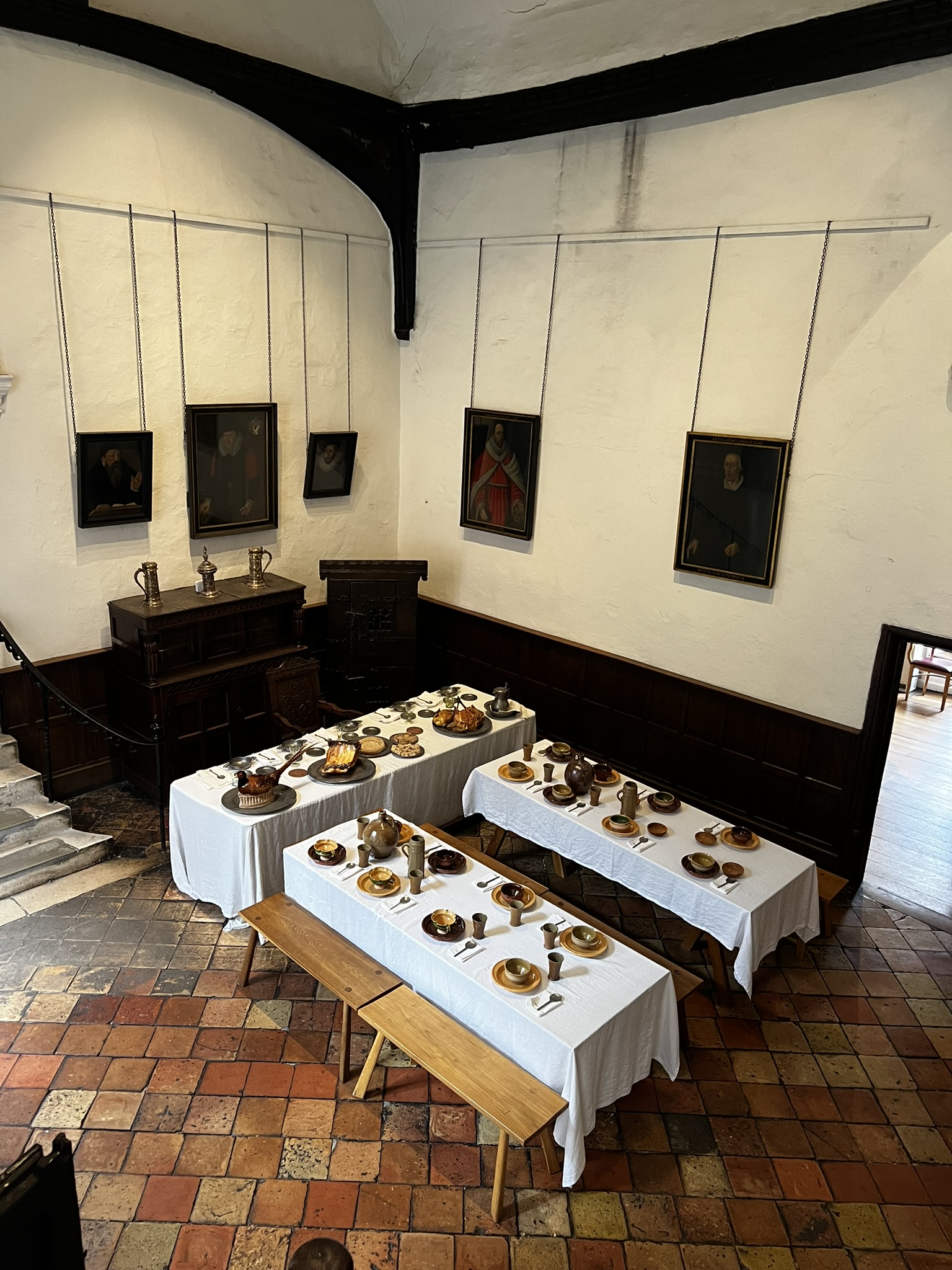
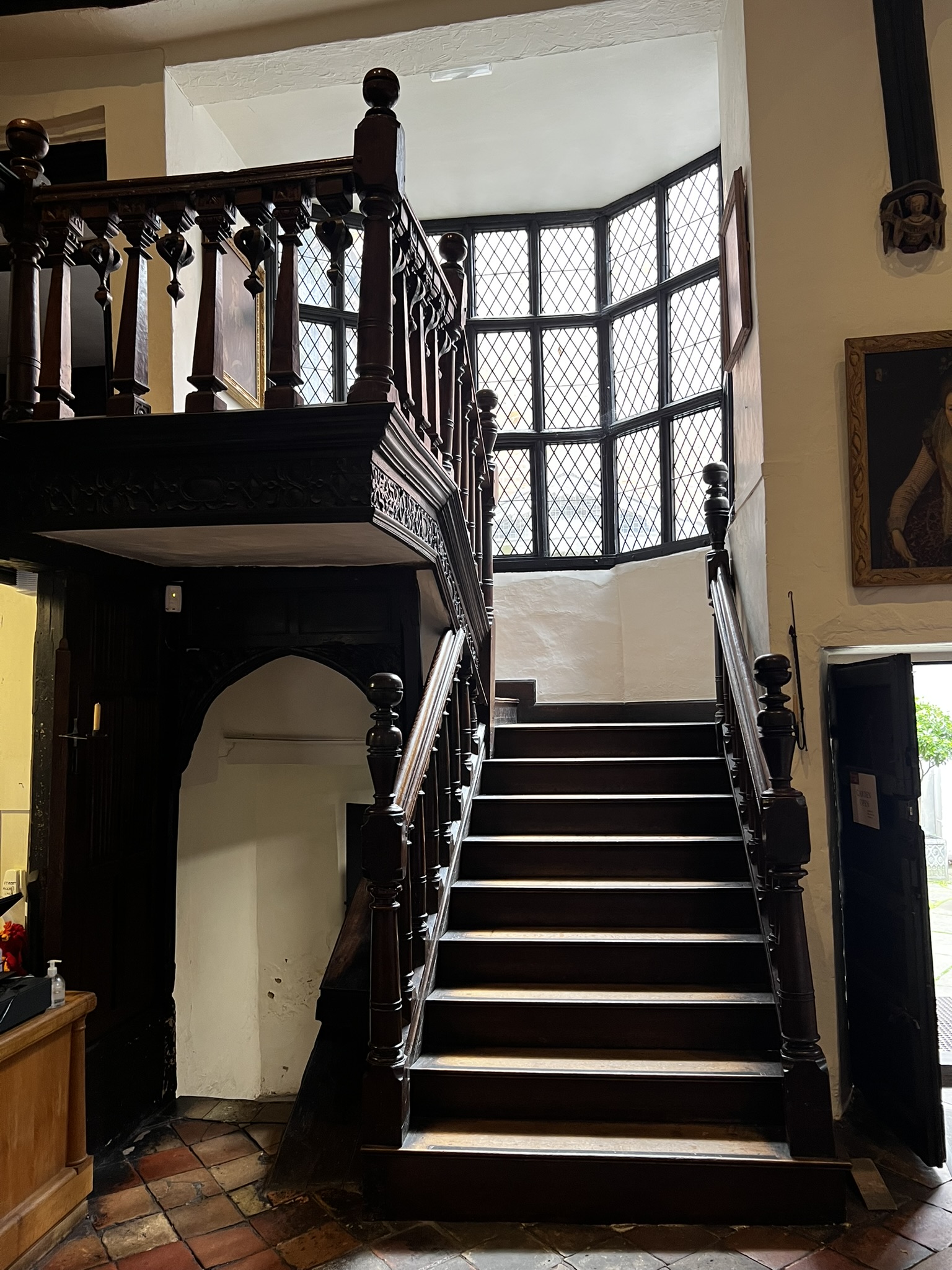
Once inside the museum, I did not know where to look first. We were standing in the Great Hall and there was a sixteenth century feast laid out on trestle tables, complete with food and napery, as if it were just waiting for the Tudor era guests to arrive. There was a magnificent staircase and a fine oriel window. I looked up to see original candle holders just below the bannisters and on the wall. Tudor and Elizabethan portraits hung around us. The atmosphere was that of a house stitched together over the centuries, with a real sense of intimacy.
I turned to the woman who was selling our tickets and asked why it is called Strangers’ Hall. She explained that there has been a building on this plot since the thirteenth century and possibly earlier. It is thought that the Great Hall was built in the fifteenth century when William Barley, a mercer and cloth merchant, lived here.
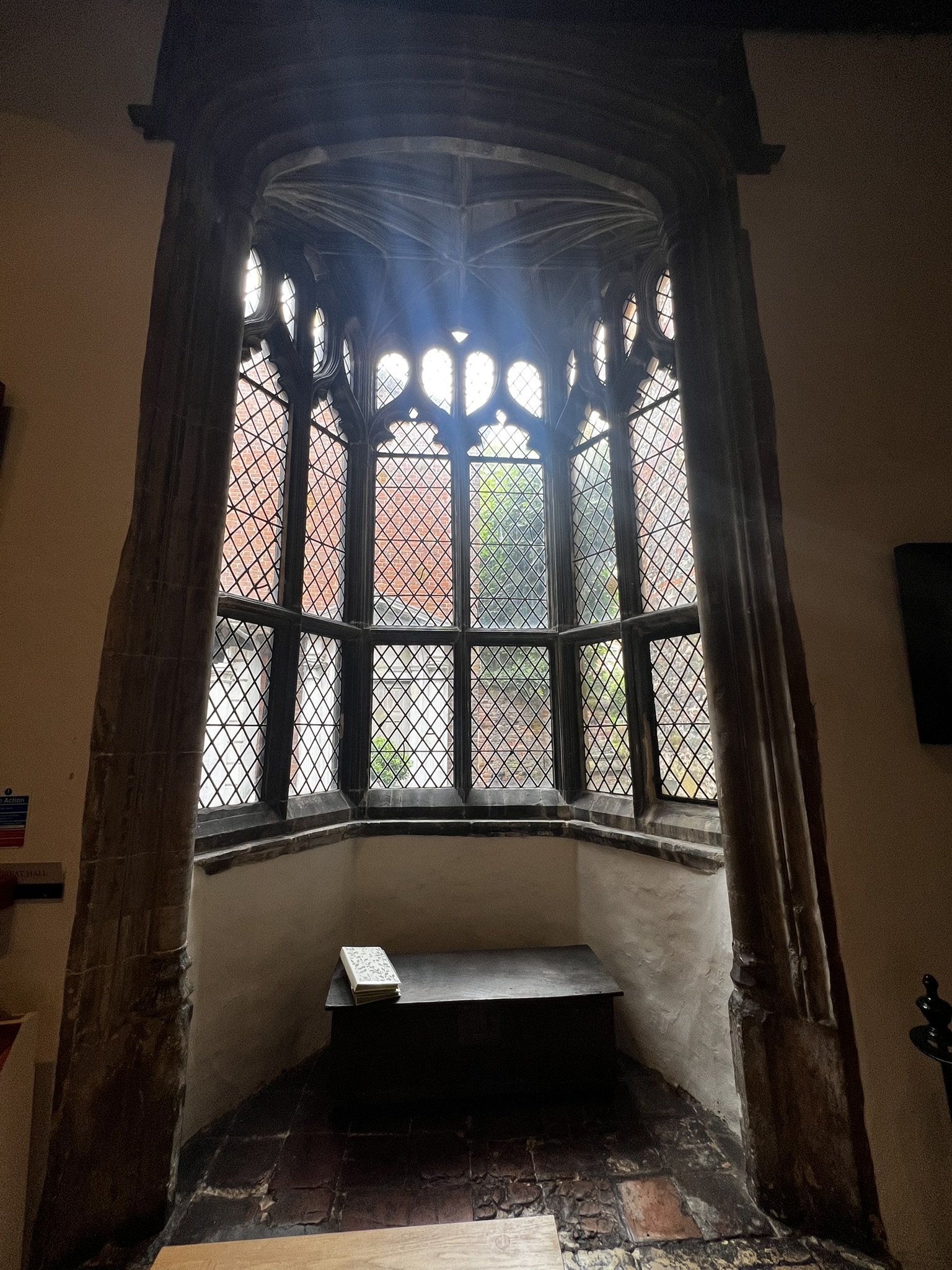
The house was later improved by the Sotherton family, who added features such as the vaulted porch. William Sotherton was a grocer and the mayor of Norwich. The first Strangers were Dutch, Walloon and Flemish refugees who were skilled weavers. They were invited by the city to help revive the ailing textiles industry, and some of these people were invited to live at Strangers’ Hall.
I had expected a tiny museum, but the house was much larger on the inside, and as we walked from room to room, it felt as though we were travelling through the centuries. In each space, there was a clear guide explaining what was on display and who had lived there.
There was a Victorian dining room, nursery and parlour, a Regency music room where I imagined Jane Austen would have been most comfortable, a seventeenth century walnut room and seventeenth century bedrooms with rope beds that were tightened each night so that you slept tight.
The highlight for me was the toy room. Much of it was behind glass, so it was difficult to photograph. There was a Noah’s Ark with its two hundred wooden animals, and it was the only toy Victorian children were allowed to play with on a Sunday.
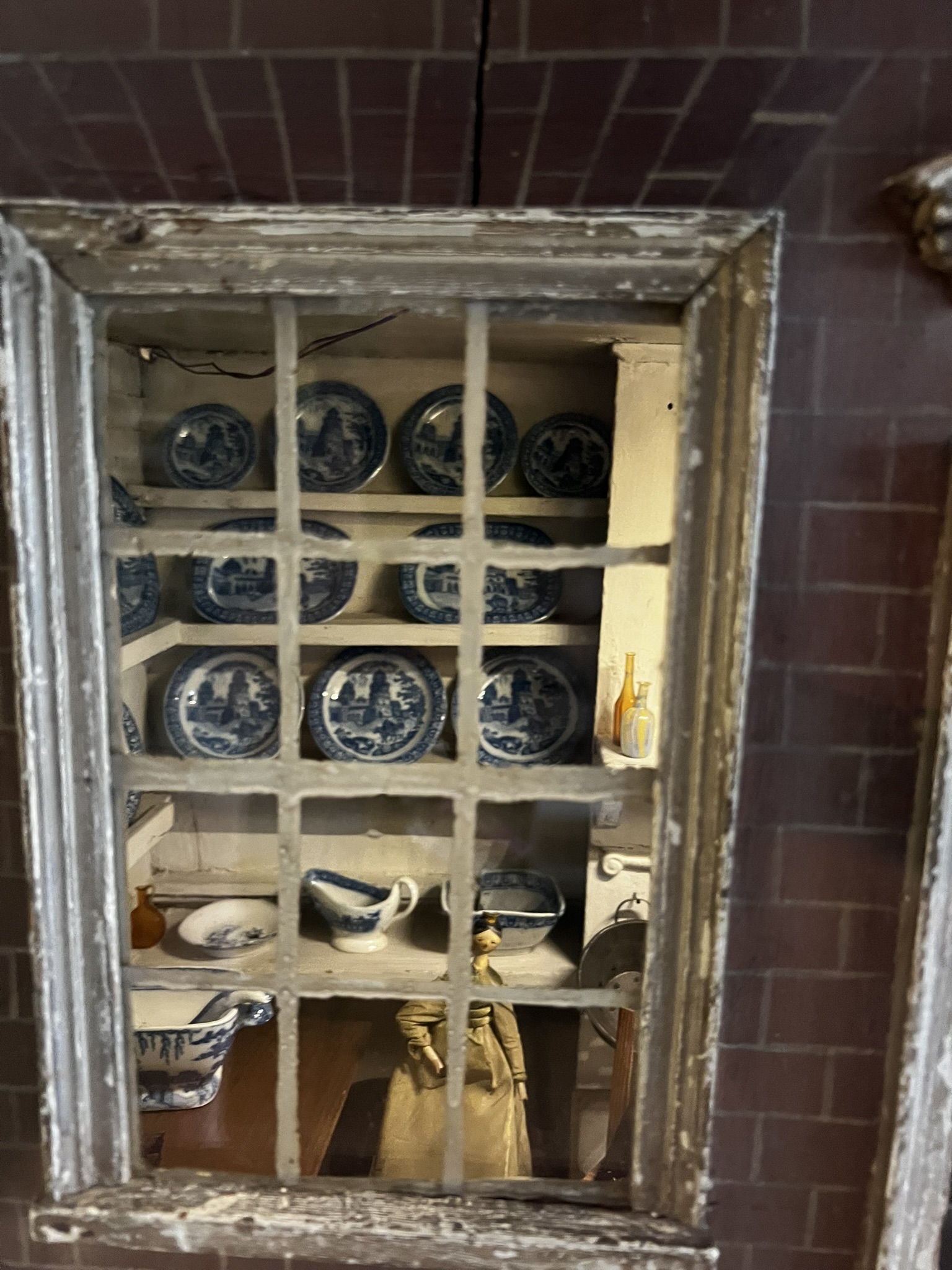
An exquisite Victorian dollhouse stole my heart. It was called a baby house and it was used to teach little girls about household management. There was everything you could have in a Victorian home in miniature. There were buttons to press to light up each room, and the interiors were beautiful. Real china plates, wonderful fireplaces with tiny coal scuttles, and little cleaning brushes, all tended by tiny wooden dolls.
For a house I almost overlooked from the street, Strangers’ Hall turned out to be one of the most atmospheric museums I have visited, from its fourteenth century undercroft to its lush gardens.
Address;
Strangers’ Hall, 4 Charing Cross, Norwich, NR2 4AL
Approximately 10 minutes from Norwich railway station and 5 minutes from Castle Meadow bus hub.
Opening Times
Wednesdays and Saturdays, 10 am to 4 pm.
Tickets
Adults: £7.50
Children: £6.50
Twilight ticket (last hour): £2
Garden access only: free
Norfolk Museums Pass holders: free
People receiving means-tested benefits and all children in their household: free
Looked-after children: free
Local university and college students: free
Disabled visitors may bring a companion free of charge.
Accessibility
The steps up to the museum are steep and not suitable for all visitors. A film of the museum is available on request during opening hours. There is a button to request this access to the left of the medieval gate. The staff were extremely helpful during my visit.
Strangers’ Hall is part of Norfolk Museums Service and is supported by Arts Council England, the National Lottery Heritage Fund and local partner organisations.
Nicola Harris is an English historical fiction writer with a passion for Tudor women. She has published three novels about the wives of Henry VIII and is now writing her fourth. She loves visiting museums and historic houses for inspiration.
* * *

Nicola Harris is an English historical fiction writer with a passion for Tudor women. She has published three novels about the wives of Henry VIII and is now writing her fourth. She loves visiting museums and historic houses for inspiration.