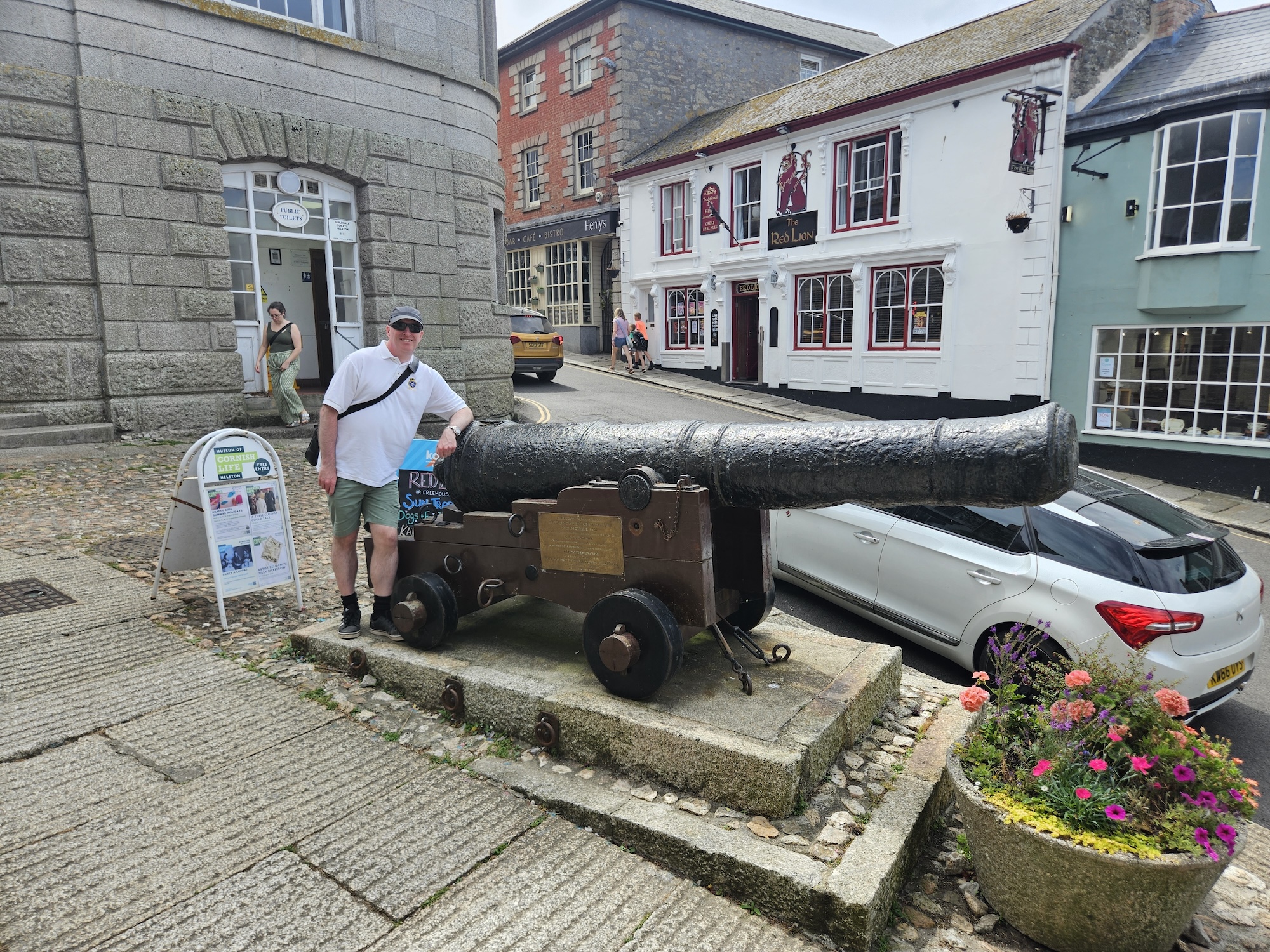
The first impression you get when you come to the town of Helston is that it is very hilly, but don’t let that put you off as the Museum of Cornish Life is just the ticket to rest on level ground as this long historic building is packed with fascinating items that show the visitor just what Cornwall has had to offer over the last few hundred years.
Walking past the cannon from the wreck of HMS Anson outside, you enter the main door and are greeted by a well-stocked gift shop and some very helpful and friendly staff. The museum is free but there is the opportunity to donate which is always worthwhile for a place like this as they are clearly doing so much for the preservation of history here.
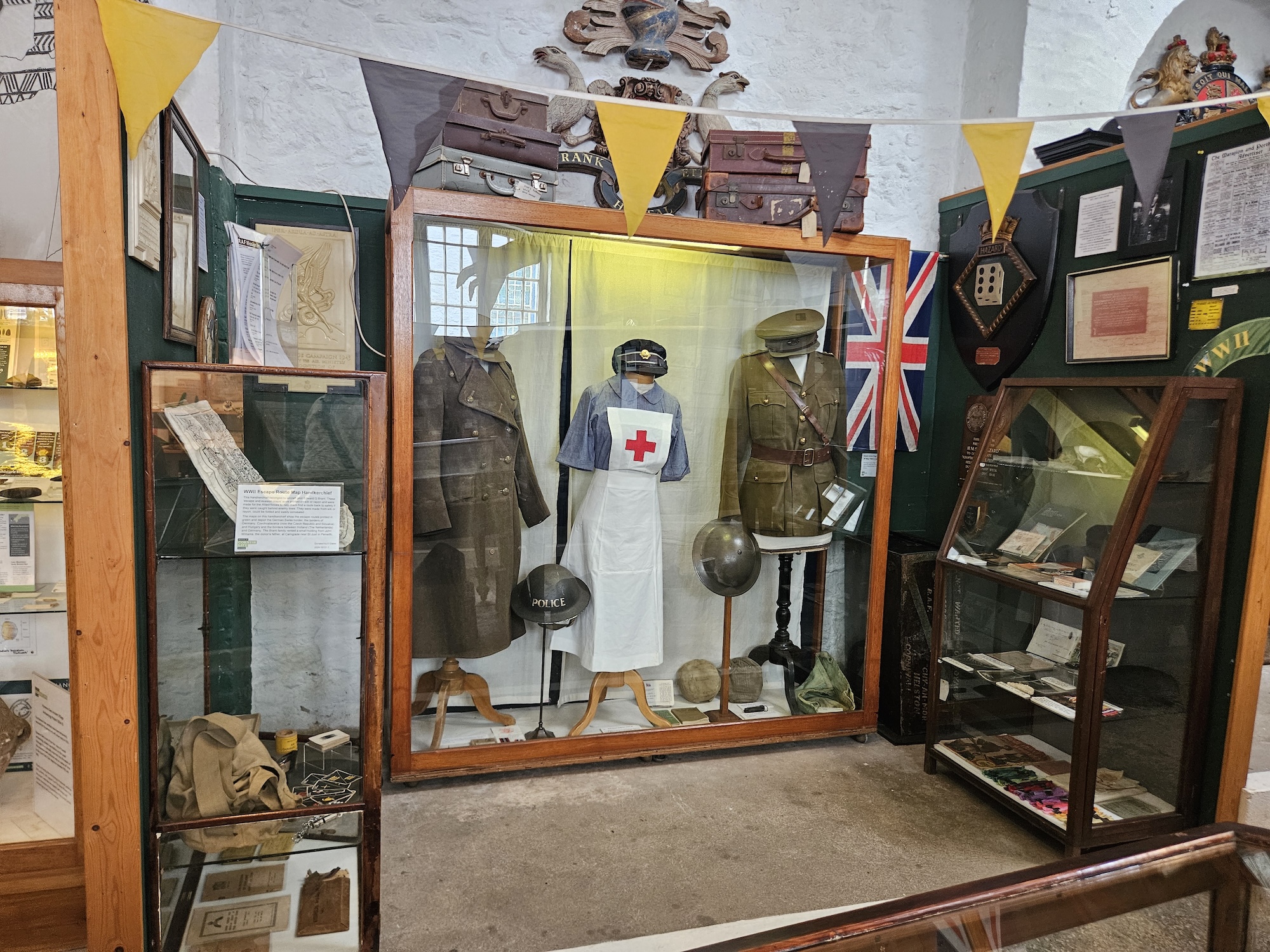
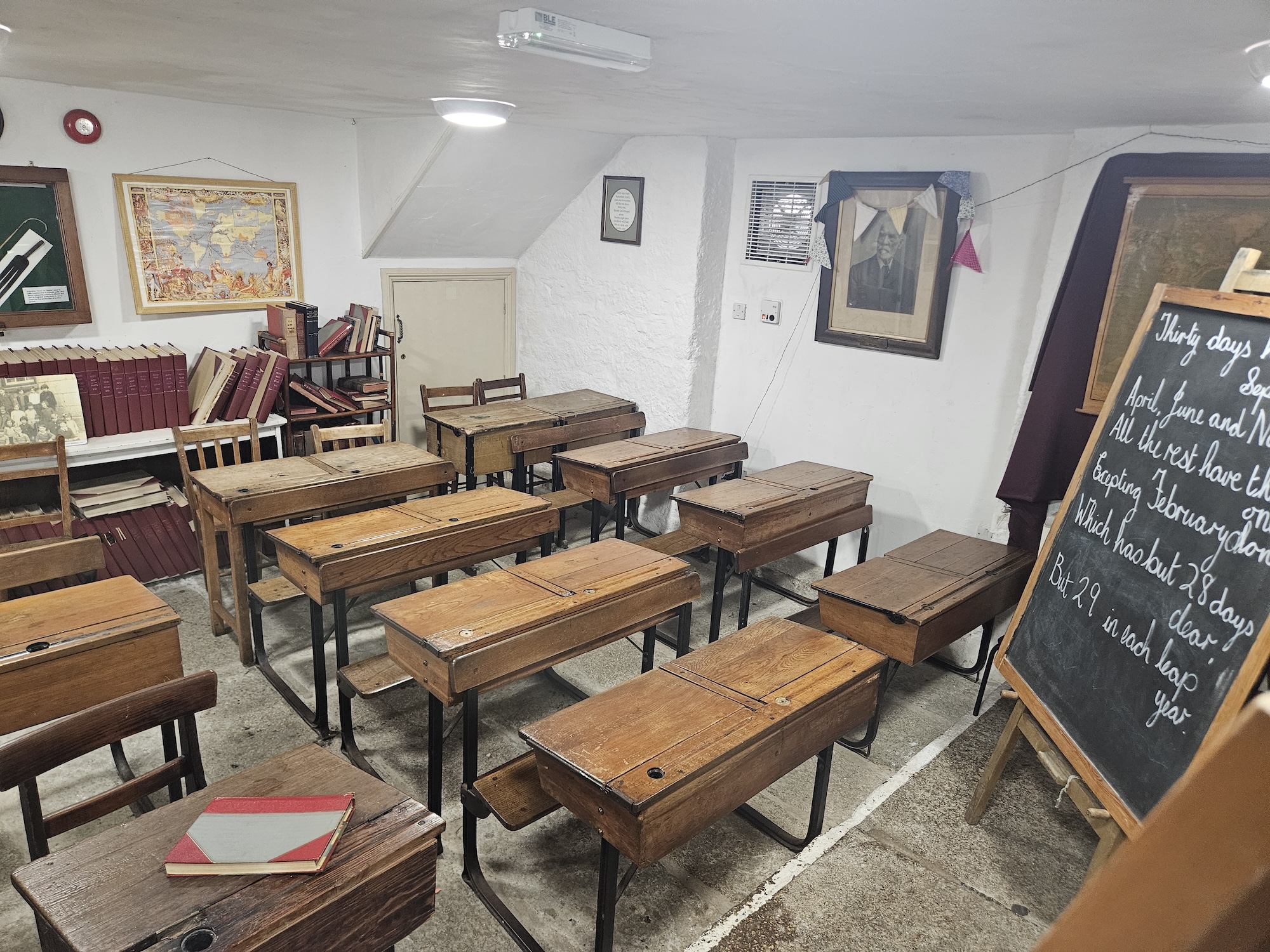
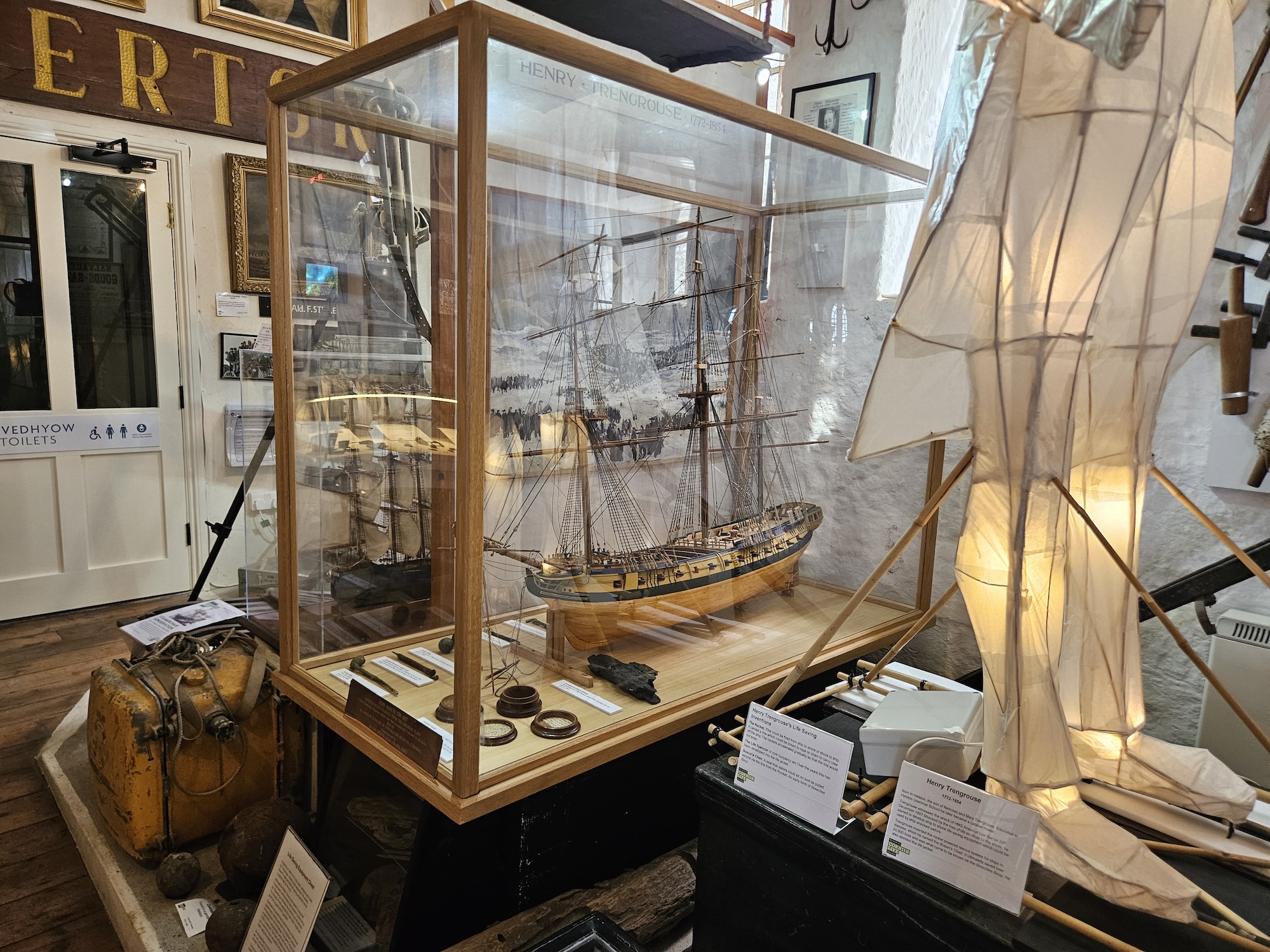
Heading to the back of the building, you head through several sections that show the things relating to the major historical events such as the two World Wars, the emergency services, the mines and right at the back is a mock-up school classroom from the Victorian era. What is great to see here is a variety of interesting artefacts from the wrecks of the hundreds of ships that have come to grief on this coast, the names famous in this area – the liner Mohegan, warship HMS Anson (remember the cannon at the front door!), the sailing ship Bay of Panama and the development of the rocket apparatus that helped save so many lives by local inventor Henry Trengrouse.
While we were here there was a display on upstairs of 300 years of clothing, titled If These Clothes Could Talk, going back to the days of “celebration, duty, love and identity” where accessories were very different to what we see today.
Some of the more famous ships are mentioned here in the form of items from Cecil Richards, a survivor of the Cunard liner Lusitania, and his cap, sail repair kit and of course the infamous commemorative medal, with a memorial window to the Titanic on the opposite side to William Gilbert who sadly died in the 1912 sinking.
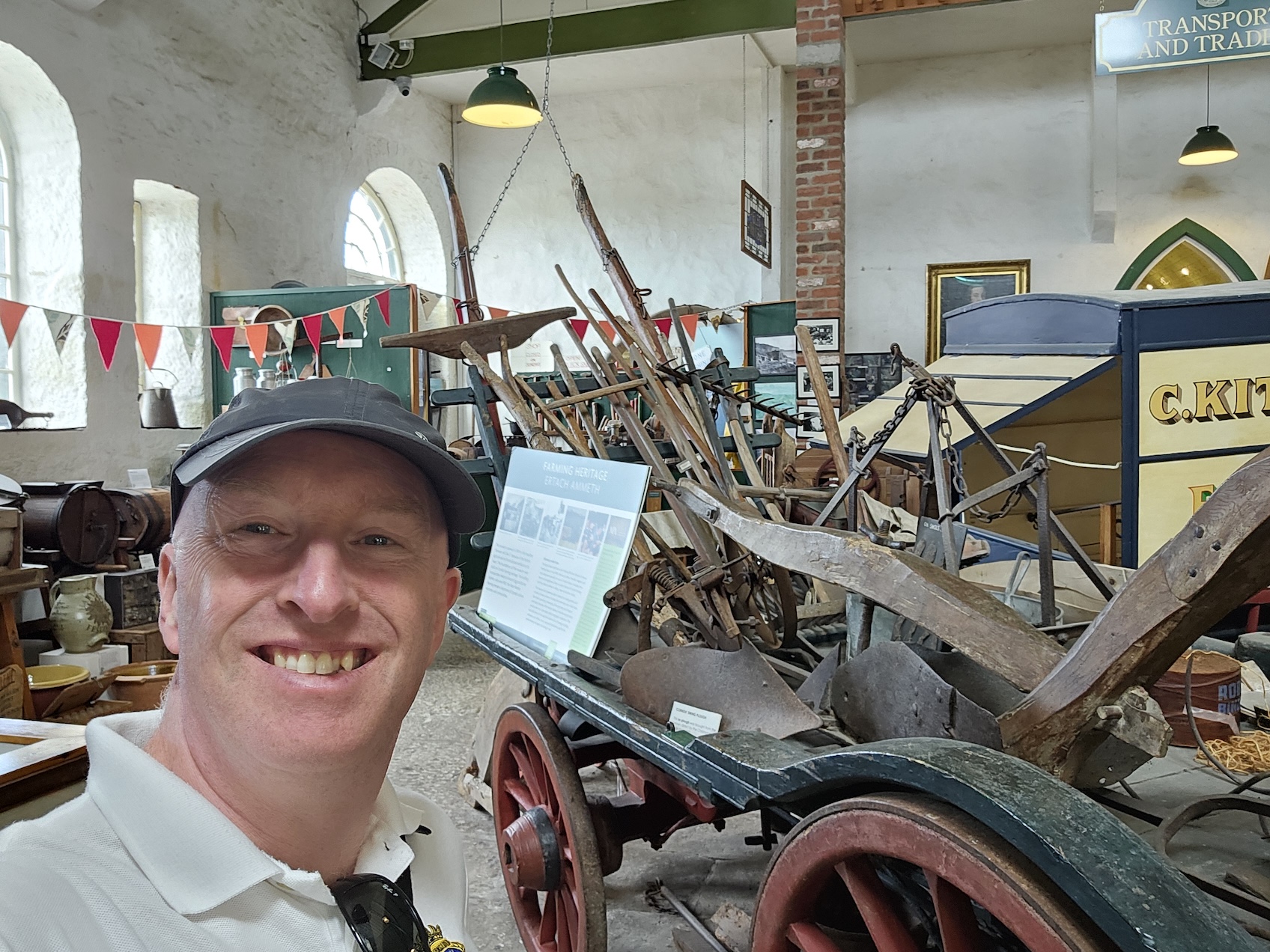
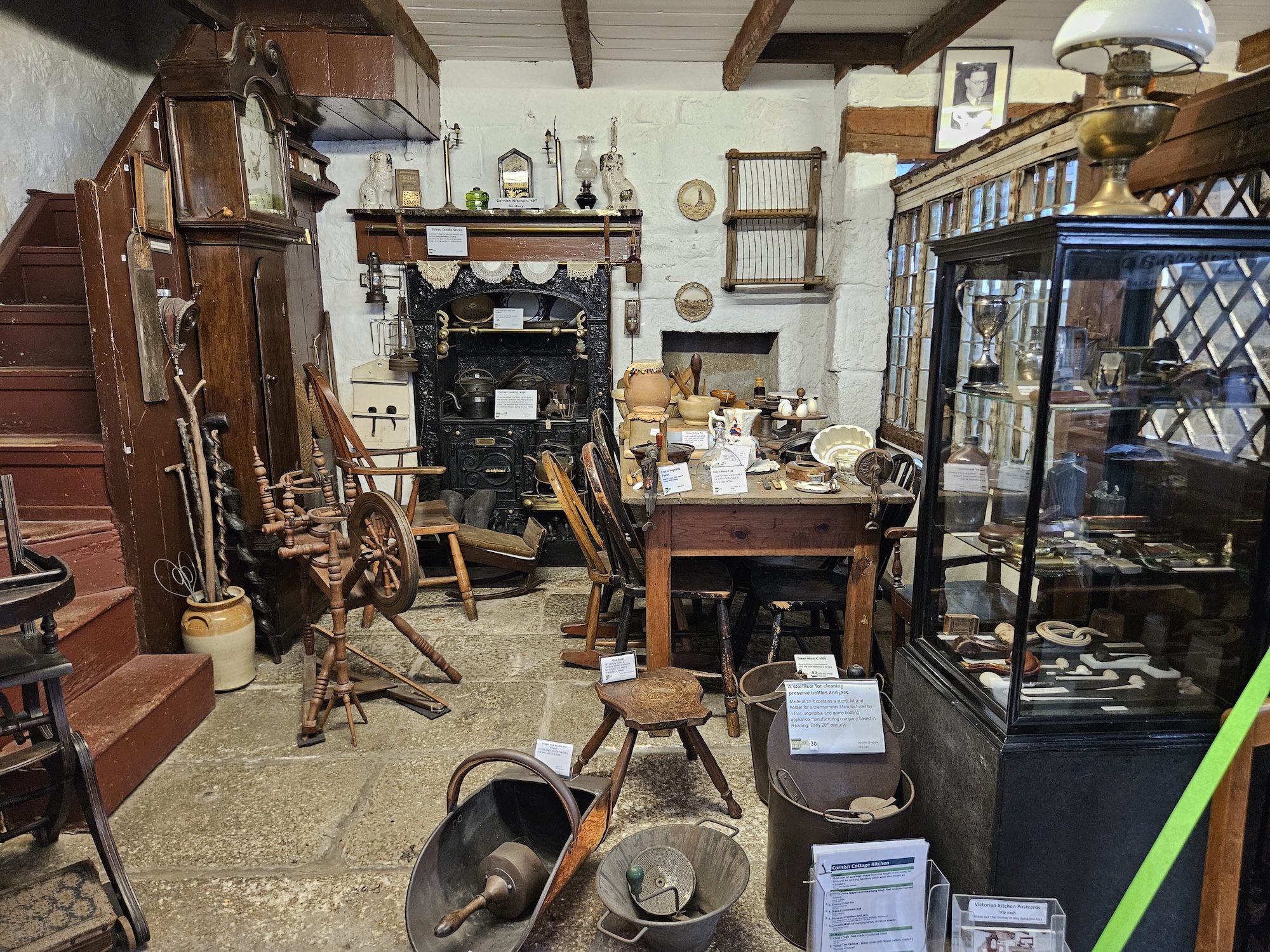
One thing that is interesting about this museum is that it delves into the everyday life of a Cornish family, displays of tools for working in the various jobs (such as the famous tin mines), promotions of boxing matches from the 1800s, musical instruments, a transport section showing an arrangement of bicycles including that of the famous Penny Farthing, and even signs that should be obeyed that normally are long thrown in the scrap pile when they’re out of use. With workman’s tools, railway history and the ability to learn the story of everything from farming to funerals, the Museum of Cornish Life is a must for anybody studying history and the welcoming atmosphere and great staff make this free museum a brilliant place to go.
The museum has disabled access, a serve-yourself café with suggested donations and somewhere to sit when you want to drink coffee and look around at the history for five minutes or so. The museum website https://museumofcornishlife.co.uk/ has a 3D tour of the building that you can explore before making the trip so that you can see which parts you want to aim for. It is open every day except Sunday. For parking, it is recommended to use the car park just a short distance from the entrance and up the hill.
* * *

Richard M. Jones is an author and historian specialising in disasters and shipwrecks along with two World Wars. Spending his time between Hampshire and Yorkshire, he has put up 18 memorials to victims of forgotten tragedies and published 23 books along the way.