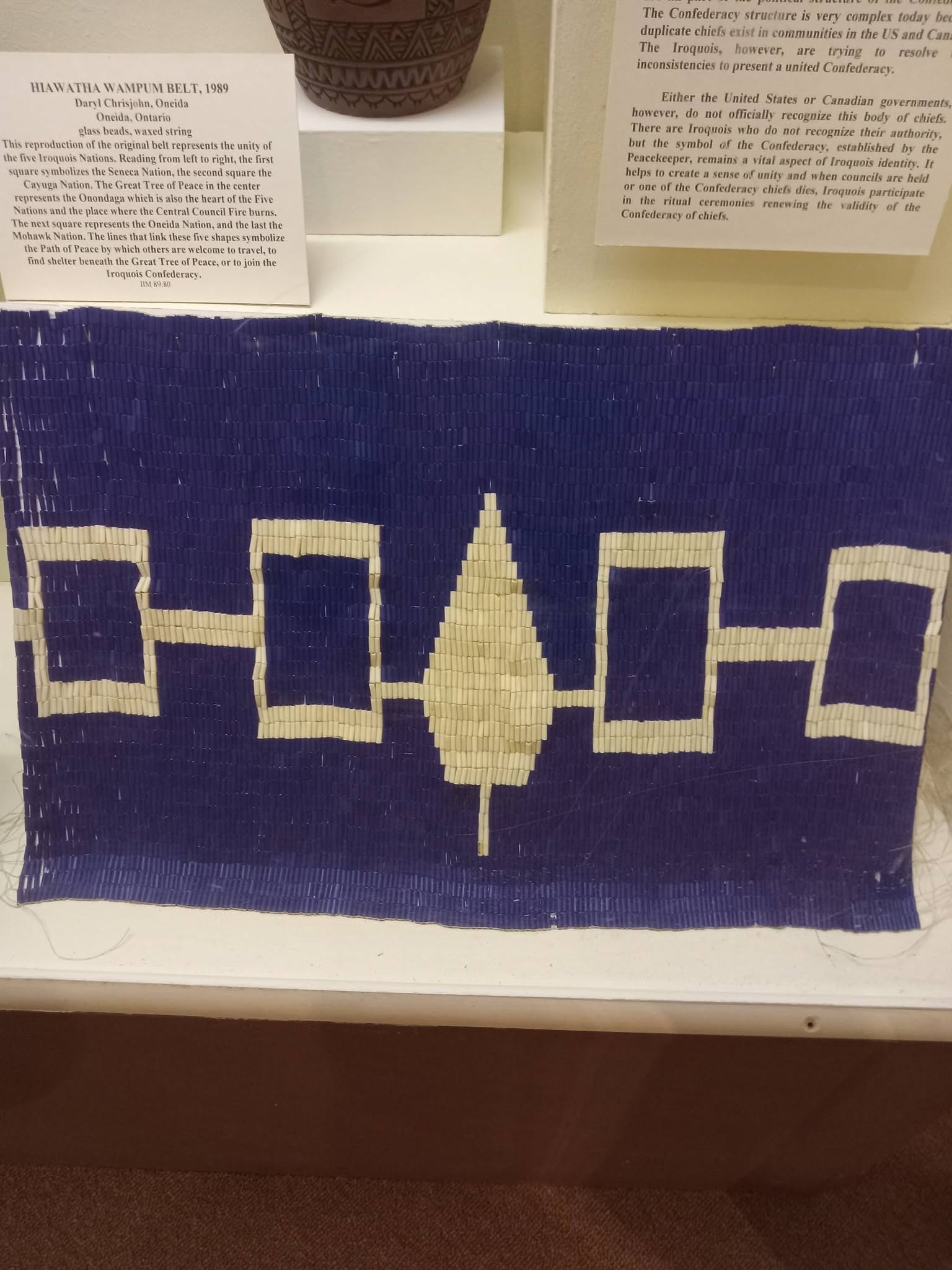
Deep in northern Schoharie County of Upstate New York, the Iroquois Museum is nestled in the panoramic Mohawk Valley, about a 45 minute drive from Albany; a little more than three hours from New York City, and a bit more than four hours from Ottawa and Montreal. The visitor wends their way by car from I-88 to NY-7 to Caverns Road, which snakes through the village of Bramanville. As we emerge from the wooded hamlet and round the bend, suddenly the Great Longhouse structure of the museum stands before us. You can find the museum at 324 Caverns Road, Howes Cave, New York. It is quite a sight to see! The surrounding countryside is beautiful in spring, summer, and autumn, but note that the museum is closed from December through March. Hours are Thurs-Sat. 10 to 4; Sun 12 to 4; May 1 - October 31: Tues-Sat. 10 to 5; Sun. 12 to 5. November: Thurs-Sat. 10 to 4, Sun 12 to 4.
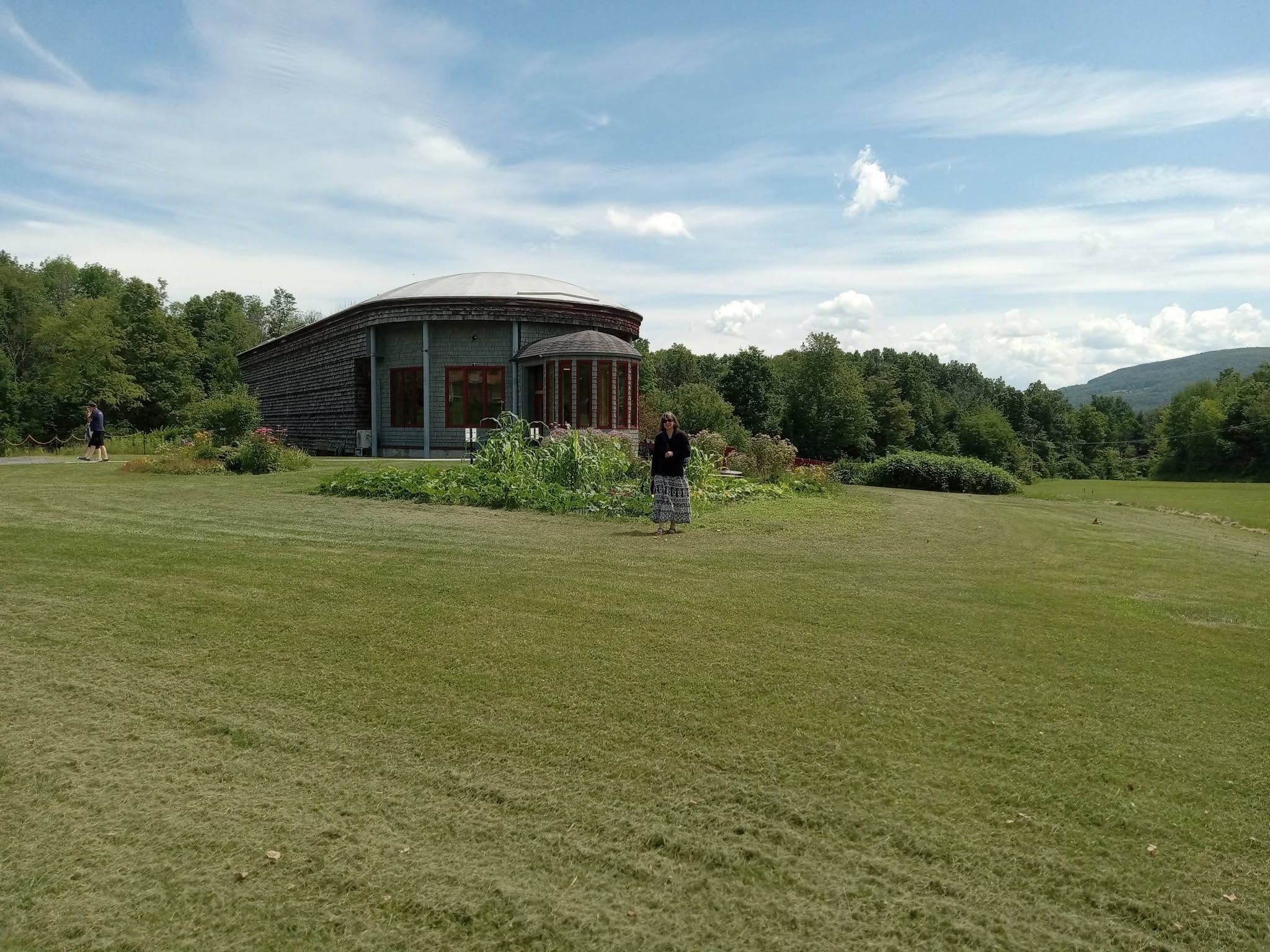
The Great Longhouse building (pictured at top), designed by architect C. Treat Arnold is surrounded by beautiful countryside; replete with both wild and medicinal flowers and herbs, an outdoor theatre for special presentations, and picnic tables for those who might want to commune with nature as they eat their lunch.
When we visited the museum on a Saturday morning in early August, there was ample parking near the front entrance, and a lovely garden featuring the “Three Sisters”, (corn, beans and squash) growing together in the traditional Iroquois manner. These three plants are both symbolized by three matrons, reflecting the Iroquois tradition of matrilineal clans, and the symbiotic nature of the three crops.
The Iroquois peoples share languages which can be understood by each other, including Mohawk, Oneida, Onondaga, Cayuga, Seneca, and Tuscarora. These nations are also related to the Cherokee. Iroquois was a name given to these peoples by the French. The Iroquois call themselves Haudenosaunee (pronounced ho-dee-no-SHOW-nee), and they formed their confederation of sovereign nations approximately one thousand years ago. Their name means “People of [or, who are building] the Longhouse.”
The connection between the Haudenosaunee Confederacy (Kayanerehsrah Gowah or the Great Law of Peace) and the Anglo-American Framers of the US Constitution is a well-documented historic dialogue. The Haudenosaunee political system was studied to answer the complex question of how to unify independent, sovereign states into a cohesive federal body without sacrificing local autonomy—the essence of a polycentric system. The Confederacy continues to operate and is headquartered on the sovereign land of the Onondaga Nation just south of Syracuse, New York.
As we enter the museum, we are immediately greeted by a friendly docent in a sunlit foyer and gift shop. At the time of our visit, adult admission was US$8 per person ($6.50 for seniors and students; $5 for children over 5 years of age; children under 5 enter free).
The interior of the Great Longhouse is airy, very peaceful, with natural wood and sunlight. In the upper levels of the Longhouse, giant works of art by various Haudenosaunee artists are displayed, along with an impressive skylight and stairwell that recreates the Iroquois creation myth of the “Sky Woman” who fell to earth on the wings of a goose, and landed on the back of a turtle.
Making your way into the first part of the exhibition space takes you on a tour of the history, geography, and culture of the Iroquois. The museum prides itself on being primarily an anthropological centre for the study and celebration of the Iroquois culture, traditions, and languages, and it is very much a living part of the community. There are many ongoing special activities for all ages, as well as permanent exhibits which interpret Iroquois culture through Haundenosaunee art and artists.
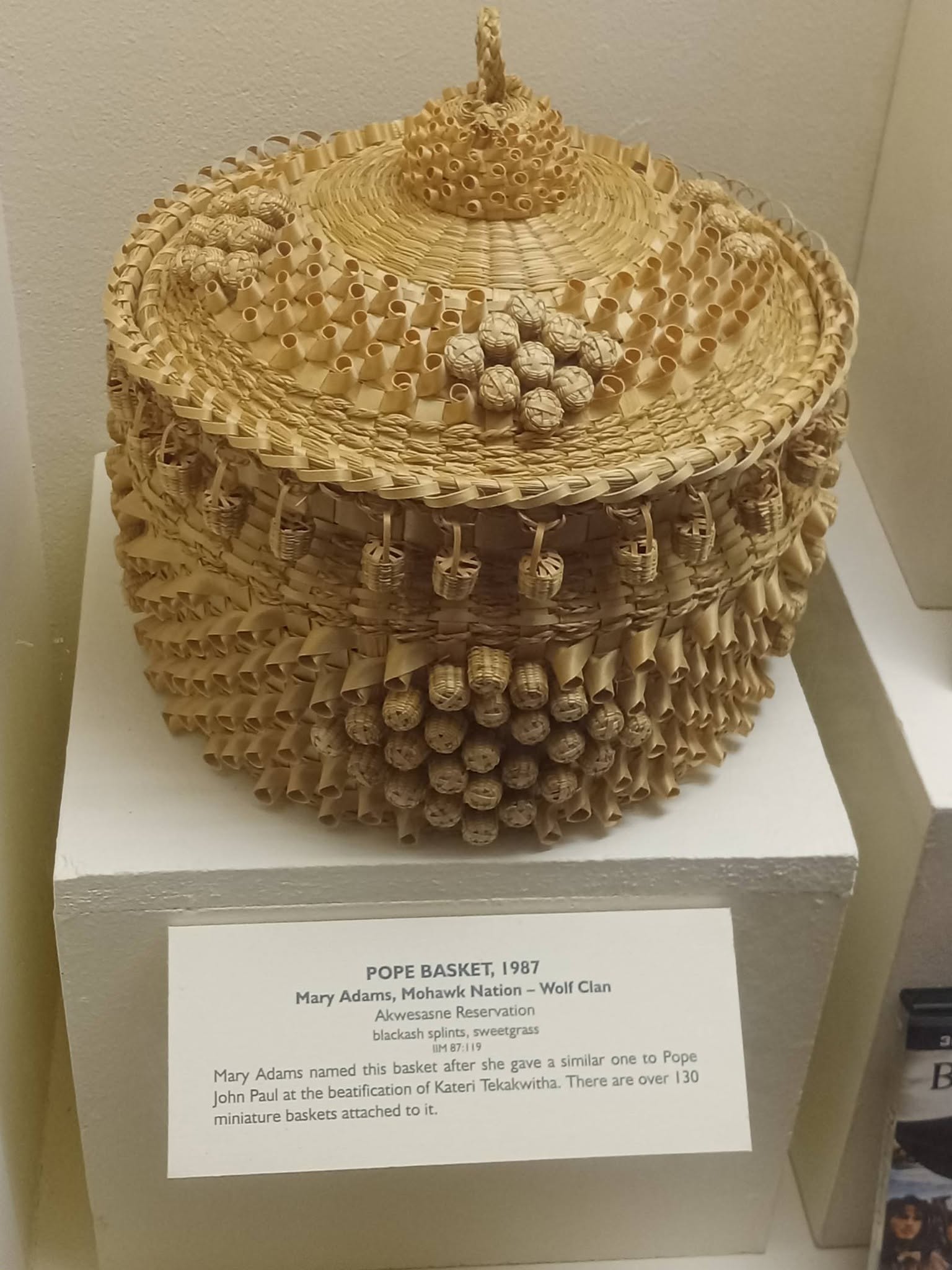
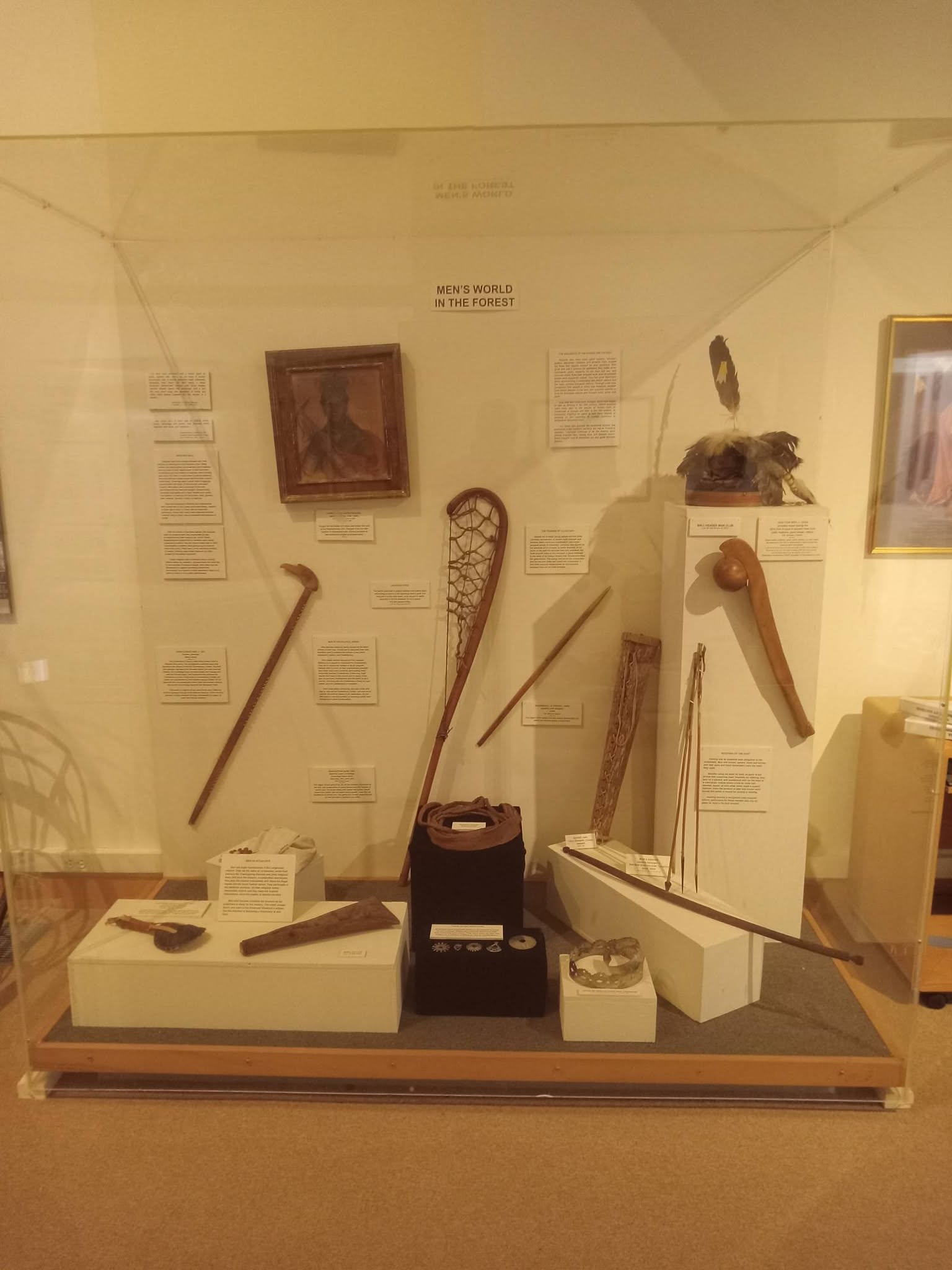
From April through November 2026, the Iroquois Museum is featuring the special exhibit, “Talkin' Bout a Revolution: A Haudenosaunee Response to the 250th” anniversary of US independence. This exhibit interprets the not-so-often told story of the dark side of the American Revolution, and its negative impact on the Haundenosaunee Confederacy.
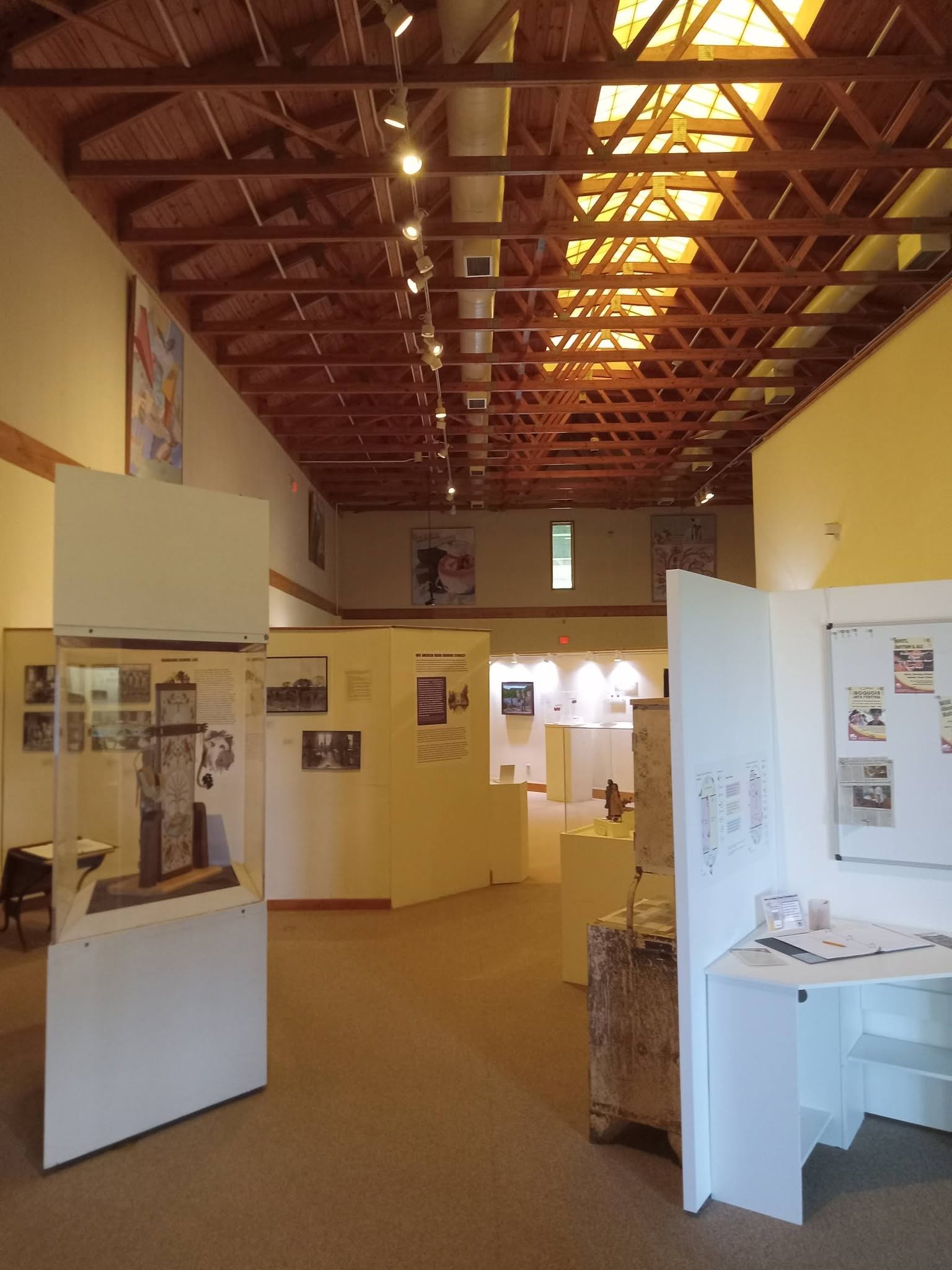
In addition to the annual exhibit, the museum’s collections include permanent displays of contemporary art by Haudenosaunee artists, a historical collection for all six nations, an archaeological collection stretching back 10,000 years of Iroquois settlements in New York, and a turtle pond and special presentation area for children on the lower level.
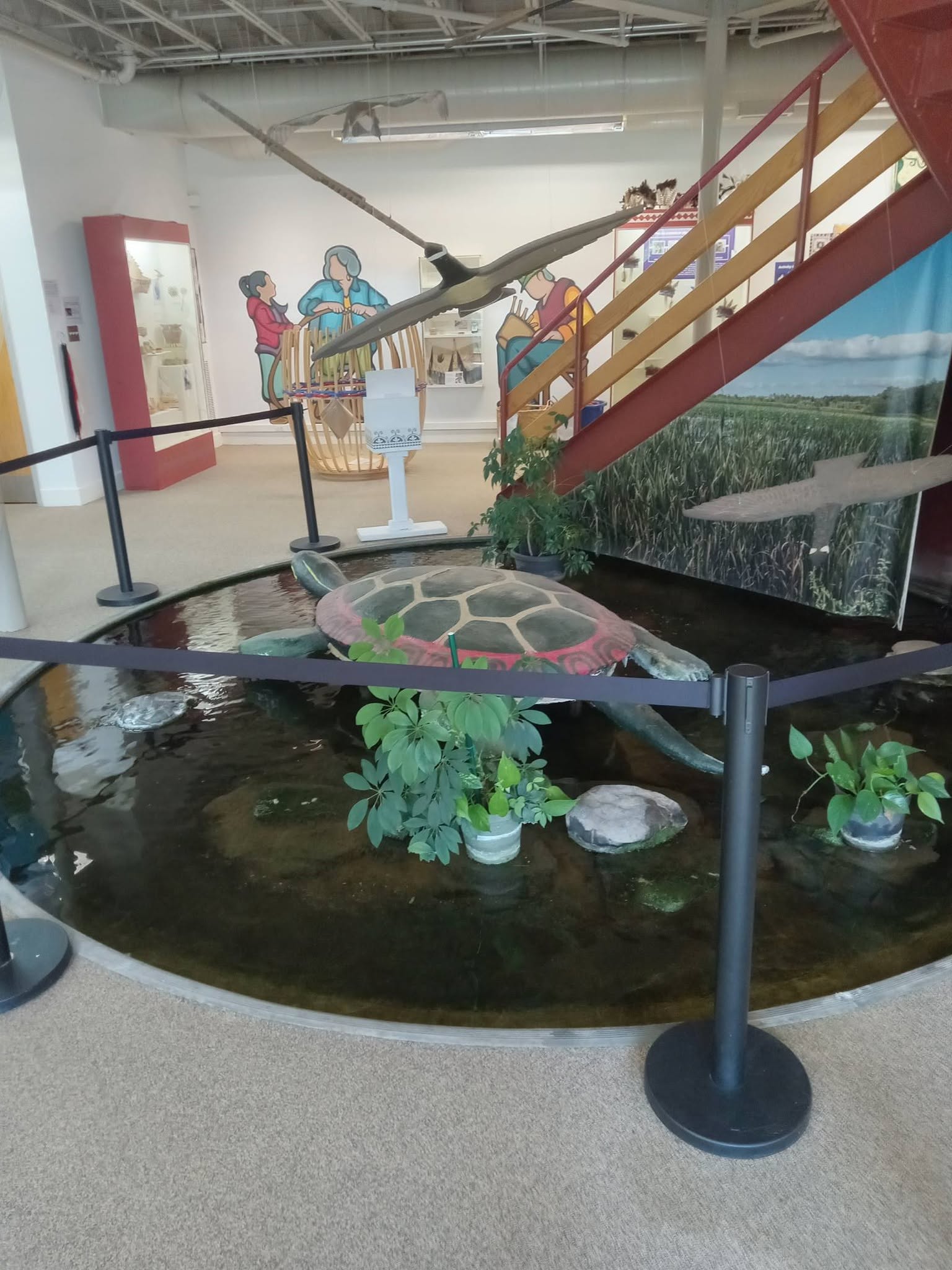
Whether you are interested in ancient history, anthropology, archaeology, modern art, or folklore, there is something for everyone at the Iroquois Museum. It should be noted that although there has been discussion of changing the name from “Iroquois” to “Haundeosaunee” Museum, the consensus has been to purposefully not use the name “Haundeosaunee” because the museum is an independent educational and anthropological institution which does not represent any tribe or nation within the Confederacy.
Finally, the Iroquois Museum is very friendly to families with children; there is easy access in and out of the building, and the exhibition space, while very inviting and evocative of the Haudenosaunee culture, is nicely human-sized. A very discerning and thorough patron might take one to two hours to properly visit the exhibits.
If you plan to visit the Iroquois Museum, there are several other attractions nearby. Among these are the Bull’s Head Inn, which is a functioning tavern and restaurant, Howe Caverns cave tours, the Huyck Preserve and Biological Research Station, and the Landis Arboretum.
* * *

Donald Donato is a published researcher bridging ancient wisdom with the present. Recovering the lessons of antiquity to cultivate a new social ecology—rooted in human dignity and the stewardship of our world. You can follow his research at the Athenaeum Polycentricum and Classics Tutor. A native of Boston, Massachusetts, he now lives and works in Binghamton, New York.