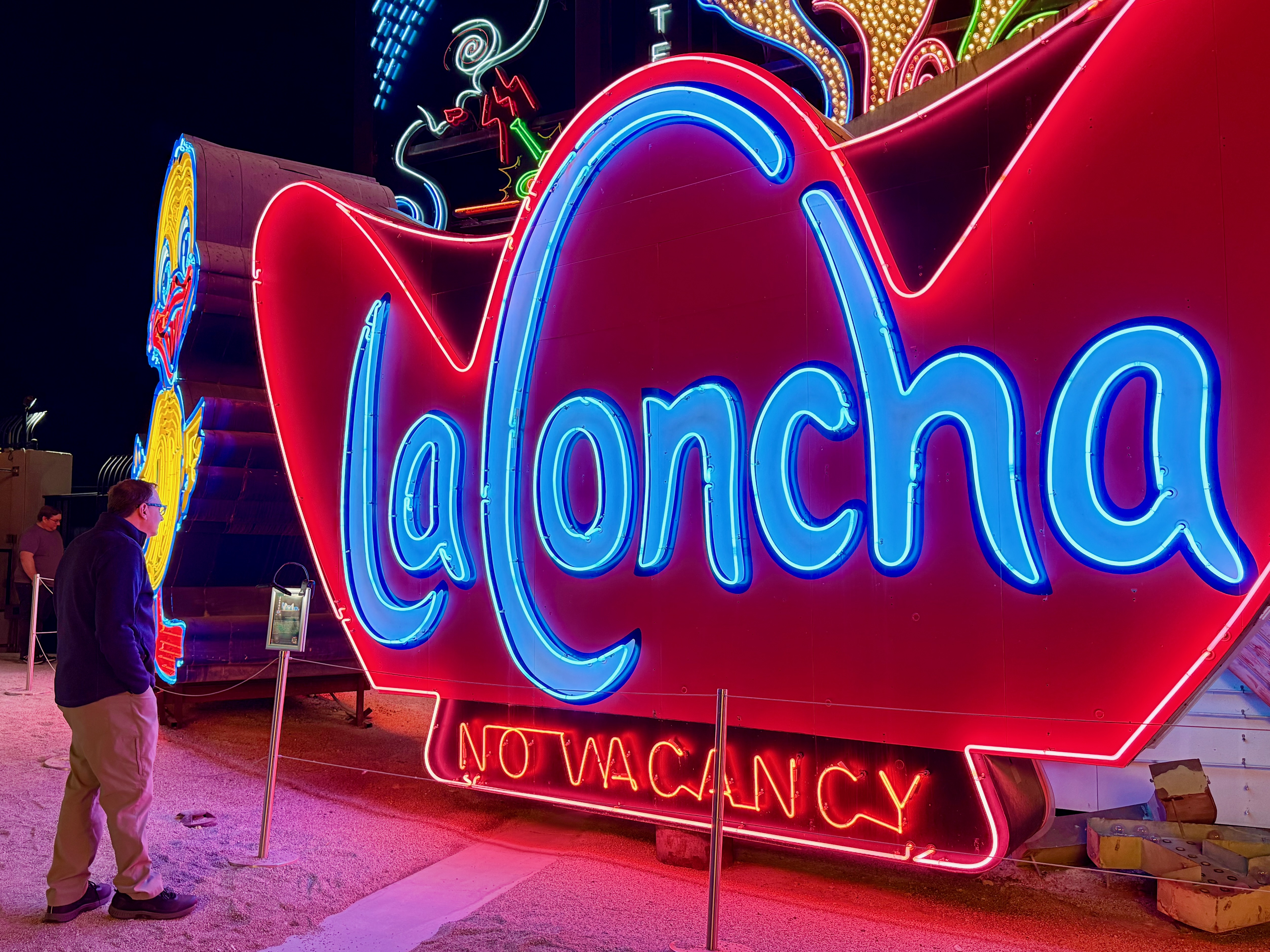
My first memory of Las Vegas is bathed in light. In early fall 1976, my family and I left Buffalo, New York to join my father, who had gone ahead to Sin City to find work. I was five, tired, and asleep in the only place I could find room among four older siblings: the floor of the back seat of our ‘72 Chevy Nomad wagon. It was supposed to be dark. The sun had long left the desert sky, yet from my spot on the floor, I saw the light shift through my closed eyes. When I pulled myself up in search of the source, I saw a firefighting fox dancing in neon. That was Foxy, the namesake of a slot parlor called Foxy’s Firehouse. While Buffalo winters left my old home covered in drifts of lake effect snow, in Vegas, a dazzling combination of glass and noble gases created an oasis of light that, today, shines 115 times brighter than the natural night sky.
For the millions of visitors who experience Las Vegas, neon is part of the package; it’s the veneer that turns night into day, tricking our circadian rhythms so we can eat, drink, and gamble ourselves silly long past our usual bedtimes. But for me, and many others, neon is art. In a town that literally blows up its past to make way for cartoon versions of other people’s history, the signs that survive tell the uniquely American story of a town that could exist nowhere else. Many of these signs find new life at The Neon Museum.
The Neon Museum's mission is to “illuminate the cultural essence of Las Vegas by sharing iconic signage, diverse collections, and stories that define its vibrant past, present, and future.” Through its collection, The Neon Museum folds Las Vegas into the larger fabric of American History—no small feat for a museum dedicated to what is essentially advertising. When I took my wife there on an unseasonably warm December evening, I saw some familiar signage, heard a few stories I knew, and delighted in seeing my wife—a first time visitor to the place that made me—learn about why I love the town so much.
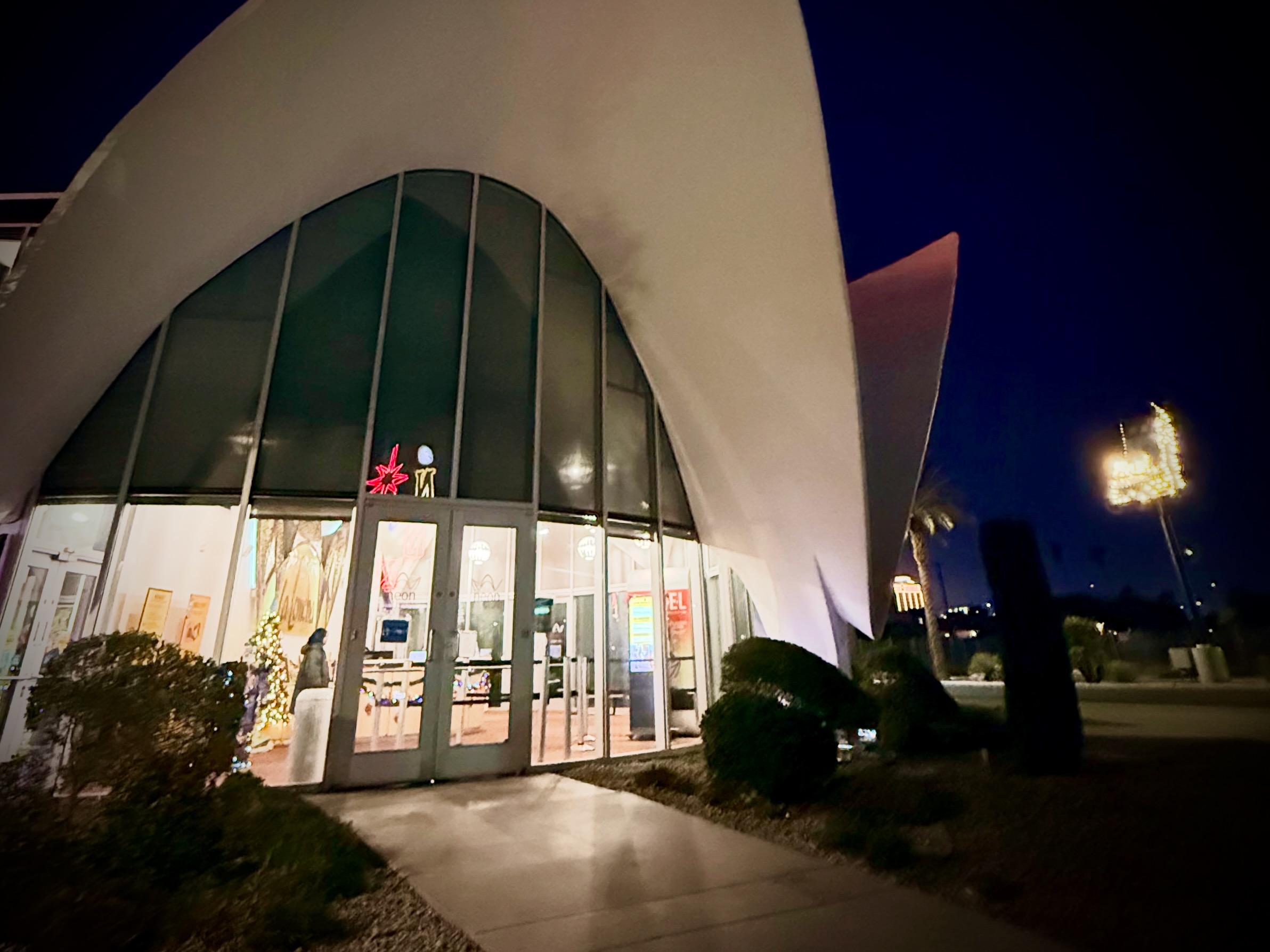
The museum’s main attraction is its outdoor exhibition space lovingly called The Neon Boneyard, a meandering collection of 282 decommissioned neon signs, 32 of which are in full working order. But the entire site, from the main entrance to the gift shop, is a thoughtfully curated homage to a place that’s deeper than most visitors realize. To get to The Neon Boneyard you have to pass through the Visitor’s Center housed inside the former La Concha Motel lobby, which was saved from demolition in 2004 and reassembled on-site in 2006. Designed in 1961 by Paul Revere Williams, the first African American member of the American Institute of Architects, the La Concha lobby, with its shell-like parabolic arches and space age curves, is a classic example of Googie architecture. More than just a quirky reminder of Vegas kitsch, the La Concha lobby physically grounds visitors in The Neon Museum's mission before they step foot inside the Boneyard. You’re standing in a place and honoring a legacy that time could've easily forgotten.
Once inside The Neon Boneyard there are other reminders that Vegas’s story is America’s story. There’s the brilliant pink letters that once graced the facade of the Moulin Rouge, the first fully integrated casino in the United States. Opened in West Las Vegas in 1955, the Moulin Rouge became a haven for Black performers who were allowed to entertain at casinos around town but could not patronize them, including Sammy Davis, Jr., Ella Fitzgerald, and Nat King Cole. It was also the site of a 1960 meeting between civic leaders, the NAACP, and property owners that officially ended segregation on the Las Vegas Strip.
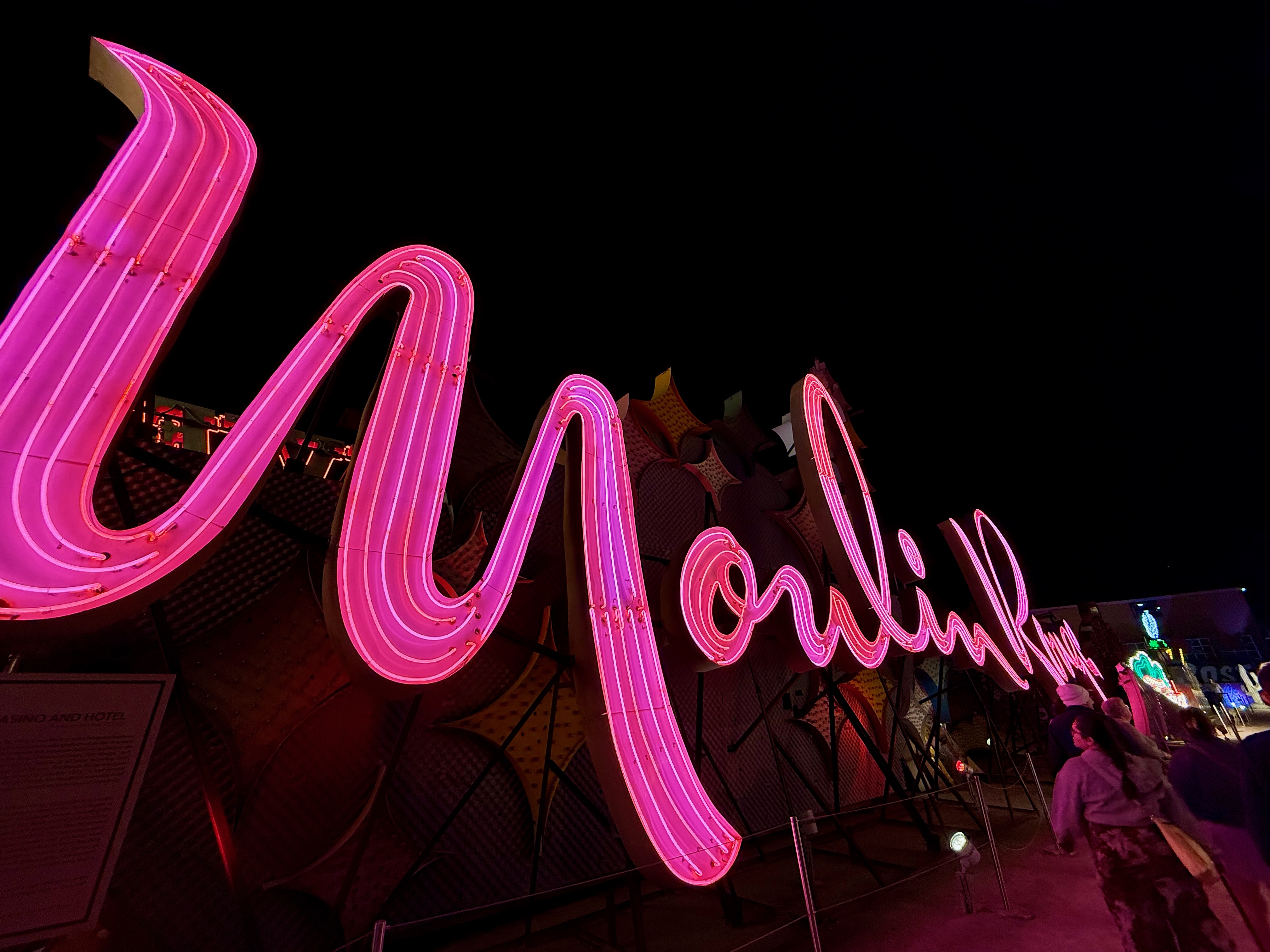
Adding to its historical significance is the Moulin Rouge neon’s importance as an art piece. It was designed by trailblazing female graphic artist Betty Willis, who hand-drew the letters after studying mid-century French lettering in order to make sure the sign captured the spirit of the casino’s famous namesake cabaret. Willis’s other claim to fame was designing the iconic “Welcome to Fabulous Las Vegas” sign, solidifying her place as a visionary designer, male or female, full-stop.
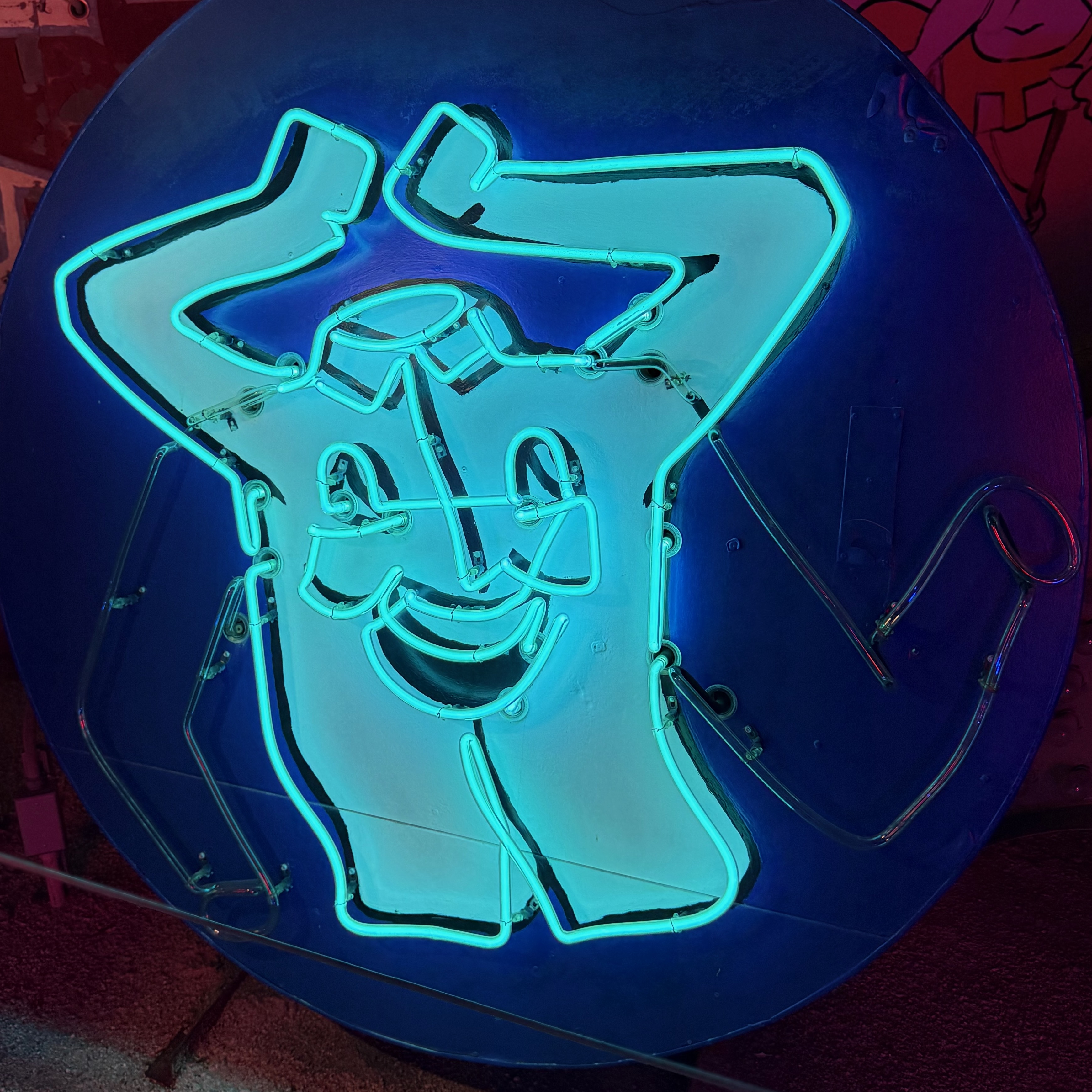
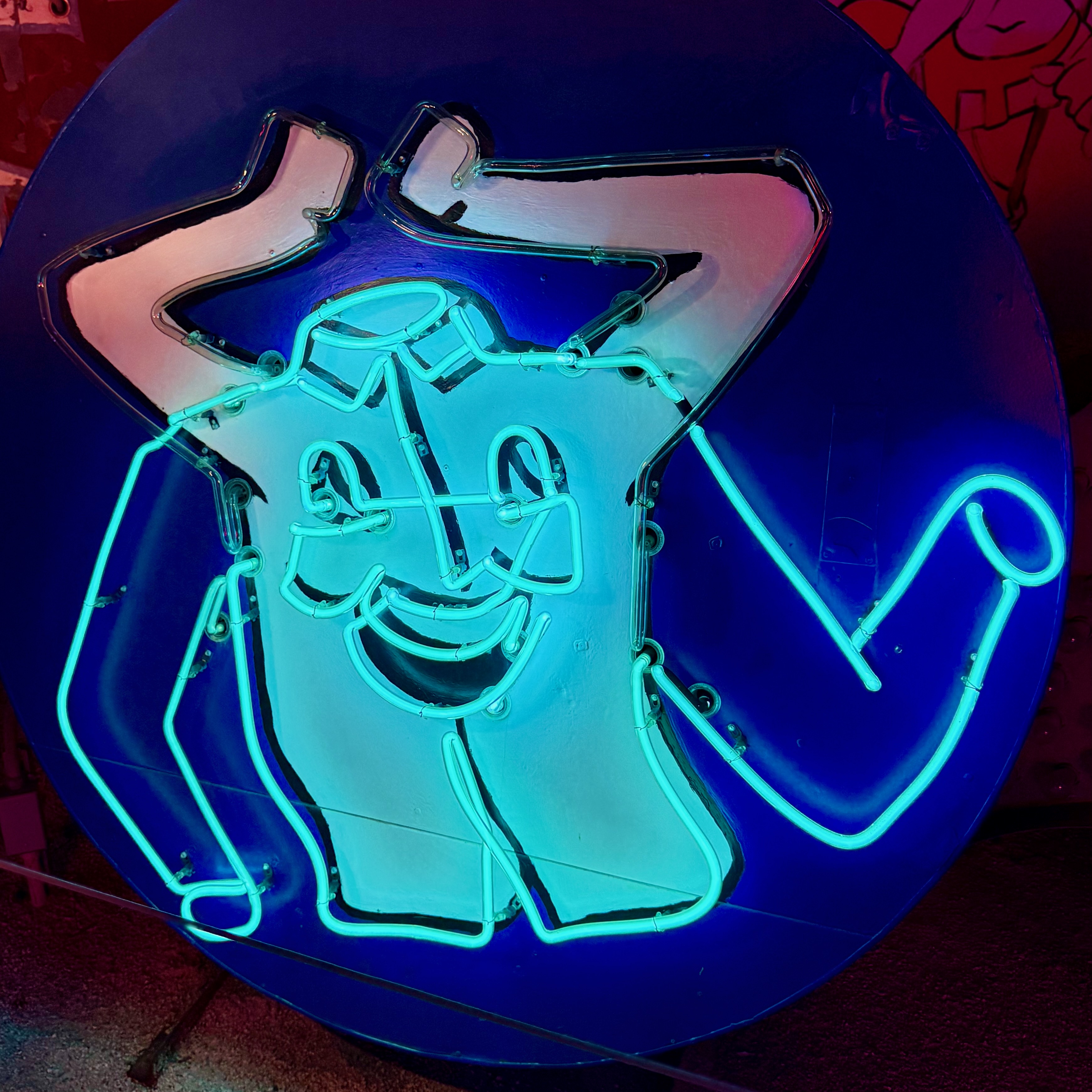
Preserving signs for the Moulin Rouge and the Red Barn, an antique-shop-turned-bar that in 1972 became the first officially advertised gay bar in Las Vegas, and giving them pride of place among more recognizable icons from Las Vegas’s past, like signs from the Stardust and Binion’s Horseshoe, is sociology in neon. While all of these pieces are made richer via the stories behind their creation, part of the magic of the Neon Museum is appreciating other pieces that may not carry as much social significance but are just as artistically impressive. One of my wife’s favorite pieces was the “Happy Shirt” that greeted patrons of Steiner Cleaners. Based on a drawing by owner Herman Steiner’s daughter, and built by Young Electric Sign Co. in 1962, this sign “moves” thanks to the clever sequencing of the shirt’s “animated” arms.
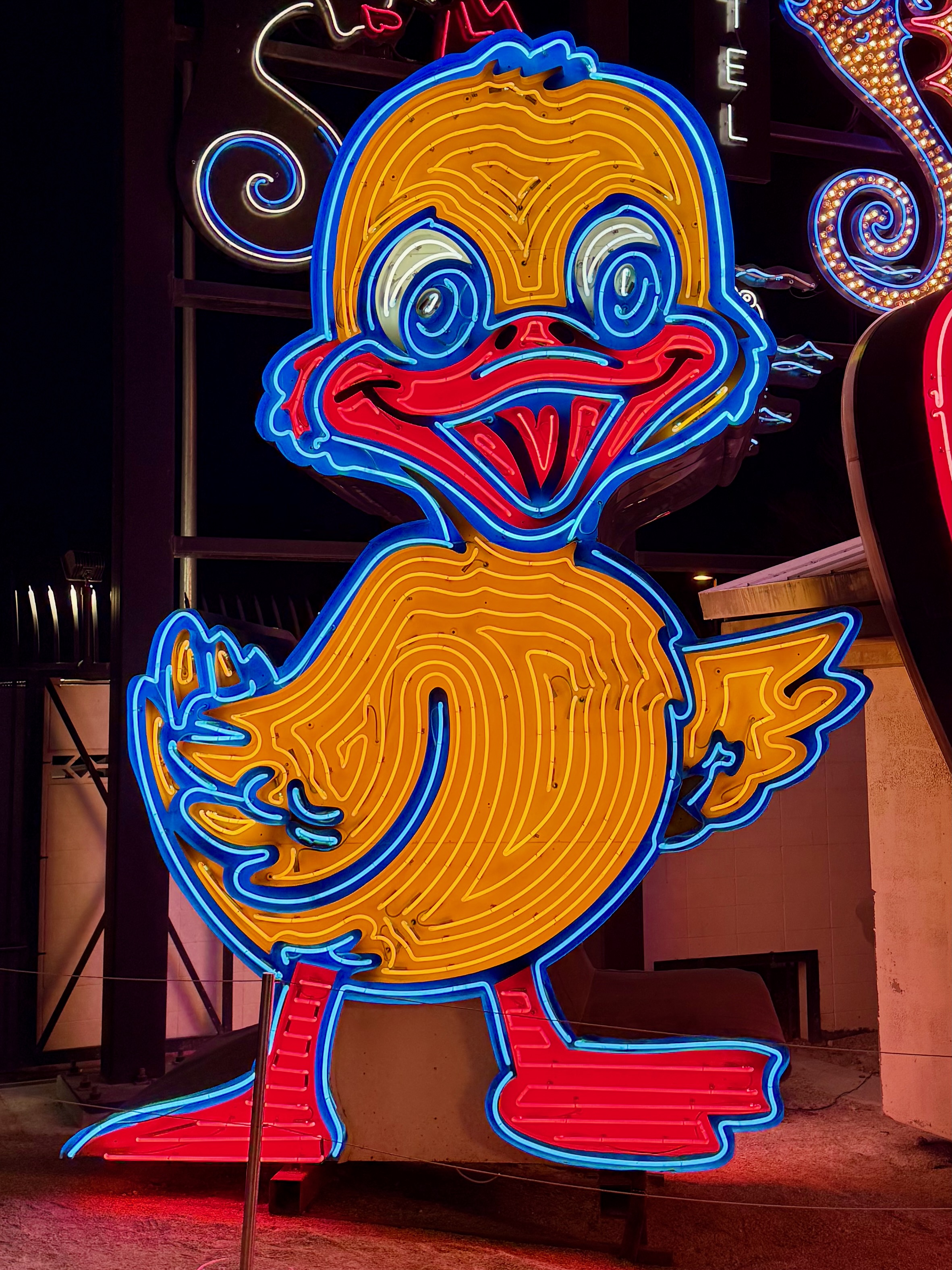
My favorite sign is the giant yellow duck that used to tout Ugly Duckling Car Sales, part of a national used-car sales chain now known as DriveTime Automotive Group which also owns Carvana. While many neon signs work in outline, the Ugly Duckling sign uses channeling and bent neon to fill-in the space in a way that keeps the colors from bleeding into one another. Along with Steiner’s “Happy Shirt” and “Andy” the Anderson Dairy Milkman sign, it’s a whimsical reminder that, like video poker machines, the things that make Las Vegas what it is are often a ubiquitous part of the daily lives of its citizens and not just for visitors.
Logistics:
The Neon Museum is located at 770 Las Vegas Blvd North, in the city’s growing Cultural Corridor. In addition to The Neon Boneyard and the La Concha Visitor’s Center, the museum also includes the North Gallery, which is home to 115 unrestored signs from the museum’s collection.
Hours are from 3:00-11:00pm, with admission prices as follows:
Evening admission prices kick in at 6:00pm. The best times to visit are late afternoon into dusk (transitioning from daylight details to neon illumination, as the signs also needed to look good during the day) or evening for full glowing signs. Advance reservations online are highly recommended due to timed entry caps. Free parking is available on-site, with additional overflow parking at the Cashman Center just a short walk from the museum.
45-minute guided tours are available for an additional $15 and are well worth the cost, as the stories behind the signs are just as illuminating as the signs themselves. There is also the immersive "Brilliant! Jackpot" Show starting at $17 that uses audiovisual projection-mapping and 3D sound to tell the story of and “re-illuminate” unrestored signs in the North Gallery.
Go to https://neonmuseum.org to learn more about The Neon Museum, and to book your visit!
* * *
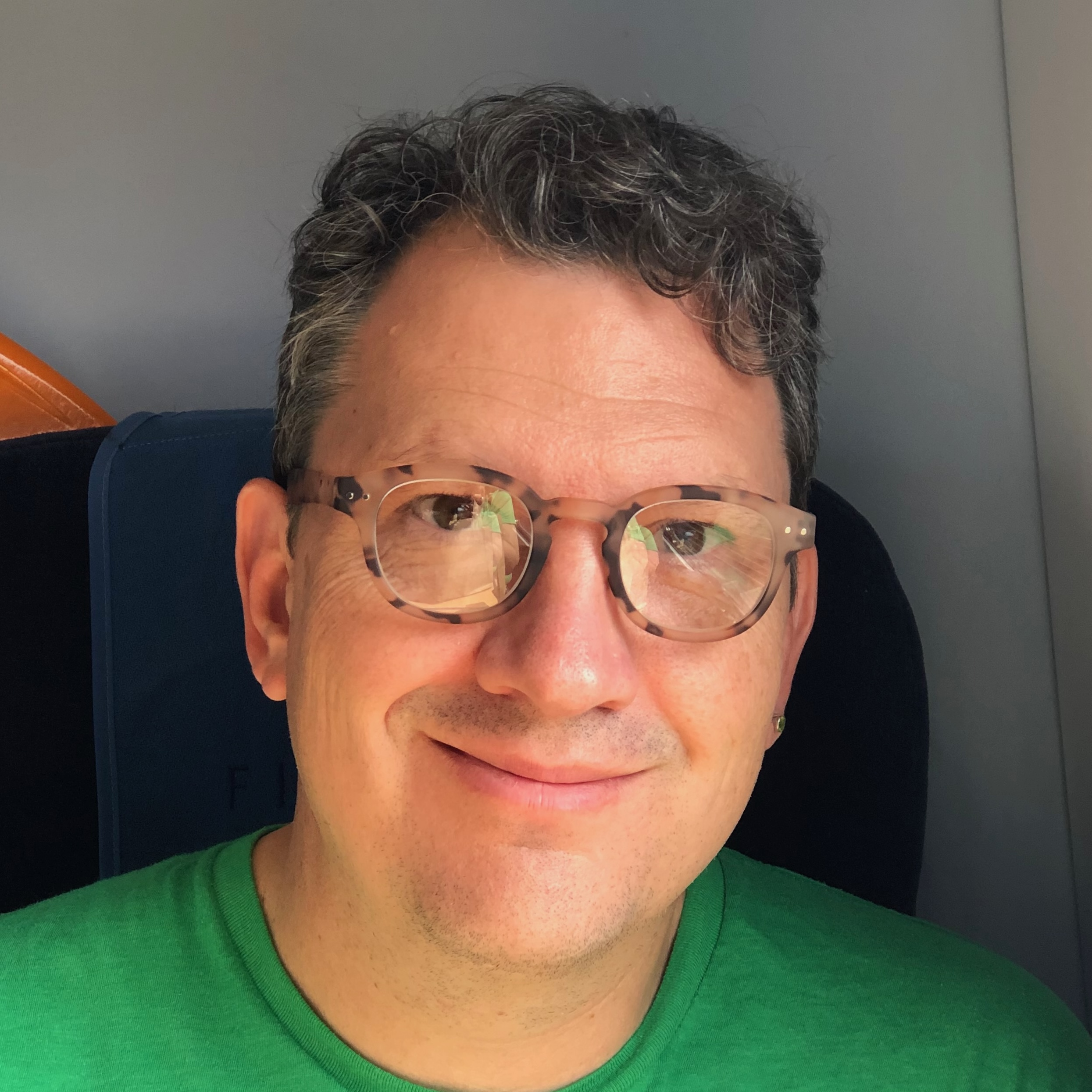
Tom Guzzio is a desert transplant firmly rooted just north of Boston where he teaches, writes, and watches birds. Working mostly in creative nonfiction, he has written about the monk parakeet’s improvisational survival skills, and why Exile on Main St. was the perfect pandemic soundtrack. Tom’s current project is an essay collection that weaves the trauma and transiency of his childhood in Las Vegas into a singular story of resilience and recovery. Connect with Tom and his work at prodigalschair.com.