

The Detroit Institute of Arts (DIA) is a must for any museumgoer. Located in Midtown Detroit, this monumental building hosts one of the largest and most diverse collections in the United States, and therefore worldwide, with more than 65,000 objects and 100 galleries distributed in 658,000 square feet. Furthermore, the DIA offers a variety of cutting-edge educational, academic and cultural programming for all ages. For these programmes, the Museum has a 1,150-seat auditorium, a 380-seat lecture hall, an art reference library, conservation services laboratory, two dining areas, an indoor courtyard and a museum shop.
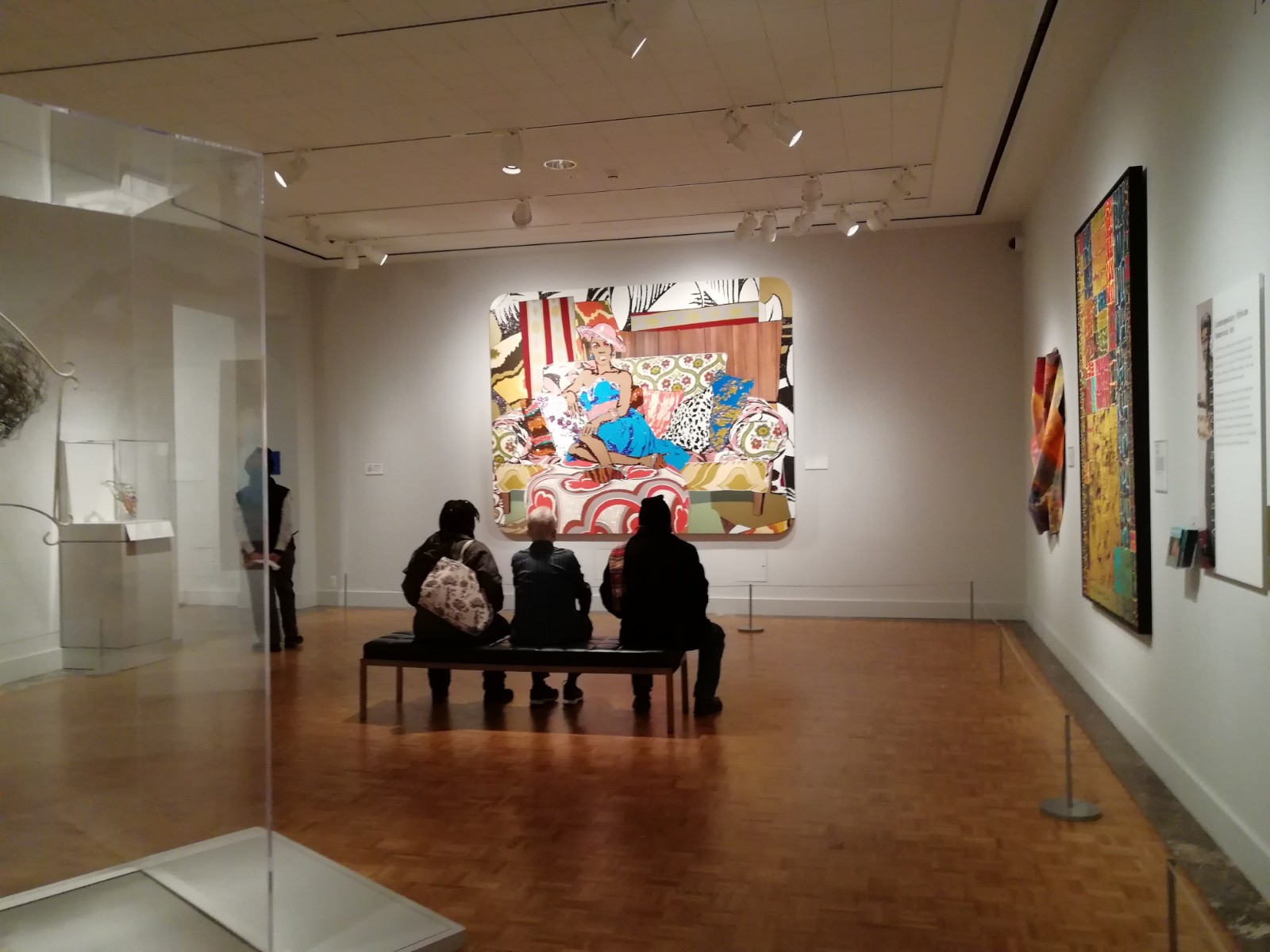
After four visits to the DIA, I could write an entire book about my experiences and feelings about this place. However, since February is the Black History Month, and as someone interested in unravelling the social justice issues behind museums and their exhibitions, I want to use this post to talk about the General Motors Center for African American Art exhibition. This permanent gallery on the second floor of the DIA helps to illustrate the delicacy, practicality, sensitivity and curatorial artistry reflected in each of the exhibition halls at this Museum, offering a comfortable environment to involve the visitor into the reflections that the DIA wants to foster.
The African American Art exhibition is distributed into four galleries, all connected. In each of them, there is a curatorial statement that describes, clearly and concisely, the historical context and the thread that connects all works of art displayed in the room
With this text, the DIA shows its interest to invite the individual who appreciates the works of art to know more about the history of African American artists, who have had to grapple with the predominance of colonial and white narratives in social, cultural, political and economic spheres.
The curatorial statement in each of the galleries presents the DIA as a mediator between the visitors and the artists, who are represented by the works of arts exhibited. This entitlement is a political and social stake that can also have its detractors, especially those who think that the art must be appreciated without mediation not to restrict the meaning that individuals want to give to their experience. However, when there is a political and social commitment to the cultural transformation of its audience, a museum can give cues, without taking away the prominence to the works of art, and let the visitor complement these reflections initiated by the institution, as the DIA does with the African American exhibition.
A second fascinating characteristic of this exhibition, which reflects what visitors could expect in the other rooms, is the title of each of the four galleries that compose this exhibition: New Self-Awareness, Examining Identities, Political and Social Consciousness; and Contemporary African American. These titles, when viewed together, follow a narrative that accounts for the psychological and political process that African-American artists have done and must do in order to fight against the oppression they have suffered due to the predominance of the white colonial culture in the arts. Notwithstanding, these names also account for processes that all of us, at some time in life, have had to deal with to defend our identity. Thus, the DIA highlights the suffering of the African American population by using a familiar and integrating language, which anyone, regardless of religion, nationality or colour can identify with.


A third characteristic I want to highlight is that visitors can find a riddle in each room, which they can solve during their visit. These experiences are called Eye Spy, which ask the visitor to find the painting that matches the clues given in the riddle. With this game, the visitor is challenged to paying attention to all works of art displayed in that room and, therefore, creating a dynamic experience that breaks the rigidity that can be felt in an art exhibition. Likewise, this tool is handy for children, demonstrating once again that there is an interest in making everyone comfortable during their visit.
There is no logic or linear route to follow in any of the four galleries of the African American Art Exhibition. Conversely, each room has a 360-degree layout that allows the visitor to decide where to start. By distributing it in this circular way, the museum offers the visitor an autonomous experience. It is not predisposing the route and therefore who seizes the space is the visitor, not the curatorial team.
This circular disposition of the works of art also creates a feeling of involvement, inclusion and intimacy that facilitates the encounter between the visitor and the work of art. This layout, reinforced by warmth lights and the wooden floor, recreates an environment similar to a ritual that invites the visitor to slow-down, contemplate and open themselves to a different quality of experience, one where they can perform certain attitudes during their visit according to their own experience and dialogues with the exhibition.

I congratulate the DIA for designing an exhibition that is both politically and aesthetically active that leaves the visitor the possibility of navigating the space according to their will, but ensuring a minimum understanding of the social, political and cultural issues at stake in the racial struggle in North America. The above, transform these galleries in mediators between the works of art, which represent artists’ voice and visitors from all ages and backgrounds.
I felt comfortably uncomfortable in this exhibition. I felt uncomfortable knowing how difficult it has been for African American artists to excel within a white-dominant field. I felt I had to read more about their work and engage myself more in their struggles against racism. I believe that is this comfortable discomfort what museums should generate. Confortable to the extent that the visitor wants to spend time in the room to appreciate the techniques and colours of the works of art while he or she learns new information. Discomfort because visitors should come out from the Museum with more questions than answers, with more curiosities about the discussions they could grasp and feel more interested in the social and political issues addressed by the exhibition.
Visit https://www.dia.org/visit for more information about the Detroit Institute of Arts.
* * *

Carolina Betancur is a MA in Communication and Social Justice. She is currently working as a museum interpreter for the City of Mississauga, ON, Canada. She is constantly reading and researching on museums and the media they use to discuss social justice issues. You can find her most recent article at: https://scholar.uwindsor.ca/major-papers/100/
You can find her on twitter @carobeta918 or e-mail her cbetancur918@gmail.com