
Above: Aerial view of the Bornholm Art Museum © Bornholms Kunstmuseum (source: https://bornholms-kunstmuseum.dk/da/museet/bornholms-museumsforening/)
If you look very closely at a map of the Baltic Sea, you will notice an almost parallelogram-like looking island close to the Southern Swedish coast. Surrounded by nothing but the sea, this small Danish speck of land might strike as quite remote. And yet, as many islanders and visitors can assure you, Bornholm has a lot more to offer than can be seen at first glance.
With sharp cliffs, many beaches, forests, and hills, Bornholm is very rich in its natural diversity. It is easy for nature-enthusiasts and geologists to fall in love with the island: As Bornholm embodies the meeting point of two tectonic plates, it has endured numerous earthquakes and has moved across seas as continents broke apart and re-joined throughout the eras. Fossil fans will not only be able to view spectacular specimen in the science museum on the island, but can also find ancient relicts on their own, just by walking along the multiple stone beaches.
Denmark’s “Sunshine Island” is quite popular with tourists from Denmark, Sweden, Poland and Germany. Throughout the summer months, the usually quiet sea-side towns are bustling with people enjoying the large range of activities and culture the island offers. Internationally renowned artists and particularly glass manufacturers reside on the island during the summer, opening their ateliers to the public and demonstrating their talent. It comes as no surprise that many artists have come to Bornholm in the past as well, using its spectacular views and colourful towns as inspiration for their artwork.
Nestled next to the Sanctuary Rocks (Helligdomsklipperne) lies Bornholm’s Art Museum which has made it its task to collect and exhibit these artworks. Whether the artist was born on the island or has spent a longer period of time there does not matter, as long as a connection to Bornholm is given. The museum actively collaborates with other European states in order to enhance their collection and is therefore in no way as remote or isolated as one might think. During the year, there are usually 6-8 temporary exhibitions that are shown alongside the permanent collection. This can vary from art films, thematic exhibitions (e.g., related to the question of posthumanism), or sculptures resonating with Bornholm’s rich glass-blowing culture. The permanent collection offers a chronological view of the Danish Golden Age (1800-1850) to modernism and contemporary art.
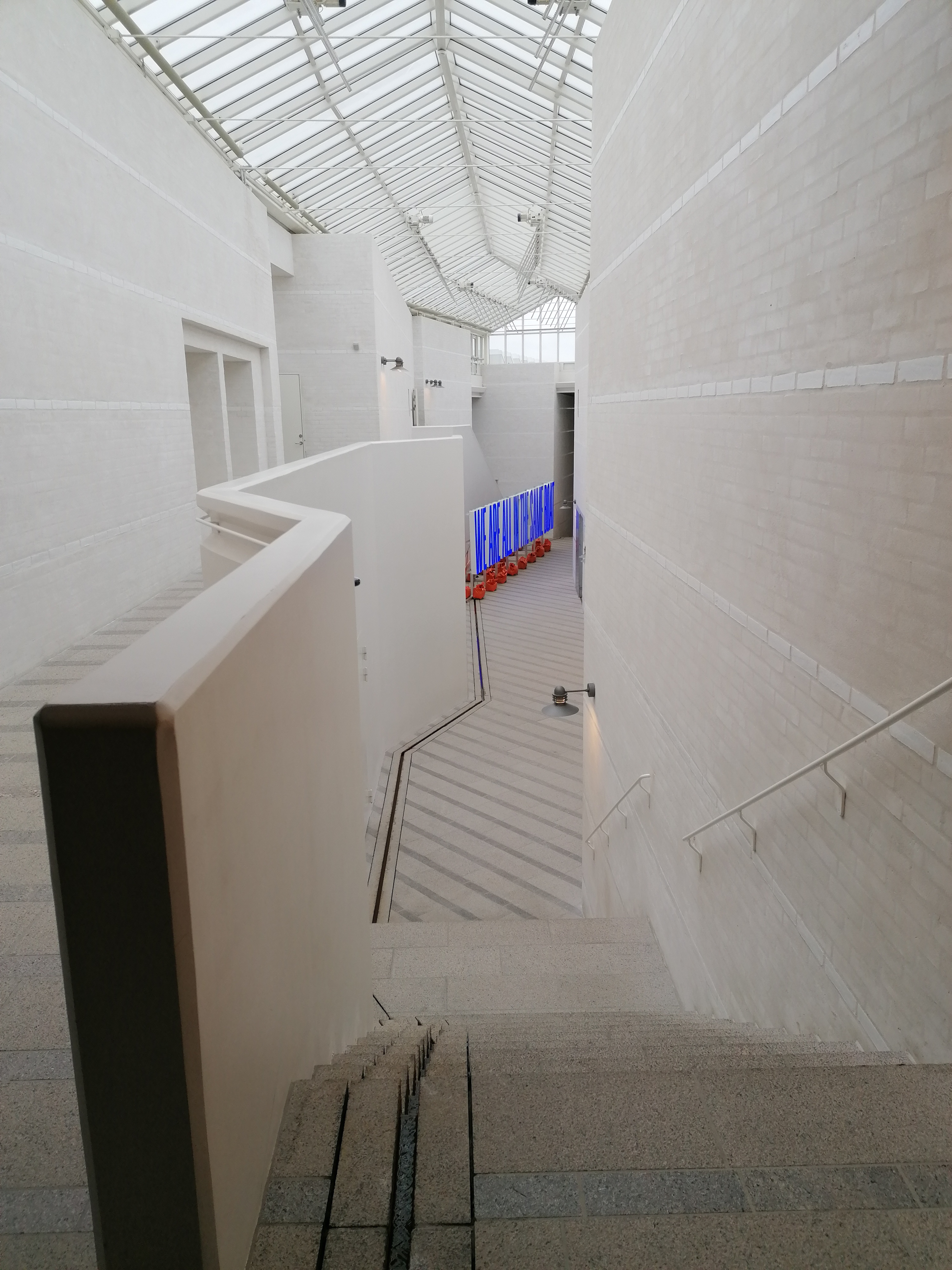
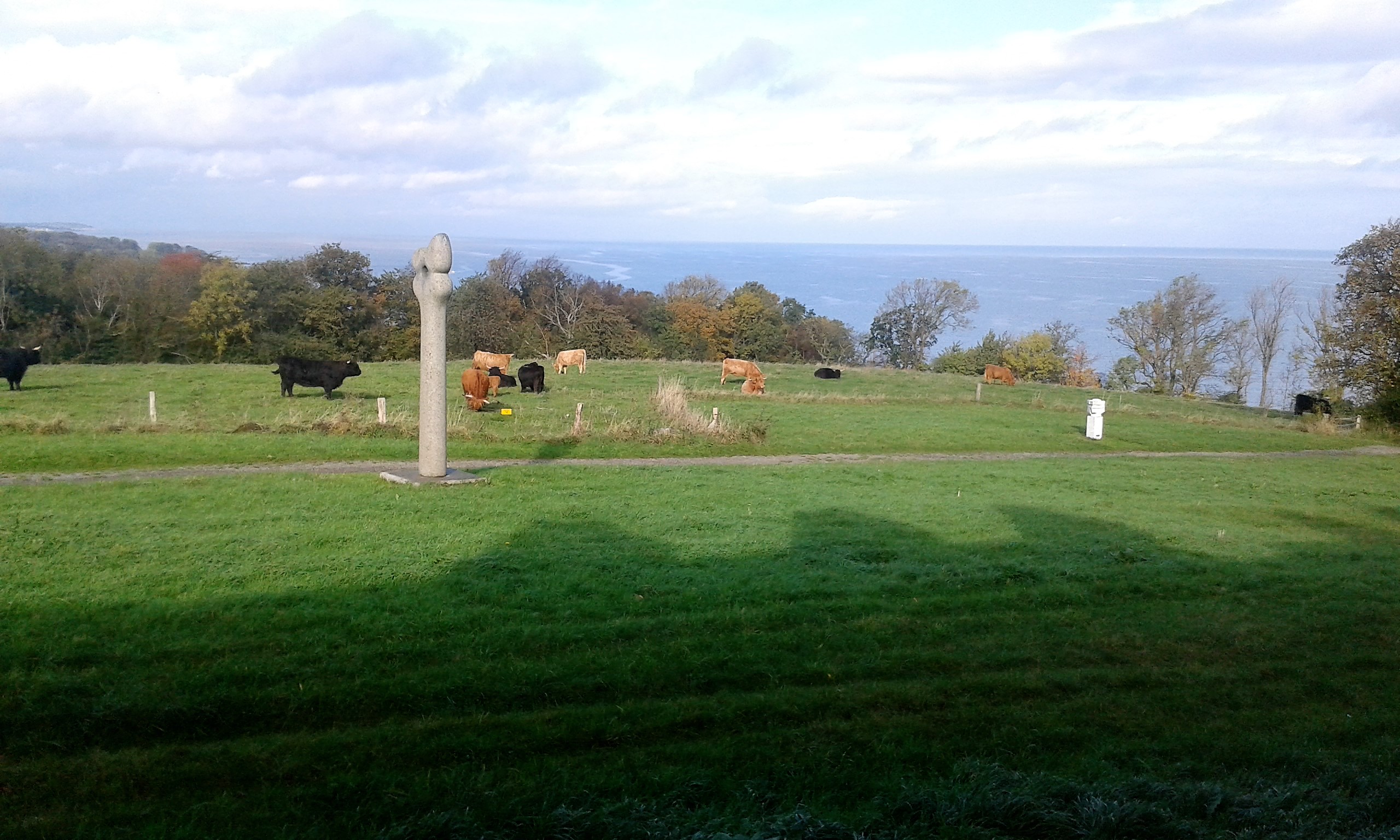
Built in 1993 by Fogh & Følner Arkitekter A/S and expanded in 2003, Bornholm’s art museum immediately strikes as incredibly modern, resembling the “white cube” architecture of contemporary art galleries across the world. However, as you can almost taste the sea as soon as you enter the parking lot, the museum seems to also radiate a great sense of calm and connectedness to its surroundings. Instead of flashy, modern buildings like in bigger cities and towns, Bornholm’s art museum is surrounded by fields that sheep and Scottish Highland cows graze on. Next to the museum, a pathway invites you to take a stroll around the site’s sculpture park for free, either before or after your visit.
Upon entering, one is encapsulated by the interior: White-washed walls meet stone floors, bridges connect rooms on both sides of the building, a staircase leads the way downstairs. Sometimes you hear a film playing in the cinema room (as a child, I would always love to see Krtek the mole, but you can request other genres at the reception desk!). What has always sparked great joy in me is the spring that flows through the museum. Starting at the entrance, going down the staircase and ending at the back doors, it seems to lead the way and shows once again how connected the Bornholm islanders are to the natural wonders that surround them at all times: Instead of burying it under concrete, the Bornholm Art Museum decided to keep this sacred spring that gave the Sanctuary Rocks their name.
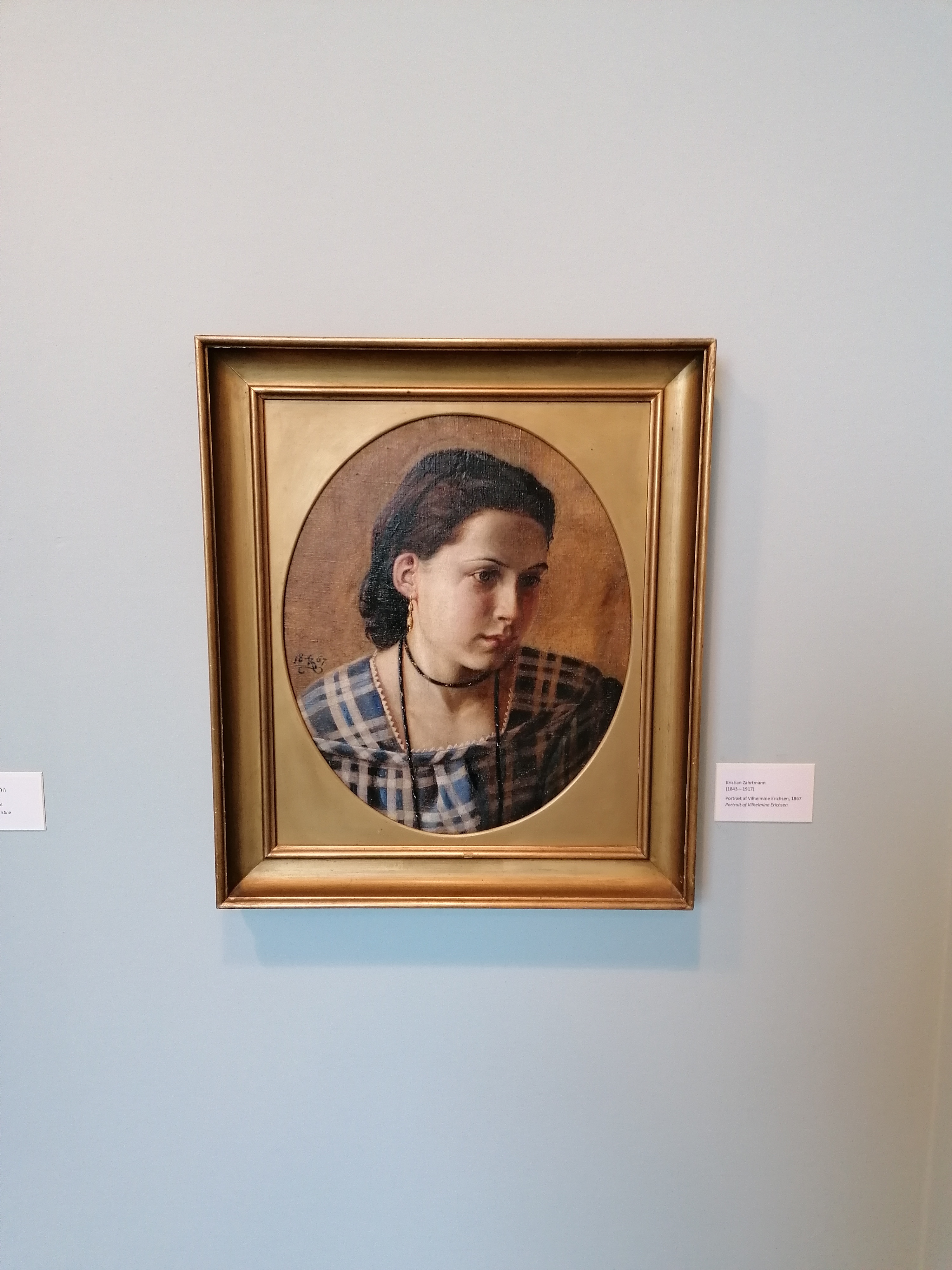
After paying the entry fee (which, admittedly, is quite expensive for people who are used to public galleries being free of charge), you begin your tour with Bornholm’s artistic past: Suddenly you find yourself in rooms that are painted in rich colours, with creaky floorboards instead of the cold stone the museum seemed to have been made out of. The “Danish Golden Age” paintings from great artists like Lars Hansen (1813-1872) and Kristian Zahrtmann (1843-1917) mostly show still lives and portraits. Especially Zahrtmann is shown a lot in the permanent collection, and his painting Det mystiske bryllup i Pistoia (1894) makes up one of the highlights one can spot while wandering around the permanent collection. Other artists, such as Vilhelm Petersen (1812-1880) depict Bornholm’s landscapes in diverse, mystic and dramatic ways, inspired by the German philosophy movement of Sturm und Drang (following the Enlightenment period). As you walk along the rooms showing paintings of the landscape, the museum breaks the wall of depiction and real life by offering views through painting-sized windows. This is what has always made the museum quite endearing for me: Next to arguably very dark, mystic depictions of the rough sea, you can watch cattle sleeping outside and look at the “real” sea yourself.
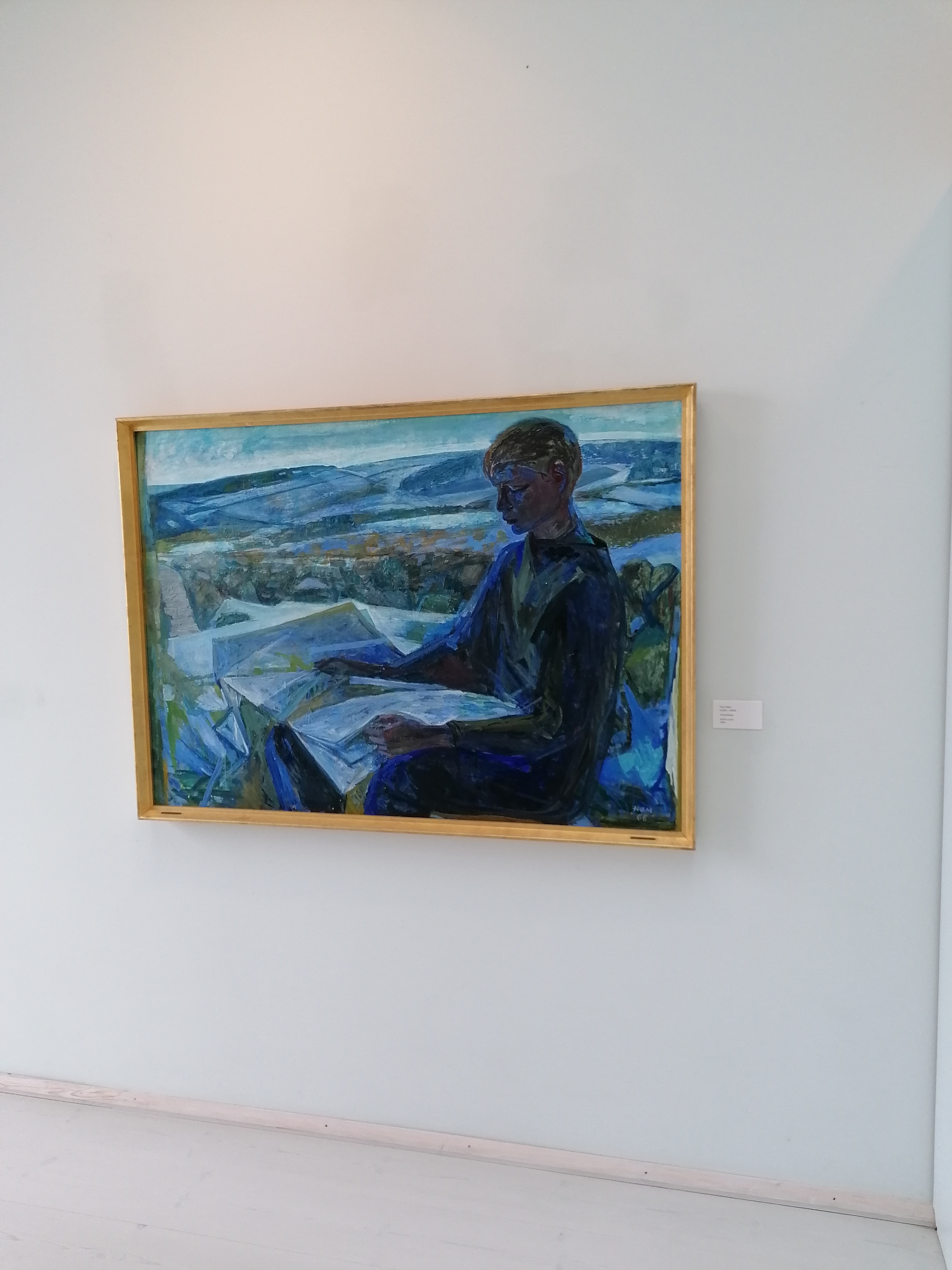
Crossing a bridge, you enter the modernist permanent collection. The surroundings become lighter and more cubist, the paintings larger and very colourful. The “Bornholm School” made up of artists such as Oluf Høst (1884-1966) offers an insight into the island’s expressionist and cubist artworks. Large windows and white walls let the rooms appear very light and airy. Next to numerous, larger-scaled paintings you can find sculptures.
The temporary exhibitions mark the second half of the museum tour which, in the end, leaves you at the bottom of the staircase. From there, one can explore basement-like, darker rooms showing more temporary exhibitions. The museum takes great pride in supporting local artists of all crafts. On my numerous visits, I got to see artworks made of glass, Chinese jewellery, ceramics and pottery, different kinds of films or larger installations filling up rooms. Every four years, the Bornholm Art Museum also hosts the European Glass Context Festival, in which international artists showcase their creations. Glasswork exhibitions are always worth a visit as it can be breath-taking to view the fine and careful ways in which artists have sculpted their ideas using the most fragile of materials.
The temporary exhibitions are poignant and incredibly well-curated; the descriptions and panels easy to understand and translated perfectly into English. Since there are always numerous temporary exhibitions at the same time, none of my visits has ever been the same, even though I must have seen the permanent collection about seven times now at least. Danish artists are definitely not to be underestimated, as they often go beyond aesthetic boundaries and confront the spectator with almost bizarre and sometimes unsettling artworks, such as Jørgen Haugen Sørensen’s large sculpture at the entrance of the museum which depicts a man with a pig’s head.
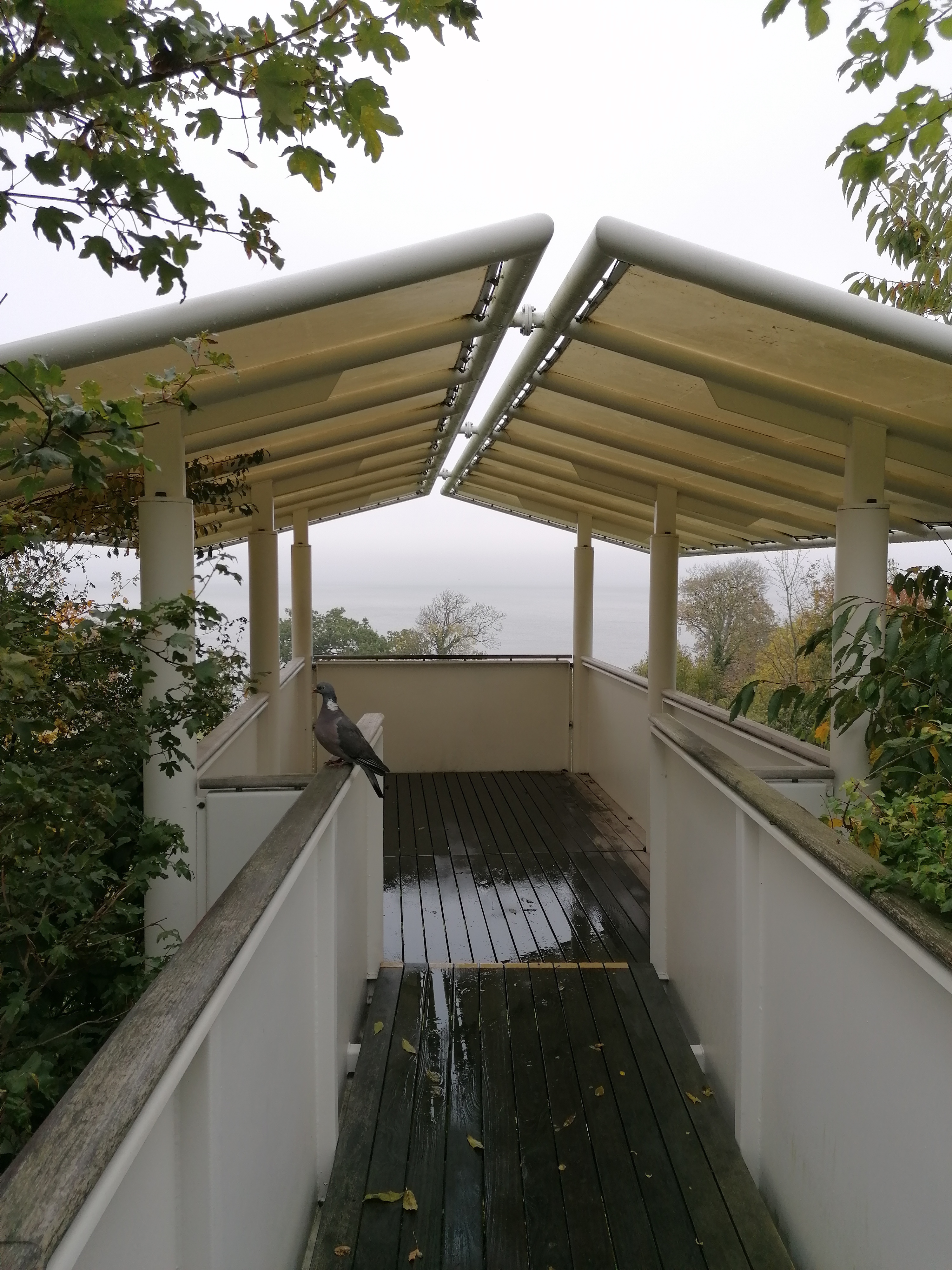
Three more tips for every visit are the exploration of where the little spring leads you to: If you exit through the back door, you can walk along a wooden pathway that lets you enjoy a gorgeous view of the sea and cliffs the museum is placed on. The museum café, while being quite expensive (as most things in Denmark are) is also worth a shout, as it offers you delicious, freshly made food with vegetable soups and self-made bread straight from the oven. The gift shop has carefully selected toys, games and books and is definitely also worth looking into (even if just to have a go at playing with the toys on display).
At the moment, you can see the exhibition LÆNGSEL which shows artworks from the early 20th century, on loan from the national museum in Szczecin (Poland). The art museum offers a variety of workshops and activities, such as a creative Christmas-themed workshop for families or painting classes. Depending on the season, you can usually spot a few tables around the entrance that offer thematic crafting supplies for children. Different activities can sometimes be found in the temporary exhibition areas, too, e.g., “Where is Waldo?”-esque treasure hunts.
For opening hours and prices, please see the website: https://bornholm.info/en/art-museum-of-bornholm/
Visiting the sculpture park is free of charge.
Source: https://bornholms-kunstmuseum.dk/da/bes%C3%B8g/%C3%A5bningstider-og-priser/
ACCESSIBILITY:
Access for wheelchairs: Yes*
Disabled-friendly parking: Yes**
Disabled-friendly toilet: Yes
Elevator and lift: Yes
* The museum has a wheelchair for visitors, that can be borrowed at the reception desk.
** Parking lots for both cars and busses at the south side of the museum. Handicap-parking as well as drop off and hop on just in front of the main entrance.
Wearing a face covering during the COVID-19 pandemic is mandatory. Exempt from this rule are:
Face coverings can only be removed when the wearer:
Visitors are asked to keep a 2-metre distance at all times.
Please note that guided tours are only allowed for up to 10 people at the same time.
(Source: https://bornholm.info/en/art-museum-of-bornholm/)
* * *
Elisabeth Nagy is currently studying Museum Studies at the University of Glasgow. In early 2020 she graduated from the University of Rostock with a degree in English and Media Studies. Before she moved to Scotland, she worked as a school librarian and helped out at Rostock’s literature house, where she published web content and sometimes provided small translations.